Published: 17 February 2026. The English Chronicle Desk. The English Chronicle Online.
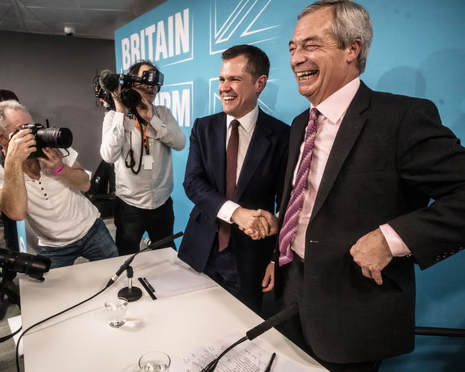
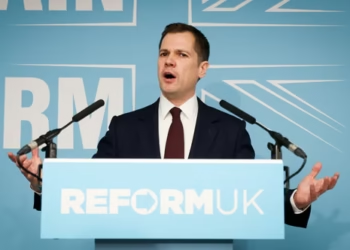
Nigel Farage is preparing a significant announcement within Reform UK, signalling a reshuffle that could redefine the party’s economic strategy. At the centre of this move stands Robert Jenrick, who is expected to be unveiled as Reform Chancellor in a bold political step. The decision, if confirmed, would place the former Conservative cabinet minister in charge of shaping the party’s fiscal message ahead of future electoral contests. Sources close to the leadership indicate that this development aims to present a more structured image of Reform UK.
The anticipated appointment of Jenrick has sparked intense discussion across Westminster and within Reform UK ranks. Many observers had assumed that Richard Tice, the party’s former leader, would secure the second most senior economic role. Tice has been a visible and loyal figure within the movement for years. However, Farage appears determined to broaden the party’s leadership bench and distribute authority more clearly. By introducing the Reform Chancellor role in this way, he seeks to answer critics who claim the party revolves around one dominant personality.
Jenrick’s political journey adds weight to this moment. Once housing secretary and later immigration minister under the Conservative government, he departed the party after disagreements with leader Kemi Badenoch. His defection to Reform UK raised eyebrows, yet it also signalled the party’s growing appeal among former Conservative figures. The possibility of him becoming Reform Chancellor suggests Farage is keen to blend experience with insurgent energy. Allies describe Jenrick as disciplined and policy driven, qualities that could reassure voters wary of populist rhetoric.

Within Reform UK, the redistribution of portfolios appears carefully designed. Richard Tice is expected to oversee business, energy and industry. This combined brief includes climate policy, an area where Tice has expressed strong scepticism toward existing net zero strategies. He has previously labelled current environmental commitments as economically damaging. Granting him this responsibility indicates that Farage intends to maintain the party’s distinctive stance on energy while separating it from broader fiscal planning under the Reform Chancellor.
Further appointments are also anticipated. Zia Yusuf, a former party chair, is reportedly set to assume responsibility for home affairs. He gained attention last year when he outlined an ambitious immigration plan proposing large-scale deportations over five years. That policy remains controversial and has drawn scrutiny from rights groups. Yet it continues to resonate with a segment of voters concerned about border control. These structural announcements are not technically a shadow cabinet, as Reform UK holds only eight parliamentary seats. Nevertheless, they reflect an attempt to create an organised front bench framework.
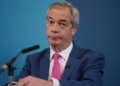
Farage addressed supporters at a rally in Romford, insisting he felt no anxiety about internal rivalries. He said he was relieved others were stepping forward to lead major policy areas. According to those present, he framed the development as evidence that Reform UK is evolving beyond a one-person project. The creation of a clear Reform Chancellor role plays directly into that narrative. It signals institutional maturity and ambition to govern rather than merely campaign.
Political analysts suggest that the move may also be timed to respond to shifting poll numbers. Recent surveys, including one conducted by YouGov, show Reform UK’s lead over Labour narrowing. While still competitive, the margin has tightened amid turbulence within the governing party and high-profile departures from Downing Street. Establishing a named Reform Chancellor could help reassure undecided voters that the party possesses credible economic leadership. In British politics, financial stewardship remains a decisive factor.
Jenrick himself has been cautious in public remarks. He previously denied that any formal offer had been made before his defection from the Conservatives. When pressed on recent reports, he expressed satisfaction with his position but declined to confirm specific details. That restraint reflects an understanding of the sensitivity surrounding internal party expectations. If he accepts the Reform Chancellor title, it will mark a striking transformation from mainstream cabinet minister to figurehead of an insurgent opposition movement.
The reaction among Conservative MPs has been mixed. Some privately argue that Jenrick’s departure symbolises ideological fragmentation within their own ranks. Others dismiss the development as political theatre. Labour figures, meanwhile, have criticised Reform UK’s policy platform as unrealistic and divisive. They contend that reshuffling titles does not equate to credible governance. Yet the optics of a defined Reform Chancellor could complicate that critique, especially if Jenrick articulates detailed fiscal proposals.
Economic policy is likely to become a central battlefield. Britain continues to grapple with inflationary pressures, sluggish growth and strained public services. Voters remain sensitive to taxation levels and cost-of-living concerns. By positioning a seasoned politician as Reform Chancellor, Farage appears to be acknowledging that slogans alone will not suffice. The party must outline concrete spending priorities and revenue strategies if it aims to convert polling momentum into seats.

The symbolism of a “great office of state” within Reform UK also carries strategic intent. Reports suggest Farage may introduce a newly conceptualised role alongside traditional institutions such as the Treasury and Home Office. While this structure holds no constitutional authority, it serves as messaging. It presents the party as a government in waiting. The Reform Chancellor would therefore occupy not merely a spokesperson role but a symbolic pillar of that projected administration.
Supporters argue that diversifying leadership strengthens resilience. They claim it encourages accountability and collective ownership of policy direction. Critics counter that internal tensions could surface if expectations clash. Richard Tice has previously hinted that his business background positioned him naturally for a senior economic brief. Although he remains influential, the allocation of responsibilities to Jenrick alters the internal hierarchy. How smoothly this transition unfolds will shape perceptions of unity.
Farage’s calculation may ultimately hinge on voter psychology. British electorates often favour parties that demonstrate organisational coherence. By clarifying who handles which portfolio, Reform UK attempts to mirror established parliamentary traditions. The Reform Chancellor label, in particular, resonates because it invokes fiscal seriousness. Whether that symbolism translates into broader trust remains uncertain.
As the announcement approaches, Westminster waits for confirmation. If Jenrick formally steps into the Reform Chancellor role, it will mark one of the most notable political shifts of the year. It underscores Reform UK’s ambition to transition from protest movement to structured contender. The coming weeks will reveal whether this strategic reshuffle consolidates support or intensifies scrutiny. What is clear is that Farage intends to project confidence and readiness for higher office.
Related News:
 British Woman in Iran ‘Losing Hope’ Amid Ongoing Detention
 BBC Journalist Held and Interrogated in Vietnam
 Green Party Surges Past Labour in Latest UK Poll
 Celebrities and Charities Demand UK Government Act on Child Poverty
 Trump’s UK Ambassador Urges North Sea Drilling to Strengthen US Ties
 FBI Director Kash Patel Defends Girlfriend Amid Government Jet Claims
 French Taxi Driver Cleared in David Lammy Theft Case After Fare Dispute
 Rachel Reeves Set to Break Labour Pledge and Raise Income Tax
 MPs Press Rachel Reeves to Hike Gambling Taxes
 Boris Johnson accused of undermining BBC leadership
 ‘Reckless’ cuts to victims’ services will cost more than they save
 Millionaires group urge Reeves to introduce wealth tax to ‘lift kids out of poverty’
 Starmer Faces Growing Dissent as Labour MPs Weigh Leadership Challenge
 Reeves rejects £1bn plea for NHS redundancy payouts
 Farage appointee to lead Reform youth accused of anti-British views
 Politics latest: Starmer ‘will fight any leadership coup’ as Streeting denies attempt to oust Labour PM
 PM Condemns Leaks, Vows Loyalty to Ministers and Stability
 Major Rent Reform Ends No-Fault Evictions in England
 Peers Flood Assisted Dying Bill with 942 Amendments
 England’s Special Needs Support Faces Breaking Point
 MoD warned over Excel risks before Afghan data breach
 UK Asylum Overhaul Sparks Debate Over Human Rights and Deportations
 UK Asylum Reforms: Temporary Refugee Status and Faster Deportations
 UK Candidate Moved to Safe House After Election Threats
 Mahmood Defends Tough Overhaul of UK Asylum System
 UK Warns China After MI5 Issues Espionage Alert
 Westminster Advances Legacy Bill Amid Criticism
 UK Vulnerable to Attack, Defence Committee Finds
 Labour Faces Historic Decline in Wales
 Rama Rebukes Mahmood for Targeting Albanian Families
 PM Highlights UK Business at G20 in South Africa
 Kate Forbes: Motherhood Harder Than Politics
 Welsh Government Christmas 2020 Lockdown Criticised
 Most Tories Expect to Support a Farage-Led Government
 Labour MP claims devolution bill is ‘blatant discrimination’ against Cornwall
 Millions Face Higher Taxes Under Reeves New Budget
 Peers Get Extra Time to Debate Assisted Dying Bill
 Planned Palestinian Flag Raising at Belfast City Hall Faces Delay Amid Legal Concerns
 Government righting decades-old injustice for miners
 Starmer Says Labour’s Economic Plan Needs Years to Deliver
 UK delays ruling on China embassy plan until January
 Culture secretary to review Telegraph takeover by Daily Mail owner
 Andy Burnham Apologises for Past LGBTQ+ Police Discrimination
 Reeves Slams Farage Over Two-Child Benefit Cap Opposition
 Plans to Limit Jury Trials Face Retreat After Mounting Opposition
 Jenrick Reform defection deepens Tory civil war
 China Dependence Threatens UK Energy Supply Chains and Jobs
 Right Must Unite After Jenrick Defection, Urges Rees-Mogg
 UK Ministers Drop Foreign Student Targets for Global Education Push
 MPs warn AI financial risks threaten UK stability
 MPs warn AI financial risks threaten UK stability
 No Gas Boiler Ban as UK Warm Homes Plan Backs Heat Pumps
 Hugh Grant Joins Call for Under-16 Social Media Ban in UK
 Shinzo Abe’s killer receives life sentence in Japan
 US Africa aid remarks spark anger after leaked State email
 Lords Vote Piles Pressure on Starmer Over Social Media Ban
 Planned Troubles Board Game Sparks Outrage in Northern Ireland
 Reform UK Health Plan ‘Would Cost £1.7bn’, Streeting Says
 Police response times face strict new national limits
 Labour policing overhaul sparks fears over growing central control
 Tories criticised after Braverman defection sparks mental health row
 Burnham Westminster return hopes fade amid Labour rift
 Starmer warns of toxic division politics in Reform challenge
 Starmer China visit raises human rights pressure on Beijing
 Labour Must Revive High Streets to Avoid Election Collapse
 Conservative Party Rejects Centrism Under Badenoch’s Leadership
 Calls Grow for King Charles to Apologise for Crown’s Role in Slavery
 Starmer Signals UK Return to EU Defence Pact Talks
 Starmer crisis deepens as Labour MPs turn on PM
 Palantir contracts face UK halt calls over transparency
 Labour Thinktank Row Deepens Over Journalist Probe Claims
 Morgan McSweeney downfall shocks Labour leadership
 Sarwar call shakes Labour as No 10 calms fears
 Starmer Aide Loses Lords Role in Doyle Whip Row
 Labour Lord Doyle Apologises Over Paedophile Ties in Political Storm
 Palestine Action Verdict Sparks Debate on Activist Tactics
 Cabinet Secretary Shake-Up Triggers Due Diligence Warning
 Starmer Faces Inquiry Calls Over Thinktank Probe
 Royal Mail Delivery Crisis Deepens Amid Weather Chaos
 Labour Together probe scandal sparks fresh Cabinet Office investigation