Published: 18 February 2026. The English Chronicle Desk. The English Chronicle Online.
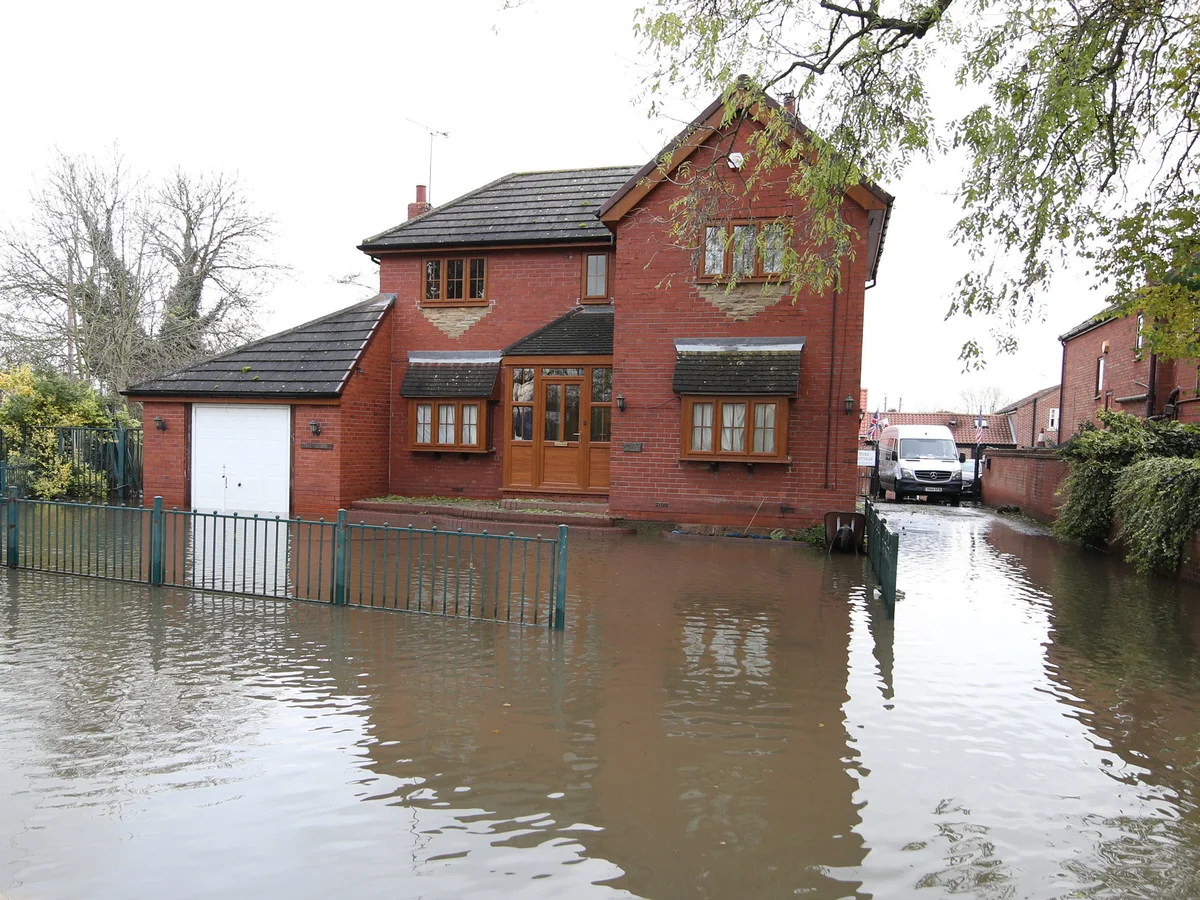
One in nine newly built properties across England now stand in areas vulnerable to flood risk homes, according to newly released data. The findings have intensified debate over national planning policy as ministers press ahead with ambitious housing targets. Verified figures drawn from industry and mapping sources show a clear upward trend in construction within medium and high flood zones. The evidence arrives at a sensitive moment for the government, which faces mounting pressure to balance development needs against climate resilience.
Research published by Aviva reveals that of 396,602 new homes recorded by Ordnance Survey between 2022 and 2024, 43,937 were built in areas classified as medium or high flood risk. Overall, 26 percent of the new properties face some level of potential flooding. The proportion represents a significant rise compared with the previous decade. Earlier assessments showed that between 2013 and 2022, one in 13 new homes were constructed in potential flood zones. The latest figures therefore mark a sharp acceleration in the creation of flood risk homes.
The analysis has been cross-referenced with the latest flood risk assessments from the Environment Agency. It highlights growing exposure in parts of Greater London and Essex, where 32 percent of newly built properties fall into at-risk categories. Regions including Lincolnshire, East Yorkshire, and parts of the North West also show elevated levels. By contrast, the east of England recorded the lowest proportion of new at-risk homes at 2 percent. These regional contrasts underline how unevenly the issue of flood risk homes is distributed across the country.

Experts warn that the climate emergency is reshaping long-standing assumptions about safe land. More intense rainfall events and rising river levels have already tested flood defences in several urban centres. Emma Howard Boyd, former chair of the Environment Agency and now a climate adviser to Aviva, cautioned that present housing ambitions may unintentionally increase exposure. She stressed that departments responsible for housing and environmental protection must work closely together. Without coordinated action, today’s developments could become tomorrow’s costly liabilities.
Government policy currently aims to deliver 1.5 million homes during this parliamentary term. Ministers argue that safety remains central to planning reforms. A spokesperson insisted that development should not proceed where it would be unsafe due to flood conditions. Officials also point to a record £10.5 billion investment programme for flood protection projects. These schemes are intended to benefit nearly 900,000 properties by 2036. However, insurers and environmental groups question whether current safeguards sufficiently address the surge in flood risk homes.
Aviva’s modelling suggests that by 2050, the exposure may deepen further. The insurer estimates that 15 percent of homes built between 2022 and 2024 could fall into medium or high-risk categories within 25 years. Nearly 30 percent may face some form of flooding threat as weather extremes intensify. Such projections reflect wider scientific consensus on increased rainfall volatility. They also reinforce concern that flood risk homes may strain both homeowners and public finances in coming decades.
Insurance data provides a stark financial perspective. The Association of British Insurers reported that domestic flood claims rose by 38 percent last year, reaching £312 million. The average payout to a homeowner climbed by 60 percent, hitting £30,000. Across 2025, insurers paid out £1.2 billion in weather-related property claims. These figures illustrate the real economic consequences behind the statistics. They also explain why the industry is urging stronger planning restrictions around flood risk homes.
One complicating factor involves the government-backed Flood Re scheme. Designed to keep insurance affordable in high-risk areas, Flood Re excludes homes built after 2009. The policy was introduced to discourage fresh development in flood-prone locations. Yet the new data indicates that construction in such areas has continued. Jason Storah, chief executive of UK and Ireland general insurance at Aviva, argued that planning frameworks must create a presumption against high-risk development. He also called for mandatory resilience measures in building regulations.
Surface water flooding poses a particular challenge. Unlike river or coastal floods, surface water events can be harder to predict. They often occur after intense rainfall overwhelms drainage systems. In urban districts with dense development, even modest storms can trigger sudden inundation. As housing density increases, impermeable surfaces multiply. This dynamic further heightens the vulnerability of flood risk homes, especially in expanding commuter belts around major cities.
The social dimension of the crisis is already visible in several communities. In Ynysybwl, South Wales, residents of a repeatedly flooded terrace accepted council buyouts after years of disruption. In Tenbury Wells, Worcestershire, repeated floods have prompted some families to relocate. Although these examples lie outside England’s newest developments, they demonstrate the lived reality behind the projections. As extreme weather becomes more frequent, confidence in property security may weaken.
London’s flood defences have also come under scrutiny. The Thames Barrier has protected the capital for decades, yet experts argue that upgrades will be required to cope with rising sea levels. While major infrastructure offers protection at scale, smaller developments often depend on local mitigation measures. The debate therefore extends beyond headline statistics to questions of long-term resilience design.
Critics of the government’s position argue that headline housing targets risk overshadowing environmental caution. They contend that planning authorities sometimes face conflicting priorities. On one hand, councils must meet housing quotas. On the other, they must heed flood risk guidance. Balancing these demands requires detailed local assessments and transparent decision-making. Failure to strike that balance may embed future vulnerability into the national housing stock.

Ministers maintain that current data may not fully account for existing flood defences. Aviva disputes this claim, stating that its modelling does include protective infrastructure. The disagreement reflects broader tensions between public and private sector interpretations of risk. Ultimately, both sides acknowledge that climate trends are altering baseline assumptions.
For prospective homeowners, the implications are immediate. Properties built in recent years do not qualify for Flood Re support. As a result, insurance premiums in certain postcodes can be significantly higher. In some cases, coverage may prove difficult to secure. These financial realities add another layer of complexity to the discussion about flood risk homes and sustainable planning.
As England grapples with housing shortages, the path forward remains contested. Delivering affordable homes is a political and social imperative. Yet the evidence suggests that environmental risk cannot remain secondary. The rise in flood risk homes presents a long-term challenge that intersects with climate adaptation, infrastructure investment, and consumer protection. Policymakers now face a critical choice about how to reconcile urgent development with responsible stewardship of land.
Related News:
 Norfolk Coastal Graves at Risk as Erosion Deepens Family Anguish
 Winter plant bloom signals climate breakdown in UK
 Dog Food Emissions: 1% of UK Greenhouse Gas Revealed
 Storm Goretti leaves Cornwall homes without power
 Kent Residents Continue Facing Water Supply Disruptions
 Water firms may avoid fines under UK water reform plan
 No Gas Boiler Ban as UK Warm Homes Plan Backs Heat Pumps
 Judi Dench Champions Fight to Save London’s Green Spaces
 UK joins North Sea wind grid pact with nine European nations
 Devon hosts first high-density hydro power system
 Storm Chandra floods Somerset, triggers major incident declaration
 Storm Chandra flooding leaves England on high alert
 UK Pfas Action Plan Faces Criticism From Environmentalists
 Wigan Dump Crisis Sparks Health and Safety Alarm
 Fish disco plan could save 90% of fish at Hinkley C
 Peterborough Mosques Tighten Security After Attack
 Reeves Faces Setback as Labour May Miss Homes Target
 Hospice Cuts Raise Alarm Across England Amid Funding Crisis
 Kate Winslet to Narrate Film Highlighting King’s Environmental Mission
 Green Party Surges Past Labour in Latest UK Poll
 Trump’s UK Ambassador Urges North Sea Drilling to Strengthen US Ties
 Children to Learn Local History in Major Curriculum Overhaul
 French Taxi Driver Cleared in David Lammy Theft Case After Fare Dispute
 UK Bans Fake Numbers: Scammers Lose Their Trick
 Prince William Plants Trees with Brazil’s Nature Heroes
M&S Profits More Than Halve After Cyber-Attack
Prince William Plants Trees with Brazil’s Nature Heroes
M&S Profits More Than Halve After Cyber-Attack
 Kent village told to remove flags before Christmas lights go up
 Patients to Test Health at Home to Ease NHS Winter Pressure
 King Charles to Lead Nation in Remembrance Sunday Service
 Palace May Restore Hyphen to Andrew Mountbatten-Windsor’s Name
 Millionaires group urge Reeves to introduce wealth tax to ‘lift kids out of poverty’
 Starmer Faces Growing Dissent as Labour MPs Weigh Leadership Challenge
 Shouting Works Best to Deter Gulls, UK Study Finds
 Reeves rejects £1bn plea for NHS redundancy payouts
 Northern Lights may illuminate UK skies this week
 PM Condemns Leaks, Vows Loyalty to Ministers and Stability
 Son Reveals UK Couple in Iran Resort to Hunger Strike for Help
 Major Rent Reform Ends No-Fault Evictions in England
 Criminal Gangs Pose as Truckers to Hijack UK Supply Chains
 Stroke Patient Mistaken for Drunk, Care Delayed
 Van Dwellers Face Eviction After Park Misuse Sparks Outcry
 Royal Navy Shadows Russian Warships Entering the Channel
 Inside the Helpline Protecting Missing Children in the UK
 Boots Showstopper Beauty Bundle Outshines Many Advent Calendars This Holiday Season
 Labour’s ‘blinkered’ drive to build risks pushing wildlife to point of no return, nature experts warn
 PlayStation PS5 Deals Hit Lowest Prices Ahead of Black Friday
 Five-Year-Old Dies After Rare Tonsil Surgery Complication
 Starmer Says Labour’s Economic Plan Needs Years to Deliver
 More Patients Now Contacting GPs Online, Data Shows
 ‘Extinct’ Antelope Returns to Sahara, Bringing Hope
 UK unemployment rises to four-year high of 5.1% before budget
 Wiltshire Police Use Lasso to Catch Rampaging Village Goat
 Children to Receive Home Vaccines as England Acts
 Local Fish Could Boost UK Health and Economy Significantly
 Cambridge College Faces Backlash Over Private School Recruitment
 NHS Violence Crisis: Staff Face Daily Assaults
 Celebrity Campaign Highlights SMA Screening Failures
 Bereaved Fathers Gain New Paternity Leave Rights in UK
 New Documentary Examines Teen’s Zombie Knife Murder
 Woman Jailed for Life After Killing E-Bike Rider in Tragic Mistaken Identity Case
 Right Must Unite After Jenrick Defection, Urges Rees-Mogg
 UK Ministers Drop Foreign Student Targets for Global Education Push
 UK Glaucoma Rise Signals Looming Eye Health Crisis by 2060
 Shinzo Abe’s killer receives life sentence in Japan
 Police response times face strict new national limits
 Edinburgh, Glasgow Lead UK Nightlife Hotspots, Uber Data
 Labour policing overhaul sparks fears over growing central control
 US-Style Pickup Trucks Surge on UK Roads
 Pornhub blocks new UK users over age checks dispute
 Starmer warns of toxic division politics in Reform challenge
 UK New Car Discounts Near £6,000 as Prices Are Slashed
 Pneumonia Surge Pushes England Emergency Cases Higher
 What is Groundwater Flooding and Why Dorset is Seeing ‘Historical Highs’
 Palantir contracts face UK halt calls over transparency
 Teen Girl Chased in Broad Daylight in Ipswich
 Send spending gap leaves deprived areas behind
 Cabinet Secretary Shake-Up Triggers Due Diligence Warning
 Hidden Crisis: Domestic Abuse Suicide Toll in UK
 Farage to Name Jenrick as Reform Chancellor Pick
 UK MPs Demand Ban on Brazilian Butt Lifts