Published: 19 February 2026. The English Chronicle Desk. The English Chronicle Online
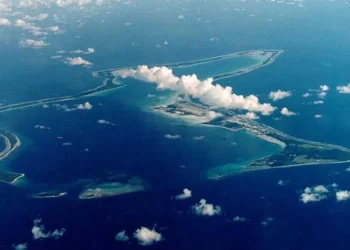
The British government has issued a stark warning to a group of Chagos Islanders who recently returned to their homeland, telling them they must leave the islands immediately or face legal consequences, in a dramatic escalation of tensions surrounding the disputed territory’s future. This comes after four Chagossians landed on one of the remote atolls in the Indian Ocean in an attempt to establish a permanent settlement, a move described by government officials as unlawful and unsafe under current arrangements.

The group, led by activist Misley Mandarin, touched down on Île du Coin in the Chagos Archipelago, claiming they were asserting their right to return to the land from which their families were forcibly removed in the 1960s and 1970s. The British Government — which is in the process of transferring sovereignty of the Chagos Islands to Mauritius under a 2025 agreement — said the landing was “illegal” and raised serious safety concerns for anyone on the uninhabited islands.
A Foreign Office spokesperson said that although the UK recognises the historical injustice suffered by the Chagossian people, the islands — apart from the strategically important Diego Garcia air base — are currently uninhabited and challenging to live on without significant infrastructure. Officials urged the returning islanders to leave immediately, warning they could be prosecuted for trespass or other offences if they remain.
The return effort has been framed by Chagossian campaigners as an act of protest against the sovereignty deal, which will see the archipelago handed over to Mauritius while allowing Britain to retain the military base on Diego Garcia under a long‑term agreement. Mr Mandarin and others argue that the settlement is being transferred without genuine consultation with the people whose ancestors lived there for generations, and that their presence demonstrates the islands are not “empty” but belong to a displaced community.

The UK‑Mauritius agreement has been controversial for years, with critics saying it fails to address the rights of the displaced Chagossians and could lock them out of lands they were forced to leave six decades ago. A United Nations body has also urged both governments not to ratify the treaty, warning it may perpetuate violations of the islanders’ rights and leave their cultural heritage unprotected.
As diplomats prepare for further discussion of the islands’ legal status and long‑term governance, the immediate standoff between returning Chagossians and British officials highlights how unresolved grievances from the past continue to shape one of the UK’s most sensitive overseas territory disputes.
Related News:
 Emails Show Epstein Funded Mandelson’s Husband After Jail
 Thousands Protest ICE in New York Against Trump Deportation Campaign
 Sexually Explicit Letters Target Hong Kong Exiles in UK, Australia
 Britain Demands Israel Reverse Ban on Aid Groups
 Grief, Fear and Fury: Mothers Unite to End Israeli-Palestinian Violence
 Shock US Raid: Maduro Pleads Not Guilty in Manhattan Court
 UK and France Agree Troop Deployment Plan for Ukraine
 EU Weakens as Trump Targets Venezuela and Greenland
 Israel Dossier Sparks Australian Political Interference Concern
 Venezuela Oil Deal Opens Tensions with US Control
 Gambia Supreme Court Hears Case to Overturn FGM Ban
 Iran Leader Blames Protesters, Says They Serve Trump
 US Citizens Warned to Venezuela Flee Amid Paramilitary Threats
 Trump Says US Will Act on Greenland ‘Whether They Like It or Not’
 Gulf states warn Trump Iran strikes risk wider Middle East war
 Machado Trump medal gesture reshapes Venezuela power struggle
 Greenland defence seen as shared Nato duty amid troop arrivals
 Gulf states warn Trump Iran strikes risk wider Middle East war
 Trump Receives Machado’s Nobel Medal in White House Meeting
 Iran unrest slows under brutal crackdown and global tensions
 Syria President Declares Victory as Ceasefire Reached with SDF
 US Considers Asylum for British Jews Amid Rising Antisemitism
 Russia Strikes Kyiv and Kharkiv as Peace Talks Enter Day Two
 Iran Death Toll Crisis Exposed: Bodies, Mass Graves, and Concealment
 Files Link Andrew to Epstein Dinner After Prison Release
 Thousands Protest ICE Operations in Nationwide US Day of Action
 Epstein Files Reveal Trump Officials’ Emails with Financier
 US Must Be Prudent When Supplying Arms to Taiwan, Xi Tells Trump
 Fears of New Arms Race as US-Russia Nuclear Weapons Treaty Expires
 US Military Says Two Killed in Strike on Alleged Drug Boat in Eastern Pacific
 Trump Endorses Japan’s Takaichi Ahead of Snap Election
 Is Bangladesh’s Youth Turning Against India? — A Deepening Debate
 Hong Kong Court Jails Pro-Democracy Media Tycoon Jimmy Lai for 20 Years
 Venezuela’s Opposition Says Party Leader Kidnapped Hours After Being Freed
 Christchurch Shooter Seeks to Overturn Guilty Plea in Appeals Court
 Sydney Protest Pepper Spray Clash During Herzog Visit
 Trump Bizarrely Claims China Will ‘Terminate All Ice Hockey in Canada’ in Threat to Block New Border Bridge
 Russia Rages “Now Is the Time to Strike” as UK Faces Fresh WW3 Nuclear Threats
 Concerns rise for Canberra boy amid Iran detention fears
 The Martin Luther King Protégé Who Helped Reshape America
 US Says It “Supports” UK Chagos Islands Deal
 ‘I Would Scream in My Sleep’: Alawite Women from Syria Tell of Kidnap and Rape
 Iran Says ‘Guiding Principles’ Agreed With US at Nuclear Talks
 Ukraine Peace Talks End in Acrimony After Two Hours
 UK Must Act with Courage and Clarity on Israel-Palestine Conflict, Says Foreign Affairs Committee Report
 Tottenham Takes On Newcastle
 Radioactive Leak at UK’s Nuclear Warhead Base Sparks Outcry Over Safety and Secrecy
 Terence Stamp, ’60s British Film Legend and Star of Superman, Dies at 87
 Hong Kong Summons UK and Australian Envoys Following Asylum Grants to Democracy Activists
 Is the UK Ready to Put Boots on the Ground in Ukraine? Assessing Military Capacity and Challenges
 Channel Crossings Surge: Over 1,000 People Arrive in the UK in Small Boats in a Single Day
 Macron Phones Trump Over Traffic Jam in New York
 Comey Indictment Deepens Fears of Political Retribution Under Trump
 Yvette Cooper Signals Global Momentum Towards Gaza Peace Deal Amid Humanitarian Crisis
 “It Was Very Tough, But I Love Life”: Former Israeli Hostage Rebuilds Life After Family Killed by Hamas
 Chaos at Ibrox as Martin’s Rangers Era Comes to an End
 Trump Claims Modi Has Agreed to Halt Russian Oil Imports Amid Heightened US Pressure
 Russia’s Latest Push to Win US Favors Shows Deep Desperation
 BBC to Apologise Over Edited Trump Speech Amid Backlash
 Britain deploys RAF specialists to assist Belgium with drone threats
 Trump Urges Herzog to Grant Netanyahu Full Pardon
 Indian authorities demolish Kashmir home linked to Red Fort blast
 Greene Pushes Epstein Files Amid Trump Fallout
 Zelenskyy Signs Fighter Jet Deal Amid Russian Drone Attacks
 Shadow Fleet at Sea: Europe’s Battle Against Illicit Oil Shipping
 US Suspends Afghan Immigration After White House Shooting
 ‘Extinct’ Antelope Returns to Sahara, Bringing Hope
 Trump Weighs Response to Iran Crackdown as Tehran Says Communication Open With US
 US Clears Nvidia AI Chip Sales to China in Policy Shift
 US Senate rejects resolution limiting Trump military powers
 Sydney Shark Attack Surge Shocks Australia Beaches
 Shinzo Abe’s killer receives life sentence in Japan
 EU Says US Ties Have Suffered ‘Big Blow’ After Greenland Crisis
 China General Under Investigation Amid Leadership Purge
 UK New Car Discounts Near £6,000 as Prices Are Slashed
 Portugal Election Delivers Socialist Win as Far Right Surges
 Australian Families Leave Syrian Camp for Home
 Starmer Weighs Fast-Tracking Defence Boost
 Snow and Rain Warnings as Cold Snap Continues in the UK
 Nine Arrested in France Over Death of Far‑Right Student