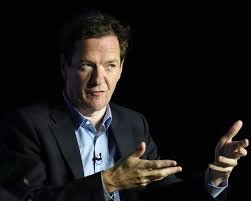
Published: 19 February 2026. The English Chronicle Desk. The English Chronicle Online.
Former chancellor George Osborne has issued a stark AI FOMO warning to world leaders. He said nations that hesitate to adopt advanced artificial intelligence risk falling behind economically and strategically. Speaking at a major summit in Delhi, he urged governments not to miss the AI revolution. The AI FOMO warning comes as competition intensifies between global technology powers. Osborne now works for OpenAI, the company behind some of the world’s most advanced AI systems.
Osborne addressed delegates at the fourth global AI summit hosted by India. The gathering was led by Prime Minister Narendra Modi in New Delhi. Leaders from across the global south met to discuss how artificial intelligence could transform agriculture, healthcare, and education. The AI FOMO warning framed the debate in urgent economic terms. According to Osborne, countries that delay widespread AI adoption could become weaker and poorer.
He described a growing fear among many governments that they may miss out on transformative growth. That fear, he said, reflects the scale of technological change already underway. Osborne argued that AI systems developed in the United States and China are advancing rapidly. Those systems, he suggested, are shaping the next industrial revolution. The AI FOMO warning emphasised that hesitation could cost nations talent and investment.

Osborne recently joined OpenAI to lead its new “for countries” programme. The San Francisco company is now valued at around $500 billion. Its tools are used by businesses, universities, and governments worldwide. By placing himself at the centre of global AI diplomacy, Osborne has embraced a new international role. His message in Delhi was clear and direct: do not be left behind.
He warned that countries slow to deploy AI could see their workforce drift abroad. Skilled professionals may seek opportunities in nations with stronger AI ecosystems. That movement, he said, could erode domestic growth and competitiveness. The AI FOMO warning therefore touches both economic policy and national security. For smaller economies, the stakes may feel particularly high.
Osborne framed the geopolitical landscape as a contest between two technological superpowers. The United States and China have produced the most powerful AI models so far. Washington’s strategy emphasises innovation and private sector leadership. Beijing has invested heavily in state-backed AI infrastructure. Many other countries, he argued, must now decide how to engage with these systems.
The summit in Delhi followed earlier editions in the United Kingdom, South Korea, and France. This year’s focus centred on delivering AI benefits to developing economies. Delegates discussed expanding AI tools into regional languages. They explored using predictive models to improve crop yields and public health systems. Yet the AI FOMO warning hovered over those practical discussions.
While enthusiasm for AI’s promise was evident, concerns about safety also surfaced. Some experts argue that regulation has not kept pace with rapid innovation. In the United States, debate continues over how much oversight is necessary. White House officials have signalled opposition to excessive regulatory burdens. The tension between speed and safety formed a backdrop to the summit.
Among American delegates was Sriram Krishnan, a senior adviser on artificial intelligence. He stressed that the United States aims for global leadership in AI. His comments underscored Washington’s determination to shape international standards. He also criticised European regulatory frameworks as overly restrictive. That view contrasts with approaches emerging from Brussels and other capitals.
The European Union has enacted comprehensive AI legislation in recent years. Critics argue that strict rules may deter startups and slow innovation. Supporters insist strong safeguards protect citizens and build trust. Although the EU was not central to the Delhi summit, its regulatory stance influenced discussion. The AI FOMO warning intersected with questions about how much control governments should exercise.
Not all participants accepted Osborne’s framing of a binary choice. Mark Surman, head of Mozilla, challenged the idea that only two countries can build powerful systems. He argued that such narratives benefit major corporations. According to Surman, innovation can flourish beyond established superpowers. His remarks reflected a desire for a more decentralised AI future.
African representatives voiced similar ambitions during the summit discussions. Kevin Degila, who oversees AI and data for Benin’s digital agency, described local initiatives. He explained that dozens of languages are spoken across his country. Building AI tools that understand those languages remains a priority. The AI FOMO warning, he suggested, should not translate into dependence.
Degila said his team combines American and Chinese technologies with domestic datasets. Their goal is to design AI services tailored to local farmers and communities. He noted that global companies often fail to reach rural populations effectively. For him, collaboration across Africa offers an alternative path. That approach seeks empowerment rather than reliance.
Rwanda’s minister of ICT and innovation, Paula Ingabire, echoed similar caution. She said her country welcomes partnerships with global AI firms. However, she stressed that such partnerships should not create permanent dependency. Rwanda aims to strengthen its own capabilities over time. The AI FOMO warning thus sparked debate about sovereignty and control.
Also present in Delhi was former UK prime minister Rishi Sunak. Sunak now advises the AI company Anthropic and works closely with Microsoft. He encouraged political leaders to take personal responsibility for AI strategy. In his view, artificial intelligence is not a distant issue. It demands immediate and centralised government attention.
Sunak argued that prime ministers must treat AI as a priority today. He warned that delay could squander economic opportunities. By placing AI at the heart of government, he believes nations can maximise benefits. His remarks aligned in part with the AI FOMO warning delivered by Osborne. Both men urged decisive leadership, though from different institutional perspectives.
The summit highlighted a wider global crossroads. Artificial intelligence promises productivity gains and social improvements. Yet it also raises profound ethical and security questions. Countries in the global south seek access without surrendering autonomy. Wealthier nations compete for dominance while navigating regulatory dilemmas.

Osborne’s intervention reflects the shifting role of former politicians in technology diplomacy. His experience in government gives weight to his arguments. At the same time, his position at OpenAI links him to corporate interests. Observers note that global AI policy increasingly blurs lines between public service and private enterprise.
For the United Kingdom, these debates carry particular resonance. Britain hosted a previous AI safety summit and continues to invest heavily in research. Policymakers must balance innovation with safeguards that protect citizens. The AI FOMO warning serves as both encouragement and caution. It reminds leaders that technological change rarely waits for consensus.
As the Delhi summit concluded, no single path emerged for participating nations. Some will deepen ties with American firms. Others may seek regional alliances or hybrid solutions. What remains clear is that artificial intelligence now shapes economic destiny. Whether framed as opportunity or risk, the AI FOMO warning captures a defining moment.
The coming years will test how effectively governments respond. Investment decisions made today could influence prosperity for decades. Leaders must weigh speed against security and ambition against autonomy. In that delicate balance lies the future of global competition. Osborne’s message, delivered with urgency, ensures the debate will not fade quickly.
Related News:
 Britain deploys RAF specialists to assist Belgium with drone threats
 Night after night, Belgium is on high alert.
 Ukraine to Get 100 French Rafale Jets in Historic Deal
 BP’s Influence Sparks Controversy in UK STEM Education
MPs warn AI financial risks threaten UK stability
BP’s Influence Sparks Controversy in UK STEM Education
MPs warn AI financial risks threaten UK stability
 MPs warn AI financial risks threaten UK stability
 Starmer Targets AI Chatbots Over Child Safety Concerns
 Yvette Cooper Backs Digital ID Plan for UK Teens
 Reform UK candidate fined £19,000 after using AI-generated cases to challenge election
 Virgin Trains Moves Closer to Challenging Eurostar Monopoly
 Green Party Surges Past Labour in Latest UK Poll
 Army Officers Orders to Cut Ties with Men-Only Clubs
 Trump’s UK Ambassador Urges North Sea Drilling to Strengthen US Ties
 French Taxi Driver Cleared in David Lammy Theft Case After Fare Dispute
 UK Bans Fake Numbers: Scammers Lose Their Trick
 Vibe coding’ named Collins dictionary’s word of the year
 Labour immigration crackdown could cost UK £4.4bn
 Patients to Test Health at Home to Ease NHS Winter Pressure
BBC to Apologise Over Edited Trump Speech Amid Backlash
Patients to Test Health at Home to Ease NHS Winter Pressure
BBC to Apologise Over Edited Trump Speech Amid Backlash
 Millionaires group urge Reeves to introduce wealth tax to ‘lift kids out of poverty’
 Starmer Faces Growing Dissent as Labour MPs Weigh Leadership Challenge
 Reeves rejects £1bn plea for NHS redundancy payouts
 Stop using ChatGPT to write speeches, AI minister tells MPs
 Northern Lights may illuminate UK skies this week
 PM Condemns Leaks, Vows Loyalty to Ministers and Stability
 Major Rent Reform Ends No-Fault Evictions in England
 Senator John Fetterman Hospitalized After Fall from Heart Flare-Up, Keeps Sense of Humor
 New AI tool could cut wasted efforts in organ transplants
 Greene Pushes Epstein Files Amid Trump Fallout
 Trump Deploys DHS to Charlotte in Major Arrest Operation
 December Run-Off in Chile as Election Produces No Winner
 Canada Passes Carney’s First Budget in Tight Parliamentary Vote
 Sundar Pichai Cautions on AI Hype and Market Risks
 Google Chief Urges Caution: Don’t Trust AI Blindly
 Shadow Fleet at Sea: Europe’s Battle Against Illicit Oil Shipping
 Most Tories Expect to Support a Farage-Led Government
 Georgians Defy Government Crackdown After Year of Protests
 US National Guard Member Killed in DC Shooting
 ICC to Rule on Duterte’s Provisional Release
 Starmer Says Labour’s Economic Plan Needs Years to Deliver
 Khaleda Zia Death in Bangladesh: First Female PM Dies at 80
 Russia losses Ukraine war peace talks intensify amid rising deaths
 Albanese Opens Door to Bondi Royal Commission Amid Rising Pressure
 Trump Escalates Minnesota Immigration Surge Amid Rising Tensions
 Iran Protesters Defy Crackdown as Violent Clashes Intensify
 Homeland security agents deployed amid Minneapolis protests
 US Clears Nvidia AI Chip Sales to China in Policy Shift
 Trump Threatens Strong Action If Iran Executes Protesters
 US Senate rejects resolution limiting Trump military powers
 Machado Trump medal gesture reshapes Venezuela power struggle
 Right Must Unite After Jenrick Defection, Urges Rees-Mogg
 Astronomers Prepare for First-Ever Movie of a Black Hole
 EU weighs response amid Greenland tariff crisis with Trump
 UK Ministers Drop Foreign Student Targets for Global Education Push
 No Gas Boiler Ban as UK Warm Homes Plan Backs Heat Pumps
 Shinzo Abe’s killer receives life sentence in Japan
 Sussan Ley leadership milestone shakes Liberal future
 EU Says US Ties Have Suffered ‘Big Blow’ After Greenland Crisis
 Andrew Hastie Emerges as Leadership Rival to Ley
 Satire Can Skewer Trump, But It Won’t Save Democracy
 Police response times face strict new national limits
 Labour policing overhaul sparks fears over growing central control
 Pornhub blocks new UK users over age checks dispute
 Starmer warns of toxic division politics in Reform challenge
 Amazon mistakenly signals new global layoffs to employees
 AI breast screening cuts later cancer diagnoses by 12%, study finds
 Keir Starmer Signals UK China Reset With Xi Visit Possibility
 UK New Car Discounts Near £6,000 as Prices Are Slashed
 Cambridge Faces Scrutiny Over Arms Investment Transparency
 Israel Moves to Bar MSF From Gaza Operations
 Palantir contracts face UK halt calls over transparency
 Most Statin Side-Effects Are Not Caused by Drugs, Study Confirms
 Australia’s Opposition Coalition Reunites After Rift
 BT Names New Openreach Chief Amid Major Fibre Expansion
 Nurses’ families fear breakup under UK immigration crackdown
 Cabinet Secretary Shake-Up Triggers Due Diligence Warning
 Tech Trends Set to Transform Life in 2026
 Australian Families Leave Syrian Camp for Home
 Trump Attacks UK-California Energy Pact
 Farage to Name Jenrick as Reform Chancellor Pick