Published: 19 February 2026. The English Chronicle Desk. The English Chronicle Online.
Tensions over the future of the Chagos Islands have flared again after Donald Trump publicly urged Sir Keir Starmer not to proceed with plans to transfer sovereignty to Mauritius. The intervention has reignited debate in Westminster and Washington about security, sovereignty, and Britain’s global role.
The Chagos Islands sit in the Indian Ocean and remain strategically vital. Under an agreement reached last year, the United Kingdom would cede sovereignty of the British Indian Ocean Territory to Mauritius. In return, Britain would lease Diego Garcia, the largest island, for 99 years to maintain the joint UK-US military base.
For months, the arrangement appeared to enjoy cautious support in Washington. Earlier this month, Mr Trump described the deal as the “best” available option. The US State Department subsequently confirmed its backing for the agreement, signalling formal approval from the administration.
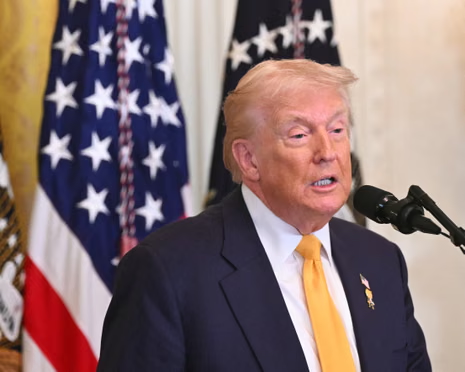
However, that position shifted sharply this week. Posting on his Truth Social platform, Mr Trump warned that Sir Keir was “making a big mistake” by handing over control. He suggested the arrangement risked weakening Western strategic interests in a volatile region.

“Our relationship with the United Kingdom is a strong and powerful one,” he wrote. Yet he argued the Prime Minister was losing control of a critical asset based on what he called questionable claims. The comments have caused fresh uncertainty about Washington’s stance.
Mr Trump also raised the prospect of heightened tensions with Iran. He suggested that, should diplomacy fail, the United States might need to rely on Diego Garcia and RAF Fairford in Gloucestershire. Such remarks underscored the military significance of the Chagos Islands.
He described the proposed lease as “tenuous at best” and warned against relinquishing sovereignty. In his view, permanent British control would better protect allied security interests. The language marked a return to the sharper criticism he voiced last month.
The timing has complicated matters for Sir Keir. Only a day before the social media post, the US Department of State had reiterated its support. Officials in Washington confirmed they backed Britain’s decision to proceed with Mauritius.
Asked whether Mr Trump’s comments represented official policy, White House press secretary Karoline Leavitt left little room for doubt. She told reporters that the post should be taken as the policy of the administration. That clarification has intensified diplomatic scrutiny.
Opposition figures in Britain quickly seized on the development. Priti Patel, the shadow foreign secretary, accused the government of pursuing an “ill-judged” surrender. She argued that repeated public rebukes from Washington represented a humiliation for Downing Street.
Ed Davey, leader of the Liberal Democrats, focused on the inconsistency in American messaging. He said the apparent “flip-flopping” illustrated why relying on Mr Trump’s backing was risky. In his view, Britain should strengthen ties with European partners instead.
The government, however, has remained firm in its position. A Foreign Office spokesperson said the agreement was essential to secure the long-term future of the base. Officials insist the deal is the only viable route to safeguard allied security.
At the centre of the debate lies Diego Garcia. The island has hosted a joint UK-US military facility for decades. Its location allows rapid deployment across the Middle East, East Africa, and South Asia.
Supporters of the deal argue that leasing arrangements preserve operational continuity. They note that the base would remain under joint management despite the sovereignty transfer. In their assessment, practical control matters more than symbolic ownership.
Critics remain unconvinced. They argue that surrendering sovereignty over the Chagos Islands could weaken Britain’s bargaining power in the future. Some also fear it sets a precedent for further territorial concessions.
Beyond geopolitics, the issue carries deep historical scars. Up to 2,000 Chagossians were forcibly removed from the archipelago during the 1960s and 1970s. Many were resettled in Mauritius and the United Kingdom.
For decades, displaced families have campaigned for the right to return. Their struggle has drawn international attention and legal challenges. The sovereignty dispute has therefore always been about more than military strategy.
This week, that human dimension resurfaced dramatically. Four Chagossians landed on Île du Coin, part of the Peros Banhos atoll, in an attempt to complicate the transfer process. Reports suggest more intended to join them in establishing a permanent settlement.
British Indian Ocean Territory officials issued removal orders shortly afterwards. The documents stated the individuals were unlawfully present and would be removed. They warned that returning could result in imprisonment and a substantial fine.
The move has prompted criticism from campaigners. Many argue that those removed were asserting ancestral rights rather than breaking immigration rules. Mauritius, for its part, denies allegations that it has neglected Chagossian interests.
International bodies have also entered the debate. A United Nations committee has urged both governments not to ratify the 2025 agreement. It warned that proceeding could perpetuate historical rights violations.
The diplomatic balancing act is delicate. Britain seeks to comply with international legal opinions favouring Mauritian sovereignty. At the same time, it must reassure Washington that military capabilities will remain intact.
Sir Keir faces pressure on multiple fronts. Domestically, he must defend the decision as pragmatic and lawful. Internationally, he must navigate a US administration that appears divided in tone.
For Mr Trump, the Chagos Islands represent a symbol of strategic resilience. His comments reflect broader scepticism about multilateral compromises. They also resonate with his longstanding emphasis on strength and sovereignty.

Yet analysts note that formal policy remains aligned with the agreement. The State Department’s endorsement has not been withdrawn. That distinction leaves room for diplomatic clarification in coming days.
The controversy also highlights the evolving nature of UK-US relations. While ties remain close, public disagreements have become more visible. Social media interventions can now reshape diplomatic narratives within hours.
As Parliament prepares to scrutinise the agreement further, ministers will emphasise continuity of defence operations. They will argue that leasing Diego Garcia ensures stability for decades. Opponents will counter that sovereignty cannot easily be reclaimed once surrendered.
Ultimately, the future of the Chagos Islands will hinge on ratification and implementation. The agreement aims to close a long-running dispute while preserving strategic assets. Whether it achieves that balance remains contested.
For Chagossian families, however, the debate carries personal weight. Their hopes of return and recognition remain central to any lasting resolution. Without addressing those concerns, sovereignty alone may not settle the issue.
As events unfold, Britain finds itself navigating complex historical, legal, and security currents. The Chagos Islands debate encapsulates the challenges of modern diplomacy. It is a test of alliances, accountability, and political judgement.
Related News:
 British Woman in Iran ‘Losing Hope’ Amid Ongoing Detention
 BBC Journalist Held and Interrogated in Vietnam
 Zohran Mamdani becomes New York City’s first Muslim mayor
Zohran Mamdani names all-female transition team for NYC mayoralty
Zohran Mamdani becomes New York City’s first Muslim mayor
Zohran Mamdani names all-female transition team for NYC mayoralty
 Second world war veterans honoured as King leads Remembrance Sunday
 BBC director-general and news chief resign amid bias row
 Rama Rebukes Mahmood for Targeting Albanian Families
 Russian Vessel Used Lasers on RAF Pilots, UK Claims
 Ireland Boosts Ukraine Aid as Zelensky Visits Dublin
 US Africa aid remarks spark anger after leaked State email
 Starmer China visit raises human rights pressure on Beijing
 UK and EU Signal Fresh Push for Defence Cooperation Talks
 Cory Bernardi joins One Nation for SA election
 Starmer Condemns ‘Depraved’ Russian Strikes on Ukraine
 UK Must Act with Courage and Clarity on Israel-Palestine Conflict, Says Foreign Affairs Committee Report
 Radioactive Leak at UK’s Nuclear Warhead Base Sparks Outcry Over Safety and Secrecy
 Mutual Inconvenience: Why Alaska Was Chosen for the Trump-Putin Summit on Ukraine
 Is the UK Ready to Put Boots on the Ground in Ukraine? Assessing Military Capacity and Challenges
 Thousands Gather in London to Protest Donald Trump’s Second UK State Visit
 A Third of EU Citizens in UK Report Discrimination by Public Bodies Post-Brexit
 Public Trust in SNP Hits Historic Low Amid NHS Concerns
 Johnson Suggests Mandelson Linked to China Spy Controversy
 Rachel Reeves signals welfare reform ahead of key budget
 Green Party Surges Past Labour in Latest UK Poll
 Trump’s UK Ambassador Urges North Sea Drilling to Strengthen US Ties
 French Taxi Driver Cleared in David Lammy Theft Case After Fare Dispute
 Just Stop Oil Protesters Convicted Amid Climate Defence Row
BBC to Apologise Over Edited Trump Speech Amid Backlash
Just Stop Oil Protesters Convicted Amid Climate Defence Row
BBC to Apologise Over Edited Trump Speech Amid Backlash
 Britain deploys RAF specialists to assist Belgium with drone threats
 Palace May Restore Hyphen to Andrew Mountbatten-Windsor’s Name
 Millionaires group urge Reeves to introduce wealth tax to ‘lift kids out of poverty’
 Starmer Faces Growing Dissent as Labour MPs Weigh Leadership Challenge
 Reeves rejects £1bn plea for NHS redundancy payouts
 PM Condemns Leaks, Vows Loyalty to Ministers and Stability
 Major Rent Reform Ends No-Fault Evictions in England
 Peers Flood Assisted Dying Bill with 942 Amendments
 Greene Pushes Epstein Files Amid Trump Fallout
 Trump Deploys DHS to Charlotte in Major Arrest Operation
 December Run-Off in Chile as Election Produces No Winner
 Canada Passes Carney’s First Budget in Tight Parliamentary Vote
 Shadow Fleet at Sea: Europe’s Battle Against Illicit Oil Shipping
 Pentagon Officials in Ukraine to Discuss War End
 Venezuela Threatens Nobel Winner Machado with Fugitive Status
 Royal Navy Shadows Russian Warships Entering the Channel
 Most Tories Expect to Support a Farage-Led Government
 Georgians Defy Government Crackdown After Year of Protests
 Starmer Says Labour’s Economic Plan Needs Years to Deliver
 EU plans $105bn Ukraine aid using frozen Russian assets
 Culture secretary to review Telegraph takeover by Daily Mail owner
 Russia losses Ukraine war peace talks intensify amid rising deaths
 Albanese Opens Door to Bondi Royal Commission Amid Rising Pressure
 Trump Escalates Minnesota Immigration Surge Amid Rising Tensions
 Iran Protesters Defy Crackdown as Violent Clashes Intensify
 Plans to Limit Jury Trials Face Retreat After Mounting Opposition
 Trump Threatens Strong Action If Iran Executes Protesters
 Machado Trump medal gesture reshapes Venezuela power struggle
 Right Must Unite After Jenrick Defection, Urges Rees-Mogg
 EU weighs response amid Greenland tariff crisis with Trump
 UK Ministers Drop Foreign Student Targets for Global Education Push
 MPs warn AI financial risks threaten UK stability
 No Gas Boiler Ban as UK Warm Homes Plan Backs Heat Pumps
 Shinzo Abe’s killer receives life sentence in Japan
 Lords Vote Piles Pressure on Starmer Over Social Media Ban
 EU Says US Ties Have Suffered ‘Big Blow’ After Greenland Crisis
 Andrew Hastie Emerges as Leadership Rival to Ley
 Reform UK Health Plan ‘Would Cost £1.7bn’, Streeting Says
 Police response times face strict new national limits
 Labour policing overhaul sparks fears over growing central control
 Tories criticised after Braverman defection sparks mental health row
 Starmer warns of toxic division politics in Reform challenge
 UK New Car Discounts Near £6,000 as Prices Are Slashed
 Israel Moves to Bar MSF From Gaza Operations
 Palantir contracts face UK halt calls over transparency
 Labour Lord Doyle Apologises Over Paedophile Ties in Political Storm
 Cabinet Secretary Shake-Up Triggers Due Diligence Warning
 Tarique Rahman’s Rise Toward Bangladesh’s Top Job
 Australian Families Leave Syrian Camp for Home
 Starmer Weighs Fast-Tracking Defence Boost
 Trump Attacks UK-California Energy Pact
 Farage to Name Jenrick as Reform Chancellor Pick