Published: 23 February 2026 . The English Chronicle Desk. The English Chronicle Online
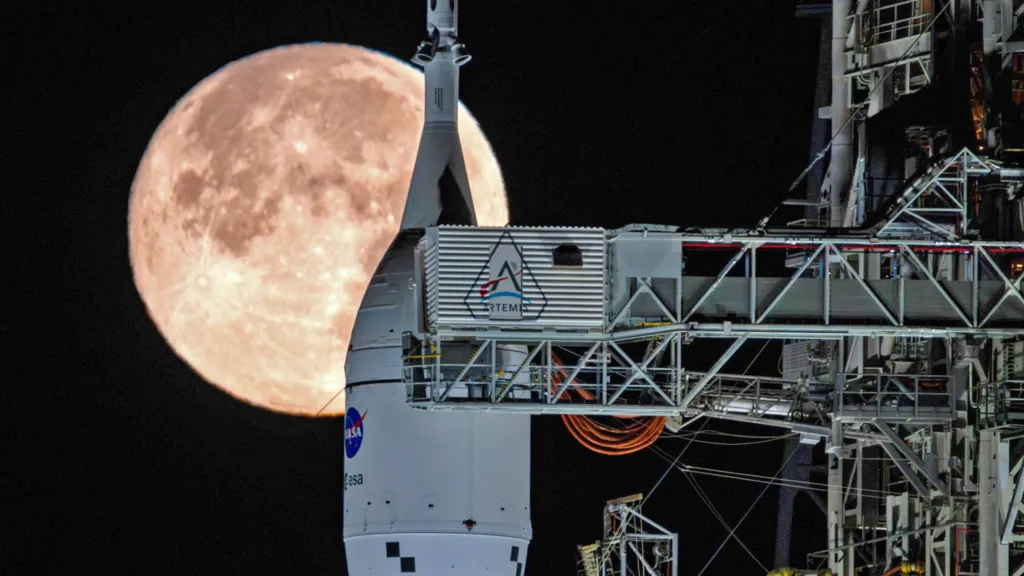
NASA is preparing to send humans back around the Moon in what promises to be a historic milestone for space exploration. The space agency has announced that it is targeting early March for the launch of its upcoming Artemis mission, marking the first time astronauts will orbit the Moon in more than half a century.
The mission, part of NASA’s Artemis program, aims to establish sustainable lunar exploration and prepare for eventual human missions to Mars. The flight will carry a crew of astronauts aboard the Orion spacecraft, which will be launched atop the Space Launch System (SLS) rocket from the Kennedy Space Center in Florida.

“This mission represents the next step in human spaceflight and our commitment to exploring beyond Earth,” said NASA Administrator Bill Nelson. “Returning humans to lunar orbit allows us to test critical systems and conduct scientific experiments that will pave the way for longer-term missions on the Moon and eventually Mars.”
The crew will spend several days orbiting the Moon, conducting experiments and testing new technologies designed to support future lunar landings. This includes evaluating life support systems, navigation instruments, and radiation protection measures — all essential for sustained deep-space missions.
NASA officials have emphasized that safety remains a top priority. Engineers have conducted rigorous testing on the SLS rocket, Orion spacecraft, and ground systems to ensure a smooth launch and orbit. Contingency plans are in place for a wide range of scenarios, from technical malfunctions to space weather disturbances.
The Artemis program is part of NASA’s broader goal to maintain American leadership in space exploration while fostering international collaboration. Several countries and private companies are contributing technologies and expertise to support the mission.
Public engagement is also a key focus. NASA plans to broadcast the launch and provide live updates from the astronauts while in lunar orbit. The mission is expected to capture global attention, inspiring a new generation of scientists, engineers, and space enthusiasts.
Following this orbit mission, NASA aims to return astronauts to the lunar surface in subsequent Artemis missions, targeting both the Moon’s South Pole and areas previously unexplored by humans. These efforts will enable scientific research, resource exploration, and technological innovation crucial for the future of human space travel.

As early March approaches, anticipation is building within the global space community. The mission marks not only a step forward in human exploration but also a symbol of human curiosity and ingenuity, reminding the world of the possibilities that lie beyond our home planet.
Related News:
 Urgent AI Threat Research Needed, Says Google Boss
 How to Exit Your Broadband Contract Without Paying Exit Fees
 Unseen Killers of the Deep Inside the UK Lab Uncovering the Silent Deaths of Sea Creatures
 AI Tools Used by English Councils Found to Downplay Women’s Health Issues, Raising Concerns Over Gender Bias in Care
 Shocking Rise in Children’s Exposure to Violent Online Pornography Raises Alarm
 Ed Davey Urges Government to Block Elon Musk’s Tesla from Supplying UK Home Energy
 Spectacular ‘Blood Moon’ Illuminates Skies Across the Globe
 Weatherwatch: From Astrology to Modern Meteorology
 British Pilot Joins Crew Training for Year-Long Mars Simulation Mission
 UK and US Forge Landmark Deals to Build Modular Nuclear Reactors Across Britain
 Big Pharma Investment Freeze Puts UK Life Sciences Sector Under Strain
 Jaguar Land Rover Extends Production Halt Following Cyber-Attack
 Persistent Offenders Owe Over £700m in Ulez Fines as TfL Cracks Down on Evasion
 British AI Startup Outshines Human Forecasters in Global Prediction Contest
 UK Fighter Jet Purchase Could Breach Nuclear Treaty, Warns CND
 Google at 27: The Untold Story of Ruth Kedar, the Woman Behind the Iconic Logo
 Biomethane Found Unfit for Large-Scale UK Home Heating as Study Highlights Limitations
 Royal Mail Owner Acquires Stake in Collect+ and Launches High Street Rebrand
 Eligibility Confusion Over COVID Vaccination Leaves Pharmacies Struggling Across the UK
 Millions in the UK at Risk of Cyber-Attacks as Microsoft Ends Windows 10 Updates, Warns Which?
 Cooper Unveils £4m Cyber Plan Against Russian Hackers
 Yvette Cooper Backs Digital ID Plan for UK Teens
 Genetic Tests May Predict Return of Blood Cancer
 Labour MPs Warn Digital ID Scheme Risks Cost and Support
 Reform UK candidate fined £19,000 after using AI-generated cases to challenge election
 Harry and Meghan join global AI leaders urging superintelligence ban
 UK Campaigners Launch Bill to Grant Legal Rights to Nature
 Met Launches Drones to Respond Rapidly to 999 Calls
 Experts Warn Russia’s Burevestnik Missile Could Destabilise Arms Control
 Virgin Trains Moves Closer to Challenging Eurostar Monopoly
 UK Bans Fake Numbers: Scammers Lose Their Trick
 Vibe coding’ named Collins dictionary’s word of the year
 Patients to Test Health at Home to Ease NHS Winter Pressure
 Britain deploys RAF specialists to assist Belgium with drone threats
 Stop using ChatGPT to write speeches, AI minister tells MPs
 Northern Lights may illuminate UK skies this week
 New laws to bolster UK’s defences against cyber attacks on NHS, transport and energy
 Valve Opens the Door for Android Games on Steam
 Hitler’s DNA Confirms He Truly Had Only One Testicle
 Working-Class Men with Prostate Cancer Left Behind by NHS
 Pokémon to open world’s first theme park in Japan next year
 New AI tool could cut wasted efforts in organ transplants
 How Cultures Interpreted the Aurora Through History
 Sundar Pichai Cautions on AI Hype and Market Risks
 Google Chief Urges Caution: Don’t Trust AI Blindly
 US Judge Says Meta Did Not Hold Illegal Social Media Monopoly
 Healthy Habits in Your 30s That Boost Life in Your 70s
 Coffins Now Too Large to Cremate Amid Rising Obesity Crisis
 AI Actress Creator Says Tilly Norwood Won’t Replace Actors
 Beachy Head Woman Identified as Local Eastbourne Resident
 AI Grok Sparks Child Safety Alarm in the UK
 Google Removes Some AI Health Summaries Over Safety Concerns
 US Clears Nvidia AI Chip Sales to China in Policy Shift
 Amazon Milton Keynes closure sparks concern for UK warehouse workforce
 Astronomers Prepare for First-Ever Movie of a Black Hole
 Robo-Vaccination Could Transform Fight Against Bovine TB
 MPs warn AI financial risks threaten UK stability
 MPs warn AI financial risks threaten UK stability
 Pornhub blocks new UK users over age checks dispute
 Amazon mistakenly signals new global layoffs to employees
 AI breast screening cuts later cancer diagnoses by 12%, study finds
 UK Launches First Rapid-Charging Battery Train This Weekend
 UK New Car Discounts Near £6,000 as Prices Are Slashed
 Most Statin Side-Effects Are Not Caused by Drugs, Study Confirms
 BT Names New Openreach Chief Amid Major Fibre Expansion
 AI fears hit UK wealth and comparison sites
 Tech Trends Set to Transform Life in 2026
 Starmer Targets AI Chatbots Over Child Safety Concerns
 How the Sound of Sport Is Being Reimagined for Deaf Fans
 Chasing the Next Solar Eclipse: When, Where and How to See It
 Indian University Kicked Out of AI Summit for Claiming Chinese Robot Dog as Its Own Invention
 China Shows Off Nunchuck‑Wielding Humanoid Robots for Lunar New Year
 Trump Directs US Govt to Prepare Release of Files on Aliens and UFOs
 The Chinese AI App Sending Hollywood Into a Panic
 How Do You Modernise Mango Farming? India’s Growers Urged to Innovate as Climate Change Hits
 Bill Gates Pulls Out of India’s AI Summit Over Epstein Files Controversy
 Trump Vows UFO File Release After Obama Interview
 Musk Cuts Starlink Access for Russian Forces – Giving Ukraine an Edge at the Front
 AI Coding Firm’s ‘Pride’ at Business Award Win
 ‘A Disgrace’ — Patient Blasts Neurology Report