Published: 16 September ‘2025. The English Chronicle Desk
Public officials who deliberately cover up state-related disasters will face criminal prosecution and up to two years in prison under the newly proposed Hillsborough law, Deputy Prime Minister and Lord Chancellor David Lammy has confirmed. The announcement comes amid concerns from campaigners that the legislation could be weakened before its introduction to parliament.
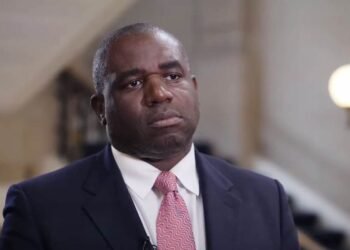
Writing in the Guardian, Lammy emphasised that the legislation will ensure public servants—from frontline officers to the highest-ranking officials—are held accountable for serious wrongdoing. The long-awaited Public Office (Accountability) Bill, expected to be formally introduced on Tuesday, represents years of advocacy by the families of Hillsborough victims and other affected communities.

The bill is designed to cover ministers, senior civil servants, and chief constables who mislead the public or fail to act with integrity, making them liable to face courts and imprisonment. Lammy underscored that the legislation includes a professional and legal “duty of candour,” requiring honesty and transparency whenever errors occur. Those who breach this duty may face prosecution, while a new offence for flagrantly misleading the public will carry sentences of up to two years behind bars. The legislation also replaces the existing offence of misconduct in public office with two more robust offences, ensuring proportional consequences for serious misconduct.
The introduction of the bill comes after earlier delays, with Prime Minister Keir Starmer having initially pledged to bring forward the legislation by the 36th anniversary of the Hillsborough disaster on 15 April. Campaigners had raised fears that critical provisions, including the duty of candour, could be diluted during drafting. Lammy assured the public that legal safeguards are being put in place, including automatic access to legal aid for bereaved families at inquests where the state is represented by teams of taxpayer-funded lawyers, ensuring families will no longer have to fund their own legal representation.
Lammy reflected on his personal experience of loss during the Grenfell Tower disaster, acknowledging the weight of grief and frustration faced by families navigating bureaucratic and legal processes. “I know what it is to sit with families whose lives have been torn apart, and to feel the weight of a system that too often meets grief with defensiveness and delay,” he wrote.
The Hillsborough disaster in 1989 claimed the lives of 97 football fans at Sheffield’s FA Cup semi-final. Survivors and family members have welcomed the legislation as a critical step towards accountability. Sue Roberts, whose brother Graham died in the tragedy, described the bill as “a huge step in the right direction” while emphasising that families will be closely monitoring its passage to ensure it is fully enacted.
Legal experts continue to scrutinise the bill. Concerns remain that the duty of candour offence is narrowly drafted, potentially allowing some public officials to avoid accountability. However, assurances have been made that the legislation will extend to combined and local authorities, as well as regulatory bodies including the Care Quality Commission, the Health and Safety Executive, and ombudsman investigations.
Pete Weatherby KC, who represents many Hillsborough families and helped draft the original bill, highlighted the transformative potential of the legislation. He noted that it could effect a cultural shift, ensuring public bodies operate with transparency as a matter of course, rather than under pressure. Families will remain actively involved as the bill progresses through parliament.

The expansion of legal aid has been broadly welcomed by bereaved families. Julia Waters, whose sister Ruth Perry took her own life following an adverse Ofsted report, described the bill as a measure that could prevent families from having to crowdfund for legal representation during emotionally distressing times. Natasha Elcock of Grenfell United echoed this sentiment, praising the duty of candour as a tool to secure accountability and improve support for survivors.
Lobby Akinnola, who lost his father early in the Covid-19 pandemic, said he has witnessed how easily the truth can be delayed or denied. He welcomed the legislation as a significant step toward justice for families and survivors.
The introduction of the Hillsborough law represents a landmark moment in UK legislation, aiming to hold public officials accountable, enhance transparency, and ensure that victims and bereaved families receive proper recognition and support when state systems fail catastrophically.
Related News:
 Tasers Introduced in UK Prisons to Combat Rising Violence and Protect Staff
 Peter Kyle Condemns Nigel Farage Over Reform UK’s Promise to Scrap Online Safety Act
 David Lammy Faces Possible Legal Challenge Over Foreign Office Secondment Scheme
 Ministers Accused of Defamation Over Palestine Action Ban and Mass Arrests
 Police Advised to Disclose Ethnicity of Suspects in High-Profile Cases
 Sally Rooney Pledges BBC Royalties to Support Palestine Action Despite UK Terror Ban
 UK’s First Transgender Judge Seeks Rehearing of Supreme Court Ruling on Biological Sex
 Government Signs Deal with Iraq to Return Illegal Migrants in Latest Bid to Deter Small Boats
 Migrant Hotel Chaos as Councils Consider Legal Action to Ban Asylum Seekers
 DWP Launches Independent Review of Post Office Staff Prosecutions
 Angela Rayner Admits Underpaying Stamp Duty on £800,000 Seaside Flat
 Angela Rayner Faces Scrutiny as Stamp Duty Row Deepens
 Shabana Mahmood Faces Daunting Challenges as New UK Home Secretary
 Tanni Grey-Thompson Faces Abuse Over Opposition to Assisted Dying Bill
New Home Secretary Hosts International Talks as Small-Boat Migrant Crossings Surge
Tanni Grey-Thompson Faces Abuse Over Opposition to Assisted Dying Bill
New Home Secretary Hosts International Talks as Small-Boat Migrant Crossings Surge
 Police Watchdog Calls for End to Recording Non-Crime Hate Incidents
 Charlie Kirk Killing Used to Mobilise UK’s Largest Far-Right Rally in Decades
 First “One In, One Out” Deportation Flight Departs Without Migrants Amid Legal Challenges
 Labour Urged to Rethink Growth Strategy as Top Economist Warns of Far-Right Surge
 Corbyn and Sultana Clash Over Membership Portal as Divisions Surface in New Leftwing Party
 Commons Speaker Warns UK Parliament Vulnerable to Foreign Espionage After China-Linked Case Dropped
Mahmood Pledges Reform of Modern Slavery Laws After Court Blocks Deportation Appeal
Commons Speaker Warns UK Parliament Vulnerable to Foreign Espionage After China-Linked Case Dropped
Mahmood Pledges Reform of Modern Slavery Laws After Court Blocks Deportation Appeal
 Migrants in UK May Need to Contribute or Face Removal, Home Secretary Signals
 Jailed Georgian Opposition Leaders Warn UK of Iranian Links to Ruling Party
 UK Police to Gain New Powers to Manage Repeated Protests, Home Office Announces
 MPs’ pay watchdog seeks to give public greater voice in how politicians are funded
 Digital ID Plans Ignite Debate Over £600m Treasury Tax Boost and Privacy Concerns
 Boris Johnson Breached Rules on Post-Office Business Contacts
 Shabana Mahmood Warns Border Failings Are Eroding Trust in States
 Lucy Powell urged ministers to reconsider costly legal case for Labour donor’s firm
 Starmer Accused of Creating ‘Toxic Downing Street’
 Tories Push to Dilute Labour’s Workers’ Rights Bill
 China Spy Case Hearing Reveals Key Gaps in Prosecution
 It’s time to come clean on the China spy case
Johnson Approved China’s London ‘Super-Embassy’ in 2018
It’s time to come clean on the China spy case
Johnson Approved China’s London ‘Super-Embassy’ in 2018
 Rachel Reeves Admits Renting Home Without Required Licence
 Experts Question HMRC Over Possible Child Benefit Privacy Breach
 Phillipson urges careful review of gender recognition guidance
 French Taxi Driver Cleared in David Lammy Theft Case After Fare Dispute
 Met Police Culture Makes Racial Harm ‘Inevitable’
 Remaining rebel Labour MPs have whip restored
 Tim Davie resigns as BBC director general amid bias claims
 Palace to reinstate hyphen in Andrew’s surname
 Victims’ commissioner Baroness Newlove dies aged 63
 BBC Apologises to Trump but Rejects $1bn Compensation Claim
 Major Rent Reform Ends No-Fault Evictions in England
 Peers Flood Assisted Dying Bill with 942 Amendments
 Nandy says BBC review to probe political board influence
 Your Party Turmoil Deepens Over Withheld Donations
 UK Unveils Fast-Track Deportation and Asylum Overhaul
 UK Asylum Overhaul Sparks Debate Over Human Rights and Deportations
 UK Asylum Reforms: Temporary Refugee Status and Faster Deportations
 Mahmood Defends Tough Overhaul of UK Asylum System
 Scottish Ministers Express Alarm Over UK Asylum Reforms
 Westminster Advances Legacy Bill Amid Criticism
 Minister Defends Tough New Asylum Reform Plan
 UK Net Migration Falls Sharply After ONS Revisions
 Peers Get Extra Time to Debate Assisted Dying Bill
 UK Must Act with Courage and Clarity on Israel-Palestine Conflict, Says Foreign Affairs Committee Report
 Targeted Attack in Bury Sparks Murder Investigation as Community Awaits Justice
 Radioactive Leak at UK’s Nuclear Warhead Base Sparks Outcry Over Safety and Secrecy
 Merseyside Police Helicopter Crew Cleared After Low-Altitude Pursuit of Suspect
 Is the UK Ready to Put Boots on the Ground in Ukraine? Assessing Military Capacity and Challenges
 Police Scotland Spends £500,000 Compensating Officers Over Trump Visit
 Urgent Action Needed on Windrush Compensation as Survivors Speak of “Waiting to Die”
Zarah Sultana Seeks Legal Action After Bitter Clash with Jeremy Corbyn Over Party Membership Funds
Urgent Action Needed on Windrush Compensation as Survivors Speak of “Waiting to Die”
Zarah Sultana Seeks Legal Action After Bitter Clash with Jeremy Corbyn Over Party Membership Funds
 Ed Miliband Urges Labour to Confront Billionaire-Backed Opposition to Net Zero Goals
 Public Trust in SNP Hits Historic Low Amid NHS Concerns
 Johnson Suggests Mandelson Linked to China Spy Controversy
 Ministry of Justice fails to file £11bn in spending receipts
 Rachel Reeves signals welfare reform ahead of key budget
 Reform UK candidate fined £19,000 after using AI-generated cases to challenge election
 William Steps Up Over Prince Andrew Palace Response
 Green Party Surges Past Labour in Latest UK Poll
 King Charles to Lead Nation in Remembrance Sunday Service
 Starmer Faces Growing Dissent as Labour MPs Weigh Leadership Challenge
 Trump Deploys DHS to Charlotte in Major Arrest Operation
 Serial Rapist and Former Cop Found Guilty Again
 Most Tories Expect to Support a Farage-Led Government
 Virgin Media Fined £23.8m Over Telecare Safety Failures