
Published: 09 December 2025. The English Chronicle Desk. The English Chronicle Online.
Foreign states are increasingly using AI-generated videos to destabilise western support for Ukraine, Yvette Cooper will warn in a major address on Tuesday. The UK foreign secretary plans to urge allied nations to assist Britain in countering what she describes as “information warfare,” highlighting growing concerns over Russia’s use of forged documents and deepfake material to advance geopolitical objectives.
Cooper’s warning builds on prior Foreign Office briefings revealing that Russian intelligence operates an extensive disinformation network known as Doppelgänger. This network has previously spread false rumours regarding the health of the Princess of Wales and western funding for Israel. Officials warn that these campaigns aim to manipulate public opinion, weaken alliances, and distort narratives surrounding Ukraine’s ongoing conflict.

“Across Europe, we are witnessing an escalation in hybrid threats – spanning physical and cyber domains – designed to weaken critical national infrastructure, undermine our interests, and interfere in our democracies for the benefit of malign foreign states,” Cooper will assert.
Her speech, marking the centenary of the Locarno treaties signed after World War I between the UK, France, Germany, Belgium, Italy, Poland, and Czechoslovakia, comes amid heightened sensitivities in the Ukraine war. With former US president Donald Trump pushing for a peace deal between Russia and Ukraine, both sides are actively seeking to influence Washington’s decision-making process.
Recent high-level talks between US and Ukrainian officials have yielded little progress, prompting Trump to accuse Ukrainian President Volodymyr Zelenskyy of not fully considering the proposals. Zelenskyy visited Downing Street on Monday, engaging in discussions with Keir Starmer, French President Emmanuel Macron, and German Chancellor Friedrich Merz. Meanwhile, Cooper met US Secretary of State Marco Rubio in Washington to coordinate international responses to information manipulation campaigns.
Cooper will emphasise that contemporary disinformation differs markedly from past propaganda efforts. “A hundred years ago, state-sponsored actors relied on forged documents or planted stories to sway public opinion. Today, technological advances have lowered the barrier to entry, allowing more actors with less expertise to operate on behalf of foreign regimes,” she will explain.
The foreign secretary warns that these AI-generated and manipulated videos can subtly erode public support for key allies such as Ukraine, diminishing the western resolve to resist Russia’s illegal invasion. The campaigns, she notes, also exploit social divisions on issues like gender, migration, and climate change.
“This is not about legitimate debate. Citizens in the UK hold strong opinions on migration, gender, and climate, but these are domestic conversations. Malign foreign states should not manipulate these debates to advance their own interests,” Cooper asserts.
Officials cite a series of disinformation campaigns worldwide, including fake websites created during Moldova’s September elections. These sites, masquerading as belonging to the ruling PAS party, presented fabricated policies such as extending retirement age and increasing military service, aiming to mislead voters and disrupt political stability.
Cooper’s address underscores a growing awareness that hybrid threats, including AI-driven information warfare, now play a strategic role in global conflict. Governments must coordinate to strengthen resilience, protect democratic processes, and prevent malign foreign influence from shaping public discourse. Analysts warn that failure to act could embolden other states to exploit emerging technologies, accelerating the dissemination of misinformation across social media platforms worldwide.
The UK government is considering a range of measures to counter these threats, from strengthening digital literacy programs to expanding cooperation with allied nations. Experts highlight that public awareness campaigns are crucial to equipping citizens with the skills to recognise deepfakes and other forms of manipulated content.
Cooper’s message is clear: hybrid threats are no longer limited to cyberattacks or traditional espionage. Generative AI, deepfakes, and digitally manipulated content present new challenges that threaten national security, international alliances, and the integrity of democratic institutions. As such, the UK is calling for a united global response, emphasising collaboration between governments, technology companies, and civil society to counter this growing menace.
“The scale of disinformation today is unprecedented. Malign actors can now manipulate entire populations, erode trust, and weaken alliances,” Cooper will warn. “Our collective response must be proactive, coordinated, and innovative, leveraging technology to combat the very tools that threaten our democratic values.”

Observers note that addressing AI-driven disinformation will require sustained investment in both technology and policy frameworks. Transparency initiatives, fact-checking networks, and legislative action are all being discussed as part of the UK’s broader strategy to safeguard information integrity. Cooper’s address is expected to galvanise international attention, highlighting the need for cooperative measures to secure the information environment while protecting freedom of expression.
As social media platforms remain a primary vector for these campaigns, experts urge companies to adopt stricter content moderation policies, implement AI detection systems, and actively partner with governments to mitigate the spread of falsified media. Failure to respond effectively could allow malicious states to influence elections, disrupt alliances, and weaken public confidence in democratic institutions.
In conclusion, Cooper’s warning about AI-driven disinformation underscores an urgent strategic challenge for the UK and its allies. Hybrid threats are evolving rapidly, and governments must remain vigilant to protect democracies, support Ukraine, and maintain international stability in an era of unprecedented technological influence.
Related News:
 Apple Unveils Ultra-Thin $999 iPhone Air at “Awe-Dropping” Annual Event
 Donald Trump’s UK State Visit Kicks Off Amid Major Tech Investments and Business Engagements
 British AI Startup Outshines Human Forecasters in Global Prediction Contest
Public Skepticism Over AI Poses Challenge to UK’s Superpower Ambitions, Says Tony Blair Institute
British AI Startup Outshines Human Forecasters in Global Prediction Contest
Public Skepticism Over AI Poses Challenge to UK’s Superpower Ambitions, Says Tony Blair Institute
 Ed Davey Urges UK to Attract US Cancer Scientists Amid Funding Cuts Under Trump
 Digital ID Cards: A Useful Modern Tool or a Threat to Privacy and Security?
 UK Fighter Jet Purchase Could Breach Nuclear Treaty, Warns CND
 Russia repeatedly targets UK military satellites, warns Space Command chief
 Teen and Man Arrested Over Nursery Cyber Attack Exposing 8,000 Children
 Yvette Cooper Backs Digital ID Plan for UK Teens
 UK Energy Firms Complete First Hydrogen Blending Trial
 Microsoft Study Reveals Jobs Most at Risk from AI
 UK Pupils Fear AI Is Eroding Their Learning Skills
 Waymo to Launch Driverless Taxis in London by 2026
 UK to Test Digital ID Scheme with Veteran Card
 Runners’ records at risk as Garmin goes to war with Strava
 Reform UK candidate fined £19,000 after using AI-generated cases to challenge election
 Harry and Meghan join global AI leaders urging superintelligence ban
 Met Launches Drones to Respond Rapidly to 999 Calls
 Starmer Defends Digital ID Plan Amid Growing Criticism
 Bloomsbury chief: AI will aid authors in beating writer’s block
 Experts Warn Russia’s Burevestnik Missile Could Destabilise Arms Control
 Breath test could ‘revolutionise’ pancreatic cancer treatment
 Mortgages and AI Set to Feature in English Schools
 Vibe coding’ named Collins dictionary’s word of the year
 Britain deploys RAF specialists to assist Belgium with drone threats
 Night after night, Belgium is on high alert.
 England schools to receive AI-generated attendance targets
 Stop using ChatGPT to write speeches, AI minister tells MPs
 New laws to bolster UK’s defences against cyber attacks on NHS, transport and energy
 Valve Opens the Door for Android Games on Steam
 Ukraine to Get 100 French Rafale Jets in Historic Deal
 Google Chief Urges Caution: Don’t Trust AI Blindly
 UK launches major AI drive to fight deadly superbugs
 Poll Reveals China Leads World in Trusting AI Technology
 AI Actress Creator Says Tilly Norwood Won’t Replace Actors
 YouTube Warns Kids Will Be Less Safe Under Australia Ban
 Experts Use Seismic Waves to Boost Soil Health and Yields
 Over 100 UK MPs and Peers Demand Urgent AI Superintelligence Ban
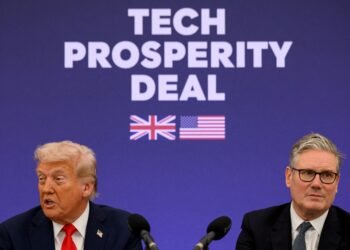 UK-US Tech Deal Remains Active Despite Trump’s EU Penalty Threats
 UK’s Largest Proposed Datacentre Faces Water Use Concerns
 UK Must Act with Courage and Clarity on Israel-Palestine Conflict, Says Foreign Affairs Committee Report
 The Fight for Trans Safety Is a Fight for Everyone’s Safety — MPs Must Debate This Crucial Issue
 Hong Kong Summons UK and Australian Envoys Following Asylum Grants to Democracy Activists
 Is the UK Ready to Put Boots on the Ground in Ukraine? Assessing Military Capacity and Challenges
 Police Scotland Spends £500,000 Compensating Officers Over Trump Visit
 Rylan Clark Criticizes UK Immigration Policies on This Morning, Sparking Public Debate
 Urgent Action Needed on Windrush Compensation as Survivors Speak of “Waiting to Die”
 Tanni Grey-Thompson Faces Abuse Over Opposition to Assisted Dying Bill
 Spectacular ‘Blood Moon’ Illuminates Skies Across the Globe
 TfL Invites RMT to Resume Talks as London Tube Strikes End
 Big Pharma Investment Freeze Puts UK Life Sciences Sector Under Strain
 Channel Crossings Surge: Over 1,000 People Arrive in the UK in Small Boats in a Single Day
 Nigel Farage Unveils Controversial Immigration and Welfare Plans at Reform UK Press Conference
 Yvette Cooper Signals Global Momentum Towards Gaza Peace Deal Amid Humanitarian Crisis
 Ed Miliband Warns UK Government on X, Citing Elon Musk as a “Dangerous Influence”
 Kemi Badenoch Unveils ‘Golden Rule’ to Halve Spending Cuts for Deficit Reduction at Tory Conference
 UK border officers deployed to Balkans to tackle migrant smuggling
 UK MPs warn of repeat riots over online misinformation
 Russia’s Latest Push to Win US Favors Shows Deep Desperation
 Army Barracks to House Migrants as Hotels Phase Out
 Army Officers Orders to Cut Ties with Men-Only Clubs
 Trump’s UK Ambassador Urges North Sea Drilling to Strengthen US Ties
 UK Bans Fake Numbers: Scammers Lose Their Trick
 Patients to Test Health at Home to Ease NHS Winter Pressure
BBC to Apologise Over Edited Trump Speech Amid Backlash
Patients to Test Health at Home to Ease NHS Winter Pressure
BBC to Apologise Over Edited Trump Speech Amid Backlash
 Millionaires group urge Reeves to introduce wealth tax to ‘lift kids out of poverty’
 Reeves rejects £1bn plea for NHS redundancy payouts
 Northern Lights may illuminate UK skies this week
 PM Condemns Leaks, Vows Loyalty to Ministers and Stability
 Trump Urges Herzog to Grant Netanyahu Full Pardon
 Major Rent Reform Ends No-Fault Evictions in England
 Indian authorities demolish Kashmir home linked to Red Fort blast
 Greene Pushes Epstein Files Amid Trump Fallout
 December Run-Off in Chile as Election Produces No Winner
 Sundar Pichai Cautions on AI Hype and Market Risks
 Shadow Fleet at Sea: Europe’s Battle Against Illicit Oil Shipping
 India’s COP30 Delay Raises Global Climate Concerns
 Starmer Says Labour’s Economic Plan Needs Years to Deliver
 Reform Candidate Sparks Fury Over Loyalty Comments