Published: 17 December 2025. The English Chronicle Desk. The English Chronicle Online.
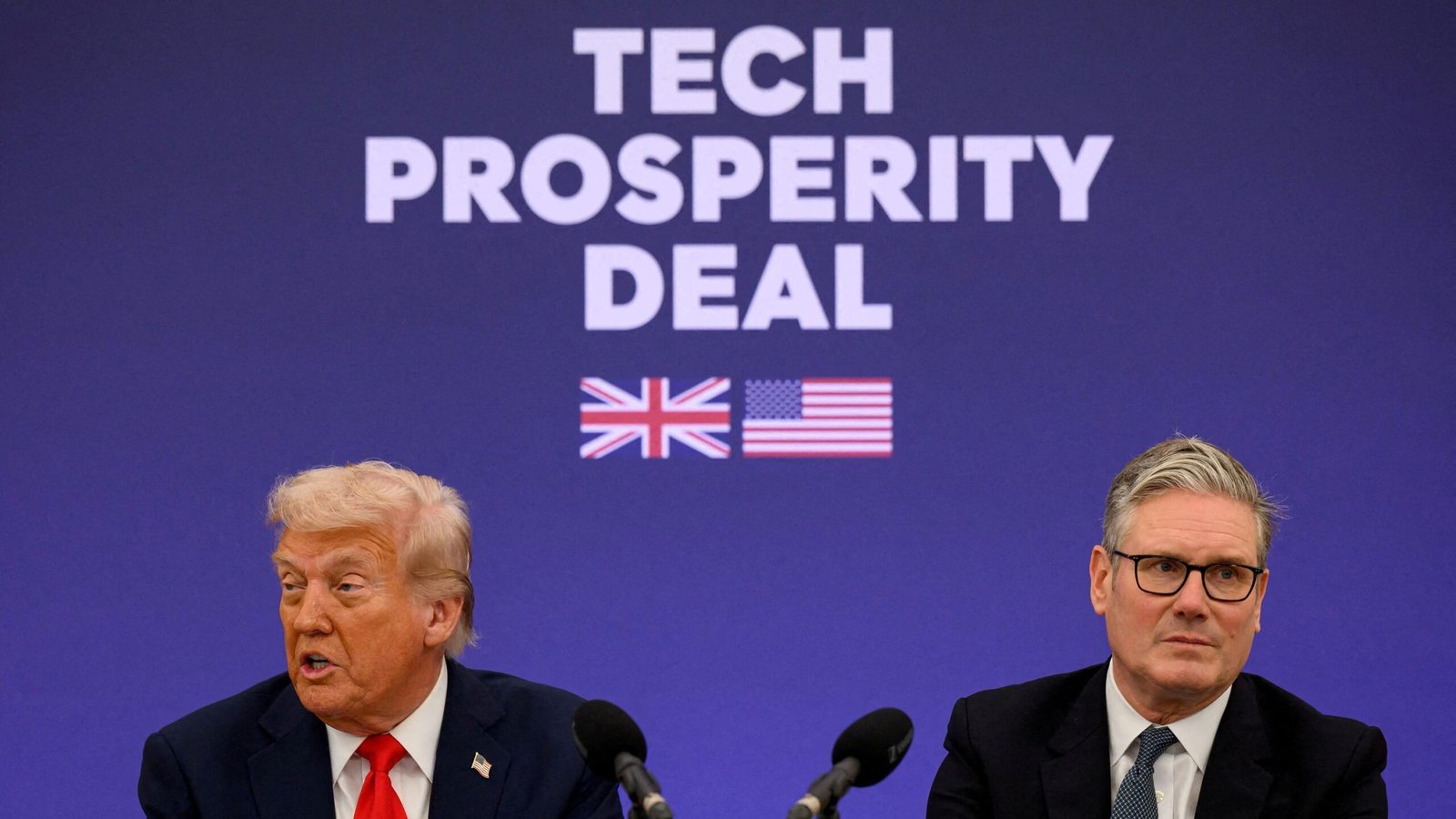
The United Kingdom has insisted that the $40 billion Tech Prosperity Deal with the United States is not permanently stalled, despite temporary pauses. Downing Street confirmed that negotiations continue actively at multiple government levels, highlighting the strategic importance of bilateral technology cooperation. Officials emphasized that work on the historic agreement will resume as soon as possible, stressing the UK’s commitment to a strong partnership with the US.

The deal, which aims to strengthen technological collaboration between the two countries, was temporarily paused due to disagreements over trade barriers. These include a digital services tax affecting American tech firms and certain British food safety rules that restrict exports of agricultural products. The New York Times reported that UK authorities confirmed these issues had caused delays, although both sides remain engaged in dialogue.
A Downing Street spokesperson stated, “We look forward to resuming work on this partnership as quickly as possible and are committed to shaping future technologies together.” This statement underscores the UK’s determination to maintain robust transatlantic ties, even as international tensions over tech regulation rise.
The Trump administration, meanwhile, has intensified its criticism of European Union policies, threatening economic penalties against European technology companies. On Tuesday, the Office of the US Trade Representative warned that firms such as Accenture, DHL, Spotify, and Siemens could face restrictions or fees if discriminatory barriers against US service providers persist. These measures reflect ongoing frustration in Washington over EU regulatory actions perceived as unfair to American companies.
The Office of the US Trade Representative stated on social media platform X that the US would use “every tool at its disposal” to counter what it called “unreasonable measures” imposed by the EU. The agency described actions such as lawsuits, fines, and taxes as discriminatory toward American services, further heightening tensions between Washington and Brussels.
European Commission spokesperson Thomas Regnier responded by emphasizing that EU regulations are applied equally and fairly to all companies operating in the region. He stated that enforcement of these rules will continue without discrimination, highlighting a commitment to transparency and equal treatment under EU law.
The escalating dispute follows a $140 million fine imposed on Elon Musk’s social media platform X for violations of the Digital Services Act. EU authorities cited issues including the misleading design of X’s “blue checkmark,” inadequate transparency in its ad repository, and restrictions on public access to data for research purposes. The penalty demonstrates the EU’s willingness to regulate major tech firms, often more aggressively than the United States, which has prompted criticism from the Trump administration.
Analysts note that the UK-US Tech Prosperity Deal could still serve as a pivotal step toward aligning innovation standards and regulatory approaches between the two nations. Negotiators are reportedly exploring compromises on trade and taxation issues while maintaining ambitions for technological leadership. The agreement is designed to bolster sectors such as artificial intelligence, semiconductors, and digital services, providing opportunities for cross-border collaboration and investment.
Despite these ongoing talks, the international environment for technology companies remains tense. US-European relations are under strain as American officials pressure EU regulators to reconsider measures deemed restrictive. The situation presents complex challenges for UK policymakers, who must balance domestic economic interests with the strategic goal of sustaining strong ties with both the US and Europe.
Downing Street continues to emphasize that the UK is fully committed to resolving trade frictions constructively. Officials highlighted the mutual benefits of the agreement, including shared technological innovation, investment growth, and global competitiveness. Observers suggest that successful negotiations could enhance the UK’s position as a hub for technological advancement, while reinforcing the transatlantic alliance.
Industry leaders and political analysts are closely monitoring the situation, noting that delays or penalties could influence investment decisions and corporate strategies in both Europe and the United States. The Trump administration’s threats against European firms add an additional layer of complexity to an already delicate negotiation process.

As discussions progress, UK officials maintain that the bilateral technology deal remains a top priority. By engaging in continuous dialogue, they aim to ensure that the agreement addresses regulatory concerns while fostering innovation. Stakeholders anticipate that a resolution could pave the way for future collaborations in emerging technology fields and reinforce the broader UK-US economic partnership.
The situation underscores the delicate balance between enforcing domestic regulatory policies and sustaining international cooperation in the fast-evolving technology sector. With ongoing negotiations and high-level diplomatic engagement, both sides appear determined to secure a mutually beneficial agreement that supports growth, innovation, and transatlantic economic ties.
Related News:
 Apple Unveils Ultra-Thin $999 iPhone Air at “Awe-Dropping” Annual Event
 British AI Startup Outshines Human Forecasters in Global Prediction Contest
Public Skepticism Over AI Poses Challenge to UK’s Superpower Ambitions, Says Tony Blair Institute
British AI Startup Outshines Human Forecasters in Global Prediction Contest
Public Skepticism Over AI Poses Challenge to UK’s Superpower Ambitions, Says Tony Blair Institute
 UK Energy Firms Complete First Hydrogen Blending Trial
 Microsoft Study Reveals Jobs Most at Risk from AI
 UK Pupils Fear AI Is Eroding Their Learning Skills
 Waymo to Launch Driverless Taxis in London by 2026
 Runners’ records at risk as Garmin goes to war with Strava
 Harry and Meghan join global AI leaders urging superintelligence ban
 Met Launches Drones to Respond Rapidly to 999 Calls
 Bloomsbury chief: AI will aid authors in beating writer’s block
 Breath test could ‘revolutionise’ pancreatic cancer treatment
 Mortgages and AI Set to Feature in English Schools
 Vibe coding’ named Collins dictionary’s word of the year
 England schools to receive AI-generated attendance targets
 Stop using ChatGPT to write speeches, AI minister tells MPs
 New laws to bolster UK’s defences against cyber attacks on NHS, transport and energy
 Valve Opens the Door for Android Games on Steam
 Google Chief Urges Caution: Don’t Trust AI Blindly
 UK launches major AI drive to fight deadly superbugs
 Poll Reveals China Leads World in Trusting AI Technology
 AI Actress Creator Says Tilly Norwood Won’t Replace Actors
 YouTube Warns Kids Will Be Less Safe Under Australia Ban
 Experts Use Seismic Waves to Boost Soil Health and Yields
 Over 100 UK MPs and Peers Demand Urgent AI Superintelligence Ban
 Foreign AI Videos Threaten Ukraine Support, Warns Cooper
 UK’s Largest Proposed Datacentre Faces Water Use Concerns
 How to Exit Your Broadband Contract Without Paying Exit Fees
 Michele Dougherty Makes History as the UK’s First Female Astronomer Royal
 Unseen Killers of the Deep Inside the UK Lab Uncovering the Silent Deaths of Sea Creatures
 UK Launches World-First Gonorrhoea Vaccine Amid Record Infection Surge
 AI Tools Used by English Councils Found to Downplay Women’s Health Issues, Raising Concerns Over Gender Bias in Care
 From ‘Skibidi’ to ‘Mouse Jiggler’: Cambridge Dictionary Expands with Modern Slang and Social Terms
 Shocking Rise in Children’s Exposure to Violent Online Pornography Raises Alarm
 Ed Davey Urges Government to Block Elon Musk’s Tesla from Supplying UK Home Energy
 Spectacular ‘Blood Moon’ Illuminates Skies Across the Globe
 Britain’s Butterfly Numbers Rebound but Remain Average
 Weatherwatch: From Astrology to Modern Meteorology
 Merck Abandons £1bn London Research Hub and Cuts 125 Jobs in Blow to UK Life Sciences
 British Pilot Joins Crew Training for Year-Long Mars Simulation Mission
 UK and US Forge Landmark Deals to Build Modular Nuclear Reactors Across Britain
 Big Pharma Investment Freeze Puts UK Life Sciences Sector Under Strain
 UK Could Generate Nearly £2bn Annually by Taxing SUVs, New Study Reveals
 Jaguar Land Rover Extends Production Halt Following Cyber-Attack
 Persistent Offenders Owe Over £700m in Ulez Fines as TfL Cracks Down on Evasion
 UK Fighter Jet Purchase Could Breach Nuclear Treaty, Warns CND
 Google at 27: The Untold Story of Ruth Kedar, the Woman Behind the Iconic Logo
 Biomethane Found Unfit for Large-Scale UK Home Heating as Study Highlights Limitations
 Royal Mail Owner Acquires Stake in Collect+ and Launches High Street Rebrand
 Eligibility Confusion Over COVID Vaccination Leaves Pharmacies Struggling Across the UK
 Millions in the UK at Risk of Cyber-Attacks as Microsoft Ends Windows 10 Updates, Warns Which?
 Majority of UK Men Would Opt for Prostate Cancer Screening, Survey Finds
 Cooper Unveils £4m Cyber Plan Against Russian Hackers
 Yvette Cooper Backs Digital ID Plan for UK Teens
 Genetic Tests May Predict Return of Blood Cancer
 UK Woman Becomes Longest Survivor of Heart-Lung Transplant
 Labour MPs Warn Digital ID Scheme Risks Cost and Support
 ‘Game-Changing’ HIV Prevention Jab Set for NHS Approval
 Reform UK candidate fined £19,000 after using AI-generated cases to challenge election
 UK Campaigners Launch Bill to Grant Legal Rights to Nature
 Experts Warn Russia’s Burevestnik Missile Could Destabilise Arms Control
 Virgin Trains Moves Closer to Challenging Eurostar Monopoly
 UK Bans Fake Numbers: Scammers Lose Their Trick
 Patients to Test Health at Home to Ease NHS Winter Pressure
 Britain deploys RAF specialists to assist Belgium with drone threats
 Government urges schools to ban phones to curb classroom disruption
 Northern Lights may illuminate UK skies this week
 Hitler’s DNA Confirms He Truly Had Only One Testicle
 Working-Class Men with Prostate Cancer Left Behind by NHS
 Pokémon to open world’s first theme park in Japan next year
 New AI tool could cut wasted efforts in organ transplants
 How Cultures Interpreted the Aurora Through History
 From Baby Teeth to Bioengineering: The Future of Self-Healing Teeth
 Sundar Pichai Cautions on AI Hype and Market Risks
 US Judge Says Meta Did Not Hold Illegal Social Media Monopoly
 Healthy Habits in Your 30s That Boost Life in Your 70s
 Raccoons Could Become America’s Next Pet
 Coffins Now Too Large to Cremate Amid Rising Obesity Crisis
 UK Taskforce Unveils Plan to Streamline Nuclear Reactor Rules
 Starmer’s communications chief to outline media strategy overhaul