Published: 24 January 2026. The English Chronicle Desk. The English Chronicle Online
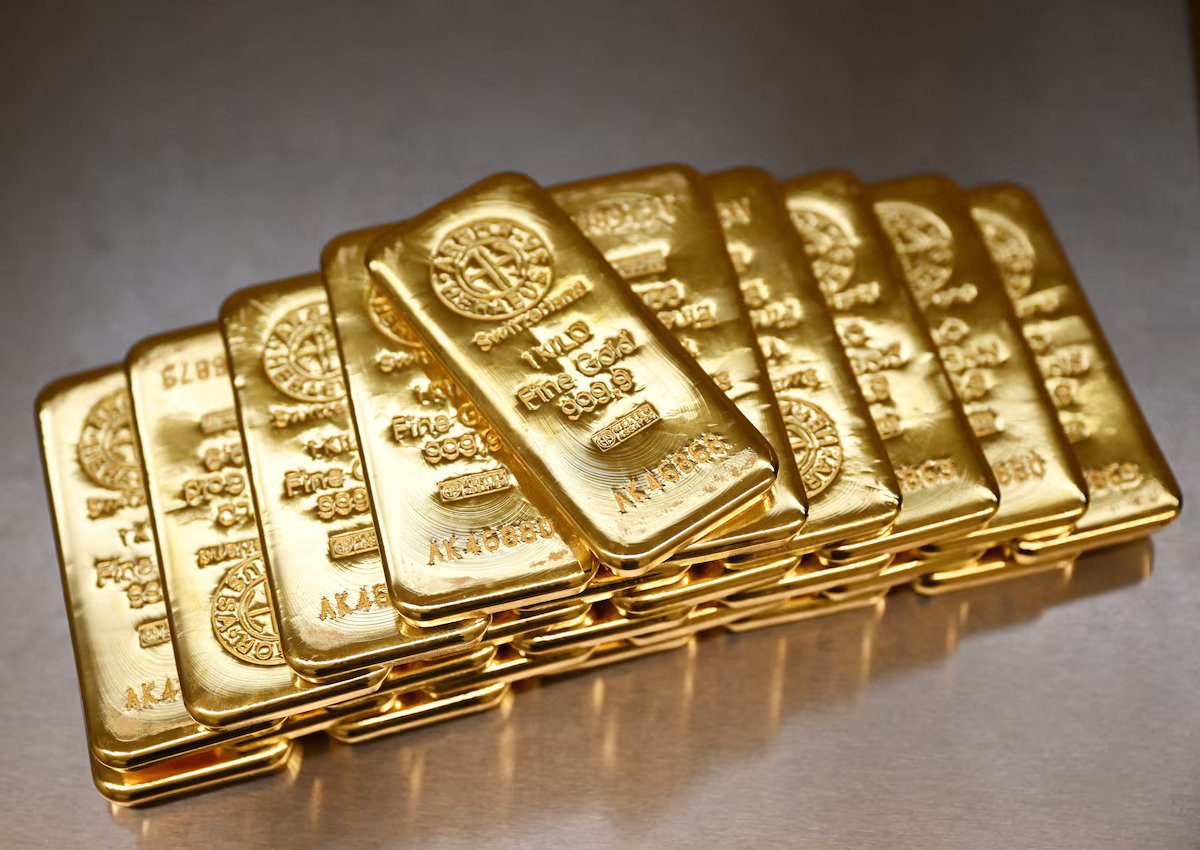
Germany’s vast gold reserves, long regarded as a symbol of stability and trust, have become the centre of an increasingly heated debate as economists, politicians and financial experts question whether billions of euros’ worth of bullion should continue to be stored in the United States. The discussion has been fuelled by a noticeable cooling in transatlantic relations and renewed uncertainty surrounding the foreign and economic policies of US president Donald Trump.
Germany holds the second-largest national gold reserves in the world after the United States. Of its total holdings, valued at close to €450bn, approximately €164bn worth, or 1,236 tonnes, is stored in the vaults of the US Federal Reserve in New York. For decades, this arrangement was seen as prudent, reflecting close political ties, military cooperation through Nato and the central role of the US in the global financial system. Today, however, that long-standing logic is being reassessed.
One of the most prominent voices calling for repatriation is Emanuel Mönch, a leading economist and former head of research at the Bundesbank. Speaking to the financial newspaper Handelsblatt, Mönch argued that the current geopolitical environment made it “risky” for Germany to keep such a large share of its gold in the US. In his view, the debate is not about distrust in technical safeguards, but about strategic autonomy in an increasingly volatile world. He suggested that, in the interest of reducing dependence on Washington, the Bundesbank should seriously consider bringing the gold back to German soil.

Mönch’s comments have resonated widely because they touch on a broader shift in European thinking. Germany, like many EU countries, has been reassessing its economic and security assumptions following years of global shocks, from the Covid-19 pandemic to Russia’s invasion of Ukraine and escalating trade tensions between major powers. The return of Donald Trump to the White House has added another layer of uncertainty, particularly given his confrontational rhetoric towards allies and his willingness to use economic leverage as a political tool.
Michael Jäger, head of the European Taxpayers Association and the Association of German Taxpayers, has also argued strongly in favour of repatriation. He has pointed to what he sees as the unpredictability of US policy under Trump, warning that financial assets held abroad could become vulnerable in times of heightened political conflict. Jäger has even linked his concerns to Trump’s controversial statements about Greenland, arguing that such provocations illustrate a willingness to push boundaries that could one day extend into the financial realm. In his view, the risk that Germany could face restrictions on access to its own gold, however remote, is no longer negligible.
Jäger has been campaigning on the issue for some time. He revealed that he wrote to both the Bundesbank and the German finance ministry last year, urging them to “bring our gold home”. While his warnings were initially dismissed as alarmist, they have gained new traction as similar arguments emerge from across the political spectrum.
Until recently, calls for repatriation were largely associated with the far-right Alternative für Deutschland, which framed the issue in patriotic terms and frequently questioned the wisdom of entrusting national wealth to foreign powers. What has changed is that the discussion has moved decisively into the mainstream. Economists, centrist politicians and even members of the opposition Greens have now weighed in, lending the debate a new level of legitimacy.
Katharina Beck, the finance spokesperson for the Greens in the Bundestag, has described Germany’s gold reserves as an “important anchor of stability and trust”. She has warned that such assets should not become bargaining chips in geopolitical disputes, implicitly supporting the idea that greater control over physical reserves could strengthen Germany’s financial sovereignty.
The growing chorus of voices in favour of repatriation has nevertheless been met with strong caution from other leading economists. Clemens Fuest, president of the Institute for Economic Research (Ifo) and one of Germany’s most influential economic thinkers, has warned that bringing the gold home could send the wrong signal at a sensitive moment in international relations. Speaking to the Rheinische Post, he argued that such a move could exacerbate tensions with Washington and “pour oil on the fire” of an already strained situation. From his perspective, the symbolic impact of withdrawing the gold could outweigh any practical benefits.
The Bundesbank itself has sought to project calm. Germany’s central bank has repeatedly stressed that its gold holdings are well diversified and securely stored. Just over half of the reserves are held in Frankfurt am Main, ensuring immediate domestic access. Around 37% are kept in New York, while roughly 12% are stored at the Bank of England in London, a global hub for gold trading. According to the Bundesbank, this geographical spread is deliberate, allowing Germany to access liquidity in major financial centres if needed.
Speaking at the International Monetary Fund’s autumn meetings in Washington last October, Bundesbank president Joachim Nagel told delegates there was “no cause for concern” regarding the gold stored at the US Federal Reserve. He emphasised that the Bundesbank conducts regular audits of all its gold holdings, including those held abroad, and that cooperation with the Federal Reserve remains professional and transparent.
Within Germany’s coalition government, the issue has also revealed differing tones, if not outright divisions. Stefan Kornelius, spokesperson for Chancellor Friedrich Merz’s government, has said that withdrawing the gold is not currently under consideration. Frauke Heiligenstadt, the Social Democrats’ parliamentary spokesperson on financial policy, has similarly urged restraint. While acknowledging public concerns, she stressed that Germany’s ability to act is guaranteed by the fact that half of the reserves are already in Frankfurt. She added that storing gold in New York still makes sense given the close financial ties between Germany, Europe and the US.
Yet even within Merz’s Christian Democratic Union, support for relocation appears to be growing. Some party members argue that strategic realities have shifted and that Germany should reduce vulnerabilities wherever possible. Ulrike Neyer, a professor of economics at the University of Düsseldorf, has been blunt in her assessment, saying that under the Trump administration the US can no longer be regarded as a fully reliable partner.

At the heart of the debate lies a deeper question about the role of gold in modern economies. While gold no longer underpins currencies in the way it once did, it remains a powerful symbol of trust and a hedge against extreme crises. Central banks hold gold precisely because it is free from counterparty risk, unlike many financial assets. For critics of overseas storage, the idea that such a risk-free asset could be subject to political pressure undermines its very purpose.
Supporters of the status quo counter that the Federal Reserve is one of the most secure and trusted institutions in the world, and that moving large quantities of gold is expensive, logistically complex and potentially destabilising. They argue that the benefits of having gold readily available in New York, close to major financial markets, outweigh the theoretical risks.
As transatlantic relations evolve and global politics become more fragmented, the question of where Germany’s gold should be stored is likely to remain unresolved. What is clear is that the debate itself reflects a broader reassessment of dependence, trust and sovereignty in an era of great-power competition. Whether or not Germany ultimately decides to repatriate its gold, the discussion has already exposed anxieties about the durability of alliances once taken for granted.
For now, Germany’s gold remains where it has been for decades, quietly resting in vaults on both sides of the Atlantic. But the renewed calls to bring it home suggest that, in a changing world, even the most solid foundations of financial policy are no longer beyond question.
Related News:
 Modi’s London Visit Seals Historic UK-India Trade Pact Amid Global Tensions
 Rubio Calls Russian Oil Imports a Strain on India-US Relations
 Rachel Reeves to lead UK trade push in Saudi Arabia amid rights debate
 Canada Passes Carney’s First Budget in Tight Parliamentary Vote
 India’s Labour Law Overhaul Sparks Fierce Debate
 Carney’s Alberta Pipeline Deal Sparks Immediate Pushback
 Mark Carney Walks Diplomatic Tightrope on China Visit
 Trump to Deploy “God Squad” Over Gulf Wildlife Protections
 Trump Slams UK Ties and Threatens To Rewrite Trade Deal
 Athens Mayor Moves to Tackle Overtourism Crisis
 Southeast Asia Turns to Russia Amid Energy Crisis
 US Calls Australia Media Law “Foreign Extortion”
 Capitalism ‘Suicidal’, Warns Petro at Climate Summit
 Oil Prices Surge Above $120 Amid Iran Blockade Fears
 Trump approval plunges amid Iran war fears
 Trump Threatens UN Budget Cuts as US Pushes ‘Trade Over Aid’ Agenda
 Norway Doubles Down on Oil and Gas for Europe Energy Security
 US Awaits Iran Reply on New Ceasefire Proposal
 Beijing Becomes Centerstage for Global Diplomatic Ballet
 Hormuz Talks Near Critical Stage
 UK Pushes for New EU Goods Trade Deal
 Reeves Fights to Keep Treasury Role Amid Labour Turmoil
 Europe Weighs Hormuz Navigation Fee Plan
 Ukraine Creates Long-Range Strike Command
 UK Must Act with Courage and Clarity on Israel-Palestine Conflict, Says Foreign Affairs Committee Report
 Radioactive Leak at UK’s Nuclear Warhead Base Sparks Outcry Over Safety and Secrecy
 Mutual Inconvenience: Why Alaska Was Chosen for the Trump-Putin Summit on Ukraine
 China’s crackdown on civil servant perks sparks economic concerns
 Chancellor Rachel Reeves Pushes for Sweeping Changes to Environmental Protections to Accelerate Development
 Hong Kong Summons UK and Australian Envoys Following Asylum Grants to Democracy Activists
 Is the UK Ready to Put Boots on the Ground in Ukraine? Assessing Military Capacity and Challenges
 Channel Crossings Surge: Over 1,000 People Arrive in the UK in Small Boats in a Single Day
 Yvette Cooper Signals Global Momentum Towards Gaza Peace Deal Amid Humanitarian Crisis
 Kemi Badenoch Unveils ‘Golden Rule’ to Halve Spending Cuts for Deficit Reduction at Tory Conference
 Russia’s Latest Push to Win US Favors Shows Deep Desperation
 Trump’s UK Ambassador Urges North Sea Drilling to Strengthen US Ties
BBC to Apologise Over Edited Trump Speech Amid Backlash
Trump’s UK Ambassador Urges North Sea Drilling to Strengthen US Ties
BBC to Apologise Over Edited Trump Speech Amid Backlash
 Britain deploys RAF specialists to assist Belgium with drone threats
 Millionaires group urge Reeves to introduce wealth tax to ‘lift kids out of poverty’
 Trump Urges Herzog to Grant Netanyahu Full Pardon
 Indian authorities demolish Kashmir home linked to Red Fort blast
 Greene Pushes Epstein Files Amid Trump Fallout
 December Run-Off in Chile as Election Produces No Winner
 Shadow Fleet at Sea: Europe’s Battle Against Illicit Oil Shipping
 India’s COP30 Delay Raises Global Climate Concerns
 Georgians Defy Government Crackdown After Year of Protests
 Starmer Says Labour’s Economic Plan Needs Years to Deliver
 Greenland Crisis Forces Europe to Draw a Line With Trump
 South Korea Jails Ex-President in Martial Law Ruling
 Trump Fed bid heads to Supreme Court
 Pentagon Signals Reduced Role in Deterring North Korea
 Thousands Protest ICE Operations in Nationwide US Day of Action
 EU Signals Open Mind on UK Customs Union Talks
 Starmer Condemns ‘Depraved’ Russian Strikes on Ukraine
 Herzog visit sparks protests across Australian cities
 Tarique Rahman’s Rise Toward Bangladesh’s Top Job
 UK shelves £110m border project amid trade strain
 AFP Reviews Pauline Hanson Comments
 Duterte ICC Hearing Begins Amid Defiance
 Trump Tariffs Threat Spark UK and EU Alarm
 The Dangerous Rise of Remigration Across Modern Europe
 US to offer passport services in West Bank settlements
 Iran Defiance Grows Amid US-Israel War Pressure
 Oil Slides, Stocks Jump on Trump Peace Signals
 Danish Election Deadlock Shakes Frederiksen’s Grip
 Pope Rebukes Leaders for War as Middle East Tensions Rise
 Army Probes Apache Flyover at Kid Rock’s Nashville Estate
 Italian Town Buys Mussolini Villa to Keep Away Fascist Fans
 Report Says Pezzullo Acted ‘Recklessly’ in Dealings
 Trump Employs Nixon’s Madman Theory Amid Iran Crisis
 Suspected Plot Targets Pipeline Before Hungary Vote
 Ohio’s Battle for Trust: Democrats Vying to Flip the Buckeye State
 Tough Fiscal Realities Await Next Scottish Government
 US ‘Narco Boat’ Strikes Draw Global Outcry
 High Street Crisis: Fears Grow Over Post Office Closures
 Oil Markets Face ‘Red Zone’ Threat Amid Iran Crisis
 Discontent grows around Putin amid war strain
 Starmer Leadership Under Pressure After Setbacks
 Le Pen to Run for President Despite Embezzlement Conviction
 Houthis Strike Saudi Arabia as Middle East Tensions Rise