Published: 05 February 2026. The English Chronicle Desk. The English Chronicle Online.
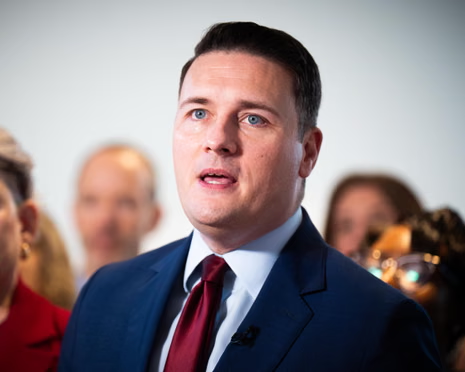
A fresh government push on doctor pay is gathering pace as ministers attempt to close a prolonged NHS dispute. Health Secretary Wes Streeting is preparing a revised settlement focused on resident doctors after months of strike action pressure. The new doctor pay approach is designed to go beyond the standard NHS offer and target concerns raised repeatedly by union leaders. Talks between officials and representatives are described as active and more constructive than earlier negotiation rounds this year.
Senior NHS figures briefed on the discussions say the proposal includes a higher uplift than previously outlined for 2026 and 2027. That increase would apply specifically to resident doctors rather than the entire NHS workforce across all roles and bands. Officials believe a targeted doctor pay rise could break the current stalemate without reopening every public sector settlement already agreed. The strategy reflects mounting operational strain caused by repeated strike waves across hospitals and urgent care services nationwide.

Resident doctors, previously called junior doctors, have staged multiple walkouts since the dispute first began nearly three years ago. Their industrial campaign has centred on earnings erosion, workload pressures, and what they describe as unsafe working environments during extended shifts. Union leaders argue that real income has fallen sharply when measured against inflation over the past decade. They say restoring value is essential for retention, recruitment, and patient safety across overstretched NHS departments and units.
Government sources indicate Streeting is reviewing options that could at least double the previously signalled 2.5 percent uplift. That earlier figure was presented as the maximum affordable baseline within wider NHS pay planning assumptions last autumn. The British Medical Association strongly criticised that number at the time, calling it unrealistic and deeply out of touch. Negotiators now believe movement on doctor pay levels could create enough goodwill to pause further strike escalation this spring.
Alongside salary changes, the emerging package also focuses heavily on daily working conditions inside hospitals and training sites. Ministers are considering enforceable standards around rest facilities, hot food access, and protected break arrangements during long shifts. NHS trusts that fail to meet those standards could face financial penalties under the proposed compliance framework. Supporters say this blends doctor pay reform with practical quality of life improvements doctors have demanded for years.
The timing is sensitive because the latest strike mandate from resident doctors extends for another six months. Union members recently voted overwhelmingly to retain their legal ability to walk out again if negotiations stall or collapse. That result increased pressure on both sides to demonstrate visible progress and credible compromise before further disruption occurs. Behind closed doors, participants say the tone of talks has shifted from confrontation toward problem solving and phased resolution.
Each recent five day strike has carried a heavy operational and financial cost for the national health system. NHS estimates suggest individual stoppages have cost hundreds of millions of pounds through cancellations and emergency cover arrangements. Elective procedures, diagnostic work, and outpatient clinics have often been postponed, extending waiting times for many patients across regions. Ministers argue that a revised doctor pay settlement would cost less overall than repeated strike cycles and service shutdowns.
Training pathways and career progression rules are also part of the parallel negotiation track now underway with officials. Resident doctors want expanded access to specialty training posts and clearer routes into their preferred medical disciplines. Many say bottlenecks leave qualified doctors stuck in temporary roles without stable advancement or predictable future earnings growth. Linking doctor pay reform with training expansion is viewed as one possible route toward a broader and lasting settlement.
NHS England leadership previously issued improvement plans covering rota management, payroll accuracy, and welfare support for resident doctors. Implementation has been uneven across trusts, according to both union representatives and internal NHS performance reviews shared with ministers. Some hospitals upgraded facilities and scheduling systems quickly, while others lagged behind due to funding and management constraints. The proposed penalty model aims to ensure doctor pay and workplace promises translate into consistent frontline reality everywhere.
Union voices have recently sounded more cautious and measured when discussing the likelihood of immediate new strike dates. Representatives say industrial action remains available but is not the preferred outcome if credible progress continues at the table. They emphasise that fair doctor pay and safe conditions remain the central goals rather than disruption itself. This softer tone has been interpreted by observers as a sign that compromise space may genuinely be opening now.
Public opinion remains divided on continued strike action by resident doctors, according to newly released polling data this week. A nationwide survey found a slim majority opposing further walkouts, while a substantial minority still express active support. Attitudes appear relatively stable compared with similar polling conducted late last year during earlier strike phases. Analysts say views often shift depending on service disruption levels and perceptions of fairness around doctor pay demands.
The Department of Health and Social Care has declined to detail specific figures while negotiations are still active. A spokesperson described the current discussions as constructive but would not confirm the scale of any revised offer. Officials insist that responsible budgeting must remain central to any agreement reached with medical unions and NHS employers. At the same time, they acknowledge that unresolved doctor pay tensions carry their own serious financial and clinical risks.

Hospital leaders are watching closely because workforce stability affects everything from waiting list recovery to emergency department resilience. Recruitment challenges have intensified in several specialties where burnout and overseas opportunities attract experienced clinicians away from UK posts. Supporters of a stronger doctor pay package argue that retention savings could offset part of the upfront settlement cost. Critics warn that targeted deals may trigger fresh demands from other professional groups inside the health service.
What happens next will depend on whether the refined offer satisfies enough union conditions to recommend acceptance to members. Formal proposals are expected to be presented through established review and negotiation channels rather than informal briefings alone. If endorsed, the plan could mark the first sustained pause in strike activity since the dispute originally erupted years ago. If rejected, both sides may return to escalation, with doctor pay again at the centre of national debate.
For patients and staff alike, the coming weeks are likely to prove decisive for service stability and workforce morale. A credible compromise could reset relationships and allow attention to return fully toward care delivery and system recovery. Failure would risk another cycle of stoppages, cancellations, and strained emergency coverage across already pressured NHS organisations. The direction of the doctor pay talks therefore carries consequences far beyond the negotiating rooms where details are still being settled.
Related News:
 Mother dies after black market weight loss injection
 Young Woman Missed 13 Times by GPs Before Bowel Cancer Diagnosis
 Hospice Cuts Raise Alarm Across England Amid Funding Crisis
 How Bringing Forests Into Preschools Boosts Children’s Health
 The diet that can significantly ease symptoms of IBS
 Celebrities and Charities Demand UK Government Act on Child Poverty
 Long A&E waits causing heartbreaking suffering, charity says
 Experts Warn on Home Birth Risks, Call for Skilled Midwives
 Lancashire council plans to close care homes and day centres
 Britain could face worst flu season on record, NHS warns
 Experts Urge Legal Right to Timely Cancer Care
 Patients to Test Health at Home to Ease NHS Winter Pressure
 London’s Childlessness Crisis: Schools Closing as Families Shrink
 NHS Takes Over Nuffield Hospital in ‘Windfall’ for London Care
 North Sea oil workers must lose weight or face job loss
 Crisis charity to become landlord amid UK housing emergency
 No link found between paracetamol in pregnancy and autism
 UK Disability Pay Gap Means Millions Work for Free From Today
 Shouting Works Best to Deter Gulls, UK Study Finds
 Reeves rejects £1bn plea for NHS redundancy payouts
 NHS trust fined after woman takes life in mental health unit
 Leading doctors issue warning amid ‘bad’ flu season
 UK Centres Used Risky Heart Pump Despite Safety Fears
 Reeves Rejects £1bn NHS Payout Plea from Streeting
 New Campaign Trains Vets to Spot Farmers’ Health Risks
 Stroke Patient Mistaken for Drunk, Care Delayed
 ‘Traumatic Wait’: Northern Ireland Women Face Breast Cancer Delays
 Boris Johnson Oversaw Toxic No 10 Culture, Covid Inquiry Finds
 Welsh Government Christmas 2020 Lockdown Criticised
 Coffins Now Too Large to Cremate Amid Rising Obesity Crisis
 Thinktank Urges Smaller Hospitals to End NHS ‘Permacrisis’
 David Cameron Reveals Prostate Cancer Diagnosis, Advocates Screening
 NHS paediatric leave parents waiting months for answers
 Catherine urges end to stigma around addiction
 11 Best Supermarket Wines Chosen by Experts and Sommeliers
 Inquiry Opens Into Disgraced Surgeon Eljamel Scandal
 Five-Year-Old Dies After Rare Tonsil Surgery Complication
 Fibromyalgia Patients Struggle as NHS Fails to Provide Care
 More Patients Now Contacting GPs Online, Data Shows
 Streeting launches review into mental health and ADHD diagnoses
 Flu cases in Scotland more than double in a week
 People in England’s Poorest Areas Face Higher Lung Health Emergencies
 MND Patients Die Waiting for Home Adaptations in England
 Minor A&E Visits Surge Across England as Hospitals Face Pressure
 Children to Receive Home Vaccines as England Acts
 UK children to get chickenpox jab with MMRV vaccine
 UK Enforces Junk Food Ad Ban Before 9pm
 Salt Intake England: Crisps Comparison Sparks Health Alarm
 Weight Loss Jabs Linked to Rapid Weight Regain, New Study Shows
 Patients Collapsing in NHS Corridors, Watchdog Warns
 Offenders to Receive Health Support During Probation Appointments
 NHS Violence Crisis: Staff Face Daily Assaults
 Celebrity Campaign Highlights SMA Screening Failures
 NHS corridor care crisis sparks fears over patient safety
 Jess’s Rule Urges GPs to Rethink Persistent Symptoms
 UK Glaucoma Rise Signals Looming Eye Health Crisis by 2060
 UK ADHD medication use triples over 13 years, landmark study finds
 Reform UK Health Plan ‘Would Cost £1.7bn’, Streeting Says
 NHS boosts bowel screening accuracy with FIT reform
 UK loses measles-free status amid deaths and jab decline
 Nottingham survivor warns of repeat attacks without mental health reform
 UK vets face reforms to tackle high pet care costs
 Small risk warning raised over weight-loss jabs in UK review
 Study Finds One in Seven England Takeaways Are Dark Kitchens
 Deadly Cancer Postcode Lottery Limits NHS Care
 Pneumonia Surge Pushes England Emergency Cases Higher
 Systemic Racism in Maternity Care Continues to Endanger Black Women in England, MPs Warn
 M&S and Morrisons Lead Christmas Supermarket Taste Test
 Reeves Faces Setback as Labour May Miss Homes Target
 Kate Winslet to Narrate Film Highlighting King’s Environmental Mission
 Trump’s UK Ambassador Urges North Sea Drilling to Strengthen US Ties
 UK Bans Fake Numbers: Scammers Lose Their Trick
 Millionaires group urge Reeves to introduce wealth tax to ‘lift kids out of poverty’
 Cambridge College Faces Backlash Over Private School Recruitment
 Bereaved Fathers Gain New Paternity Leave Rights in UK
 Woman Jailed for Life After Killing E-Bike Rider in Tragic Mistaken Identity Case
 No Gas Boiler Ban as UK Warm Homes Plan Backs Heat Pumps
 Police response times face strict new national limits
 Devon hosts first high-density hydro power system
 AI breast screening cuts later cancer diagnoses by 12%, study finds