Published: 05 February 2026. The English Chronicle Desk. The English Chronicle Online.
Venezuela has announced a bold initiative to transform the notorious El Helicoide prison into a youth centre, aiming to rewrite the site’s dark history. The youth centre project, introduced by acting president Delcy Rodríguez, promises to provide cultural, sports, and commercial facilities for local communities and police families, signalling a dramatic shift from its infamous past. Activists, however, warn that the plan risks erasing decades of documented repression, arguing the site should instead preserve historical memory.
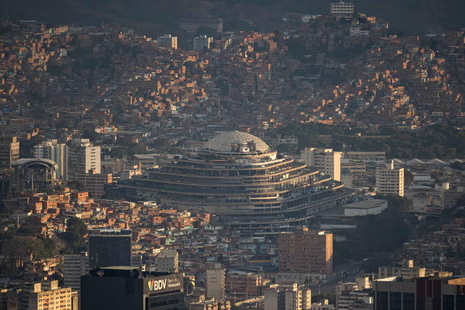
El Helicoide, originally conceived in the 1950s as a modernist shopping complex, became a symbol of political repression under Hugo Chávez and Nicolás Maduro. The building, with its spiralling concrete ramps and abandoned commercial spaces, was converted into detention cells, where reports of torture and abuse were widespread. Under Maduro, the Bolivarian National Intelligence Service (Sebin) oversaw harsh conditions, including beatings, electric shocks, and restrictions on family visits. Rodríguez, who previously supervised Sebin, now claims the youth centre will signal a new era of community engagement.

Critics argue that turning El Helicoide into a youth centre risks sanitising its history. Martha Tineo, coordinator of Justicia, Encuentro y Perdón, stated that while closure of the prison is welcome, the conversion should not erase its role as a torture site. She emphasised that the building could serve as a museum or memorial, similar to Argentina’s Escuela de Mecánica de la Armada, providing a space for truth-telling and reparation for victims.
For decades, the massive structure has reflected Venezuela’s turbulent history. Initially designed to be a futuristic shopping and leisure hub, El Helicoide never opened commercially. In the 1970s, it temporarily housed victims of natural disasters, but the overcrowding led to criminal activity. By the 1980s, the building became headquarters for intelligence services. Under Chávez, political dissidents were detained, and conditions worsened under Maduro, with abuse documented by human rights groups and international organisations.
Angel Godoy, an engineer and activist, spent nine months at El Helicoide after being arrested for monitoring electoral processes in 2024. Though he avoided physical torture, he was isolated from his family for months. Upon release, Godoy expressed relief but highlighted the plight of remaining political prisoners. Between 600 and 800 individuals are estimated to still be detained under the regime, facing limited rights even as an “amnesty” bill is proposed by Rodríguez.
The youth centre initiative forms part of broader reforms touted by Rodríguez as a step away from Maduro-era policies. Nevertheless, civil society groups warn that without transparency and consultation, the project may merely serve political optics rather than genuine reconciliation. Tineo highlighted that individuals wrongfully imprisoned, their families, and advocacy groups must be part of discussions about amnesty and the future of the site.
Rodríguez has indicated that the youth centre will cater to local communities and police families, offering recreational and cultural facilities. She claims it will be a symbol of Venezuela’s new direction, yet critics remain cautious. Many argue that genuine reform requires acknowledgment of historical abuses, comprehensive reparations, and accountability for past crimes. Without these measures, a youth centre may risk glossing over decades of systemic repression.
The proposal also raises questions about broader societal change in Venezuela. Recent legislation on oil industry reform faced similar criticism, with activists citing limited public debate and a lack of transparency. Observers warn that transforming El Helicoide into a youth centre without historical context might signal continuity rather than reform, reinforcing concerns about “Chavismo 3.0” under Rodríguez’s administration.
International human rights groups have stressed that any closure of El Helicoide should prioritize truth and accountability. They advocate for preserving evidence of abuses and ensuring that future generations understand the site’s significance. This approach, they argue, balances community development with historical remembrance, creating both educational opportunities and spaces for reflection.

Meanwhile, Rodríguez’s government is navigating domestic and international pressure to demonstrate reform. By proposing the youth centre, officials aim to redirect focus from past controversies and highlight cultural engagement. However, civil society actors caution that without meaningful inclusion of former detainees and independent oversight, such efforts may be insufficient in addressing long-standing grievances.
The youth centre plan has already sparked debate among Venezuelans and observers abroad. Supporters welcome investment in community facilities, but opponents insist that preserving historical memory is crucial. They contend that El Helicoide should not only house recreational spaces but also serve as a reminder of the consequences of political oppression.
As Venezuela grapples with its turbulent history, the transformation of El Helicoide represents both opportunity and risk. The project embodies aspirations for cultural revival while confronting the need for truth and justice. Its outcome will likely reflect the broader tension between political narrative and collective memory, highlighting the importance of transparency, accountability, and civic participation.
Ultimately, the success of the youth centre depends on balancing community development with remembrance of past injustices. Without careful planning, there is concern the building could become a symbol of erased history rather than reconciliation. For many activists, the measure of progress will not be the facility itself, but whether political prisoners, victims, and civil society are meaningfully engaged in shaping its legacy.
Related News:
 BBC to Apologise Over Edited Trump Speech Amid Backlash
 Britain deploys RAF specialists to assist Belgium with drone threats
 Palace May Restore Hyphen to Andrew Mountbatten-Windsor’s Name
 Greene Pushes Epstein Files Amid Trump Fallout
 December Run-Off in Chile as Election Produces No Winner
 Zelenskyy Signs Fighter Jet Deal Amid Russian Drone Attacks
 Canada Passes Carney’s First Budget in Tight Parliamentary Vote
 Shadow Fleet at Sea: Europe’s Battle Against Illicit Oil Shipping
 Tiny Curacao Makes History as Smallest Nation to Reach World Cup
 Deadly Russian Strikes Hit Western Ukraine, 20 Killed in Ternopil
 Ukraine Peace Plan: Zelensky Ready for Dialogue
 Royal Navy Shadows Russian Warships Entering the Channel
 US Suspends Afghan Immigration After White House Shooting
 Georgians Defy Government Crackdown After Year of Protests
 Tokyo court rules Japan’s same-sex marriage ban constitutional
 ‘Extinct’ Antelope Returns to Sahara, Bringing Hope
 American Mother Extradited From UK to U.S. on Murder Charges
 Irish Beach Tragedy: Irish Drown at Whitehaven Beach in Australia
 Sanctioned oil tankers sail Channel amid Russia scrutiny
 US and UK Withdraw Personnel as Middle East Tensions Rise
 Half the World’s Largest Cities Face Rising Water Stress
 Pentagon Signals Reduced Role in Deterring North Korea
 Herzog visit sparks protests across Australian cities
 Tarique Rahman’s Rise Toward Bangladesh’s Top Job
 AFP Reviews Pauline Hanson Comments
 Duterte ICC Hearing Begins Amid Defiance
 Trump Tariffs Threat Spark UK and EU Alarm
 Australian Women in Syrian Camp Offer Separation Deal
 The Dangerous Rise of Remigration Across Modern Europe
 US to offer passport services in West Bank settlements
 Seeking Truth: The Vital Battle for Honest Journalism
 Iranian Australian community divided after vigils
 UK Rescue Flight Delayed Amid Middle East War
 Seventh US Service Member Killed in Iran Conflict Identified
 Iran Defiance Grows Amid US-Israel War Pressure
 US Missile Strike on Iran School Sparks Global Shock
 Canada Plasma Deaths Raise Safety Concerns After Two Donors Die
 US Attack on IRIS Dena Shocks Indian Ocean Security
 Australian Petrol Crisis Deepens as Local Stations Run Dry
 Gulf Tensions Rise as Iran Alleges Covert Support
 Oil Slides, Stocks Jump on Trump Peace Signals
 Danish Election Deadlock Shakes Frederiksen’s Grip
 Pope Rebukes Leaders for War as Middle East Tensions Rise
 Army Probes Apache Flyover at Kid Rock’s Nashville Estate
 Artemis II: Humanity Returns to the Moon After Decades
 Nuns of Schloss Goldenstein Move Closer to Staying Home
 Italian Town Buys Mussolini Villa to Keep Away Fascist Fans
 Report Says Pezzullo Acted ‘Recklessly’ in Dealings
 Trump and Tehran Find Common Ground in Landmark Ceasefire
 Trump Employs Nixon’s Madman Theory Amid Iran Crisis
 Singapore Pledges Stable Fuel Supply for Australia
 Suspected Plot Targets Pipeline Before Hungary Vote
 Reeves Slams Trump Over Iran War Lack Of Exit Plan
 Learner Driver Charged After Expo Tragedy
 Coalition pushes fossil fuel phaseout plan
 Trump approval plunges amid Iran war fears
 Ohio’s Battle for Trust: Democrats Vying to Flip the Buckeye State
 US ‘Narco Boat’ Strikes Draw Global Outcry
 FIFA Confirms Global Ban for Benfica Star Prestianni
 US Awaits Iran Reply on New Ceasefire Proposal
 US and Mexico Face Heatwave as Floods Batter South Africa
 Putin Signals War End as Russian Momentum Stalls
 Australia Welcomes the Iconic Michelin Guide
 Scepticism and tight security as Beijing braces for Trump
 Philippine Senator Flees After Days Under Senate Siege
 Tensions Flare as Israeli Nationalists March in Jerusalem
 High Street Crisis: Fears Grow Over Post Office Closures
 Xi Hosts Putin for Talks Right After Trump Visit
 Fragile Truce Shattered as Violence Escapes Diplomatic Control
 Oil Markets Face ‘Red Zone’ Threat Amid Iran Crisis
 Pope Meets Families in Italy Toxic Waste Zone
 Discontent grows around Putin amid war strain
 US Strikes Iranian Sites Amid Shaky Ceasefire Talks
 Starmer Leadership Under Pressure After Setbacks
 Papal Visit Offers Political Lifeline to Spanish Premier
 Aukus Deal Facing Fierce Backing and Historic Criticism
 Thai Princess Bajrakitiyabha Passes Away at 47
 Le Pen to Run for President Despite Embezzlement Conviction
 Ukraine Creates Long-Range Strike Command
 Houthis Strike Saudi Arabia as Middle East Tensions Rise