Published: 12 February 2026. The English Chronicle Desk. The English Chronicle Online.
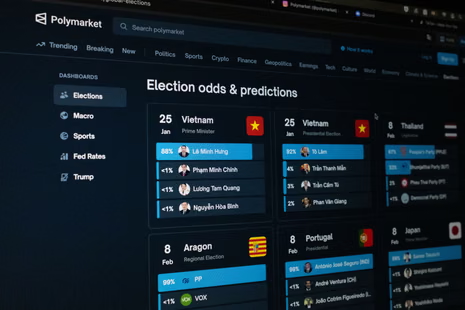
Prediction markets are rapidly gaining popularity across the United States, raising concerns about gambling risks and regulatory oversight. Users as young as eighteen can engage in these markets, betting on outcomes ranging from sports events to political elections, blurring the line between investing and gambling. The term “prediction markets” has become central to discussions about financial risk, as platforms like Polymarket and Kalshi report unprecedented trading volumes that rival conventional stock markets. Analysts warn that the allure of constant updates and high returns may obscure potential harms associated with gambling-like behaviour.
Yadin Eldar, a 21-year-old economics student, has been active in prediction markets since 2019, describing the platforms as a combination of options trading and betting. Eldar explained that, unlike conventional casinos, these markets allow users to interact with constantly changing odds rather than play against a house. Yet, critics like Zachary Azra, a University of North Carolina student, assert that prediction markets are merely another way to gamble money, cleverly disguised as financial activity. This debate highlights growing uncertainty over whether regulators should treat these platforms as investment tools or gambling venues.

Prediction markets operate legally in all U.S. states and allow users to place bets on a wide range of outcomes. Unlike traditional sports betting, which is restricted in some regions and regulated to prevent underage participation, prediction markets impose few limitations, with platforms welcoming anyone over eighteen. Polymarket and Kalshi, two leading services, collectively handled approximately $1.2 billion in trading volume on the Sunday of a recent Super Bowl, reflecting how deeply these markets have penetrated mainstream culture. Social media amplification, through memes and screenshots, further spreads public attention, blurring the boundaries between entertainment, investment, and gambling.
The industry’s proponents argue that these platforms are derivatives markets rather than betting services. They offer “event contracts,” where users profit if a specific outcome occurs and lose if it does not. This binary payoff structure has drawn comparisons to options trading, prompting fierce debate over regulatory classification. Platforms have long engaged with the Commodity Futures Trading Commission, seeking to be treated as financial products rather than traditional betting services. However, skeptics insist the risks mirror those of conventional gambling, including impulsive behaviour, financial loss, and addiction.
High-profile interventions have brought prediction markets under scrutiny. The Biden administration notably targeted Polymarket in 2024, with the FBI raiding the CEO’s home for allegedly enabling U.S.-based users to bet despite a regulatory ban. The Trump administration, in contrast, has taken a more lenient stance, with Donald Trump Jr. publicly involved in advisory roles for both Polymarket and Kalshi. Additionally, Trump Media & Technology Group has announced plans to launch its own prediction platform, further integrating political figures into the market ecosystem. This increasing involvement of political actors amplifies public debate over influence, transparency, and ethical concerns.
Academics note that prediction markets benefit from the perceived loss of credibility in traditional polls and media. Harry Crane, a statistics professor at Rutgers University, explained that these markets reward users who acquire information quickly, potentially giving rise to insider trading concerns. Bets on political outcomes and events like Nobel Prizes have occasionally spiked suspiciously, prompting regulatory review and legislation proposals aimed at limiting unfair advantages. These markets operate continuously, unlike stock markets with fixed trading hours, making them particularly appealing to participants seeking constant updates and immediate feedback on their bets.
Critics worry that widespread engagement with prediction markets could influence real-world outcomes. Political science instructor Grant Ferguson noted that prominent odds can shift voter perception or campaign narratives, with markets potentially shaping behavior rather than merely predicting it. The interactive nature of prediction markets enables users to bet on events they may influence themselves, introducing feedback loops that challenge conventional notions of prediction versus impact. This blurred line complicates any efforts to regulate or classify the platforms definitively.
The risks of gambling-related harm remain significant. Cait Huble, director at the National Council on Problem Gambling, cautioned that users often fail to recognise the similarities between prediction markets and traditional gambling, increasing the likelihood of irresponsible behaviour and financial harm. Young participants may underestimate potential losses, assuming these markets offer reliable investment opportunities. Azra echoed this concern, comparing prediction market participation to smoking, warning that users should be fully aware of the potential dangers before engaging.

Despite warnings, experts suggest that prediction markets are likely to grow in popularity, attracting a wider demographic eager for rapid returns or entertainment. Analysts note that unless regulations or consumer protections are strengthened, the platforms may replicate the same risks associated with conventional gambling, potentially expanding their influence on both financial markets and political outcomes. Eldar believes prediction markets complement traditional polling rather than replacing it, but their growing presence in media and online culture underscores their increasing social relevance.
The ongoing debate over whether prediction markets constitute legitimate financial tools or cleverly disguised gambling operations remains unresolved. With billions wagered weekly, high-profile political involvement, and persistent regulatory uncertainty, prediction markets present both opportunity and risk. Their rapid growth, constant accessibility, and pervasive social presence suggest these platforms will continue to provoke discussion about finance, ethics, and the boundaries of legal gambling in the United States.
Related News:
 Army Officers Orders to Cut Ties with Men-Only Clubs
 Trump’s UK Ambassador Urges North Sea Drilling to Strengthen US Ties
BBC to Apologise Over Edited Trump Speech Amid Backlash
Trump’s UK Ambassador Urges North Sea Drilling to Strengthen US Ties
BBC to Apologise Over Edited Trump Speech Amid Backlash
 Britain deploys RAF specialists to assist Belgium with drone threats
 Millionaires group urge Reeves to introduce wealth tax to ‘lift kids out of poverty’
 Reeves rejects £1bn plea for NHS redundancy payouts
 PM Condemns Leaks, Vows Loyalty to Ministers and Stability
 Major Rent Reform Ends No-Fault Evictions in England
 Greene Pushes Epstein Files Amid Trump Fallout
 December Run-Off in Chile as Election Produces No Winner
 Canada Passes Carney’s First Budget in Tight Parliamentary Vote
 Shadow Fleet at Sea: Europe’s Battle Against Illicit Oil Shipping
 Georgians Defy Government Crackdown After Year of Protests
 US National Guard Member Killed in DC Shooting
 ICC to Rule on Duterte’s Provisional Release
 Starmer Says Labour’s Economic Plan Needs Years to Deliver
 Ley Triumphs in Royal Commission Debate, Paving Way for Unity
 Mandelson apologises over Epstein ties after public scrutiny
 Australia grants Asio powers to designate hate groups under new laws
 Trump press secretary attacks reporter over ICE question
 Starmer Challenges US Over Controversial Greenland Deal
 Spoof “Make America Go Away” Caps Rally Denmark Over Greenland
 Trump Fed bid heads to Supreme Court
 Pentagon Signals Reduced Role in Deterring North Korea
 Artificial intelligence will cost jobs, admits Liz Kendall
 Partial US Government Shutdown Hits Homeland Security Funding
 Mandelson Faces Police Inquiry Over Epstein Leak
 Morgan McSweeney downfall shocks Labour leadership
 UK and US Drop in Global Corruption Index Rankings
 Starmer Faces Inquiry Calls Over Thinktank Probe
 Royal Mail Delivery Crisis Deepens Amid Weather Chaos
 UK shelves £110m border project amid trade strain
 AFP Reviews Pauline Hanson Comments
 California Democrats Vow Trump Reckoning
 Trump Tariffs Threat Spark UK and EU Alarm
 Trump’s Surgeon General Pick Evades Vaccine Questions
 The Dangerous Rise of Remigration Across Modern Europe
 US to offer passport services in West Bank settlements
 Green Party Stuns Labour in Gorton and Denton Byelection
 Labour Together scandal sparks clean break vow
 Iran Defiance Grows Amid US-Israel War Pressure
 Starmer Praised for Stance on Trump and Iran Conflict
 NHS Plans to Cut Overseas Workers Labeled Overambitious
 Danish Election Deadlock Shakes Frederiksen’s Grip
 Pope Rebukes Leaders for War as Middle East Tensions Rise
 Army Probes Apache Flyover at Kid Rock’s Nashville Estate
 Farage Shuns Truss as US Right-Wing Roadshow Hits London
 Chancellor Meets Supermarket Chiefs Over Living Costs
 Italian Town Buys Mussolini Villa to Keep Away Fascist Fans
 Report Says Pezzullo Acted ‘Recklessly’ in Dealings
 Suspected Plot Targets Pipeline Before Hungary Vote
 Trump Defiant After Washington Hotel Shooting
 Starmer Survives Mandelson Rebellion
 Trump approval plunges amid Iran war fears
 Tough Fiscal Realities Await Next Scottish Government
 US ‘Narco Boat’ Strikes Draw Global Outcry
 One Nation Candidate’s Surprising Ties to Independents
 Labour Members Doubt Starmer Future as Burnham Leads Poll
 Reform UK Faces Crisis as Newly Elected Councillors Resign
 Farage Faces New Questions Over Private Helicopter Use
 Green Party Makerfield Candidate Resigns Over Posts
 Tony Abbott Returns as New Liberal Party President
 US green card applicants must apply from abroad, DHS says
 Discontent grows around Putin amid war strain
 DeSantis’s ‘Alligator Alcatraz’ Faces Final Shutdown
 Secret Role of UK Security Services in Troubles Amnesty Law
 Starmer Leadership Under Pressure After Setbacks
 The Hidden Crisis Eroding Trust in British Communities
 Deepfake Abuse on X Sparks Safety Concerns for Dissidents
 UK Ministers Lobby Trump Over Under-16s Social Media Ban
 Starmer Resolves to Fight Burnham in Leadership Battle
 US Courts Back Trump on Park Signage Removals
 Hollie Ridley to Step Down as Labour General Secretary
 Trump’s Mount Rushmore Speech: A Divisive Anniversary
 Jarvis Urges Burnham to Secure 3.5% Defence Spending
 Trump’s Red-Card Intervention Hurts the US World Cup
 Farage Warns Sky News Following Financial Inquiry
 Trump Swaps Planes Amid Iran Tensions
 Ann Widdecombe, Formidable Political Figure, Dies at 78
 Houthis Strike Saudi Arabia as Middle East Tensions Rise