Published: 19 February 2026.. The English Chronicle Desk. The English Chronicle Online
The United States is preparing to significantly reduce its remaining military presence in Syria over the coming months, marking a pivotal shift in Washington’s Middle East strategy at a time of heightened regional tension. A senior White House official has confirmed that approximately 1,000 American troops stationed in Syria will be withdrawn as part of what the administration describes as a “conditions-based transition.” The move signals a recalibration of America’s on-the-ground engagement in Syria, even as military deployments elsewhere in the region intensify amid rising friction with Iran.
American forces have operated in Syria since 2015 as part of an international coalition to combat the so-called Islamic State group. At the height of the campaign, thousands of US troops were deployed to support local allies, particularly Kurdish-led forces, in dismantling the territorial “caliphate” declared by IS in 2014. Over the past decade, US-backed operations played a critical role in recapturing key strongholds such as Raqqa and Deir ez-Zor, severely weakening the group’s operational capacity.

According to the White House official, the Syrian government has now agreed to assume primary responsibility for counter-terrorism operations within its borders, reducing the need for a large-scale American presence. While the US will retain the ability to respond rapidly to emerging threats, officials argue that maintaining troops “at scale” is no longer strategically necessary.
The decision unfolds against a broader backdrop of regional instability. Despite withdrawing from Syria, the Trump administration has simultaneously ramped up military readiness across the Middle East. BBC Verify recently confirmed the presence of the USS Abraham Lincoln aircraft carrier strike group near Iranian waters. The carrier, supported by guided missile destroyers and equipped with dozens of advanced fighter jets, represents a significant show of force.
In parallel, the USS Gerald R. Ford, the world’s largest aircraft carrier, has reportedly been dispatched to the region and is expected to arrive within weeks. The dual carrier presence underscores Washington’s message that while it may be reducing its footprint in Syria, it remains prepared to project power elsewhere.
Senior national security officials told CBS News that President Donald Trump has directed the US military to be prepared for potential strikes against Iranian targets, should circumstances warrant. Although no final decision has been publicly announced, the mere preparation signals the seriousness with which Washington views current tensions.
The withdrawal from Syria also follows significant political changes within the country itself. The collapse of the Assad government in 2024 fundamentally altered Syria’s power dynamics. In its aftermath, President Ahmed al-Sharaa emerged as a central figure in Damascus, ushering in a new political chapter that has cautiously opened doors to diplomatic engagement with Western nations.
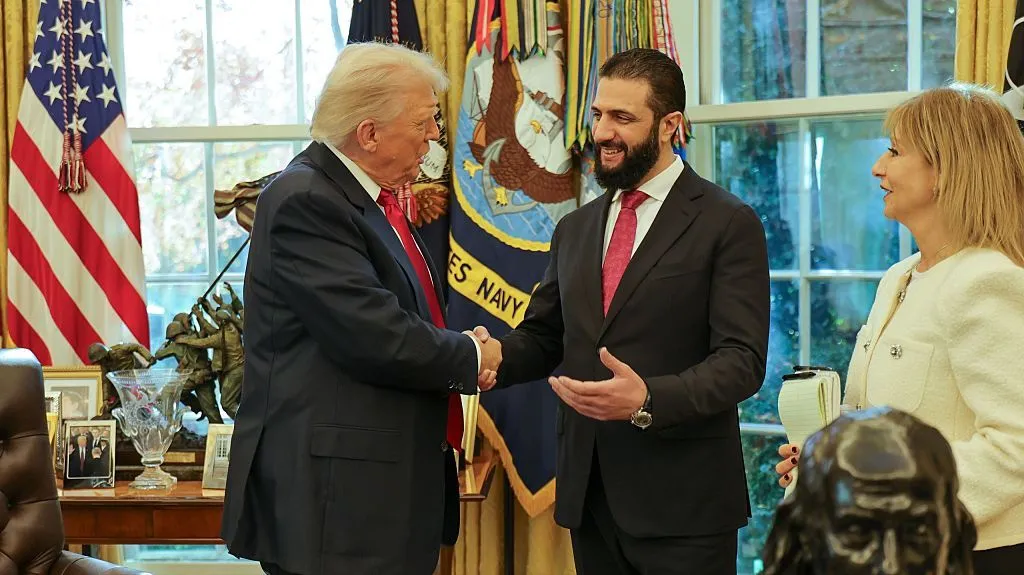
In November, Sharaa visited the White House, marking the first visit by a Syrian leader to Washington in the nation’s history. The symbolic meeting reflected a thaw in relations and the Trump administration’s stated desire to stabilise Syria through diplomatic channels rather than prolonged military involvement.
Yet Syria’s internal security landscape remains complex. Although Islamic State has been substantially weakened, it has not been eradicated. In December, a tragic ambush in Palmyra claimed the lives of a translator and two members of the Iowa National Guard. The Pentagon attributed the attack to a lone IS gunman. In response, the US launched Operation Hawkeye Strike, conducting a series of targeted raids aimed at dismantling remaining extremist cells.
Officials insist that the troop drawdown does not equate to disengagement. Rather, it reflects a shift toward intelligence cooperation, regional partnerships, and over-the-horizon capabilities. American forces have already vacated key installations, including the al-Tanf garrison in southern Syria and the al-Shaddadi base in the north-east. These departures form part of a phased transition rather than an abrupt exit.
Another critical element of the evolving security arrangement involves the Kurdish-led Syrian Democratic Forces (SDF). Historically, the SDF served as Washington’s most reliable partner on the ground. However, tensions between Kurdish groups and Damascus complicated post-Assad integration efforts. In January, a breakthrough agreement was reached to incorporate SDF units into Syria’s national armed forces structure, aiming to unify command and reduce the risk of fragmentation.
Secretary of State Marco Rubio met Syrian Foreign Minister Asaad al-Shaibani last week to discuss maintaining the fragile ceasefire and ensuring that counter-terrorism operations remain effective. Rubio reportedly emphasised the importance of preventing any resurgence of extremist networks, particularly as the US reduces its direct footprint.
Analysts suggest that Washington’s recalibration is influenced by both domestic and strategic considerations. After more than a decade of involvement in Syria, public appetite for sustained overseas deployments has waned. At the same time, policymakers increasingly view Iran as the more immediate regional challenge. By concentrating naval and air assets near Iranian territory, the administration signals deterrence without committing large numbers of ground troops.
Critics, however, caution that reducing US presence in Syria could create security gaps that extremist groups might exploit. Past withdrawals in other theatres have occasionally led to power vacuums, enabling militant networks to regroup. Supporters counter that Syria’s improved security environment, combined with enhanced Syrian government responsibility, reduces that risk.
The geopolitical implications extend beyond Syria and Iran. Regional actors including Turkey, Israel, and Gulf states are closely monitoring the shift. Israel, in particular, remains concerned about Iranian-backed militias operating across Syria. A diminished US footprint may alter regional calculations, though American air and naval capabilities continue to offer a deterrent umbrella.

For many Syrians, the withdrawal carries mixed symbolism. On one hand, it signals a return of sovereignty and reduced foreign military presence. On the other, lingering fears of instability persist, especially in areas once heavily contested by IS fighters.
As the months ahead unfold, the success of the transition will likely hinge on Syria’s ability to maintain internal security and prevent extremist resurgence. Washington’s pledge to remain “ready to respond” suggests that the chapter of direct military engagement may be closing, but the broader narrative of US involvement in the Middle East is far from over.
The withdrawal marks not an end, but a transformation. It reflects a balancing act between disengagement and deterrence, diplomacy and defence. In a region where alliances shift rapidly and tensions simmer beneath the surface, strategic recalibration may be as consequential as outright intervention.
Related News:
 Putin Intensifies Territorial Demands Before US Talks
 Trump to Recheck Green Cards from 19 Nations After DC Attack
 Russia losses Ukraine war peace talks intensify amid rising deaths
 Trump Escalates Minnesota Immigration Surge Amid Rising Tensions
 Trump: US Stands Ready to Help Iran Find Freedom Amid Widespread Unrest
 US Conducts Large-Scale Strikes Against ISIS Targets Across Syria
 Trump Says US Will Act on Greenland ‘Whether They Like It or Not’
 Trump Administration Probe of Fed’s Powell Draws Pushback
 Greenland Faces Pivotal Summit Over Arctic Power Struggle
 Trump Threatens Strong Action If Iran Executes Protesters
 Trump Receives Machado’s Nobel Medal in White House Meeting
 Greenland Crisis Forces Europe to Draw a Line With Trump
 Iran Cannot Be Bombed Into Democracy, Only Helped There
 Historic Abu Dhabi Talks Bring US, Ukraine and Russia Together
 Trump Pulls Canada from His Controversial ‘Board of Peace’ Plan
 EU Says US Ties Have Suffered ‘Big Blow’ After Greenland Crisis
 Thousands Protest ICE Operations in Nationwide US Day of Action
 Epstein Files Reveal Trump Officials’ Emails with Financier
 Thousands Protest ICE in New York Against Trump Deportation Campaign
 Trump Praises ‘Terrific’ Petro After White House Talks
 US Must Be Prudent When Supplying Arms to Taiwan, Xi Tells Trump
 Fears of New Arms Race as US-Russia Nuclear Weapons Treaty Expires
 New Nuclear Talks Between US and Iran Begin in Geneva
 ‘He Did It for Us’: US Soldier Recalls Jesse Jackson’s Efforts to Free Him and Two Other POWs
 Under Pressure From Trump, Venezuela’s New President Has Aces Up Her Sleeve
 Stephen Colbert Says CBS Spiked Interview With Democrat Over FCC Fears
 US Urges Iran to Make Deal as Military Presence Rises
 Kinnock’s Rebuke Echoes Loudly as Corbyn Allies Launch Left-Wing Breakaway: “A Gift to Farage”
 UK and Norway Forge Stronger Ties Through Joint Sanctions and Enhanced Defence Cooperation
 Trump Administration Dismisses 17 Immigration Judges, Sparking Debate Over Judicial Independence
 UK Must Act with Courage and Clarity on Israel-Palestine Conflict, Says Foreign Affairs Committee Report
 Trump Threatens 100% Tariff on Nations Importing Russian Oil Amid India Standoff Over Ukraine War
 Radioactive Leak at UK’s Nuclear Warhead Base Sparks Outcry Over Safety and Secrecy
 Mutual Inconvenience: Why Alaska Was Chosen for the Trump-Putin Summit on Ukraine
 Hong Kong Summons UK and Australian Envoys Following Asylum Grants to Democracy Activists
 Is the UK Ready to Put Boots on the Ground in Ukraine? Assessing Military Capacity and Challenges
 Conservative Influencer Charlie Kirk Fatally Shot During University Debate
 Channel Crossings Surge: Over 1,000 People Arrive in the UK in Small Boats in a Single Day
 Widow of Charlie Kirk Forgives Killer at Emotional Memorial Service
 Yvette Cooper Signals Global Momentum Towards Gaza Peace Deal Amid Humanitarian Crisis
 Public Trust in SNP Hits Historic Low Amid NHS Concerns
 Johnson Suggests Mandelson Linked to China Spy Controversy
 Rachel Reeves signals welfare reform ahead of key budget
 Russia’s Latest Push to Win US Favors Shows Deep Desperation
 BBC to Apologise Over Edited Trump Speech Amid Backlash
 Britain deploys RAF specialists to assist Belgium with drone threats
 Trump Urges Herzog to Grant Netanyahu Full Pardon
 Indian authorities demolish Kashmir home linked to Red Fort blast
 Greene Pushes Epstein Files Amid Trump Fallout
 Trump Deploys DHS to Charlotte in Major Arrest Operation
 December Run-Off in Chile as Election Produces No Winner
 Canada Passes Carney’s First Budget in Tight Parliamentary Vote
 Shadow Fleet at Sea: Europe’s Battle Against Illicit Oil Shipping
 India’s COP30 Delay Raises Global Climate Concerns
 Two National Guard Soldiers Critically Injured Near White House
 Georgians Defy Government Crackdown After Year of Protests
 US National Guard Member Killed in DC Shooting
 American Mother Extradited From UK to U.S. on Murder Charges
 US Cities Erupt in Protests Against Trump’s Venezuela Military Action
 Albanese Opens Door to Bondi Royal Commission Amid Rising Pressure
 Iran Protesters Defy Crackdown as Violent Clashes Intensify
 Homeland security agents deployed amid Minneapolis protests
 Trump Weighs Response to Iran Crackdown as Tehran Says Communication Open With US
 US Clears Nvidia AI Chip Sales to China in Policy Shift
 Machado Trump medal gesture reshapes Venezuela power struggle
 European Leaders Condemn Trump Tariff Threat Over Greenland
 EU weighs response amid Greenland tariff crisis with Trump
 Andrew Hastie Emerges as Leadership Rival to Ley
 Videos reveal earlier clash before Alex Pretti shooting
 Israel Moves to Bar MSF From Gaza Operations
 Nurses’ families fear breakup under UK immigration crackdown
 ‘Trump Will Be Gone in Three Years,’ Top Democrats Tell Europe
 After the Landslide: Can India Reset Ties with BNP Bangladesh?
 Australian Families Leave Syrian Camp for Home
 Starmer Weighs Fast-Tracking Defence Boost
 Trump Attacks UK-California Energy Pact
 US Civil Rights Leader Jesse Jackson Dies Aged 84
 Iran Says ‘Guiding Principles’ Agreed With US at Nuclear Talks
 Nine Arrested in France Over Death of Far‑Right Student
 South Korea’s Ex-President Faces Death Penalty in Insurrection Trial