Published: 26 February 2026. The English Chronicle Desk. The English Chronicle Online.
The winners of the 2026 Inclusive Books for Children awards showcase inspiring stories that resonate widely. Six female authors have claimed this year’s prizes, celebrating inclusive narratives for children aged one to nine across the United Kingdom. The literacy charity behind the awards has shared a £30,000 prize fund among the authors and illustrators, recognising their innovative contributions to children’s literature. This year marks the second consecutive occasion where every winner has been a woman, demonstrating a shift towards greater diversity in children’s publishing. Winners will present their works at the Hay festival in May, engaging with readers and highlighting the importance of inclusive storytelling.
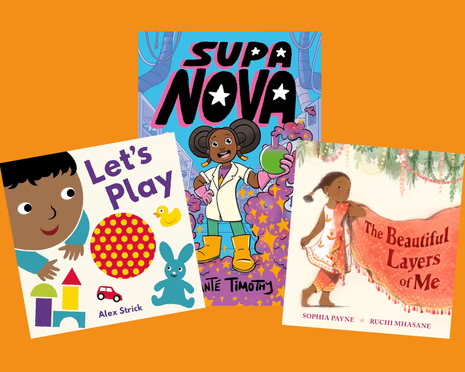
In the children’s fiction category, the top award was given to Supa Nova by Chanté Timothy, a graphic novel exploring the life of a young Black girl passionate about science and discovery. The picture book prize was awarded to The Beautiful Layers of Me by Sophia Payne and Ruchi Mhasane, which follows a young girl building the confidence to wear a salwar kameez for the first time, embracing her cultural identity. In the baby and toddler category, the award went to Let’s Play by Alex Strick, Annie Kubler, and Sarah Dellow, a touch-and-feel book incorporating words in sign language and braille, designed to foster inclusion from an early age. Each winning title was carefully evaluated by a panel of educators, authors, and illustrators, who assessed both the quality of storytelling and the authenticity of representation.
 Judge and illustrator Mei Matsuoka praised the winners, stating, “These books are pushing boundaries and opening pathways into worlds that need to be represented more.” She emphasised how inclusivity was woven into narratives that were engaging, humorous, and emotionally resonant without feeling forced or didactic. Matsuoka’s remarks underline the awards’ mission to recognise children’s literature that combines accessibility with creativity, highlighting stories that reflect a broad spectrum of experiences. The judging panel commended the authors for their “compelling storytelling, strong visual composition and authentic representation,” reinforcing the awards’ commitment to promoting literature that challenges norms and expands cultural visibility.
Alongside the main prizes, the Inclusive Books for Children initiative also introduced the inaugural children’s choice awards. Designed as a pilot scheme, the awards aim to foster a love of reading and encourage young readers to express their preferences. Primary school pupils across the UK voted for their favourites, selecting Won’t Go! by Sumana Seeboruth and Fotini Tikkou, Cloud Boy by Greg Stobbs, and Supa Nova as their top choice. The children’s choice awards complement the main prizes by providing a platform for young readers to have a voice in recognising literature that resonates with their daily lives and interests.
The announcement of the winners coincides with the government’s National Year of Reading campaign, which aims to rekindle children’s passion for books by allowing them to follow personal reading interests. This initiative responds to alarming findings from the National Literacy Trust, which reported that enjoyment of reading among children and young people is at its lowest recorded level, with only one in three eight- to eighteen-year-olds expressing strong enjoyment. Literacy advocates suggest that inclusive and engaging narratives can help reverse this trend, making reading an appealing and meaningful activity for all young audiences.
Recent research by the Inclusive Books for Children charity has highlighted significant disparities in representation. A report released last year revealed that the number of children’s books featuring a Black main character fell by more than a fifth between 2023 and 2024. Of the 2,721 books surveyed, only 51 featured a Black protagonist, representing a 21.5% decrease compared with the previous year. The charity described this as a “catastrophic decline in Black representation” and warned that these findings expose stark inequalities in the UK’s children’s publishing landscape. Initiatives such as the IBC awards are designed to counteract these trends, celebrating diverse voices and narratives that have historically been underrepresented in mainstream publishing.
The 2026 winners reflect a variety of approaches to inclusive storytelling. Supa Nova merges scientific curiosity with cultural identity, presenting a young protagonist who defies stereotypes in both educational and social spheres. Its visual storytelling emphasizes the intersection of creativity and knowledge, encouraging young readers to see themselves reflected in STEM-related pursuits. Meanwhile, The Beautiful Layers of Me addresses themes of self-expression and cultural pride, illustrating how personal growth can emerge from embracing one’s heritage. Let’s Play demonstrates the potential of tactile and multisensory books to engage young children, making literature accessible to those with sensory impairments or communication differences. Collectively, these works exemplify the broad scope of inclusive literature and its capacity to engage readers across multiple dimensions.
Judges noted that the books excelled not only in narrative quality but also in the authenticity of character experiences. By centering stories around protagonists from diverse backgrounds, the awards aim to challenge preconceptions and inspire empathy among young audiences. Illustrators and authors involved in the project highlighted the importance of visual and textual storytelling in conveying nuanced experiences, stressing that representation in children’s literature can shape perceptions from the earliest stages of development. Educators involved in the judging process also emphasised how these books could be incorporated into classroom settings to foster inclusivity, discussion, and cultural awareness among pupils.
The awards reflect a broader shift in the UK publishing industry, which is increasingly acknowledging the need for diverse perspectives and authentic representation. Initiatives such as the Inclusive Books for Children awards provide both recognition and financial support to authors whose works champion these principles. Beyond celebrating individual achievements, the awards encourage publishers to invest in projects that explore underrepresented stories, promoting equality within the literary landscape. The IBC awards also serve as a model for international efforts to diversify children’s literature, demonstrating how targeted recognition can elevate voices that might otherwise remain marginalised.

Engagement with events like the Hay festival offers further opportunities for children and educators to interact directly with authors, fostering a sense of connection between readers and the creative process. These presentations allow authors to discuss their inspiration, challenges, and commitment to inclusive storytelling, providing young audiences with role models and tangible examples of literary creativity. Such interactions also reinforce the message that literature can be both enjoyable and educational, demonstrating the power of stories to cultivate curiosity, empathy, and understanding.
As the UK continues to grapple with declining reading enjoyment among children, initiatives like the IBC awards are crucial in promoting diverse and accessible literature. By combining rigorous judging criteria, community engagement, and public recognition, the awards create a platform for stories that might otherwise struggle to gain visibility. The focus on authentic representation ensures that children encounter protagonists who reflect their own experiences, as well as those of peers from different cultural, social, and sensory backgrounds. These stories not only entertain but also educate, instilling values of inclusion, respect, and understanding.
In conclusion, the 2026 Inclusive Books for Children awards highlight the transformative potential of inclusive literature. By recognising six female authors whose works combine creativity, authenticity, and accessibility, the awards contribute to a more equitable publishing landscape. The introduction of the children’s choice awards, alongside recognition from industry professionals, ensures that young readers have agency in shaping literary culture. As reading initiatives expand and engagement with diverse narratives grows, the impact of these books will extend far beyond the awards themselves, fostering a generation of readers who value both imagination and inclusion.
Related News:
 Peterborough Mosques Tighten Security After Attack
 Reeves Faces Setback as Labour May Miss Homes Target
 Hospice Cuts Raise Alarm Across England Amid Funding Crisis
 Kate Winslet to Narrate Film Highlighting King’s Environmental Mission
 Green Party Surges Past Labour in Latest UK Poll
 Trump’s UK Ambassador Urges North Sea Drilling to Strengthen US Ties
 Children to Learn Local History in Major Curriculum Overhaul
 French Taxi Driver Cleared in David Lammy Theft Case After Fare Dispute
 UK Bans Fake Numbers: Scammers Lose Their Trick
 Prince William Plants Trees with Brazil’s Nature Heroes
 M&S Profits More Than Halve After Cyber-Attack
 Kent village told to remove flags before Christmas lights go up
 Patients to Test Health at Home to Ease NHS Winter Pressure
 King Charles to Lead Nation in Remembrance Sunday Service
 Palace May Restore Hyphen to Andrew Mountbatten-Windsor’s Name
 Millionaires group urge Reeves to introduce wealth tax to ‘lift kids out of poverty’
 Starmer Faces Growing Dissent as Labour MPs Weigh Leadership Challenge
 Shouting Works Best to Deter Gulls, UK Study Finds
 Reeves rejects £1bn plea for NHS redundancy payouts
 Northern Lights may illuminate UK skies this week
 PM Condemns Leaks, Vows Loyalty to Ministers and Stability
 Son Reveals UK Couple in Iran Resort to Hunger Strike for Help
 Major Rent Reform Ends No-Fault Evictions in England
 Former Lion Heskey Warns of Shortage of England Strikers
 Criminal Gangs Pose as Truckers to Hijack UK Supply Chains
 Stroke Patient Mistaken for Drunk, Care Delayed
 Van Dwellers Face Eviction After Park Misuse Sparks Outcry
 ‘Traumatic Wait’: Northern Ireland Women Face Breast Cancer Delays
 Serial Rapist and Former Cop Found Guilty Again
 Royal Navy Shadows Russian Warships Entering the Channel
 Inside the Helpline Protecting Missing Children in the UK
 Most Tories Expect to Support a Farage-Led Government
 Boots Showstopper Beauty Bundle Outshines Many Advent Calendars This Holiday Season
 Labour’s ‘blinkered’ drive to build risks pushing wildlife to point of no return, nature experts warn
 PlayStation PS5 Deals Hit Lowest Prices Ahead of Black Friday
 Karen Carney Stuns on Blackpool Week, Deserves Strictly Final
 Five-Year-Old Dies After Rare Tonsil Surgery Complication
 Fibromyalgia Patients Struggle as NHS Fails to Provide Care
 Starmer Says Labour’s Economic Plan Needs Years to Deliver
 Virgin Media Fined £23.8m Over Telecare Safety Failures
 More Patients Now Contacting GPs Online, Data Shows
 UK unemployment rises to four-year high of 5.1% before budget
 Wiltshire Police Use Lasso to Catch Rampaging Village Goat
 Children to Receive Home Vaccines as England Acts
 Cambridge College Faces Backlash Over Private School Recruitment
 NHS Violence Crisis: Staff Face Daily Assaults
 Celebrity Campaign Highlights SMA Screening Failures
 Bereaved Fathers Gain New Paternity Leave Rights in UK
 Storm Goretti leaves Cornwall homes without power
 New Documentary Examines Teen’s Zombie Knife Murder
 Woman Jailed for Life After Killing E-Bike Rider in Tragic Mistaken Identity Case
 Right Must Unite After Jenrick Defection, Urges Rees-Mogg
 UK Ministers Drop Foreign Student Targets for Global Education Push
 No Gas Boiler Ban as UK Warm Homes Plan Backs Heat Pumps
 UK Glaucoma Rise Signals Looming Eye Health Crisis by 2060
 Shinzo Abe’s killer receives life sentence in Japan
 Police response times face strict new national limits
 Edinburgh, Glasgow Lead UK Nightlife Hotspots, Uber Data
 Labour policing overhaul sparks fears over growing central control
 Devon hosts first high-density hydro power system
 Pornhub blocks new UK users over age checks dispute
 Starmer warns of toxic division politics in Reform challenge
 UK New Car Discounts Near £6,000 as Prices Are Slashed
 Pneumonia Surge Pushes England Emergency Cases Higher
 Palantir contracts face UK halt calls over transparency
 Send spending gap leaves deprived areas behind
 Hidden Crisis: Domestic Abuse Suicide Toll in UK
 Farage to Name Jenrick as Reform Chancellor Pick
 UK MPs Demand Ban on Brazilian Butt Lifts
 Civil Service Pay: Union Urges Ministers to End ‘Barking Mad’ Limits
 Antonia Romeo appointment sparks criticism
 Farage Chagos Islands Row Sparks Fury
 UK Job Vacancies Hit Five-Year Pandemic Low
 UK Youth Unemployment Surges Amid Tax Changes
 Reform UK targets workers’ rights repeal
 Half of Britons Avoid GP When Ill, Survey Reveals Growing Concern
 Strong Rebound for UK Housing Market Sees 6% More Homes
 Russian Trade Routed Through British Islands Exposed
 Mandelson Arrest: Met Apologises to Hoyle
 Rolling Hills and Heritage: A Car-Free Break in Leicestershire