Published: 26 March 2026. The English Chronicle Desk. The English Chronicle Online.
The name Samuel Pepys has long been synonymous with the vibrant and chaotic history of seventeenth-century London. His famous journals provided us with an almost voyeuristic window into the Great Fire, the Great Plague, and the intricate social hierarchies of the Restoration era. We have traditionally viewed him as a candid observer, a man whose private thoughts were laid bare for posterity in a complex shorthand. However, groundbreaking new research has begun to pull back the curtain on a much more calculated version of the man. It appears that Pepys was not just a passive recorder of history but a master of his own narrative, specifically when it came to his involvement with the burgeoning slave trade. Recent findings suggest that Pepys carefully curated his personal archives to hide the fact that he was once offered an enslaved boy as a bribe. This revelation shifts our understanding of the diarist from a mere storyteller to a powerful state official who understood exactly how to manipulate the record to protect his reputation and career.
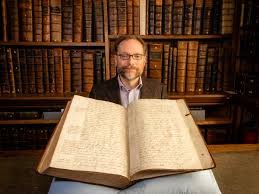
Dr. Michael Edwards, a dedicated historian from Cambridge University and a fellow of Jesus College, is the scholar behind this illuminating study. His research involved an exhaustive dive into hundreds of historical records spanning several prestigious institutions. He spent years combing through the Pepys Library at Magdalene College, the National Archives, and the Bodleian Library in Oxford. The resulting paper, titled Samuel Pepys, the African Companies, and the Archives of Slavery, 1660–1689, provides a sobering look at how deeply the English state was entangled with human trafficking. The study highlights a specific incident from April 1675 involving a naval officer named John Howe. At the time, Howe was seeking the influential support of Pepys to reclaim a ship’s command he felt he had been unfairly denied. In a bid to win over the high-ranking naval official, Howe wrote a letter offering a small enslaved boy as a gift for his honour.

In the letter, Howe expressed his hope that the child was sufficiently seasoned to endure the cold weather of England, a chillingly casual reference to the survival of a human being in a foreign climate. Pepys did eventually write back to reject the offer, but the research suggests his motivations were far from humanitarian. During this period, Pepys was the Secretary to the Admiralty, a position of immense power and constant scrutiny. He was a man with many political enemies and was acutely aware of how a public scandal could lead to his downfall. In fact, he was later imprisoned in the Tower of London on charges of corruption and popery in 1679. Therefore, his rejection of the enslaved boy was likely a calculated move to avoid the appearance of being susceptible to bribery rather than a moral stand against the institution of slavery itself. He was playing a high-stakes political game where his image as a law-abiding official was his most valuable asset.
What makes this discovery particularly fascinating is how the evidence of this transaction was subsequently managed within the Pepys archive. Dr. Edwards argues that Pepys and his loyal clerk, William Hewer, worked together to index and organize his correspondence in a way that obscured the reality of the situation. In later records, the mention of a human being is replaced by sterile, bureaucratic language such as gratuity or reward. By stripping away the humanity of the subject, Pepys was able to frame the incident as a standard official matter rather than a failed attempt at human trafficking. This process of erasure meant that the fate of the young boy disappeared from the historical record entirely. While Pepys was a compulsive archive maker who preserved massive amounts of naval paperwork, he was also a selective one. He understood that the written word could be used as a shield just as easily as it could be used as a mirror.
To understand why such an offer was made in the first place, one must look at the broader context of the English Navy at the time. The Navy was not just a military force; it was a primary engine for global trade and colonial expansion. Pepys was instrumental in arranging the loan of naval ships to the Royal African Company, an organization that held a monopoly on the English trade in enslaved people. The ship Phoenix, which John Howe served on, was one of the vessels lent to the company under Pepys’ oversight. Records from that specific voyage show that the ship arrived in Barbados in late 1675 after a harrowing journey from the African coast. The logbooks reveal the deaths of nineteen enslaved people during the crossing, all of whose bodies were thrown overboard. This was the brutal reality of the industry that Pepys facilitated from his desk in London, proving that his professional life was inextricably linked to the transatlantic slave trade.
Interestingly, while Pepys was careful to hide the evidence of bribes, he was surprisingly unashamed about his personal ownership of enslaved people in other parts of his records. In one instance from September 1688, he wrote to a ship’s captain about an enslaved man in his own household. Pepys described the man as mischievous and lamented that neither whipping nor fetters had been enough to reform his behavior. He instructed the captain to take the man away, keep him on a diet of hard meat, and eventually sell him off to a plantation as a rogue. Another record from 1679 shows Pepys arranging the sale of an enslaved male through a naval contact, casually telling the recipient not to let the black boy add any extra care to his responsibilities. These entries show a man who viewed human beings as property to be managed, punished, or traded away when they were no longer useful or became a social liability.
The research conducted by Dr. Edwards serves as a vital reminder that the historical figures we celebrate often have complexities that are conveniently overlooked. Samuel Pepys helped build the foundations of the modern British state, but that state was built on a foundation of exploitation. The presence of a substantial number of Black people in seventeenth-century London was a direct result of these global trading networks. For too long, the stories of the unnamed men and boys mentioned in these archives have been silenced by the very men who recorded them. By examining the gaps and the careful edits in the Pepys archive, historians can begin to reconstruct a more honest version of the past. It is not enough to simply read the diaries; we must also look at what was intentionally left out or rephrased to suit a specific narrative.

As we move further into the twenty-first century, the demand for transparency regarding Britain’s colonial past continues to grow. The work of historians like Dr. Edwards is essential for providing the evidence needed to have these difficult but necessary conversations. The revelation that a figure as central to English literature as Samuel Pepys was actively involved in the slave trade—and actively worked to hide the more unsavory aspects of that involvement—is a powerful call for reflection. It reminds us that history is not just a collection of facts but a series of choices made by those who had the power to write it down. The boy offered to Pepys may never have a name in our history books, but his presence in the archives, however fleeting, tells a story of a system that treated human lives as currency.
In the end, the legacy of Samuel Pepys remains a dual one. He is still the man who gave us the most vivid account of London’s survival during its darkest hours, but he is also a man of his time, deeply complicit in the era’s greatest cruelties. The process of curating his papers was an attempt to control how future generations would see him, and for centuries, it worked. But as more records come to light and new perspectives are applied to old documents, the truth begins to surface. This latest research ensures that the story of the enslaved boy and the many others like him will no longer be hidden behind the polished prose of a high official. Their lives were part of the fabric of the seventeenth century, and acknowledging their existence is the first step toward a truly comprehensive history of the British Empire.
Related News:
 Koh-i-noor Diamond Row Reignites Colonial Debate
 Reeves Faces Setback as Labour May Miss Homes Target
 Kate Winslet to Narrate Film Highlighting King’s Environmental Mission
 Trump’s UK Ambassador Urges North Sea Drilling to Strengthen US Ties
 UK Bans Fake Numbers: Scammers Lose Their Trick
 M&S Profits More Than Halve After Cyber-Attack
 Patients to Test Health at Home to Ease NHS Winter Pressure
 Millionaires group urge Reeves to introduce wealth tax to ‘lift kids out of poverty’
 Reeves rejects £1bn plea for NHS redundancy payouts
 Northern Lights may illuminate UK skies this week
 PM Condemns Leaks, Vows Loyalty to Ministers and Stability
 Inside the Helpline Protecting Missing Children in the UK
 PlayStation PS5 Deals Hit Lowest Prices Ahead of Black Friday
 Five-Year-Old Dies After Rare Tonsil Surgery Complication
 Starmer Says Labour’s Economic Plan Needs Years to Deliver
 Starmer Faces Parliamentary Battles Over UK-EU ‘Reset’ Plan
 Met Police Vetting Failures Let Serial Rapists Remain
 Google Employee Claims Redundancy After Harassment Report
 Fatal Bolton Taxi Crash Claims Three Teens and Driver
 ScottishPower Tops List of Worst UK Energy Suppliers
 Judi Dench Champions Fight to Save London’s Green Spaces
 Crowborough Camp Welcomes First Asylum Seekers
 BBC Funding Crisis: Tim Davie Warns of Jeopardy Ahead
 Storm Chandra floods Somerset, triggers major incident declaration
 Artificial intelligence will cost jobs, admits Liz Kendall
 Older Women Vanish from BBC Screens, Review Confirms Bias
 Mandelson Faces Police Inquiry Over Epstein Leak
 Streeting moves on doctor pay to end strike dispute
 UK reports baby formula toxin poisoning cases across the country
 Morgan McSweeney downfall shocks Labour leadership
 Send spending gap leaves deprived areas behind
 Hidden Crisis: Domestic Abuse Suicide Toll in UK
 UK Unemployment Rate Climbs to 5.2% Peak
 Farage Unveils Reform UK Frontbench Team
 BBC World Cup Presenting Duties Shared Among Trio
 Placenta Accreta Warning as Hunt Urges Action
 Wales Approves Assisted Dying Bill Consent
 CPS Updates Guidance on Honour-Based and Dowry Abuse
 Rolling Hills and Heritage: A Car-Free Break in Leicestershire
 Corbyn Leads Your Party in Coordinated Left-Flank Strategy
 Asylum Seekers to Work After Year-Long Wait
 Starmer Row as Greens Demand Apology
 Major Fire Causes Chaos at Glasgow Central Station
 Gordon Brown urges court for crimes against children
 Inquiry into HMRC child benefit errors launched by NAO
 Farage Faces Backlash Over Crypto Cameo Endorsements
 Rising Costs Force Families to Rethink Days Out
 Men Bailed After Arson Attack on Jewish Ambulance Service
 Army Probes Apache Flyover at Kid Rock’s Nashville Estate
 National Energy Grant Proposed to Slash UK Household Bills
 Melania Trump Denies Ties to Epstein and Ghislaine Maxwell
 Mandelson Vetting Scandal: A Crisis of Trust at the FCDO
 Trump Starts $166bn Tariff Refund Process
 Prominent Voices Challenge Palestine Action Ban
 Heritage at Risk: Britain’s Endangered Landmarks
 Starmer Survives Mandelson Rebellion
 New AI Tool To Target Obesity Risk And Transform NHS Care
 Greens Face Internal Row Over Antisemitism Claims
 Met Officers Probed Over Al Fayed Abuse Allegations
 Reform UK Faces Crisis as Newly Elected Councillors Resign
 Starmer Strikes Back as 100 MPs Sign Support Pledge
 UK Firms Freeze Spending as Iran Conflict Bites
 Reeves to Fast-Track Clean Energy Amid Iran Crisis
 The Battle for Wembley Sparking Unprecedented Legal Warfare
 Secret Role of UK Security Services in Troubles Amnesty Law
 Tube Strike Brings Capital to a Standstill Over Shift Disputes
 Teaching Machines Right From Wrong in the Digital Age
 The Hidden Crisis Eroding Trust in British Communities
 Stolen Mobiles Could Soon Become Useless Bricks
 Clean Air Initiatives Spark Major Fall in London Hospital Admissions
 Shocking Zoo Incident Sparks Attempted Murder Probe
 The Hybrid School Revolution Defying the Social Media Ban
 UK Care Crisis: Row Explodes Over New Visa Settlement Rules
 Sainsbury’s Boss Optimistic As Grocery Inflation Eases
 NHS Urges Investigation For Irregular Periods
 US Airman Avoids British Court in Indecent Exposure Case
 Farage Warns Sky News Following Financial Inquiry
 Ann Widdecombe, Formidable Political Figure, Dies at 78
 UK Schools Struggle as Classrooms Top 40C
 Westminster Council Threatens Charing Cross Soup Kitchen