Published: 30 March 2026. The English Chronicle Desk. The English Chronicle Online.
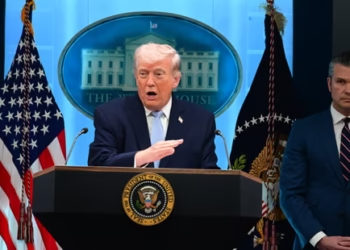
The geopolitical landscape of the Caribbean shifted unexpectedly today as President Donald Trump signalled a surprising change. He appeared to relax the long-standing de facto oil blockade currently strangling the island of Cuba. This sudden pivot occurred just hours before a sanctioned Russian oil tanker was due to arrive. The vessel is approaching the island amidst a period of intense pressure from the United States government. Reporters gathered aboard Air Force One were surprised by the president’s newfound tone regarding the shipment. Trump stated that he has no problem if a country wants to send oil into Cuba. He specifically mentioned that his administration would not block the delivery even if it originated from Russia. This comment marks a significant departure from the aggressive stance maintained by his administration until very recently.
For months, Washington had effectively prevented almost all oil shipments from reaching the shores of Cuba. The primary goal of this strategy was to exert maximum pressure on the government in Havana. High-ranking officials had previously issued a series of threatening statements to discourage any potential global suppliers. However, the New York Times recently reported that the United States would allow this specific tanker. The vessel is filled with crude oil and represents a vital lifeline for the struggling nation. Cuba is currently facing a worsening energy crisis that has crippled daily life for its many citizens. It remains unclear why the Trump administration decided to allow this particular shipment to proceed now. Some analysts suggest that blocking the tanker by force could have sparked dangerous tensions with Russia. A naval confrontation at sea is something both global powers likely wish to avoid at this time.
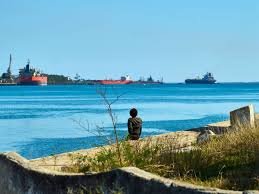
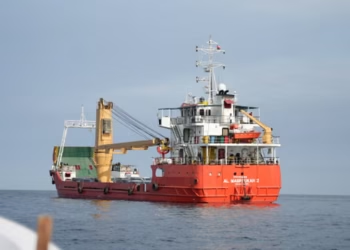
The Russian tanker involved in this high-stakes maritime drama is named the Anatoly Kolodkin. It is currently carrying approximately 730,000 barrels of crude oil across the vast Atlantic Ocean. Tracking services such as MarineTraffic and LSEG confirm that the ship is heading toward Matanzas port. If the vessel maintains its current course, it will soon begin discharging its critical cargo there. These thousands of barrels would provide significant and immediate relief to the people of the island. President Miguel Díaz-Canel recently highlighted the severity of the fuel shortage during a public address. He noted that Cuba has not received any significant oil imports for three full months. This lack of supply has led to strict rationing of gasoline across the entire country. The energy crisis has also resulted in multiple and prolonged power outages for many residents.
The situation in Havana became particularly dire after the loss of their main regional ally. Venezuela had served as the primary oil supplier for Cuba for many years until very recently. This relationship ended abruptly in January when United States forces captured the Venezuelan president, Nicolás Maduro. Following that event, Trump threatened to impose heavy tariffs on any nation sending oil to Cuba. He even mused publicly about the possibility of taking control of the island through direct means. Such rhetoric created a sense of immense uncertainty and fear within the international shipping community. Many companies were hesitant to risk the wrath of the American Treasury Department and its sanctions. Consequently, the flow of essential energy resources to the island slowed to a mere trickle. This latest development suggests a possible thawing in that cold and rigid diplomatic strategy.
Jorge Pinon is a respected expert on the energy sector at the University of Texas. He expressed genuine surprise that the United States did not attempt to intercept the Russian ship. Pinon noted that the tanker was vulnerable while it was still navigating through international waters. He explained that once the boat enters Cuban waters, it becomes almost impossible to stop. The legal and military complexities of an intervention increase significantly once a ship enters sovereign territory. By allowing the vessel to get this close, Washington has essentially permitted the delivery to happen. This choice reflects a strategic calculation that prioritises stability over the total enforcement of the blockade. Perhaps the administration recognised that the humanitarian cost of the blockade was becoming far too high. The social fabric of Cuba has been stretched to a breaking point by these measures.
The effects of the American oil blockade have forced Cuba to adopt various emergency measures. The government has been compelled to implement strict rationing of all available gasoline and diesel. Fuel prices have soared to levels that are unaffordable for the average Cuban citizen today. Public transport services have dwindled, leaving many workers unable to reach their places of employment. Even some international airlines have been forced to suspend their regular flights to the island nation. This has dealt a massive blow to a fragile economy that relies heavily on tourism. The arrival of the Russian shipment could provide a brief but necessary moment of breathing room. Experts believe the crude oil can be converted into 250,000 barrels of usable diesel fuel. This amount is estimated to cover the national demand for about twelve days.
While twelve days of fuel may seem small, it is a monumental shift for Havana. It represents the first major break in a blockade that felt increasingly permanent and total. The move also signals that Russia remains committed to supporting its historical allies in the Caribbean. Moscow is clearly willing to test the limits of American sanctions to maintain its influence. Trump’s relaxed attitude suggests he may be using this as a bargaining chip elsewhere. International observers are now watching closely to see if this is a one-time occurrence. It could also be the start of a more nuanced approach to Caribbean policy. For the people of Cuba, the primary concern remains the restoration of their power grid. They hope that this arrival marks the end of the darkest days of rationing.
The geopolitical implications of this event will likely be discussed in London and Brussels tomorrow. European leaders have often criticised the unilateral nature of the American sanctions against the island. They argue that such measures hurt the civilian population more than the political leadership. If the United States is truly softening its stance, it could open doors for diplomacy. However, the volatile nature of the current administration makes any long-term predictions quite difficult. One day the president is threatening tariffs, and the next he is allowing tankers. This unpredictability has become a hallmark of American foreign policy during this turbulent era. For now, the Anatoly Kolodkin continues its steady journey toward the port of Matanzas. Its arrival will be met with great relief by those waiting in the dark.
The story of the Anatoly Kolodkin is more than just a simple shipping delivery. It is a symbol of the complex power dynamics currently shaping our modern world. It involves the intersection of energy needs, international law, and high-level political posturing. The fact that the ship is Russian adds another layer of intrigue to the situation. It highlights the ongoing rivalry between Washington and Moscow on the global stage. Even as they clash in other regions, they must navigate these delicate maritime encounters. The world waits to see how Havana will respond to this unexpected diplomatic lifeline. Will this lead to further concessions or a return to the previous status quo? Only time will tell how this Caribbean energy drama eventually plays out for all.
Related News:
 British skier killed in La Plagne avalanche tragedy
 Mandelson apologises over Epstein ties after public scrutiny
 Friedman Uninvited From 2024 Adelaide Writers’ Week
 Starmer Challenges US Over Controversial Greenland Deal
 Spoof “Make America Go Away” Caps Rally Denmark Over Greenland
 Starmer Resists Matching Trump Amid Greenland Tensions
 Silence and Unity Mark Bondi Terror Attack Memorial
 India-EU Free Trade Deal Marks Historic Economic Shift
 Thousands Protest ICE Operations in Nationwide US Day of Action
 Concerns rise for Canberra boy amid Iran detention fears
 Anthony Albanese Must Uphold Rights for All Australians
 UK suspends study visas for four nations to curb asylum
 New Zealand Covid Response Praised Despite Lingering Scars
 African World Cup Fans Face $15,000 Entry Bond Fee
 Diplomacy on the Brink: Pakistan’s Risky Peace Mission
 Police Seek Immunity in Indigenous Custody Death Case
 Farage Shuns Truss as US Right-Wing Roadshow Hits London
 Trump Slams Europe as Transatlantic Tensions Boil Over
 Spain Faces Backlash Over Xenophobic Chants in Egypt Draw
 Trump Facing Backlash Over Firing of Cabinet Women
 The Price of Hubris: Trump, Netanyahu, and the ‘Easy’ War
 Trump and Tehran Find Common Ground in Landmark Ceasefire
 Own an Entire Australian Town for the Price of a UK Flat
 Cyclone Maila Intensifies to Category Five Strength
 Melania Trump Denies Ties to Epstein and Ghislaine Maxwell
 Reeves Slams Trump Over Iran War Lack Of Exit Plan
 Kyiv and Odesa Mourn After Deadly Wave of Russian Strikes
 Norway’s Telenor Faces Lawsuit Over Myanmar Data Breach
 Strait of Hormuz Status Uncertain Despite Iran’s Claims
 Trump’s Presidency: A House of Cards Collapsing?
 US Forces Seize Iranian Ship Near Hormuz Blockade
 Trump Starts $166bn Tariff Refund Process
 Israeli Soldiers Jailed Over Vandalism of Lebanese Statue
 Investigation: Offshore Loans and Sanctions
 Prominent Voices Challenge Palestine Action Ban
 Cross-Border Crisis Shatters Fragile Afghan Peace
 Tragedy Near Jakarta: Train Collision Leaves 14 Dead
 NSW Police Urged Victim to Abandon Antisemitic Case
 The Burning Lens: An Iranian Artist’s Visual Resistance
 FIFA Confirms Global Ban for Benfica Star Prestianni
 The Global Battle for Control Over the Women’s Game
 Tensions Surge in the Gulf as Ceasefire Wobbles
 One Nation Candidate’s Surprising Ties to Independents
 New South Wales Wetland Rescue Legislation Passes
 US and Mexico Face Heatwave as Floods Batter South Africa
 French Patient Told Hantavirus Was Just Anxiety
 Putin Signals War End as Russian Momentum Stalls
 Romania’s Judicial Crisis: A System Under Siege
 Scepticism and tight security as Beijing braces for Trump
 Philippine Senator Flees After Days Under Senate Siege
 Alberta Separatist Bid Blocked by Canadian Court
 Big Tobacco Under Fire Over Controversial New Ad Campaign
 Court Upholds Landmark Win for Transgender Rights
 Fragile Truce Shattered as Violence Escapes Diplomatic Control
 Secrecy Down Under: Albanese Faces FoI Scandal
 Taliban Codifies Strict New Marriage and Divorce Legislation
 Tony Abbott Returns as New Liberal Party President
 Discontent grows around Putin amid war strain
 Trump Diplomacy Faces Hurdles from Tehran to Tbilisi
 Teaching Machines Right From Wrong in the Digital Age
 Oman Defies US Pressure Over Strategic Strait of Hormuz
 Ex-CIA Agent Accused of $40m Gold Theft and Fake Spy Unit
 Aukus Deal Facing Fierce Backing and Historic Criticism
 Thai Princess Bajrakitiyabha Passes Away at 47
 Tragic Loss of Australian Sprinter Jemma Stapleton
 Firearm Fine for Missing Boy’s Grandmother
 Trump Urged to Condemn UFC Fighter Over Obama Slurs
 US Democratic Crisis Deepens as Trump Limits Mail Voting
 Russian Tanker Captain Remanded in UK Court After Channel Seizure
 US Military Pacific Boat Strike Kills Three People
 US Battles Auction of Titanic Artifacts
 Scouts Introduce Badges For AI And Digital Skills
 France Dominate Sweden as Deschamps’ New Era Takes Shape
 Trump’s Mount Rushmore Speech: A Divisive Anniversary
 Trump Swaps Planes Amid Iran Tensions
 Rotterdam Museum Honours Artist With Peanut Butter Floor
 Bangkok Nightclub Blaze Claims 30 Lives Amid Negligence Probe
 Yemen Accuses Iran of Violating National Sovereignty
 Japan Bear Hunt: Serial Fridge Raider Sparks Panic
 Houthis Strike Saudi Arabia as Middle East Tensions Rise