Published: 29 June 2026. The English Chronicle Desk. The English Chronicle Online.
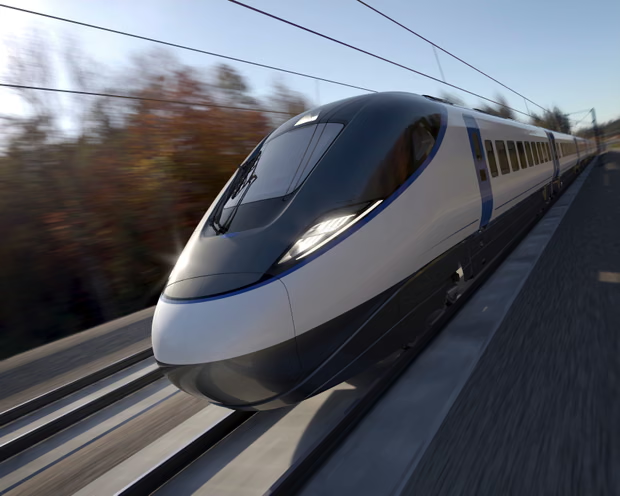
The controversial high-speed rail network faces another critical turning point in its turbulent history. The UK public spending watchdog has issued a stark warning to senior government ministers. Plans to reset the massive transport scheme require absolute certainty before moving forward into development. The National Audit Office insists on a stable footing to prevent any further failures. Previous mistakes have severely damaged public confidence and drained vital taxpayer resources over time. This definitive report demands a highly considered approach to the remaining construction phases ahead.
Recent official announcements revealed staggering new figures regarding the total cost of the project. Transport Secretary Heidi Alexander confirmed that the scheme could now reach over one hundred billion. Trains will not carry passengers between London and Birmingham until late autumn of 2039. This timeline represents a painful delay of thirteen years compared to the original promises. Furthermore, the entire project will not see full completion until the year 2043. The immense scale of these delays highlights the deep systemic challenges facing British infrastructure.
A rigorous fifteen-month review was conducted to assess the current state of construction. Mark Wild, the chief executive of HS2 Limited, developed the detailed new strategy. His fresh plan outlines the remaining work required to connect the major urban hubs. The spending watchdog acknowledged that this new approach appears thoughtful and highly structured. However, the official report explicitly stresses that significant work remains before completion is reached. Moving too quickly without addressing fundamental flaws could repeat the disasters of the past.
The Department for Transport currently aims to finalize this operational reset by spring 2027. Watchdog officials state it is absolutely crucial that they get it right this time. They must not proceed until they are entirely confident in their delivery capabilities. A secondary review is scheduled for this autumn to test the realistic timeline expectations. Adjustments must be made immediately if the current schedule proves too ambitious for workers. The administrative process of resetting the project will cost an estimated 153 million pounds.
The original budget for the entire network was set at thirty-two billion pounds. That early estimate included planned extensions to the northern cities of Leeds and Manchester. The latest figures show that costs have roughly doubled since evaluations made in 2020. Passengers were originally supposed to begin using the high-speed services during this calendar year. Instead, major sections of the route have been permanently abandoned by successive political leaders. These dramatic shifts in policy have complicated the engineering process and increased final costs.
The Manchester leg of the network was cancelled by former Prime Minister Rishi Sunak. That decision in October 2023 caused widespread anger across northern business and political communities. The spending watchdog attributed the rising costs to poor estimation and highly inefficient delivery. Frequent changes to the scope of the project also added massive financial burdens throughout. This chaotic management style created severe instability for the engineering firms tasked with building. A lack of clear direction consistently hindered progress along the entire designated route.
Gareth Davies, the head of the watchdog, emphasized the need for robust estimates. He stated that completing commercial negotiations is necessary before the reset is officially finalized. The right operational capabilities must be securely in place across all government departments involved. Finding experienced industry experts is vital to managing the immense complexities of the line. Without these essential elements, the project risks falling into another cycle of expensive delays. Ministers must show strong leadership to guide the railway toward successful completion.
A spokesperson for the Department for Transport defended the current government’s swift actions. They blamed years of previous mismanagement for the current predicament facing the rail network. The current administration claims it has taken decisive steps to regain control of spending. Their stated goal is ensuring safe delivery at the lowest reasonable cost to taxpayers. They claim the reset is already driving much faster and more efficient construction work. Six major construction milestones were reportedly reached well ahead of schedule last year.
Representatives from HS2 Limited also argued that a fundamental reset was entirely unavoidable. They believe it was the only viable way to break the bad cycle. Poor delivery, constant delays, and spiraling costs had to be addressed with urgency. Managing a 140-mile construction programme requires balancing massive industry expertise alongside daily physical labor. They insist that the costs of the reset will eventually pay for themselves. Improved management and better structural efficiencies will save money during the final build phase.
The British public remains deeply divided over the value of this massive enterprise. Supporters argue that modern high-speed rail is essential for increasing long-term economic productivity. It connects major cities and frees up capacity on crowded existing regional lines. Critics view the project as an expensive mistake that should have been cancelled completely. They believe the money would be better spent on local transport networks instead. The debate intensifies as the completion date stretches further into the distant future.
Navigating the next few years will require exceptional coordination between all major partners. The government must rebuild trust with skeptical taxpayers and wary private sector investors. Clear communication and transparency regarding budgets will be essential for maintaining political support. The upcoming autumn review will provide the first real test of the new strategy. If the timelines hold, a more reliable rail network may finally emerge eventually. Until then, the project remains a stark reminder of infrastructure challenges in Britain.
As construction continues across the English countryside, the pressure on ministers will mount. They must balance the demands of fiscal responsibility with the vision of progress. The watchdog will undoubtedly maintain close scrutiny over every single pound spent going forward. Future generations will ultimately judge whether the immense cost was truly worth the sacrifice. For now, the focus shifts to ensuring that the spring deadline is met safely. The coming months will determine if this reset can truly deliver on promises.
Related News:
 Reeves Faces Setback as Labour May Miss Homes Target
 Kate Winslet to Narrate Film Highlighting King’s Environmental Mission
 Trump’s UK Ambassador Urges North Sea Drilling to Strengthen US Ties
 UK Bans Fake Numbers: Scammers Lose Their Trick
 Millionaires group urge Reeves to introduce wealth tax to ‘lift kids out of poverty’
 Reeves rejects £1bn plea for NHS redundancy payouts
 PM Condemns Leaks, Vows Loyalty to Ministers and Stability
 Stroke Patient Mistaken for Drunk, Care Delayed
 Inside the Helpline Protecting Missing Children in the UK
 Boots Showstopper Beauty Bundle Outshines Many Advent Calendars This Holiday Season
 PlayStation PS5 Deals Hit Lowest Prices Ahead of Black Friday
 Five-Year-Old Dies After Rare Tonsil Surgery Complication
 Starmer Says Labour’s Economic Plan Needs Years to Deliver
 UK unemployment rises to four-year high of 5.1% before budget
 Wiltshire Police Use Lasso to Catch Rampaging Village Goat
 Coasting Drinks: The Trend Redefining Alcohol Enjoyment This New Year
 Rising Hate Crimes Threaten Safety on UK Public Transport
 Starmer Faces Parliamentary Battles Over UK-EU ‘Reset’ Plan
 Met Police Vetting Failures Let Serial Rapists Remain
 Google Employee Claims Redundancy After Harassment Report
 Fatal Bolton Taxi Crash Claims Three Teens and Driver
 ScottishPower Tops List of Worst UK Energy Suppliers
 Judi Dench Champions Fight to Save London’s Green Spaces
 Crowborough Camp Welcomes First Asylum Seekers
 BBC Funding Crisis: Tim Davie Warns of Jeopardy Ahead
 Storm Chandra floods Somerset, triggers major incident declaration
 Artificial intelligence will cost jobs, admits Liz Kendall
 Older Women Vanish from BBC Screens, Review Confirms Bias
 Mandelson Faces Police Inquiry Over Epstein Leak
 Streeting moves on doctor pay to end strike dispute
 UK reports baby formula toxin poisoning cases across the country
 Morgan McSweeney downfall shocks Labour leadership
 Send spending gap leaves deprived areas behind
 Hidden Crisis: Domestic Abuse Suicide Toll in UK
 UK Unemployment Rate Climbs to 5.2% Peak
 Farage Unveils Reform UK Frontbench Team
 BBC World Cup Presenting Duties Shared Among Trio
 Placenta Accreta Warning as Hunt Urges Action
 Wales Approves Assisted Dying Bill Consent
 CPS Updates Guidance on Honour-Based and Dowry Abuse
 Asylum Seekers to Work After Year-Long Wait
 Inquiry into HMRC child benefit errors launched by NAO
 Rising Costs Force Families to Rethink Days Out
 Scott Mills Sacked by BBC Over Personal Conduct Claims
 Palantir Boss Defends NHS Deal Amid Government Break Clause
 Relationship with Trump may be beyond repair, Starmer warned
 UK Government Poised to Revive Stalled Hillsborough Law
 Home Office Faces Legal Risks Over Asylum Hotel Living
 Crisis in NHS Surgery Scheduling Hits Patients Hard
 Blue Badge Abuse: The Rising Tide of Public Hostility
 Scott Parker Leaves Burnley After Premier League Drop
 Silent Tracks: Rail Line Without Passengers
 RFU Backs Borthwick Despite England’s Poor Six Nations
 Major test for Labour as polls open in Great Britain
 Keir Starmer Struggles to Secure His Grip on Downing Street
 Fear and Betrayal: The Chilling Case of Kouri Richins
 Farage Faces Standards Probe Over Cash Property Purchase
 Closing the Gap: UK Pensions Commission Demands Action
 Sun and Jams: Britain Braces for a Sizzling Bank Holiday
 Russian Electronic Attack Targets UK Defence Chief Jet
 UK Shoppers Face Prolonged Price Rises At Tills
 Tube Strike Brings Capital to a Standstill Over Shift Disputes
 Labour Denies Benefit Tax Hike Amid Mandelson Leak
 Makerfield Voters Demand Real Change as Election Looms
 US Condemns ‘Two-Tier’ UK Policing After Student Murder
 Millions in British Charity Funds Linked to Illegal Settlements
 Ryanair Faces Probe Over Mandatory Family Seating Fees
 Britain’s Crowning Butterfly Takes the Nation by Storm
 Labour MP Revives Blocked Assisted Dying Bill in Commons
 Starmer Set to Announce Exit Plan as Burnham Eyes No 10
 Stirchley Community Housing Scheme Faces Crisis
 Australia Social Media Ban Fails to Stop Under-16s
 UK Care Crisis: Row Explodes Over New Visa Settlement Rules
 Sainsbury’s Boss Optimistic As Grocery Inflation Eases
 NHS Urges Investigation For Irregular Periods
 US Airman Avoids British Court in Indecent Exposure Case
 Farage Warns Sky News Following Financial Inquiry
 Ann Widdecombe, Formidable Political Figure, Dies at 78
 UK Schools Struggle as Classrooms Top 40C
 Westminster Council Threatens Charing Cross Soup Kitchen