Published: 27 January 2026. The English Chronicle Desk. The English Chronicle Online.
The departure of Border Patrol commander Gregory Bovino from Minneapolis signals a major shift in federal immigration enforcement following the fatal shooting of ICU nurse Alex Pretti. Bovino, who became the public face of the Trump administration’s Operation Metro Surge, was at the centre of national criticism from Democrats and civil liberties advocates. Sources confirmed that Bovino, 55, would leave the city along with several agents, as the administration reshuffles leadership and scales back its federal Border Patrol presence.
Bovino’s exit follows the killing of Pretti, prompting sharp scrutiny over the federal deployment in Minneapolis. Officials stated that Bovino had been stripped of his title of “commander at large” and would return to his previous post as chief patrol agent in the El Centro sector along the US-Mexico border. The move coincides with Donald Trump’s announcement that Tom Homan, the former ICE director and current border czar, would oversee Border Patrol operations directly in Minnesota.

The Trump administration had initially justified the surge as necessary to combat violent crime and illegal immigration, highlighting Bovino’s aggressive strategies and media appearances promoting the Border Patrol. However, the fatal shootings of Pretti and earlier Renee Good intensified public outrage. Footage contradicted Bovino’s claims that the victims posed a threat, showing Pretti holding a phone rather than a weapon. His defence of agents drew widespread condemnation, increasing calls for leadership change.
During a White House press briefing, Press Secretary Karoline Leavitt described Pretti’s death as a “tragedy,” reflecting a more conciliatory tone from the administration compared to prior comments from Stephen Miller. President Trump confirmed that he had held calls with Governor Tim Walz and Minneapolis Mayor Jacob Frey, signalling attempts to coordinate federal and state approaches to Border Patrol enforcement. Walz’s office noted discussions focused on potentially reducing federal agent numbers while targeting violent criminals in a more coordinated fashion.
Bovino’s tenure in Minneapolis drew attention for its high-profile, militarised imagery. Videos produced to publicise the operations often depicted Bovino as the central figure, dressed in army green greatcoats with agents surrounding him in black gaiters, evoking strong public reactions and comparisons to historical authoritarian imagery. The Atlantic reported that his aggressive tactics had elevated him from a regional chief patrol agent to a nationally recognisable enforcer for Trump’s city-by-city Border Patrol crackdown.
Following Bovino’s departure announcement, dozens of protesters gathered outside his presumed hotel, using whistles, pots, and even a trombone to voice opposition. Police maintained a barrier between demonstrators and the hotel entrance, underscoring the continued tension surrounding the federal Border Patrol presence. Meanwhile, the Department of Homeland Security clarified that Bovino had not been officially relieved of duties, countering reports suggesting otherwise, although speculation about his imminent retirement persists.
The Minnesota deployment has sparked broader debates over federal intervention and civil liberties. Mayor Frey expressed relief that some agents would begin leaving the city immediately and reiterated his call for a full withdrawal of the Border Patrol operation. Trump described his discussions with local officials as positive, emphasising that he and state leadership were “on a similar wavelength” regarding enforcement priorities. The administration now appears to be balancing the optics of strong Border Patrol enforcement with the political realities of public outrage and fatalities.
Bovino will return to El Centro, California, resuming his prior responsibilities in a sector long associated with high-intensity Border Patrol enforcement. His departure may also signal an internal warning to federal officers that high-profile operations carry significant reputational and career risks. DHS has suspended his access to official social media accounts, preventing further public engagement while investigations continue.

The Minneapolis operation now enters a transitional phase, with reduced personnel, altered leadership, and heightened oversight. Both federal and local authorities are under pressure to prevent further fatalities while continuing to address violent crime and illegal immigration. The administration appears committed to preserving enforcement priorities, but lessons from the Pretti shooting may guide more cautious operational planning.
Public sentiment remains deeply divided. Supporters of stringent Border Patrol enforcement applaud the focus on illegal immigration and violent crime, while opponents decry excessive force and lack of accountability. Protest activity and media scrutiny are likely to persist, reflecting the highly charged nature of federal intervention in local law enforcement matters.
Ultimately, Bovino’s departure signals both a symbolic and operational shift, as the Trump administration recalibrates its approach to controversial federal deployments. It illustrates the intersection of policy, public perception, and accountability, demonstrating the political consequences of high-profile Border Patrol actions. Analysts expect further adjustments as federal and state leaders work to reconcile law enforcement objectives with community safety concerns. The unfolding situation in Minneapolis will remain a focal point for national discussions on immigration enforcement and the balance of power between federal authority and local governance.
Related News:
 US National Guard Member Killed in DC Shooting
 Trump to pause migration from ‘third-world countries’
 US Defence Chief on Drug Boat Strike: “Did Not See Survivors”
 Franklin Turtle, Sabrina Carpenter Slam US Social Media Use
 Trump officials continue false claims after Alex Pretti shooting
 Badenoch Warns Farage’s Grooming Gangs Plan Could Backfire
 Five More Prisoners Freed by Mistake in Essex Week
 Afghan man charged with murder after west London knife attack
 Police Probe Four Knife Incidents Linked to Cambridgeshire Train Attack
 French Taxi Driver Cleared in David Lammy Theft Case After Fare Dispute
 Just Stop Oil Protesters Convicted Amid Climate Defence Row
 China-critical UK academics face ‘extremely heavy’ pressure from Beijing
 Newcastle United Lifts Ban on Fan Over Gender-Critical Views
 King Charles to Lead Nation in Remembrance Sunday Service
 Government urges schools to ban phones to curb classroom disruption
 Seven Conditions That Automatically Qualify You for a Free Bus Pass
 Palace to reinstate hyphen in Andrew’s surname
 Pop Stars Call on UK Government to Cap Resale Prices for Fans
 South Korea’s Jeju Island Faces Rising Tide of Illicit Drugs
 Major Rent Reform Ends No-Fault Evictions in England
 Peers Flood Assisted Dying Bill with 942 Amendments
 US Justice Department Files Lawsuit Against California Over Partisan Voting Maps
 Oklahoma Governor Grants Last-Minute Clemency to Death Row Inmate
 Rio Raid’s Death Toll Raises Questions About Gang Impact
 UK Unveils Fast-Track Deportation and Asylum Overhaul
 Trump Deploys DHS to Charlotte in Major Arrest Operation
 Delhi Car Bomb Arrest: Suspect Linked to Deadly Attack
 UK Asylum Overhaul Sparks Debate Over Human Rights and Deportations
 UK Asylum Reforms: Temporary Refugee Status and Faster Deportations
 Mahmood Defends Tough Overhaul of UK Asylum System
 Paralegal Fired After Exposé on Illegal Worker Scam
 Charlotte Raids: 130 Arrested in Major Immigration Sweep
 South African Detained After Neo-Nazi Rally in Australia
 Eminem Takes Legal Aim at Australian ‘Swim Shady’ Brand
 Westminster Advances Legacy Bill Amid Criticism
 Federal Court Blocks Texas Republican Maps Over Racial Bias
 Only One Republican Opposes Mass Release of Epstein Files
 Serial Rapist and Former Cop Found Guilty Again
 Man Charged Over Attempted Murder of Senior Officer
 Two Officers Injured After Van Deliberately Rams Patrol Car
 Man Denies Stealing Bronze Age Gold from Museum
 Runaway Driver Caught by DNA Evidence
 Peers Get Extra Time to Debate Assisted Dying Bill
 Two National Guard Soldiers Critically Injured Near White House
 Residents Face £3.6m Bill for Unsafe Kirkby Flats
 Singapore Women Acquitted After Pro-Palestine March
 Second homes curbs quashed in Gwynedd legal ruling
 ICC to Rule on Duterte’s Provisional Release
 Tokyo court rules Japan’s same-sex marriage ban constitutional
 Virgin Media Fined £23.8m Over Telecare Safety Failures
 Chinese & Japanese Boats Clash Near Disputed Islands
 Hong Kong Orders Probe Into Deadly 151-Death Fire
 Indonesia to Repatriate Two Dutch Drug Convicts
 Starmer’s communications chief to outline media strategy overhaul
 American Mother Extradited From UK to U.S. on Murder Charges
 Russia losses Ukraine war peace talks intensify amid rising deaths
 US Cities Erupt in Protests Against Trump’s Venezuela Military Action
 Trump Escalates Minnesota Immigration Surge Amid Rising Tensions
 Capitol Attack Anniversary Sparks Deep Political Divide
 Portland Shooting: Federal Agents Open Fire Near Hospital
 Google Employee Claims Redundancy After Harassment Report
 Trump Says US Must ‘Own’ Greenland to Block Russia, China
 Homeland security agents deployed amid Minneapolis protests
 Minneapolis mayor demands state access to Renee Good probe
 German Supermarket Aldi to Open 180 US Stores This Year
 Plans to Limit Jury Trials Face Retreat After Mounting Opposition
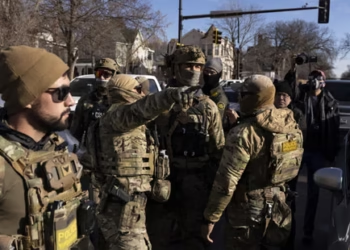 Minnesota Sues Trump Administration Over ICE Surge
 Trump targets Iran trade with 25% tariff warning
 US Clears Nvidia AI Chip Sales to China in Policy Shift
 Trump Threatens Strong Action If Iran Executes Protesters
 Labour Faces Internal Rift Over Hillsborough Law Dispute
 Portland man pleads not guilty after Border Patrol shooting
 Labor’s Hate Speech and Gun Laws Face Federal Roadblocks
 Trump Receives Machado’s Nobel Medal in White House Meeting
 Woman Jailed for Life After Killing E-Bike Rider in Tragic Mistaken Identity Case
 Trump Aide Sparks Fury as Greenland Dispute Intensifies
 EU Says US Ties Have Suffered ‘Big Blow’ After Greenland Crisis
 ‘A long time coming’: US table tennis finds its moment
 ‘Unfathomable’: Australian veterans rebuke Trump claims
 Minneapolis pushes back against ICE’s federal crackdown