Published: 02 February 2026. The English Chronicle Desk. The English Chronicle Online.
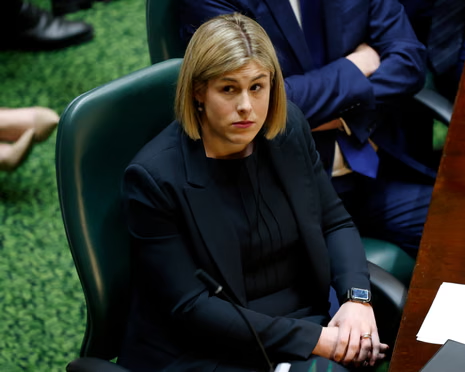
The Jess Wilson event withdrawal has reshaped political debate in Victoria after a sharp exchange between government and opposition figures this week. The Victorian opposition leader stepped back from a regional conference appearance after criticism from the premier linked the gathering to One Nation figures. The Jess Wilson event decision quickly became a national talking point, drawing reactions from party colleagues, rivals, and organisers. What began as a routine regional forum has now turned into a symbol of broader tensions inside Victorian and federal conservative politics.
Jess Wilson had been scheduled to speak at the Across Victoria Alliance conference in Horsham on 9 February. The event drew added attention because former Nationals leader Barnaby Joyce was announced earlier as the headline dinner speaker. Joyce recently shifted his political alignment and has been associated with One Nation activity, which intensified scrutiny around the conference program. The Jess Wilson event plan triggered criticism from Labor, which argued the appearance suggested ideological overlap with more hardline positions.

A spokesperson for the Victorian opposition confirmed that Wilson would no longer attend, citing an unavoidable scheduling conflict. The statement stressed that engagement with regional communities remains a priority for the opposition team. It also confirmed that Nationals leader Danny O’Brien and upper house Liberal leader Bev McArthur would attend instead. That substitution ensured party representation remained in place, even as the Jess Wilson event withdrawal changed the political tone surrounding the gathering.
The premier, Jacinta Allan, publicly criticised the planned appearance during remarks to colleagues ahead of parliament’s return. She described the Horsham conference as a misinformation-focused forum and claimed Wilson’s attendance would signal alignment with extreme positions. Allan argued that the opposition leader was seeking internal unity after years of leadership instability within the Liberal Party. Her comments amplified media focus and placed the Jess Wilson event at the centre of a wider narrative about party direction.
Allan also connected the conference to debates about renewable energy, emergency services funding, and regional policy disputes. She suggested that sharing a platform with Joyce would blur ideological boundaries for the opposition. According to the premier, voters expect clearer separation between mainstream conservative politics and protest-driven movements. Her remarks were widely circulated across broadcast and digital outlets, accelerating discussion around the Jess Wilson event and its political implications.
Danny O’Brien rejected the premier’s characterisation and defended the value of attending regional forums with mixed political voices. He said the conference reflects genuine frustrations among regional Victorians about taxes, land access, and emergency management policies. O’Brien argued that listening to community concerns does not equal endorsing every speaker present. In his view, replacing Wilson at the Jess Wilson event maintains engagement without conceding political ground to critics.
Barnaby Joyce expressed disappointment about the withdrawal and suggested political pressure influenced the outcome. He argued that democratic debate requires engagement across ideological lines, even when disagreements are strong. Joyce said excluding speakers or avoiding shared platforms weakens open discussion. His comments added another layer of controversy to the Jess Wilson event story, as supporters and critics debated the boundaries of acceptable political association.
The Across Victoria Alliance, which organised the conference, emerged from grassroots opposition to several Victorian government reforms. The group initially formed in response to changes in the emergency services levy structure. It later expanded its advocacy to include objections to renewable energy project approvals and land access powers granted to VicGrid. Organisers say the conference aims to give regional residents direct access to policymakers and decision makers. That mission, they argue, remains unchanged despite the Jess Wilson event withdrawal.
Alliance founder Andrew Weideman said organisers were disappointed but understanding about Wilson’s absence. He noted that invitations had also been extended to the premier, who has not confirmed attendance. Weideman emphasised that the conference welcomes debate and differing views. He said discussions will focus on bushfire response, regional infrastructure, and farming sector pressures. In his remarks, he downplayed claims that the gathering promotes misinformation or ideological extremism.
Political analysts say the episode reflects a delicate balancing act for opposition leaders before major elections. Regional forums offer valuable voter contact but can create risk when controversial figures are involved. Leaders must weigh grassroots engagement against reputational exposure in metropolitan media coverage. The Jess Wilson event controversy shows how quickly a local conference can become a statewide flashpoint when party rivalries intensify.
Within the Liberal and Nationals coalition in Victoria, unity has been a recurring challenge in recent years. Leadership turnover and policy disagreements have complicated messaging against the Labor government. Appearances alongside polarising figures can either energise segments of the base or alienate moderate voters. Strategists often measure these risks carefully, especially when election cycles approach. The Jess Wilson event situation illustrates how scheduling choices can carry unexpected political cost.
Voters in regional areas remain focused on practical concerns rather than political theatre, according to several community advocates. Cost pressures, energy prices, insurance availability, and disaster preparedness rank high among local priorities. Conferences like the Horsham gathering attempt to channel those concerns into policy discussion. Whether the Jess Wilson event withdrawal affects attendance or influence remains uncertain, but interest in the forum has clearly increased.
Media monitoring shows that online engagement around the story rose sharply after the premier’s remarks. Social platforms carried competing narratives, with some users praising the withdrawal and others criticising it as avoidance. That split reflects broader national patterns in political communication, where symbolic gestures can overshadow policy substance. The Jess Wilson event debate has therefore become both a scheduling matter and a messaging contest.

Looking ahead, attention will shift to what is said at the conference itself and how replacement speakers frame their contributions. Observers will watch for signals about coalition strategy, regional alliances, and positioning toward minor parties. The opposition will likely seek to refocus discussion on policy alternatives and cost-of-living arguments. Government figures, meanwhile, may continue highlighting contrasts in political partnerships and priorities.
While the immediate trigger was a single conference invitation, the ripple effects reach further across party strategy and voter perception. Decisions about where leaders appear, and with whom, increasingly shape campaign narratives. The Jess Wilson event withdrawal demonstrates how modern political optics can redefine routine engagements. In a tightly contested environment, even small calendar changes can produce outsized consequences.
Related News:
 Liberal Turmoil Threatens Victorian Election Hopes
 Hanson and Joyce Use Rinehart Jet to Tour Flooded Queensland
 Labor’s Hate Speech and Gun Laws Face Federal Roadblocks
 Nationals Crisis Meeting Threatens Coalition Stability
 Sussan Ley leadership milestone shakes Liberal future
 Andrew Hastie Emerges as Leadership Rival to Ley
 Morrison Faces Backlash Over Call to Regulate Islam in Australia
 David Littleproud and Sussan Ley to Discuss Coalition Future
 Green Party Surges Past Labour in Latest UK Poll
 Celebrities and Charities Demand UK Government Act on Child Poverty
 Army Officers Orders to Cut Ties with Men-Only Clubs
 Trump’s UK Ambassador Urges North Sea Drilling to Strengthen US Ties
 FBI Director Kash Patel Defends Girlfriend Amid Government Jet Claims
 French Taxi Driver Cleared in David Lammy Theft Case After Fare Dispute
 Labour immigration crackdown could cost UK £4.4bn
BBC to Apologise Over Edited Trump Speech Amid Backlash
Labour immigration crackdown could cost UK £4.4bn
BBC to Apologise Over Edited Trump Speech Amid Backlash
 Britain deploys RAF specialists to assist Belgium with drone threats
 ‘Reckless’ cuts to victims’ services will cost more than they save
 Millionaires group urge Reeves to introduce wealth tax to ‘lift kids out of poverty’
 Starmer Faces Growing Dissent as Labour MPs Weigh Leadership Challenge
 Reeves rejects £1bn plea for NHS redundancy payouts
 Politics latest: Starmer ‘will fight any leadership coup’ as Streeting denies attempt to oust Labour PM
 PM Condemns Leaks, Vows Loyalty to Ministers and Stability
 Major Rent Reform Ends No-Fault Evictions in England
 Peers Flood Assisted Dying Bill with 942 Amendments
 England’s Special Needs Support Faces Breaking Point
 Senator John Fetterman Hospitalized After Fall from Heart Flare-Up, Keeps Sense of Humor
 US Justice Department Files Lawsuit Against California Over Partisan Voting Maps
 Greene Pushes Epstein Files Amid Trump Fallout
 Trump Deploys DHS to Charlotte in Major Arrest Operation
 December Run-Off in Chile as Election Produces No Winner
 Canada Passes Carney’s First Budget in Tight Parliamentary Vote
 Shadow Fleet at Sea: Europe’s Battle Against Illicit Oil Shipping
 Pentagon Officials in Ukraine to Discuss War End
 Venezuela Threatens Nobel Winner Machado with Fugitive Status
 Most Tories Expect to Support a Farage-Led Government
 Labour MP claims devolution bill is ‘blatant discrimination’ against Cornwall
 Millions Face Higher Taxes Under Reeves New Budget
 Georgians Defy Government Crackdown After Year of Protests
 US National Guard Member Killed in DC Shooting
 ICC to Rule on Duterte’s Provisional Release
 Jordan Bardella: France’s Young Presidential Contender
 Starmer Says Labour’s Economic Plan Needs Years to Deliver
 EU plans $105bn Ukraine aid using frozen Russian assets
 Culture secretary to review Telegraph takeover by Daily Mail owner
 Khaleda Zia Death in Bangladesh: First Female PM Dies at 80
 Russia losses Ukraine war peace talks intensify amid rising deaths
 Albanese Opens Door to Bondi Royal Commission Amid Rising Pressure
 Trump Escalates Minnesota Immigration Surge Amid Rising Tensions
 Iran Protesters Defy Crackdown as Violent Clashes Intensify
 Adelaide Festival Sparks Widespread Controversy Among Writers
 Homeland security agents deployed amid Minneapolis protests
 Plans to Limit Jury Trials Face Retreat After Mounting Opposition
 Trump Threatens Strong Action If Iran Executes Protesters
 US Senate rejects resolution limiting Trump military powers
 Quebec Premier François Legault Resigns in Surprise Move
 Machado Trump medal gesture reshapes Venezuela power struggle
 Right Must Unite After Jenrick Defection, Urges Rees-Mogg
 EU weighs response amid Greenland tariff crisis with Trump
 Sydney Shark Attack Surge Shocks Australia Beaches
 ICE street raids expose a chilling future for public freedoms
 UK Ministers Drop Foreign Student Targets for Global Education Push
 MPs warn AI financial risks threaten UK stability
 NSW Shark Attacks Surge, Authorities Urge Swimmers to Stay Out
 No Gas Boiler Ban as UK Warm Homes Plan Backs Heat Pumps
 Hugh Grant Joins Call for Under-16 Social Media Ban in UK
 Shinzo Abe’s killer receives life sentence in Japan
 Lords Vote Piles Pressure on Starmer Over Social Media Ban
 Deadly NSW Shooting Leaves Three Dead, Gunman Escapes
 EU Says US Ties Have Suffered ‘Big Blow’ After Greenland Crisis
 Satire Can Skewer Trump, But It Won’t Save Democracy
 Reform UK Health Plan ‘Would Cost £1.7bn’, Streeting Says
 Police response times face strict new national limits
 Labour policing overhaul sparks fears over growing central control
 Tories criticised after Braverman defection sparks mental health row
 Starmer warns of toxic division politics in Reform challenge
 Starmer China visit raises human rights pressure on Beijing
 Keir Starmer Signals UK China Reset With Xi Visit Possibility
 Cambridge Faces Scrutiny Over Arms Investment Transparency
 Israel Moves to Bar MSF From Gaza Operations