Published: 04 February 2026. The English Chronicle Desk. The English Chronicle Online
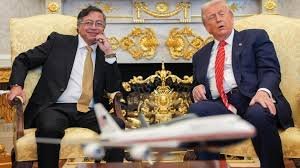
After months of sharp rhetoric and public insults, US President Donald Trump and Colombian President Gustavo Petro struck a notably conciliatory tone following a high-profile meeting at the White House, signalling a potential thaw in relations between Washington and Bogotá.
The closed-door bilateral talks, which lasted around two hours, covered a wide range of sensitive regional issues, including drug trafficking, energy cooperation and regional diplomacy. While no formal joint statement was issued, both leaders emerged with warm words for one another, a marked contrast to the acrimony that had defined their relationship in recent months.
President Trump, speaking to reporters after the meeting, described Petro as “terrific” and said the two leaders had “got along very well”. He added that discussions had been “very good” and hinted at a shift in Washington’s posture towards Colombia, including a possible review of sanctions imposed last year on Petro’s administration.

Those sanctions were introduced amid allegations of links between senior Colombian figures and the drug trade, claims Petro has repeatedly dismissed as baseless and politically motivated. On Tuesday, Trump suggested he was now working on lifting those measures, though no specific timeline or conditions were outlined.
For his part, President Petro characterised the meeting as “optimistic” and “constructive”, particularly in the context of joint efforts to combat drug trafficking. Speaking later at the Colombian embassy, he acknowledged that the two leaders held sharply different views on how to address the problem, but stressed the importance of cooperation.
“There are undoubtedly different ways of viewing the problem,” Petro said. “Some approaches are aggressive, others perhaps more open to being built collectively. We try to hold on to what brings us together rather than what separates us.”
The friendly tone marked a dramatic shift from the heated exchanges that had preceded the meeting. Trump had previously referred to Petro as a “sick man”, while the Colombian president had accused his US counterpart of modelling immigration policies on those of the Nazis. Those comments had raised fears of a deepening diplomatic rift between the two countries, long-standing allies in the region.
Photographs released after the meeting suggested a relaxed atmosphere, with both leaders smiling and appearing at ease. Petro later posted a handwritten note apparently penned by Trump, reading “a great honour – I love Colombia”, alongside a photograph of the pair together. The gesture was widely shared on social media in Colombia, where reactions ranged from cautious optimism to outright surprise.
Substantively, Petro said the two leaders discussed the possibility of exporting Venezuelan gas through Colombia, an idea that would involve cooperation between Bogotá, Caracas and Washington. He argued that sanctions and regional competition had left all three countries economically disadvantaged and suggested that pragmatic energy cooperation could benefit the wider region.
Trump also confirmed that both leaders had agreed on the need to confront the National Liberation Army (ELN), Colombia’s largest remaining guerrilla group. The ELN has been responsible for a series of high-profile attacks and has complicated Petro’s efforts to pursue his “total peace” agenda through negotiations with armed groups.
Drug trafficking was another central topic. Ahead of the meeting, Colombian officials had indicated they would present detailed evidence of their counter-narcotics efforts, including data on cocaine seizures and the destruction of drug laboratories. Petro told reporters that he had urged Trump to focus on dismantling the upper echelons of international drug networks rather than concentrating solely on production and transit routes.
“I told him you need to go after the kingpins,” Petro said. “The top tier of drug traffickers isn’t what you might imagine.” He added that many senior figures in the drug trade were operating from outside Colombia, including in Europe, the United States and the United Arab Emirates, and called for closer intelligence cooperation to track and apprehend them.
Another unexpected outcome of the talks was Petro’s claim that Trump had agreed to mediate in a trade dispute between Colombia and Ecuador. Details of the dispute remain unclear, and the White House has not publicly confirmed any mediating role, but the suggestion underscored the broader diplomatic scope of the meeting.
The change in tone follows months of escalating tensions. Trump had repeatedly accused Petro’s government of failing to curb the flow of drugs into the US and had even suggested that expanded US strikes against drug traffickers could one day include targets in Colombia. Petro, meanwhile, had accused Washington of imperial overreach and criticised US military actions and immigration policies.
In an interview with the BBC last month, Petro accused the US of treating sovereign nations as part of its “empire”, comments that further strained relations. Against that backdrop, Tuesday’s meeting appeared designed to reset the relationship, or at least stabilise it.

In a nod to Trump’s famous campaign slogan, Petro called for a “pact for life” to help “make the Americas great again”. He was careful, however, to stress that neither leader had fundamentally changed their worldview.
“He did not change his way of thinking on many issues, and neither did I,” Petro said. “A pact is between opponents who are able to find a path toward a shared human brotherhood.”
Whether the cordiality displayed in Washington translates into lasting policy shifts remains to be seen. But for now, the meeting marked a rare moment of warmth between two leaders whose relationship had seemed defined by mutual suspicion and sharp words, offering at least the possibility of a more pragmatic chapter in US-Colombia relations.
Related News:
 Putin Intensifies Territorial Demands Before US Talks
 Trump to Recheck Green Cards from 19 Nations After DC Attack
 Russia losses Ukraine war peace talks intensify amid rising deaths
 Trump Escalates Minnesota Immigration Surge Amid Rising Tensions
 Greenland Faces Pivotal Summit Over Arctic Power Struggle
 Trump Threatens Strong Action If Iran Executes Protesters
 Trump Receives Machado’s Nobel Medal in White House Meeting
 EU Says US Ties Have Suffered ‘Big Blow’ After Greenland Crisis
 Thousands Protest ICE Operations in Nationwide US Day of Action
 Epstein Files Reveal Trump Officials’ Emails with Financier
 Thousands Protest ICE in New York Against Trump Deportation Campaign
 British Woman in Iran ‘Losing Hope’ Amid Ongoing Detention
 BBC Journalist Held and Interrogated in Vietnam
 UK University Suspends Human Rights Research Following Pressure from China
 UK University Faces Counter-Terror Probe Over China Pressure
 Abigail Spanberger Elected Virginia’s First Female Governor
China-critical UK academics face ‘extremely heavy’ pressure from Beijing
Abigail Spanberger Elected Virginia’s First Female Governor
China-critical UK academics face ‘extremely heavy’ pressure from Beijing
 BBC to Apologise Over Edited Trump Speech Amid Backlash
 Britain deploys RAF specialists to assist Belgium with drone threats
 Ukraine-Russia war latest: Putin’s troops exploit bad weather to force Kyiv withdrawal from multiple towns
 Hamas Fighters in Gaza Tunnels Stall Ceasefire Progress
 US Justice Department Files Lawsuit Against California Over Partisan Voting Maps
 Greene Pushes Epstein Files Amid Trump Fallout
 Trump Deploys DHS to Charlotte in Major Arrest Operation
 December Run-Off in Chile as Election Produces No Winner
 Canada Passes Carney’s First Budget in Tight Parliamentary Vote
 Why Russian Liberals Push Strongly Pro-Israel Narratives
 Shadow Fleet at Sea: Europe’s Battle Against Illicit Oil Shipping
 Rama Rebukes Mahmood for Targeting Albanian Families
 Russian Vessel Used Lasers on RAF Pilots, UK Claims
 Pentagon Officials in Ukraine to Discuss War End
 Venezuela Threatens Nobel Winner Machado with Fugitive Status
 Trump Envoy to Discuss Ukraine Peace at Kremlin
 Two National Guard Soldiers Critically Injured Near White House
 Pope Leo XIV Begins Historic Trip to Turkey and Lebanon
 Georgians Defy Government Crackdown After Year of Protests
 US National Guard Member Killed in DC Shooting
 India’s Labour Law Overhaul Sparks Fierce Debate
 Video shows Israeli troops kill Palestinians after surrender
 Chinese & Japanese Boats Clash Near Disputed Islands
 EU plans $105bn Ukraine aid using frozen Russian assets
 Global campaign launched to free Palestinian leader Barghouti
 UK Aid Cuts Could Undermine Global Influence, Experts Warn
 American Mother Extradited From UK to U.S. on Murder Charges
 Thailand and Cambodia Agree Ceasefire After Weeks of Deadly Clashes
 Zelenskyy Accuses Russia of Sabotaging Peace Talks
 Trump ‘Not Worried’ as China Conducts Massive Taiwan Wargame
 Khaleda Zia Laid to Rest with State Honour in Dhaka
 US Cities Erupt in Protests Against Trump’s Venezuela Military Action
 Maduro Faces Court in New York Over Drugs and Weapons Case
 Albanese Opens Door to Bondi Royal Commission Amid Rising Pressure
 Iran Protesters Defy Crackdown as Violent Clashes Intensify
 Trump Says US Must ‘Own’ Greenland to Block Russia, China
 Iran Leader Blames Protesters, Says They Serve Trump
 Homeland security agents deployed amid Minneapolis protests
 Trump Eyes Strong Military Options Amid Iran Protest Crackdown
 US Clears Nvidia AI Chip Sales to China in Policy Shift
 Machado Trump medal gesture reshapes Venezuela power struggle
 Trump press secretary attacks reporter over ICE question
 Greenland Crisis Forces Europe to Draw a Line With Trump
 Iran Cannot Be Bombed Into Democracy, Only Helped There
 EU weighs response amid Greenland tariff crisis with Trump
 US Considers Asylum for British Jews Amid Rising Antisemitism
 ICE street raids expose a chilling future for public freedoms
 Trump Aide Sparks Fury as Greenland Dispute Intensifies
 US Africa aid remarks spark anger after leaked State email
 Trump Fed bid heads to Supreme Court
 Trump Launches “Board of Peace” Amid Global Diplomacy Push
 Andrew Hastie Emerges as Leadership Rival to Ley
 Russia Strikes Kyiv and Kharkiv as Peace Talks Enter Day Two
 ‘Unfathomable’: Australian veterans rebuke Trump claims
 Starmer China visit underscores clear-eyed national security stance
 Starmer China visit raises human rights pressure on Beijing
 Arizona border shooting leaves suspect hospitalised after agent pursuit
 ‘Evil is resilient’: Pressure Mounts on Stephen Miller
 Videos reveal earlier clash before Alex Pretti shooting
 Israel Moves to Bar MSF From Gaza Operations
 Mandelson resignation shakes Labour over Epstein row
 Cory Bernardi joins One Nation for SA election
 ‘Painful Times’ as Melinda Gates Responds to Epstein Files