Published: 31 December 2025. The English Chronicle Desk. The English Chronicle Online.
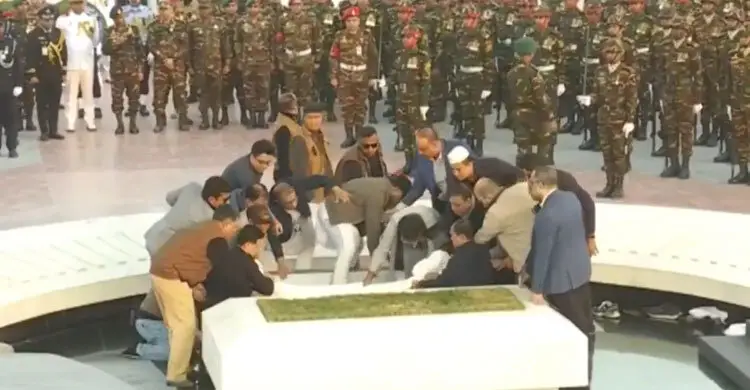
Bangladesh mourned as Khaleda Zia, former Prime Minister and BNP Chairperson, was laid to rest beside her husband, late President Ziaur Rahman, at Sher-e-Bangla Nagar in Dhaka. The burial, conducted with full state honour, followed her namaz-e-janaza at the South Plaza of the Jatiya Sangsad Bhaban, and drew widespread attention across the nation. Khaleda Zia, a towering figure in Bangladesh politics, passed away at Evercare Hospital after prolonged medical treatment. The focus keyword, Khaleda Zia burial, was central to coverage as thousands gathered to pay their respects and witness the solemn proceedings.
The burial took place at approximately 4:30 pm, with security tightly managed and public access limited around Zia Udyan until the event concluded. Family members, government officials, foreign diplomats, and BNP leaders attended the ceremony, reflecting Khaleda Zia’s immense political and social influence. Namaz-e-janaza prayers were offered by Mufti Mohammad Abdul Malek, the Khatib of Baitul Mukarram Mosque, at 3:02 pm, setting a solemn tone for the day.
Mourners lined Manik Mia Avenue, braving the cold winter air to pay tribute to the three-time former Prime Minister. Despite logistical challenges, the atmosphere remained orderly, thanks to extensive arrangements by the army, police, RAB, and BGB. Tens of thousands of citizens from across Bangladesh joined the procession, waving national flags and chanting prayers, reinforcing Khaleda Zia’s enduring connection with the public.
Her body, draped in the red-and-green national flag, arrived around 11:50 am from her son Tarique Rahman’s residence in Gulshan. The procession highlighted the deep respect accorded to Khaleda Zia, who spent over four decades shaping the political landscape of Bangladesh. Leaders from India, Pakistan, and other South and Southeast Asian countries were present, underscoring her international recognition.

Khaleda Zia’s political career spanned 41 years, during which she earned the reputation of an uncompromising leader, especially noted for her role in the anti-autocracy movements of the 1990s. She served as Prime Minister three times and Leader of the Opposition twice, demonstrating her resilience and political acumen. Her influence extended beyond BNP, shaping democratic discourse in Bangladesh.
Despite multiple chronic illnesses, including liver and kidney complications, heart disease, diabetes, arthritis, and infections, Khaleda Zia remained active in politics until her final days. Her unwavering dedication was evident in her decision never to leave the country, even when facing repeated arrests and political challenges. Starting as a homemaker, she transformed into a formidable political leader whose campaigns and movements consistently mobilised millions.
The state’s security protocols ensured that all aspects of the burial proceeded without incident. Multi-layered measures included checkpoints, controlled access points, and the deployment of law enforcement personnel throughout the venue. Authorities balanced public participation with safety, allowing citizens to witness the historic moment while maintaining order.
The gathering of foreign dignitaries highlighted Khaleda Zia’s diplomatic significance. Representatives from neighbouring countries observed the ceremony, reflecting her regional influence. The event also served as a reminder of Bangladesh’s rich political history and the legacy of its leaders, who navigated complex social and political landscapes with courage and determination.
Throughout the day, media coverage focused on Khaleda Zia burial ceremonies, documenting the devotion of supporters and the meticulous planning by authorities. Her political contributions, personal sacrifices, and leadership during national crises were frequently highlighted, emphasizing her role as a central figure in modern Bangladeshi history. The event demonstrated the enduring impact of her leadership, resonating deeply with citizens of all ages.
Khaleda Zia’s final journey combined public mourning with personal tributes from family members and colleagues. Her legacy as a relentless advocate for democracy, a three-time Prime Minister, and the BNP Chairperson was honoured in both formal and heartfelt expressions of grief. The combination of religious observances, state protocols, and widespread public respect reflected the profound significance of her passing.
By the evening, the burial was complete, leaving behind a nation in reflection. Observers noted the unity and discipline displayed by mourners, and the seamless execution of the ceremony underscored the state’s organisational capacity. As news of Khaleda Zia burial spread internationally, tributes poured in, recognising her as a pivotal figure in South Asian politics and a leader whose influence transcended national boundaries.
The legacy of Khaleda Zia burial extends beyond the day’s events, symbolising the culmination of decades of political struggle, leadership, and personal sacrifice. Citizens, leaders, and foreign representatives alike paid homage, acknowledging her contributions to democracy, national development, and the enduring strength of the BNP.
Khaleda Zia burial, remembered for its solemnity, precision, and mass public participation, marks the end of a remarkable political era in Bangladesh. The ceremony underscored the nation’s respect for its leaders and the indelible mark they leave on history. Her memory continues to inspire political engagement, civic responsibility, and national unity, reinforcing her place in the country’s collective consciousness.
Related News:
 British Woman in Iran ‘Losing Hope’ Amid Ongoing Detention
 BBC to Apologise Over Edited Trump Speech Amid Backlash
 Britain deploys RAF specialists to assist Belgium with drone threats
 US Justice Department Files Lawsuit Against California Over Partisan Voting Maps
 Greene Pushes Epstein Files Amid Trump Fallout
 Trump Deploys DHS to Charlotte in Major Arrest Operation
 December Run-Off in Chile as Election Produces No Winner
 Canada Passes Carney’s First Budget in Tight Parliamentary Vote
 Shadow Fleet at Sea: Europe’s Battle Against Illicit Oil Shipping
 Pentagon Officials in Ukraine to Discuss War End
 Venezuela Threatens Nobel Winner Machado with Fugitive Status
 Georgians Defy Government Crackdown After Year of Protests
 India’s Labour Law Overhaul Sparks Fierce Debate
 EU plans $105bn Ukraine aid using frozen Russian assets
 Global campaign launched to free Palestinian leader Barghouti
 US Strategy in Venezuela Clarified, Johnson Says No War
 Iran Leader Blames Protesters, Says They Serve Trump
 Trump Policies Boost China’s Global Rise, Survey Finds
 Iran unrest slows under brutal crackdown and global tensions
 Thousands Protest ICE Operations in Nationwide US Day of Action
 Epstein Files Reveal Trump Officials’ Emails with Financier
 Thousands Protest ICE in New York Against Trump Deportation Campaign
 Starmer Condemns ‘Depraved’ Russian Strikes on Ukraine
 Herzog visit sparks protests across Australian cities
 Sydney Protest Escalates and Elderly Woman Suffers Severe Injury
 Tarique Rahman’s Rise Toward Bangladesh’s Top Job
 Glass Cliff Debate After Ley’s Ouster
 AFP Reviews Pauline Hanson Comments
 Duterte ICC Hearing Begins Amid Defiance
 Trump Tariffs Threat Spark UK and EU Alarm
 Difficult Grace Tame Label Ignites Fury and Debate Down Under
 The Dangerous Rise of Remigration Across Modern Europe
 Trump’s Marathon Speech Fails to Mask a Growing National Disconnect
 US to offer passport services in West Bank settlements
 Health Funding Row Rocks US‑Africa Relations
 New UK-EU Reset Faces Criticism from Parliament
 Cuba charges six exiles for terrorism after speedboat raid
 Mojtaba Khamenei Chosen as Iran’s New Supreme Leader
 Iran Defiance Grows Amid US-Israel War Pressure
 US Strikes on Iran Set for Most Intense Day Yet
 Iran Nuclear Stockpile Sparks US Special Forces Debate
 China’s Ethnic Unity Law Set to Reshape Minority Schools
 Moscow Internet Blackouts Raise Censorship Fears
 Republicans Rebuke FCC Threat Over Iran War Coverage
 Oil Prices Surge as IEA Weighs Emergency Release
 Trump Nato threats expose Iran strategy vacuum
 UK Minister Denies Iran Missile Threat to Britain
 Danish Election Deadlock Shakes Frederiksen’s Grip
 Trump to Visit China in May After Iran War Delay
 Pope Rebukes Leaders for War as Middle East Tensions Rise
 Trump to Deploy “God Squad” Over Gulf Wildlife Protections
 Army Probes Apache Flyover at Kid Rock’s Nashville Estate
 Italian Town Buys Mussolini Villa to Keep Away Fascist Fans
 Report Says Pezzullo Acted ‘Recklessly’ in Dealings
 Trump Employs Nixon’s Madman Theory Amid Iran Crisis
 Trump Voices Frustration Over Nato Role in Iran Conflict
 Hungary election: Orbán faces biggest test amid scandal
 Suspected Plot Targets Pipeline Before Hungary Vote
 Trump Slams UK Ties and Threatens To Rewrite Trade Deal
 Southeast Asia Turns to Russia Amid Energy Crisis
 Capitalism ‘Suicidal’, Warns Petro at Climate Summit
 Judge halts deportation of Yemeni refugees in US
 Activists allege abuse after Gaza flotilla seizure
 Trump approval plunges amid Iran war fears
 Ohio’s Battle for Trust: Democrats Vying to Flip the Buckeye State
 US ‘Narco Boat’ Strikes Draw Global Outcry
 Ohio Primaries Set Stage for Crucial Midterms
 Afghan Families Left in Limbo Face Risk of Deportation
 Tensions Emerge in Netanyahu-Trump Alliance
 US Awaits Iran Reply on New Ceasefire Proposal
 Hormuz Talks Near Critical Stage
 Discontent grows around Putin amid war strain
 Starmer Leadership Under Pressure After Setbacks
 House Curbs Trump’s War Powers in Rare Rebellion
 Germany Summons Chinese Envoy Over Russian Troop Training
 New South Wales Premier Chris Minns Signals Tough Road Ahead for Labor
 Le Pen to Run for President Despite Embezzlement Conviction
 Ukraine Creates Long-Range Strike Command
 Le Pen’s Popularity Holds Despite Conviction
 Houthis Strike Saudi Arabia as Middle East Tensions Rise