Published: 11 February 2026. The English Chronicle Desk. The English Chronicle Online.
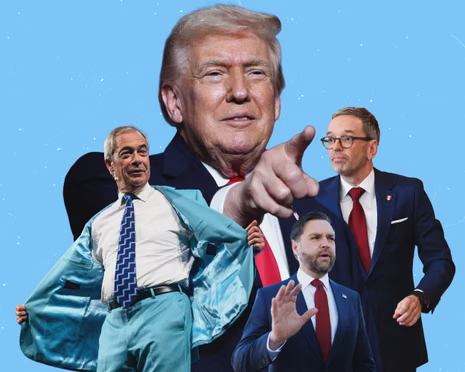
The rise of vice-signalling is reshaping political language across the United States and the United Kingdom today. Analysts say vice-signalling has moved from fringe rhetoric into mainstream campaigning and media confrontation worldwide. The term describes deliberate taboo-breaking speech designed to attract attention and mobilise loyal political supporters quickly. Unlike polite symbolic gestures, vice-signalling thrives on outrage, division, and emotional reaction rather than consensus building. Researchers tracking digital discourse say this shift has accelerated through social platforms and partisan broadcasters recently.
The concept developed as a counterpoint to the older idea of virtue-signalling in public political debate. Virtue-signalling described low-cost moral positioning that projected decency without demanding serious personal sacrifice from advocates. Vice-signalling operates differently because it rewards provocation and hostility instead of courtesy or inclusive social language. Experts in discourse studies explain that it functions through shock value and repeated boundary violations. Each breach resets expectations and makes harsher statements appear less extreme over time.
Observers often trace the modern breakthrough of this style to campaign era political messaging after 2015. High profile campaign launches included unscripted remarks targeting migrants and minorities using emotionally charged generalisations and claims. Those moments drew intense criticism yet generated enormous media exposure and voter recognition for their authors. Communication scholars say this demonstrated how outrage can convert directly into visibility and political brand strength. The method soon spread beyond one country and appeared across several right leaning movements internationally.

Linguistics specialists describe vice-signalling as a strategy built on intentional taboo violation for attention capture and agenda control. By forcing opponents to react, speakers redirect coverage away from policy weaknesses and toward cultural conflict narratives. Continuous controversy keeps personalities at the centre of news cycles and social media discussion threads. This pattern reduces space for technical policy debate and increases emotionally driven political identity formation. Newsroom editors confirm that conflict driven clips still outperform detailed policy segments in audience engagement metrics.
Gender based rhetoric has also featured in several recent controversies tied to this communication approach. Statements once considered politically disqualifying now circulate widely before consequences are even seriously discussed by parties. Critics argue repeated exposure reduces shock and slowly normalises language that previously triggered immediate cross party condemnation. Some political figures later describe remarks as jokes, sarcasm, or metaphor after backlash grows online. Even then, the original message often reaches millions before any clarification or apology appears publicly.
Political behaviour researchers warn that vice-signalling can shift what voters perceive as normal campaign communication standards. When extreme phrasing brings attention without electoral punishment, incentives change for ambitious candidates seeking rapid recognition. Historical comparisons show earlier eras where inflammatory speeches led to isolation from mainstream political structures and leadership roles. Today that informal barrier appears weaker, especially where partisan media ecosystems provide alternative supportive platforms. The result is a fragmented accountability system shaped by audience loyalty instead of shared democratic norms.
Media structure plays a significant role in amplifying this messaging pattern across borders and ideological communities. Competitive digital publishing rewards engagement spikes, and outrage consistently produces measurable audience interaction and rapid sharing patterns. Some editors admit commercial pressure influences headline framing and clip selection during fast moving political controversies. Broadcast challengers and online networks often promote voices willing to say what established outlets previously filtered out. That environment gives vice-signalling repeated exposure and reduces the reputational cost once attached to inflammatory claims.
There is also concern about social fatigue caused by constant exposure to hostile political expression and symbolic attacks. European discourse researchers use a term meaning exhaustion from permanent outrage and moral alarm in public conversation. When citizens grow tired, they may disengage or treat harmful rhetoric as background noise rather than warning signals. That reaction benefits those using vice-signalling because diminished shock weakens collective pushback and institutional response. Normalisation then occurs quietly through repetition instead of formal acceptance or open democratic agreement.
Party gatekeeping once limited how far provocative figures could travel within established political organisations seeking broad appeal. Candidate selection processes, donor pressure, and editorial standards acted as filters against openly discriminatory or dehumanising speech. Several recent nomination cycles show those filters no longer function consistently across all major democracies and parties. Internal divisions and membership shifts sometimes reward confrontational styles that energise activist bases and volunteer networks. This change complicates efforts to separate populist performance tactics from official governing agendas after elections conclude.

Technology has accelerated distribution speed, making controversial statements instantly global rather than locally contained events or scandals. A short video clip can define a politician’s image within hours across multiple countries and languages. Supporters often frame backlash itself as proof of outsider authenticity and resistance to elite control structures. Opponents then struggle to criticise content without increasing its reach through rebuttal and repeated broadcast segments. This feedback loop strengthens vice-signalling as a reliable visibility engine in crowded political information markets.
Centrists and cross party institutions now face pressure to restate boundaries around acceptable speech without appearing partisan. Legal frameworks on hate speech differ across jurisdictions, yet enforcement remains uneven and often politically contested in practice. Some commentators argue clearer standards and faster consequences would reduce incentives for calculated rhetorical escalation strategies. Others warn that overreach could strengthen claims of censorship and deepen distrust toward democratic institutions and regulators. The balance between free expression and civic protection remains a defining unresolved tension in this debate.
What remains clear is that vice-signalling has altered the tone and tempo of political communication in recent years. It rewards emotional reaction, compresses complex issues, and transforms controversy into a campaign resource rather than liability. Voters, editors, and party leaders now shape whether this style expands further or gradually loses effectiveness. Public response, not only elite criticism, will determine how durable this communication model becomes over time. Democratic culture ultimately decides which signals gain power and which signals finally lose their influence.
Related News:
 Green Party Surges Past Labour in Latest UK Poll
 Celebrities and Charities Demand UK Government Act on Child Poverty
 Army Officers Orders to Cut Ties with Men-Only Clubs
 Trump’s UK Ambassador Urges North Sea Drilling to Strengthen US Ties
 FBI Director Kash Patel Defends Girlfriend Amid Government Jet Claims
 French Taxi Driver Cleared in David Lammy Theft Case After Fare Dispute
 Labour immigration crackdown could cost UK £4.4bn
BBC to Apologise Over Edited Trump Speech Amid Backlash
Labour immigration crackdown could cost UK £4.4bn
BBC to Apologise Over Edited Trump Speech Amid Backlash
 Britain deploys RAF specialists to assist Belgium with drone threats
 ‘Reckless’ cuts to victims’ services will cost more than they save
 Millionaires group urge Reeves to introduce wealth tax to ‘lift kids out of poverty’
 Starmer Faces Growing Dissent as Labour MPs Weigh Leadership Challenge
 Reeves rejects £1bn plea for NHS redundancy payouts
 Politics latest: Starmer ‘will fight any leadership coup’ as Streeting denies attempt to oust Labour PM
 PM Condemns Leaks, Vows Loyalty to Ministers and Stability
 Major Rent Reform Ends No-Fault Evictions in England
 Peers Flood Assisted Dying Bill with 942 Amendments
 England’s Special Needs Support Faces Breaking Point
 Senator John Fetterman Hospitalized After Fall from Heart Flare-Up, Keeps Sense of Humor
 US Justice Department Files Lawsuit Against California Over Partisan Voting Maps
 Greene Pushes Epstein Files Amid Trump Fallout
 Trump Deploys DHS to Charlotte in Major Arrest Operation
 December Run-Off in Chile as Election Produces No Winner
 Canada Passes Carney’s First Budget in Tight Parliamentary Vote
 Shadow Fleet at Sea: Europe’s Battle Against Illicit Oil Shipping
 Pentagon Officials in Ukraine to Discuss War End
 Venezuela Threatens Nobel Winner Machado with Fugitive Status
 Most Tories Expect to Support a Farage-Led Government
 Labour MP claims devolution bill is ‘blatant discrimination’ against Cornwall
 Millions Face Higher Taxes Under Reeves New Budget
 Georgians Defy Government Crackdown After Year of Protests
 US National Guard Member Killed in DC Shooting
 ICC to Rule on Duterte’s Provisional Release
 Jordan Bardella: France’s Young Presidential Contender
 Starmer Says Labour’s Economic Plan Needs Years to Deliver
 EU plans $105bn Ukraine aid using frozen Russian assets
 Culture secretary to review Telegraph takeover by Daily Mail owner
 Khaleda Zia Death in Bangladesh: First Female PM Dies at 80
 Russia losses Ukraine war peace talks intensify amid rising deaths
 Albanese Opens Door to Bondi Royal Commission Amid Rising Pressure
 Trump Escalates Minnesota Immigration Surge Amid Rising Tensions
 Iran Protesters Defy Crackdown as Violent Clashes Intensify
 Homeland security agents deployed amid Minneapolis protests
 Plans to Limit Jury Trials Face Retreat After Mounting Opposition
 Hanson and Joyce Use Rinehart Jet to Tour Flooded Queensland
 Trump Threatens Strong Action If Iran Executes Protesters
 US Senate rejects resolution limiting Trump military powers
 Quebec Premier François Legault Resigns in Surprise Move
 Machado Trump medal gesture reshapes Venezuela power struggle
 Right Must Unite After Jenrick Defection, Urges Rees-Mogg
 EU weighs response amid Greenland tariff crisis with Trump
 ICE street raids expose a chilling future for public freedoms
 UK Ministers Drop Foreign Student Targets for Global Education Push
 MPs warn AI financial risks threaten UK stability
 MPs warn AI financial risks threaten UK stability
 No Gas Boiler Ban as UK Warm Homes Plan Backs Heat Pumps
 Hugh Grant Joins Call for Under-16 Social Media Ban in UK
 Shinzo Abe’s killer receives life sentence in Japan
 Lords Vote Piles Pressure on Starmer Over Social Media Ban
 Sussan Ley leadership milestone shakes Liberal future
 EU Says US Ties Have Suffered ‘Big Blow’ After Greenland Crisis
 Andrew Hastie Emerges as Leadership Rival to Ley
 Satire Can Skewer Trump, But It Won’t Save Democracy
 Reform UK Health Plan ‘Would Cost £1.7bn’, Streeting Says
 Police response times face strict new national limits
 Labour policing overhaul sparks fears over growing central control
 Tories criticised after Braverman defection sparks mental health row
 Starmer warns of toxic division politics in Reform challenge
 Starmer China visit raises human rights pressure on Beijing
 Keir Starmer Signals UK China Reset With Xi Visit Possibility
 Cambridge Faces Scrutiny Over Arms Investment Transparency
 Israel Moves to Bar MSF From Gaza Operations
 David Littleproud and Sussan Ley to Discuss Coalition Future
 Trump Praises ‘Terrific’ Petro After White House Talks
 Palantir contracts face UK halt calls over transparency
 Epstein UAE Emails Shake British Royal Andrew’s Legacy
 Australia’s Opposition Coalition Reunites After Rift
 Sydney Protest Escalates and Elderly Woman Suffers Severe Injury
 Nurses’ families fear breakup under UK immigration crackdown
 Labour Lord Doyle Apologises Over Paedophile Ties in Political Storm