Published: 12 February 2026. The English Chronicle Desk. The English Chronicle Online
Authorities in Canada have identified an 18-year-old as the suspect responsible for one of the deadliest acts of violence in the country’s recent history, after a shooting in the small community of Tumbler Ridge, British Columbia, left eight people dead and dozens injured, shattering the sense of safety long associated with the quiet mountain town. Police confirmed that Jesse Van Rootselaar was found dead at the scene from what investigators described as a self-inflicted gunshot wound, bringing a swift end to the attack but leaving behind unanswered questions about motive, warning signs, and whether the tragedy could have been prevented.
The violence unfolded in two locations within a short span of time. Investigators believe the first incident occurred at a nearby home, where two victims were discovered dead: the suspect’s mother, aged 39, and an 11-year-old stepbrother. From there, authorities say, the suspect travelled to Tumbler Ridge Secondary School, a modest campus serving roughly 160 students from grades seven through twelve, and opened fire shortly after 13:30 local time. Within minutes, police received reports of an active shooter and rushed to the scene, arriving in approximately two minutes. Officers reported hearing gunfire as they entered the building, and moments later they located the suspect deceased.

Inside the school, the devastation was immediate and profound. Six people were killed, including a 39-year-old female educator and five students, most of them just 12 years old. Among the victims were three girls aged 12, a 12-year-old boy, and a 13-year-old boy. At least 25 others were injured, some seriously, and two victims were airlifted to hospital where they remain under medical care. The scale of the attack stunned investigators as well as residents of the town, which has a population of about 2,400 and is known for its close-knit character and remote, peaceful surroundings.
Police recovered two firearms at the school, described as a long gun and a modified handgun, though officials said it remains unclear which weapons were used at specific stages of the attack. Authorities also confirmed that the suspect had previously held a valid firearms licence that had since lapsed. That detail has prompted renewed debate in Canada about gun regulations, monitoring systems, and the challenges of tracking individuals whose legal access to weapons changes over time.
Investigators disclosed that Van Rootselaar had been known to police for several years prior to the tragedy. Officers had attended the family residence on multiple occasions, some of which were linked to mental health concerns. British Columbia Premier David Eby told reporters that authorities have begun reaching out to public health agencies to better understand what interactions, if any, may have taken place between the suspect and mental health services. Officials stressed that the investigation remains ongoing and that determining motive is a priority, though they cautioned that clear answers may take time to emerge.
During a press briefing, Royal Canadian Mounted Police deputy commissioner Dwayne McDonald confirmed that the suspect had been born biologically male and had identified as female for approximately six years. He noted that this information was being shared strictly for identification purposes and emphasised that investigators were focused on establishing a comprehensive timeline of events rather than drawing premature conclusions about underlying causes. Law enforcement officials have repeatedly urged the public to avoid speculation while the inquiry continues.
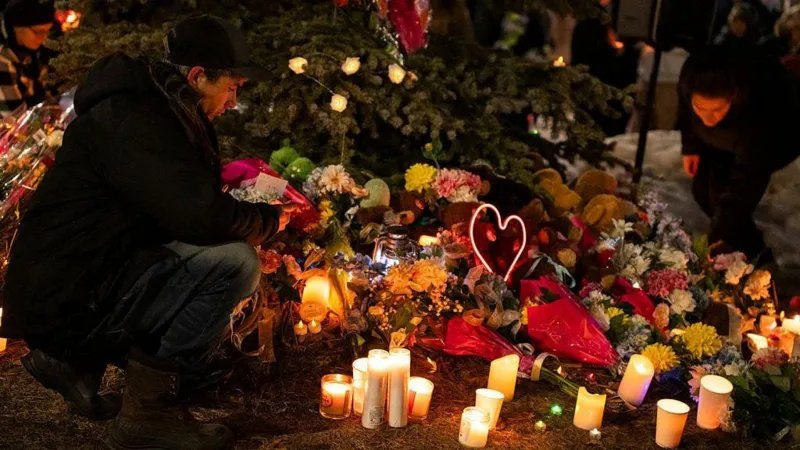
Community grief has been visible and deeply felt in the days following the attack. Hundreds of residents gathered in Tumbler Ridge’s main square for a vigil, standing shoulder to shoulder in silence, lighting candles, and placing photographs and flowers near a tree that quickly became a memorial site. Some mourners wept openly while others embraced in quiet solidarity, their shared sorrow reflecting the intimacy of a town where many residents know one another personally. One attendee, Gigi Rejano, told reporters that schools should always be places of safety, her words echoing the disbelief and anguish expressed by parents across the region.
Similar scenes unfolded in Vancouver, where another vigil took place outside the British Columbia legislature. Raj Chouhan, speaker of the legislature, addressed those gathered and spoke of unity in the face of tragedy, saying communities must come together in compassion and support for those directly affected. His remarks captured a sentiment felt across Canada, where messages of condolence have poured in from political leaders, educators, and citizens alike.
Prime Minister Mark Carney described the attack as an act of “unheard of cruelty,” noting that students and teachers had endured unimaginable trauma. He emphasised that several victims remain in hospital fighting for their lives and pledged that federal authorities would assist provincial investigators in any way required. The prime minister’s statement underscored the national impact of the event, which has prompted reflection on school safety, youth mental health, and the responsibilities of institutions to identify early warning signs.
Mayor Darryl Krakowka of Tumbler Ridge spoke emotionally about the town’s response, describing the community as “one big family” now united in mourning. In small municipalities, he explained, tragedies resonate differently because personal connections run deep. Teachers are neighbours, classmates are lifelong friends, and families often share generations of history. That closeness, he said, makes the loss particularly painful but also strengthens the resolve to support one another through grief.
Authorities confirmed that they do not believe any other suspects were involved and that there is no ongoing threat to public safety. Nevertheless, the investigation is expected to be extensive, involving forensic analysis, interviews with acquaintances, and a review of digital records. Officials are seeking to reconstruct the suspect’s movements in the hours and days leading up to the shootings, hoping to identify factors that might explain the sequence of events.
The tragedy has reignited broader conversations about violence prevention, mental health support, and the role of community vigilance. Experts note that while such incidents are statistically rare in Canada compared with some other countries, their impact is profound and long-lasting. Survivors, witnesses, and first responders often carry psychological scars long after physical wounds heal, making counselling services and community outreach essential components of recovery.

In Tumbler Ridge, those efforts are already under way. Crisis support teams have been deployed to assist students, families, and school staff as they process the shock. Flags across the region have been lowered to half-mast, and local organisations have begun fundraising to help affected families with medical costs and funeral expenses. Schools in neighbouring districts have held moments of silence, and messages of solidarity have arrived from across the country and beyond.
As investigators continue their work, the town faces the difficult task of mourning while searching for meaning in an event that defies easy explanation. For many residents, the focus remains on remembering the victims rather than the perpetrator, honouring lives cut short and offering comfort to those left behind. In the quiet streets of this mountain community, candles still flicker at makeshift memorials, their light a fragile but persistent symbol of resilience amid sorrow.
Related News:
 Pregnant UK Teen to Be Freed from Georgian Jail
 Just Stop Oil Protesters Convicted Amid Climate Defence Row
 British Grandmother to Return Home After Death Sentence in Bali
 Oklahoma Governor Grants Last-Minute Clemency to Death Row Inmate
 Teens ‘Ran Amok’ at Ex-MP’s Covid Testing Firm
 Northern Ireland Family of Three Shot Dead in Maguiresbridge Home Incident
 A Fugitive’s Double Life Uncovered: My Interview with Nicholas Rossi, Scotland’s Notorious Escapee Facing Utah Rape Trial
 Failed New Mexico Candidate Sentenced to 80 Years for Drive-By Shootings at Lawmakers’ Homes
 Jailed Georgian Opposition Leaders Warn UK of Iranian Links to Ruling Party
 UK Gamer Recruited by Wagner Group Found Guilty of Arson
 Badenoch Warns Farage’s Grooming Gangs Plan Could Backfire
 Five More Prisoners Freed by Mistake in Essex Week
 Nearly 48,000 Zombie Knives Removed from UK Streets in a Year
 Afghan man charged with murder after west London knife attack
 Trump Speaks on Prince Andrew’s Royal Scandal Fallout
 Man Charged Over Cambridgeshire Train Stabbing
 Police Probe Four Knife Incidents Linked to Cambridgeshire Train Attack
 French Taxi Driver Cleared in David Lammy Theft Case After Fare Dispute
 UK University Faces Counter-Terror Probe Over China Pressure
China-critical UK academics face ‘extremely heavy’ pressure from Beijing
UK University Faces Counter-Terror Probe Over China Pressure
China-critical UK academics face ‘extremely heavy’ pressure from Beijing
 Prison sentencing reforms expected to raise crime by up to 6%, police warn
 Met Police Culture Makes Racial Harm ‘Inevitable’
 Remaining rebel Labour MPs have whip restored
 BBC’s Tim Davie to Address Staff Amid Trump $1bn Threat
 Ukraine-Russia war latest: Putin’s troops exploit bad weather to force Kyiv withdrawal from multiple towns
 New Epstein Files Spark Political Clash in Washington
 South Korea’s Jeju Island Faces Rising Tide of Illicit Drugs
 Ukraine Energy Corruption Scandal Hits Zelensky’s Inner Circle
 US Justice Department Files Lawsuit Against California Over Partisan Voting Maps
 US Pushes Global Effort to Stop Arms Flow to Sudan RSF Forces
 Rio Raid’s Death Toll Raises Questions About Gang Impact
 Israel Confirms Returned Hostage as Meny Godard
 ‘Fake Admiral’ Sparks Outrage at Remembrance Event
 Greene Pushes Epstein Files Amid Trump Fallout
 Trump Deploys DHS to Charlotte in Major Arrest Operation
 Delhi Car Bomb Arrest: Suspect Linked to Deadly Attack
 Tragedy Strikes Indian Pilgrims in Saudi Bus Accident
 Paralegal Fired After Exposé on Illegal Worker Scam
 Dan Wootton Rejects Catfishing Allegation in Court
 Charlotte Raids: 130 Arrested in Major Immigration Sweep
 South African Detained After Neo-Nazi Rally in Australia
 Convicted Killer Challenges Vegemite Ban Behind Bars
 Congress Approves Release of Epstein Files, Trump Expected to Sign
 Newport Man Left Injured After Electric Bike Collision
 Forgotten War, Shattered Lives: Sexual Violence Devastates Women in Ethiopia
 Deadly Russian Strikes Hit Western Ukraine, 20 Killed in Ternopil
 Serial Rapist and Former Cop Found Guilty Again
 Man Charged Over Attempted Murder of Senior Officer
 Two Officers Injured After Van Deliberately Rams Patrol Car
 Man Denies Stealing Bronze Age Gold from Museum
 Trump Signs Bill Releasing Justice Department Files on Epstein
 WhatsApp Messages Expose Nathan Gill’s Bribery
 Venezuela Threatens Nobel Winner Machado with Fugitive Status
 Texas Governor Faces Lawsuit From CAIR
 Gardener Guilty of Brutal Attack on Teacher Partner
 Runaway Driver Caught by DNA Evidence
 Trump Envoy to Discuss Ukraine Peace at Kremlin
 Twenty-Four Nigerian Schoolgirls Freed After Abduction
 Two National Guard Soldiers Critically Injured Near White House
 Southern Lebanon reels as Israeli strikes shatter communities
 Video shows Israeli troops kill Palestinians after surrender
 Guinea-Bissau President Flees After Military Coup
 Kidnap Gangs, Jihadists and Separatists Plague Nigeria
 Rare shark attack kills woman, injures man at remote NSW beach
 Tokyo court rules Japan’s same-sex marriage ban constitutional
 Chinese & Japanese Boats Clash Near Disputed Islands
 Putin Meets US Envoy Amid Key Ukraine Peace Talks
 Twelve Prisoners Released in Error, Two Still Missing
 Man Swallows $19K Fabergé Egg Pendant in Theft
 Indonesia to Repatriate Two Dutch Drug Convicts
 US Defence Chief on Drug Boat Strike: “Did Not See Survivors”
 American Mother Extradited From UK to U.S. on Murder Charges
 Migrant father guilty of honour killing in Holland
 Woman Jailed for Life After Killing E-Bike Rider in Tragic Mistaken Identity Case
 Thousands Flee Cambodia Scam Centres Amid Global Pressure
 Files Link Andrew to Epstein Dinner After Prison Release
 Emails Show Epstein Funded Mandelson’s Husband After Jail
 Thousands Protest ICE Operations in Nationwide US Day of Action
 Police Doubt Fugitive Dezi Freeman Survived Bushland
 Saif al-Islam Gaddafi Reportedly Killed in Libya Shooting