Published: 18 February 2026. The English Chronicle Desk. The English Chronicle Online
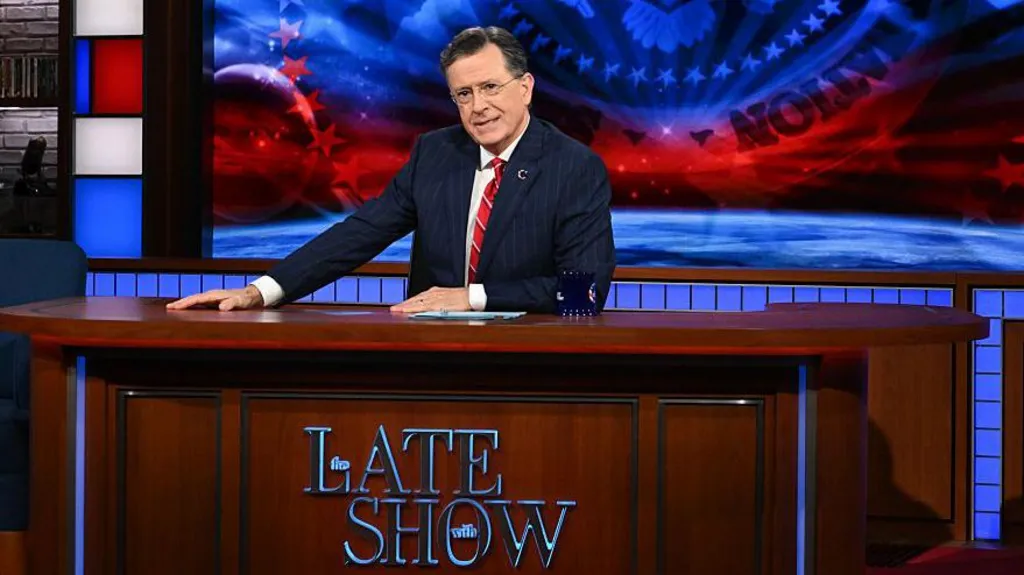
US talk show host Stephen Colbert has claimed that CBS declined to air an interview with a Democratic politician due to concerns about possible scrutiny from the Federal Communications Commission (FCC), according to a report by BBC.
Colbert, who hosts The Late Show with Stephen Colbert, told his audience that a pre-recorded segment featuring a member of the Democratic Party was ultimately pulled before broadcast. He suggested that network executives were wary of how the interview might be interpreted amid heightened political tensions and regulatory sensitivity in the United States.

Speaking during a recent taping, Colbert said the decision was not editorial but precautionary. “There was concern,” he told viewers, “about how it might look to regulators.” While he did not accuse the FCC directly of interference, he implied that the broader political climate had created an environment in which media companies feel pressure to avoid potential controversy.
CBS has not publicly confirmed the precise reasoning behind the decision, but in a statement cited by US media, the network said programming choices are made “based on a variety of editorial and business considerations.” It did not reference the FCC specifically.
The FCC, an independent government agency that regulates interstate communications by radio, television, wire, satellite and cable, has not indicated any formal investigation related to the programme. However, debates about media oversight and political bias have intensified in recent years, particularly during election cycles. Broadcasters are subject to certain content regulations and licensing requirements, though talk shows typically fall within wide editorial discretion.
Colbert’s remarks come amid a broader conversation in the United States about the relationship between media organisations and political power. Late-night talk shows have long featured political satire and interviews with elected officials, often providing a platform for extended discussions outside traditional news formats. While such appearances can be influential, they are also sometimes criticised by political opponents as partisan.
According to the BBC report, the unaired interview had included criticism of recent Republican policy proposals and comments on regulatory reform. Colbert did not reveal whether the segment might be released online or aired at a later date, but he emphasised that he felt it was “a conversation worth having.”
Media analysts say that networks sometimes err on the side of caution when regulatory questions intersect with politically sensitive content. Although the FCC does not typically intervene in individual editorial decisions, broadcasters remain mindful of compliance issues and public perception. Any suggestion that programming could jeopardise licensing, even indirectly, can influence internal deliberations.
Supporters of Colbert argue that pulling the interview risks creating a chilling effect, where networks avoid political content out of fear of regulatory backlash rather than clear legal obligation. Critics, meanwhile, contend that entertainment programmes should not blur the lines between comedy and political advocacy.
The situation highlights the delicate balance US broadcasters must strike between free expression, commercial considerations and regulatory oversight. The First Amendment of the US Constitution guarantees freedom of speech and of the press, but broadcast media operates within a framework that includes licensing rules and public interest obligations.
In recent years, late-night hosts have played an increasingly prominent role in shaping political discourse. Programmes like Colbert’s regularly feature lawmakers, activists and commentators. These appearances can reach millions of viewers, particularly through online clips shared on social media platforms.
Whether the interview will eventually see the light of day remains unclear. Colbert indicated he would continue to invite politicians from across the spectrum, adding that open discussion is central to democratic debate. “If we can’t talk about issues on a talk show,” he said, “where can we?”

CBS has yet to confirm whether internal guidelines were updated or whether similar decisions might apply to future political segments. For now, the episode has sparked renewed scrutiny of how regulatory concerns — real or perceived — influence editorial choices in American television.
As the United States approaches another election cycle, tensions between media companies, political figures and regulators are likely to remain under close watch. Colbert’s comments have added fuel to an already charged discussion about press freedom, corporate caution and the evolving role of entertainment platforms in political life.
Related News:
 Putin Intensifies Territorial Demands Before US Talks
 Trump to Recheck Green Cards from 19 Nations After DC Attack
 Russia losses Ukraine war peace talks intensify amid rising deaths
 Trump Escalates Minnesota Immigration Surge Amid Rising Tensions
 Trump: US Stands Ready to Help Iran Find Freedom Amid Widespread Unrest
 US Conducts Large-Scale Strikes Against ISIS Targets Across Syria
 Trump Says US Will Act on Greenland ‘Whether They Like It or Not’
 Trump Administration Probe of Fed’s Powell Draws Pushback
 Greenland Faces Pivotal Summit Over Arctic Power Struggle
 Trump Threatens Strong Action If Iran Executes Protesters
 Trump Receives Machado’s Nobel Medal in White House Meeting
 Greenland Crisis Forces Europe to Draw a Line With Trump
 Iran Cannot Be Bombed Into Democracy, Only Helped There
 Historic Abu Dhabi Talks Bring US, Ukraine and Russia Together
 Trump Pulls Canada from His Controversial ‘Board of Peace’ Plan
 EU Says US Ties Have Suffered ‘Big Blow’ After Greenland Crisis
 Thousands Protest ICE Operations in Nationwide US Day of Action
 Epstein Files Reveal Trump Officials’ Emails with Financier
 Thousands Protest ICE in New York Against Trump Deportation Campaign
 Trump Praises ‘Terrific’ Petro After White House Talks
 US Must Be Prudent When Supplying Arms to Taiwan, Xi Tells Trump
 Fears of New Arms Race as US-Russia Nuclear Weapons Treaty Expires
 New Nuclear Talks Between US and Iran Begin in Geneva
 ‘He Did It for Us’: US Soldier Recalls Jesse Jackson’s Efforts to Free Him and Two Other POWs
 Under Pressure From Trump, Venezuela’s New President Has Aces Up Her Sleeve
 Kinnock’s Rebuke Echoes Loudly as Corbyn Allies Launch Left-Wing Breakaway: “A Gift to Farage”
 UK and Norway Forge Stronger Ties Through Joint Sanctions and Enhanced Defence Cooperation
 Trump Administration Dismisses 17 Immigration Judges, Sparking Debate Over Judicial Independence
 UK Must Act with Courage and Clarity on Israel-Palestine Conflict, Says Foreign Affairs Committee Report
 Trump Threatens 100% Tariff on Nations Importing Russian Oil Amid India Standoff Over Ukraine War
 Radioactive Leak at UK’s Nuclear Warhead Base Sparks Outcry Over Safety and Secrecy
 Mutual Inconvenience: Why Alaska Was Chosen for the Trump-Putin Summit on Ukraine
 Hong Kong Summons UK and Australian Envoys Following Asylum Grants to Democracy Activists
 Is the UK Ready to Put Boots on the Ground in Ukraine? Assessing Military Capacity and Challenges
 Conservative Influencer Charlie Kirk Fatally Shot During University Debate
 Thousands Gather in London to Protest Donald Trump’s Second UK State Visit
 Channel Crossings Surge: Over 1,000 People Arrive in the UK in Small Boats in a Single Day
 Widow of Charlie Kirk Forgives Killer at Emotional Memorial Service
 Yvette Cooper Signals Global Momentum Towards Gaza Peace Deal Amid Humanitarian Crisis
 A Third of EU Citizens in UK Report Discrimination by Public Bodies Post-Brexit
 Public Trust in SNP Hits Historic Low Amid NHS Concerns
 Johnson Suggests Mandelson Linked to China Spy Controversy
 Rachel Reeves signals welfare reform ahead of key budget
 Ireland Votes as Two Women Compete for Presidency
 Russia’s Latest Push to Win US Favors Shows Deep Desperation
 Experts Warn Russia’s Burevestnik Missile Could Destabilise Arms Control
 BBC to Apologise Over Edited Trump Speech Amid Backlash
 Britain deploys RAF specialists to assist Belgium with drone threats
 Trump Urges Herzog to Grant Netanyahu Full Pardon
 Indian authorities demolish Kashmir home linked to Red Fort blast
 Greene Pushes Epstein Files Amid Trump Fallout
 Trump Deploys DHS to Charlotte in Major Arrest Operation
 December Run-Off in Chile as Election Produces No Winner
 Canada Passes Carney’s First Budget in Tight Parliamentary Vote
 Shadow Fleet at Sea: Europe’s Battle Against Illicit Oil Shipping
 Pentagon Officials in Ukraine to Discuss War End
 India’s COP30 Delay Raises Global Climate Concerns
 Venezuela Threatens Nobel Winner Machado with Fugitive Status
 Two National Guard Soldiers Critically Injured Near White House
 Georgians Defy Government Crackdown After Year of Protests
 US National Guard Member Killed in DC Shooting
 American Mother Extradited From UK to U.S. on Murder Charges
 US Cities Erupt in Protests Against Trump’s Venezuela Military Action
 Albanese Opens Door to Bondi Royal Commission Amid Rising Pressure
 Iran Protesters Defy Crackdown as Violent Clashes Intensify
 Homeland security agents deployed amid Minneapolis protests
 Trump Weighs Response to Iran Crackdown as Tehran Says Communication Open With US
 US Clears Nvidia AI Chip Sales to China in Policy Shift
 EU weighs response amid Greenland tariff crisis with Trump
 Videos reveal earlier clash before Alex Pretti shooting
 Israel Moves to Bar MSF From Gaza Operations
 Nurses’ families fear breakup under UK immigration crackdown
 ‘Trump Will Be Gone in Three Years,’ Top Democrats Tell Europe
 After the Landslide: Can India Reset Ties with BNP Bangladesh?
 Australian Families Leave Syrian Camp for Home
 Starmer Weighs Fast-Tracking Defence Boost
 Macron Rebuked in Franco-German Defence Row
 Trump Attacks UK-California Energy Pact
 US Civil Rights Leader Jesse Jackson Dies Aged 84
 Iran Says ‘Guiding Principles’ Agreed With US at Nuclear Talks