Published: 18 February 2026. The English Chronicle Desk. The English Chronicle Online
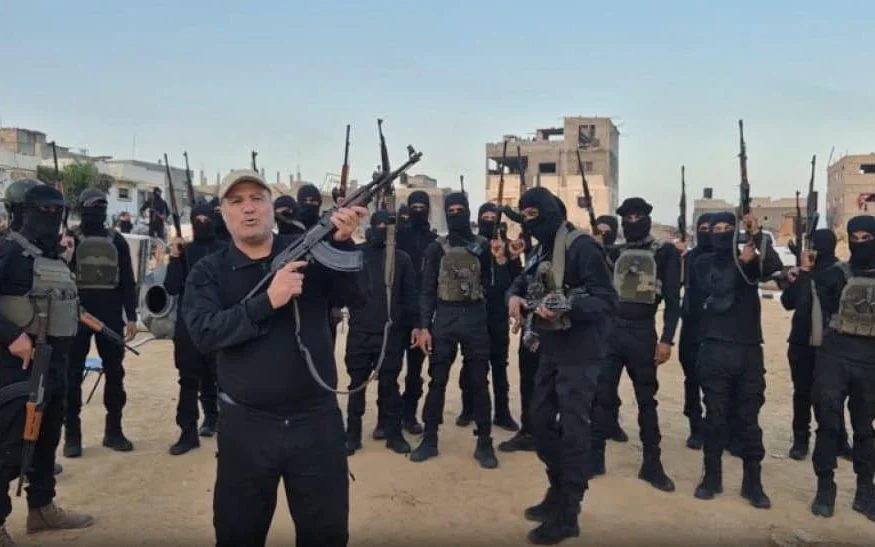
In a remarkable and controversial development in international policy, senior US officials have quietly advanced a proposal to recruit organised crime and drug‑dealing gangs to join and form the backbone of a new police force in the Gaza Strip, according to internal diplomatic sources. The revelation has shocked diplomatic, human rights and Middle East policy circles, raising urgent questions about the future of law enforcement and governance in the post‑conflict enclave.
The proposal, which is being circulated among senior State Department and White House officials, advocates incorporating elements of Gaza’s existing network of armed gangs — some of which were previously viewed as security threats and criminal enterprises — into a formalised police force tasked with maintaining civil order and policing duties across the territory. At its core, the idea would redirect the energies of these gangs away from illicit activities and into sanctioned law enforcement roles, with training, support and oversight from international partners led by the United States.

This initiative comes amid ongoing discussions in Washington and allied capitals on stabilising Gaza following months of intense conflict, a fragile ceasefire, and persistent lawlessness that has seen outbreaks of violence, looting, and criminality across the Strip. Since the end of major hostilities, Gazans have faced not only the devastation of war but also the breakdown of civil infrastructure and policing capacity, creating a vacuum of authority in many parts of the enclave.
The US proposal reflects both the recognised need for a functioning police presence in Gaza and the diplomatic frustration at the failure of existing governance structures to impose order. Traditional ideas — such as strengthening Hamas’ internal security forces or deploying foreign peacekeepers — have encountered resistance from regional actors and parts of the international community wary of legitimising any one faction’s control. Against this backdrop, the use of organised crime groups as the foundation of a new police service represents a dramatic shift in thinking.
Senior US diplomats argue that some of these criminal networks already possess local influence and an understanding of the territory that conventional policing units lack. By offering pathways into legitimate employment and authority, proponents of the plan contend that loyal ex‑gang members could be reoriented toward stabilising communities rather than exploiting them. The initiative, they insist, would also come with oversight mechanisms, accountability training, and direct support from international advisors.
However, the concept has alarmed many observers who warn that it could blur the lines between law enforcement and criminality, potentially empowering the very actors who have contributed to Gaza’s insecurity. Critics also point out that gangs in Gaza are not monolithic; they include groups with competing loyalties, diverse motivations, and deep roots in wartime networks that have thrived in the absence of strong civil authority.
Gaza’s security vacuum emerged starkly after the collapse of formal governance structures during and after the war that erupted in October 2023. In the chaos, armed groups — ranging from local crime families to rival militias — seized control of neighbourhoods, looted humanitarian aid, and extorted civilians, undermining efforts to rebuild social order. According to analysts, some of these groups later tried to rebrand themselves as stabilising forces, offering protection and local enforcement in exchange for community loyalty or economic control.
In response, the Ministry of Interior in Gaza announced several programmes aimed at demobilising non‑violent gang members and encouraging them to surrender their weapons in exchange for reintegration into official structures, including employment in security roles. Yet authorities acknowledged that this approach has had mixed results, particularly where gangs have continued to operate with significant autonomy.
The US proposal, as described by insiders, would institutionalise such reintegration efforts on an unprecedented scale. Plans reportedly include the creation of a formal police academy, stipends and contracts for former gang members, structured chains of command, and joint training with international law enforcement experts. If approved, the initiative could see former gang leaders assuming roles as precinct commanders or community liaisons — an idea that has elicited both intrigue and concern.

Reactions from regional and international actors have been cautious and in many quarters deeply critical. Some human rights groups have condemned the proposal as potentially legitimising criminality and entrenching violence under the guise of law enforcement. They warn that without robust safeguards, the policy could perpetuate cycles of abuse, corruption, and exploitation that Gaza’s civilian population has endured for years. Moreover, critics contend that peace and stability must be built on rule of law principles and community trust, not the incorporation of armed criminal elements into the official apparatus of policing.
Others in diplomatic circles have expressed concern that the initiative could complicate relationships with key Palestinian factions, particularly those already hesitant to engage with US‑led stabilisation efforts. Hamas and other established players in Gaza’s political landscape might view the formal empowerment of gangs as a direct challenge to their authority and legitimacy.
Meanwhile, international organisations focusing on post‑conflict recovery have urged a cautious approach that focuses on community policing, reconstruction of civil institutions, and support for locally trusted law enforcement entities — rather than an experimental gambit involving groups with histories of violence.
As the United States pushes forward with diplomatic consultations on the proposal, the coming weeks are likely to see spirited debate among policy makers in Washington, allied capitals, and international forums, including the United Nations. Proponents argue that unconventional times call for unconventional solutions, especially in a context as fractured and fragile as the Gaza Strip. Detractors warn that desperation must not justify measures that could further destabilise an already vulnerable population.
Ultimately, the future of Gaza’s police force — and whether it will be built around former gang networks, traditional law enforcement models, or some hybrid formation — remains uncertain. What is clear, however, is that the urgency of restoring security, rule of law, and public trust in the territory has reached a critical point, forcing policy makers to examine options that would have been unthinkable only a short time ago.
Related News:
 Iran Says ‘Guiding Principles’ Agreed With US at Nuclear Talks
 Two National Guard Soldiers Critically Injured Near White House
 Putin Intensifies Territorial Demands Before US Talks
 Trump to Recheck Green Cards from 19 Nations After DC Attack
 US Defence Chief on Drug Boat Strike: “Did Not See Survivors”
 American Mother Extradited From UK to U.S. on Murder Charges
 Russia losses Ukraine war peace talks intensify amid rising deaths
 Trump Taiwan China drills: US President Downplays Tensions
 US Venezuela protests sweep cities after intervention
 US Cities Erupt in Protests Against Trump’s Venezuela Military Action
 Trump Escalates Minnesota Immigration Surge Amid Rising Tensions
 Trump: US Stands Ready to Help Iran Find Freedom Amid Widespread Unrest
 US Conducts Large-Scale Strikes Against ISIS Targets Across Syria
 Trump Says US Must ‘Own’ Greenland to Block Russia, China
 Trump Says US Will Act on Greenland ‘Whether They Like It or Not’
 Trump Weighs Response to Iran Crackdown as Tehran Says Communication Open With US
 Australia’s US Ambassador Rudd to Step Down Early
 Trump Administration Probe of Fed’s Powell Draws Pushback
 Trading Day: Trump Crosses Fed Rubicon, Market Shrugs
 Greenland Faces Pivotal Summit Over Arctic Power Struggle
 US Clears Nvidia AI Chip Sales to China in Policy Shift
 Trump Threatens Strong Action If Iran Executes Protesters
 Trump Receives Machado’s Nobel Medal in White House Meeting
 Greenland Crisis Forces Europe to Draw a Line With Trump
 Iran Cannot Be Bombed Into Democracy, Only Helped There
 Trump Aide Sparks Fury as Greenland Dispute Intensifies
 Historic Abu Dhabi Talks Bring US, Ukraine and Russia Together
 Trump Pulls Canada from His Controversial ‘Board of Peace’ Plan
 EU Says US Ties Have Suffered ‘Big Blow’ After Greenland Crisis
 Arizona border shooting leaves suspect hospitalised after agent pursuit
 Videos reveal earlier clash before Alex Pretti shooting
 Thousands Protest ICE Operations in Nationwide US Day of Action
 Epstein Files Reveal Trump Officials’ Emails with Financier
 Thousands Protest ICE in New York Against Trump Deportation Campaign
 ‘Painful Times’ as Melinda Gates Responds to Epstein Files
 Trump Praises ‘Terrific’ Petro After White House Talks
 US Must Be Prudent When Supplying Arms to Taiwan, Xi Tells Trump
 Fears of New Arms Race as US-Russia Nuclear Weapons Treaty Expires
 US and Iran Talks to Begin as Fears of Direct Conflict Continue
 US Military Says Two Killed in Strike on Alleged Drug Boat in Eastern Pacific
 Trump Endorses Japan’s Takaichi Ahead of Snap Election
US and Iran Hold Nuclear Talks as Trump Ramps Up Military Threats
Trump Endorses Japan’s Takaichi Ahead of Snap Election
US and Iran Hold Nuclear Talks as Trump Ramps Up Military Threats
 Venezuela’s Opposition Says Party Leader Kidnapped Hours After Being Freed
 Trump Bizarrely Claims China Will ‘Terminate All Ice Hockey in Canada’ in Threat to Block New Border Bridge
 Oil Refinery Ablaze in Cuba as Fuel Crisis Deepens Amid Worsening Shortages
 Trump Says Iran Regime Change Is “Best Thing That Could Happen”
 Iran Signals Readiness to Compromise for Nuclear Deal
 Obama Slams Trump’s Racist ‘Ape’ Video Amid Backlash
 Eleven Killed in Israeli Strikes on Gaza, Rescuers Say
 Actor Robert Duvall, Who Starred in The Godfather, Dies Aged 95
 New Nuclear Talks Between US and Iran Begin in Geneva
 ‘He Did It for Us’: US Soldier Recalls Jesse Jackson’s Efforts to Free Him and Two Other POWs
 US Says It “Supports” UK Chagos Islands Deal
 Under Pressure From Trump, Venezuela’s New President Has Aces Up Her Sleeve
 ‘I Would Scream in My Sleep’: Alawite Women from Syria Tell of Kidnap and Rape
 Stephen Colbert Says CBS Spiked Interview With Democrat Over FCC Fears
 Moment Officers Rescue Injured Bald Eagle From Icy Hudson River
 Suspect in Rhode Island Ice Hockey Shooting Killed Ex‑Wife and Son
 UK Must Act with Courage and Clarity on Israel-Palestine Conflict, Says Foreign Affairs Committee Report
 Tottenham Takes On Newcastle
 Radioactive Leak at UK’s Nuclear Warhead Base Sparks Outcry Over Safety and Secrecy
 Terence Stamp, ’60s British Film Legend and Star of Superman, Dies at 87
 Hong Kong Summons UK and Australian Envoys Following Asylum Grants to Democracy Activists
 Is the UK Ready to Put Boots on the Ground in Ukraine? Assessing Military Capacity and Challenges
 Yvette Cooper Signals Global Momentum Towards Gaza Peace Deal Amid Humanitarian Crisis
 Chaos at Ibrox as Martin’s Rangers Era Comes to an End
 Russia’s Latest Push to Win US Favors Shows Deep Desperation
 BBC to Apologise Over Edited Trump Speech Amid Backlash
 Greene Pushes Epstein Files Amid Trump Fallout
 Zelenskyy Signs Fighter Jet Deal Amid Russian Drone Attacks
 Shadow Fleet at Sea: Europe’s Battle Against Illicit Oil Shipping
 US Suspends Afghan Immigration After White House Shooting
 ‘Extinct’ Antelope Returns to Sahara, Bringing Hope
 Minnesota Sues Trump Administration Over ICE Surge
 Sydney Shark Attack Surge Shocks Australia Beaches
 UK New Car Discounts Near £6,000 as Prices Are Slashed
 Portugal Election Delivers Socialist Win as Far Right Surges
 ‘Trump Will Be Gone in Three Years,’ Top Democrats Tell Europe
 Australian Families Leave Syrian Camp for Home
 Starmer Weighs Fast-Tracking Defence Boost