Published: 23 February 2026 . The English Chronicle Desk. The English Chronicle Online
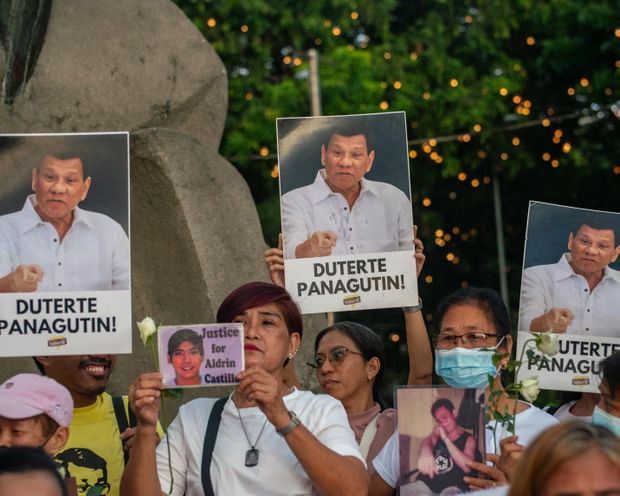
Former Philippine President Rodrigo Duterte has refused to attend the International Criminal Court (ICC) pre-trial hearing concerning alleged crimes committed during his controversial “war on drugs.” The hearing marks a significant step in the ongoing legal scrutiny of Duterte’s administration, which has faced international criticism for alleged human rights abuses.

Duterte, who led the Philippines from 2016 to 2022, has consistently rejected accusations that his policies encouraged extrajudicial killings or violated international law. In a statement released via his legal team, he described the ICC proceedings as “politically motivated” and vowed not to participate.
The ICC’s Office of the Prosecutor has been investigating claims that thousands of people were killed or unlawfully detained during Duterte’s aggressive anti-drug campaign. Prosecutors argue that these actions may constitute crimes against humanity, and the pre-trial stage is intended to determine whether there is sufficient evidence to proceed to a full trial.
Fatou Bensouda, former ICC Prosecutor, noted that pre-trial hearings are standard procedure: “This stage ensures that all evidence and arguments are carefully reviewed. Attendance by the accused is not mandatory, but participation can allow them to respond to allegations and present their side of the case.”
Human rights organizations have welcomed the hearing as a crucial step toward accountability. Karina Santos, spokesperson for the Philippine Human Rights Watch chapter, said: “The pre-trial hearing is a key opportunity to address the grievances of families affected by the drug war. Justice and transparency must be upheld regardless of political influence.”
The Philippine government has maintained that Duterte acted within the law and emphasized national sovereignty, arguing that domestic courts are best placed to handle issues related to internal policies. This position has led to tense relations with international bodies, including the ICC, over the limits of accountability and jurisdiction.
Legal experts predict that Duterte’s absence could complicate proceedings, but it does not halt the case. The pre-trial chamber will assess the evidence and determine whether formal charges should be issued. If the ICC decides to proceed, the case could be the first major trial concerning state-led anti-drug campaigns in Southeast Asia.

The hearing comes amid renewed debate in the Philippines about the legacy of Duterte’s administration, with public opinion divided. Supporters praise his hardline approach to crime, while critics argue that the campaign left a lasting mark on human rights and the rule of law.
As the ICC pre-trial proceedings unfold, the international community will be watching closely, balancing questions of justice, accountability, and the challenges of prosecuting former state leaders for policies implemented under their tenure.
Related News:
 Mansfield condemns refusal to meet hunger strikers
 Files Link Andrew to Epstein Dinner After Prison Release
 Emails Show Epstein Funded Mandelson’s Husband After Jail
 Labour Attacks Reform Candidate Over Tommy Robinson Backing
 Royal Marine Admits Killing Man with Fatal Punch
 How Dark Web Agent Spotted Bedroom Wall Clue to Rescue Girl from Years of Harm
 Trump Administration Dismisses 17 Immigration Judges, Sparking Debate Over Judicial Independence
 Britain’s Immigration Overhaul Begins: New Skilled Worker Rules Set to Reshape UK Labour Market
 Tasers Introduced in UK Prisons to Combat Rising Violence and Protect Staff
 Northern Ireland Family of Three Shot Dead in Maguiresbridge Home Incident
 Tragedy in the Skies: Inquest Reveals Devastating Cause of Death in Southend Plane Crash
 Targeted Attack in Bury Sparks Murder Investigation as Community Awaits Justice
 Man Remanded After Children Fall Ill at Leicestershire Summer Camp in Shocking Child Cruelty Case
 Prison System Faced Collapse Under Sunak’s Leadership, Reveals Damning Review
 Diane lost her husband to a reckless driver — and the long wait for justice was nearly just as agonizing.
 Inquest Finds Agency Worker Failings Led to Unlawful Death of Vulnerable 14-Year-Old
 Merseyside Police Helicopter Crew Cleared After Low-Altitude Pursuit of Suspect
 High Court Rules Against Noel Clarke in Libel Case Against Guardian Publisher
 Tanni Grey-Thompson Faces Abuse Over Opposition to Assisted Dying Bill
 UK Launches Major Crackdown on Networks Profiting from Online Child Sexual Abuse
 Mahmood Pledges Reform of Modern Slavery Laws After Court Blocks Deportation Appeal
 Migrants in UK May Need to Contribute or Face Removal, Home Secretary Signals
 No Evidence Found to Substantiate Alleged Rape in Oxfordshire Churchyard, Police Confirm
 Digital ID Plans Ignite Debate Over £600m Treasury Tax Boost and Privacy Concerns
 Nigel Farage’s partner linked to Brussels fraud probe
 Badenoch Warns Farage’s Grooming Gangs Plan Could Backfire
 Johnson Approved China’s London ‘Super-Embassy’ in 2018
 Police Probe Four Knife Incidents Linked to Cambridgeshire Train Attack
 French Taxi Driver Cleared in David Lammy Theft Case After Fare Dispute
 Just Stop Oil Protesters Convicted Amid Climate Defence Row
 King Charles to Lead Nation in Remembrance Sunday Service
 Trump Urges Herzog to Grant Netanyahu Full Pardon
 Major Rent Reform Ends No-Fault Evictions in England
 Peers Flood Assisted Dying Bill with 942 Amendments
 US Justice Department Files Lawsuit Against California Over Partisan Voting Maps
 Rio Raid’s Death Toll Raises Questions About Gang Impact
 Trump Deploys DHS to Charlotte in Major Arrest Operation
 Charlotte Raids: 130 Arrested in Major Immigration Sweep
 Eminem Takes Legal Aim at Australian ‘Swim Shady’ Brand
 Serial Rapist and Former Cop Found Guilty Again
 Man Charged Over Attempted Murder of Senior Officer
 Man Denies Stealing Bronze Age Gold from Museum
 Runaway Driver Caught by DNA Evidence
 US National Guard Member Killed in DC Shooting
 ICC to Rule on Duterte’s Provisional Release
 Tokyo court rules Japan’s same-sex marriage ban constitutional
 Virgin Media Fined £23.8m Over Telecare Safety Failures
 Sexually Explicit Letters Target Hong Kong Exiles in UK, Australia
 Protest Rights Under Threat Across England and Wales
 Gambia Supreme Court Hears Case to Overturn FGM Ban
 Google Employee Claims Redundancy After Harassment Report
 Plans to Limit Jury Trials Face Retreat After Mounting Opposition
 Woman Jailed for Life After Killing E-Bike Rider in Tragic Mistaken Identity Case
 Betfair Faces Pressure Over Funds Lost to Gambling Fraud
 American democracy faces crisis after Trump’s return
 Study Finds One in Seven England Takeaways Are Dark Kitchens
 Police Doubt Fugitive Dezi Freeman Survived Bushland
 Epstein Files Release Sparks Renewed Outrage Over Withheld Records
 Appeal to B&B Owners Over Cash Point Ram-Raid
 Australia’s Opposition Coalition Reunites After Rift
 Concerns rise for Canberra boy amid Iran detention fears
 After the Landslide: Can India Reset Ties with BNP Bangladesh?
 Wayne Couzens Still Eligible for £7k Pension
 Japan’s Lost “Tigers” Were Actually Lions, Study Reveals
 Motorists Could Face ‘Mandatory’ Driving Ban for Road Offences Under Tougher Laws
 Students Begin Covid Compensation Claim Against 36 More Universities
 Disability and LGBT Hate Crimes Set to Become Aggravated Offences
 ‘I Would Scream in My Sleep’: Alawite Women from Syria Tell of Kidnap and Rape
 Last‑ditch Call to Save Police Front Counters in London
 Dual Nationals Face Scramble for UK Passports as New Rules Come Into Force
 Nine Arrested in France Over Death of Far‑Right Student
 Gower, Waugh and Gavaskar Among Cricket Legends Calling for Imran Khan to Receive Proper Medical Care
 South Korea’s Ex-President Faces Death Penalty in Insurrection Trial
 Civil Service Pay: Union Urges Ministers to End ‘Barking Mad’ Limits
 How Much Could Andrew’s Arrest Hurt the Royal Family?
 Epstein Eyed Record Label Investment to Access Women, Files Suggest
 Epstein Files Could Be Just Tip of the Iceberg for Andrew Investigation
 Fly-Tippers to Be Hunted by ‘Drone Squad’ in Crackdown from the Sky
 Live Nation Sees Strong Ticket Sales as Monopoly Lawsuit Looms
 ‘We’re Still on Edge’: Toy Firms Look to US Supreme Court as Tariffs Hit Profits