Published: 23 February 2026. The English Chronicle Desk. The English Chronicle Online.
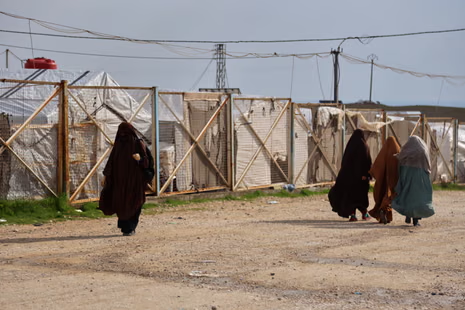
New South Wales authorities are preparing for the possible return of IS-linked children and women, amid ongoing tensions over their status in Syria. Federal and state agencies have been in discussions since late 2025 about the potential repatriation of some of the 11 women and 23 children currently residing in the Roj refugee camp. The premier, Chris Minns, emphasized that NSW is focused on a measured law enforcement response, while also safeguarding the welfare of IS-linked children trapped in dangerous circumstances.
The group recently attempted to leave the camp but were blocked by Syrian authorities, heightening concerns about the safety of the IS-linked children. Minns acknowledged the contentious debate in Canberra between the federal government and the Coalition, stating that while he has no sympathy for adults who left Australia to fight in the Middle East, the wellbeing of IS-linked children remains a priority. The premier highlighted that NSW agencies have been working closely with federal counterparts on contingencies, stressing that any return would involve strict legal scrutiny and protective measures.
“The reality is NSW government agencies have been working with the commonwealth since the end of last year about possible arrivals from Syria, from refugee camps,” Minns said. He further clarified that existing laws already criminalize Australians who leave to join terrorist organizations, and the state expects these laws to be enforced consistently upon any return. The premier’s remarks underscore a dual approach: upholding justice for adults while providing a safe environment for IS-linked children who have been inadvertently caught in conflict zones.

Debate over the group’s potential return has intensified in the federal parliament, with the opposition calling for stricter rules to prevent repatriation. Coalition members have criticized Labor for issuing passports to individuals linked to Islamic State, even as the federal government maintains that it will not actively facilitate the group’s return. The Passports Act grants Australian citizens the right to hold a passport, subject to certain restrictions such as criminal warrants, complicating the legal landscape around repatriation.
Minns emphasized that, regardless of political controversy, the NSW government would provide education services to any IS-linked children returning to the state. “I worry about where these children will be in the years ahead, and I worry about the consequences of doing nothing for them if they did return to Australia,” he said, acknowledging the long-term social and psychological support these children would require. Such statements reflect a careful balancing act between legal obligations and humanitarian considerations, as authorities navigate a complex ethical and security challenge.
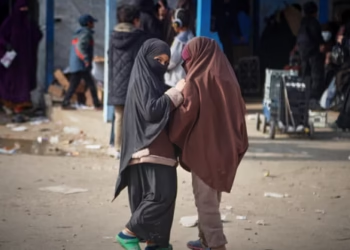
Reports from the Roj refugee camp indicate rising instability, with Kurdish officials reportedly refusing to return tents after the group attempted to leave. Many families are now scattered, living with other camp residents after their possessions were seized and shelters destroyed. Eyewitness accounts describe near-nightly raids and increasing violence within the camp, underscoring the urgent need for protective interventions for vulnerable IS-linked children. These conditions have drawn attention from aid organizations, which advocate for evidence-based approaches rather than politically charged responses.
Angus Taylor, the federal opposition leader, announced plans to introduce legislation criminalizing the facilitation of re-entry for individuals linked to terror organizations. Taylor insisted that Australians who supported extremist groups overseas should not be allowed to return, framing the measure as necessary to protect national security. “We will take action and refuse to let people come here who abandoned Australia to support Islamic extremist terror overseas,” Taylor said, challenging Labor to back the proposed legislation. This political push reflects broader public anxieties about domestic security, citizenship rights, and accountability for actions abroad, which also directly affect IS-linked children.
Humanitarian organizations have urged caution against overly punitive rhetoric. Mat Tinkler, chief executive of Save the Children, warned that both government and opposition risk framing the situation purely as a political problem, rather than addressing the complex needs of IS-linked children. “It feels we’ve got a hardening position from the government and opposition, that’s seeking to deal with what’s seen as a political problem or a political opportunity,” he told ABC TV. Tinkler’s comments highlight the ethical tension between political expediency and principled, evidence-based care for vulnerable populations.
The legal framework surrounding the group’s possible return is intricate. Temporary exclusion orders, such as one recently issued to a woman in the group, ban entry for up to two years and reflect an interim approach to controlling movement. At the same time, Australian authorities are obligated to monitor the welfare of IS-linked children, who may require long-term psychosocial support, schooling, and rehabilitation. The interplay between national security imperatives and humanitarian obligations complicates policy decisions, requiring both legal precision and careful planning by authorities at all levels.
Minns reinforced that NSW is prepared to implement strong law enforcement responses in line with existing counter-terrorism legislation. Simultaneously, the government is developing frameworks to ensure education, healthcare, and social services are immediately accessible upon the return of IS-linked children. By taking a proactive stance, authorities hope to mitigate the risks posed by potential adult offenders while preventing further trauma for children caught in the conflict. This dual strategy emphasizes accountability, public safety, and the moral responsibility to safeguard innocent lives.
Security concerns extend beyond immediate repatriation. Experts caution that returning individuals may require close monitoring to prevent radicalization, support reintegration, and manage potential community tensions. Agencies must balance these security protocols with the imperative to offer IS-linked children normalcy, stability, and access to education. In doing so, authorities aim to prevent the perpetuation of violence and promote long-term rehabilitation rather than punitive isolation, reflecting evolving counter-terrorism strategies within Australia.
As discussions continue between NSW authorities and federal agencies, the situation remains fluid, hinging on diplomatic coordination with Syrian officials and the operational status of the Roj camp. The potential return of this group illustrates the broader challenges Australia faces in managing citizens involved in foreign conflicts, particularly when IS-linked children are affected. While the political debate remains heated, the focus on child welfare, education, and protective services demonstrates a commitment to principled governance under complex circumstances.

In navigating this issue, NSW authorities are emphasizing clarity, transparency, and adherence to the law, while also addressing humanitarian obligations for IS-linked children caught in conflict. The state government’s approach seeks to balance national security interests with the moral imperative to provide care and education for minors. By planning for both security measures and reintegration support, officials aim to address immediate risks while laying the groundwork for the children’s long-term wellbeing. The complexity of the situation underscores the tension between legal accountability, political pressures, and ethical responsibilities in contemporary Australian governance.
The Roj camp developments and increasing instability there highlight the urgent need for coordinated responses between international, federal, and state agencies. While adults linked to extremist groups face legal repercussions, IS-linked children remain vulnerable and dependent on structured interventions. NSW’s preparedness plan demonstrates an effort to anticipate challenges, safeguard vulnerable populations, and uphold the rule of law. The situation serves as a stark reminder of the human consequences of foreign conflicts and the importance of principled policy frameworks in protecting children’s futures.
As the debate unfolds, it becomes clear that the potential return of IS-linked children will require ongoing collaboration across multiple levels of government. Legal measures, educational support, and community reintegration programs must be carefully coordinated to address both security and welfare concerns. Authorities continue to monitor developments in Syria and maintain contingency plans for safe repatriation. Through a measured approach, NSW aims to mitigate security threats while fulfilling its ethical duty to protect innocent IS-linked children, highlighting the complex intersection of law, politics, and humanitarian responsibility.
Related News:
 Victoria Police Ends Warrantless Search Powers, Consolidating Peace
 Liberal Turmoil Threatens Victorian Election Hopes
 Adelaide Festival Sparks Widespread Controversy Among Writers
 Racist Attack on Imam Sparks Melbourne Police Action
 PM pushes urgent hate speech and gun laws after Bondi terror attack
 Hanson and Joyce Use Rinehart Jet to Tour Flooded Queensland
 Craig Silvey faces charges over child exploitation material in Australia
 Labor’s Hate Speech and Gun Laws Face Federal Roadblocks
 Bondi memorial flowers preserved in lasting tribute artwork
 Sydney shark attack leaves boy critically injured in harbour waters
 Sydney Shark Attack Surge Shocks Australia Beaches
 Melbourne Antisemitic Attack Targets Young Boys
 NSW Shark Attacks Surge, Authorities Urge Swimmers to Stay Out
 Nationals Crisis Meeting Threatens Coalition Stability
 Sussan Ley leadership milestone shakes Liberal future
 Deadly NSW Shooting Leaves Three Dead, Gunman Escapes
 Silence and Unity Mark Bondi Terror Attack Memorial
 Andrew Hastie Emerges as Leadership Rival to Ley
 Record-Breaking Heat Looms Over South-East Australia as Catastrophic Fire Risk Escalates
 Victorians Evacuate Otways Amid Massive Fire Threat
 David Speers to host ABC panel on Jewish Australian experiences
 Morrison Faces Backlash Over Call to Regulate Islam in Australia
 How Sandhill Ashes Rebuilt a Bushfire-Hit Rural Community
 David Littleproud and Sussan Ley to Discuss Coalition Future
 Jess Wilson Event Exit After Joyce Controversy
 Townsville Hospital Probes Privacy Breach After Activist Posts Foetus Image
 Psychiatric failings linked to Bondi Junction stabbings, coroner finds
 Gus Lamont Case: Grandmothers ‘Devastated’ by Major Crime Status
 Australia’s Opposition Coalition Reunites After Rift
 Christchurch Shooter Seeks to Overturn Guilty Plea in Appeals Court
 Australia Police Defend Actions After Violence at Protest Over Israeli President Visit
 Lenore Taylor steps down as Guardian Australia editor
 Liberal Party Faces Leadership Spill as Taylor Challenges Ley
 Angus Taylor Faces Immense Test with New Frontbench
 Sydney Businessman Falsely Claimed Security Advice Came From Kevin Rudd
 NSW to Introduce Minimum Age for Ebike Riders
 UK Banks Granted Reprieve as BoE Delays Basel III Capital Rules Until 2028
 Singapore Corruption Scandal: Details Emerge on Iswaran’s Luxury Flight and Ties to Tycoon Ong Beng Seng
 Corfu Beyond the Crowds: Discovering Serenity in Southern Villages and Hidden Taverns
 Peter Andre Praises Son Junior’s ‘Quiet Season’ Amid Ongoing Family Dispute
 Massive 641-Mile Storm Set to Batter UK with 15 Hours of Rain and Strong Winds
 Jeremy Clarkson’s Pub: A Sunday Lunch Like No Other
 Scottish Government Mandates Single-Sex Toilets and Changing Facilities in Schools
 Reeves Faces Setback as Labour May Miss Homes Target
 Kate Winslet to Narrate Film Highlighting King’s Environmental Mission
 Trump’s UK Ambassador Urges North Sea Drilling to Strengthen US Ties
 UK Bans Fake Numbers: Scammers Lose Their Trick
 Vibe coding’ named Collins dictionary’s word of the year
BBC to Apologise Over Edited Trump Speech Amid Backlash
Vibe coding’ named Collins dictionary’s word of the year
BBC to Apologise Over Edited Trump Speech Amid Backlash
 Millionaires group urge Reeves to introduce wealth tax to ‘lift kids out of poverty’
 Reeves rejects £1bn plea for NHS redundancy payouts
 PM Condemns Leaks, Vows Loyalty to Ministers and Stability
 Phillipson Accused of Appeasing Unions by Diluting EBacc
 Saka Solidifies Role as Tuchel’s Key England Lieutenant
 Greene Pushes Epstein Files Amid Trump Fallout
 ‘Extinct’ Antelope Returns to Sahara, Bringing Hope
 IndiGo Cancels Hundreds of Flights Amid Pilot Shortages
 Young Britons Face Heaviest Burden from Ageing Population, Lords Warn
 U‑Turn on Farmers’ Inheritance Tax Sparks Political Firestorm
 Khaleda Zia Death in Bangladesh: First Female PM Dies at 80
 Children to Receive Home Vaccines as England Acts
 GMB Union Faces Turmoil Amid Female Leaders’ Claims
 MoJ Prison Leasing Scandal Triggers £100m Public Cost
 Cambridge College Faces Backlash Over Private School Recruitment
 Bereaved Fathers Gain New Paternity Leave Rights in UK
 Minnesota Sues Trump Administration Over ICE Surge
 US Senate rejects resolution limiting Trump military powers
 Woman Jailed for Life After Killing E-Bike Rider in Tragic Mistaken Identity Case
 No Gas Boiler Ban as UK Warm Homes Plan Backs Heat Pumps
 Police response times face strict new national limits
 Devon hosts first high-density hydro power system
 US Dollar Hits Four-Year Low Amid Market Turmoil
 AI breast screening cuts later cancer diagnoses by 12%, study finds
 Police Doubt Fugitive Dezi Freeman Survived Bushland
 Most Statin Side-Effects Are Not Caused by Drugs, Study Confirms
 Portugal Election Delivers Socialist Win as Far Right Surges
 Send spending gap leaves deprived areas behind
 Australian Families Leave Syrian Camp for Home
 Civil Service Pay: Union Urges Ministers to End ‘Barking Mad’ Limits
 UK Job Vacancies Hit Five-Year Pandemic Low