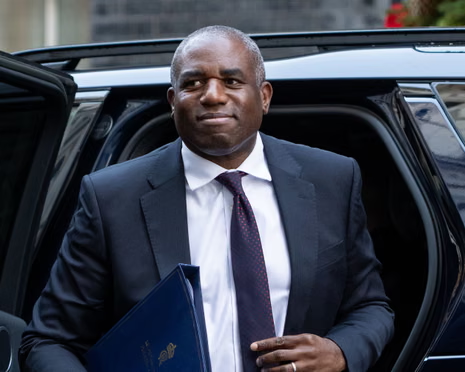
Published: 24 February 2026. The English Chronicle Desk. The English Chronicle Online.
David Lammy has confirmed the government will lift the cap on crown court sitting days to help reduce the persistent crown court backlog of criminal cases. The justice secretary and deputy prime minister explained that every crown court in England and Wales will be funded to hear more cases in the coming financial year. Criminal barristers have welcomed the decision, noting it as a substantial step forward after discussions with the lady chief justice, Sue Carr, aimed at addressing delays. Lammy indicated that further measures will follow, designed specifically to ease a crown court backlog affecting at least 80,000 criminal cases.
The agreement ensures there will be no limit on the number of days crown courts can sit over the next financial year. Caps on court sitting days have historically been imposed intermittently to manage Ministry of Justice budgets and staffing shortages, but the latest move represents a decisive change. In October, the MoJ announced plans to increase crown court sitting days to 111,250 for this year, a figure now expected to rise to 113,000 with the removal of the cap.
Alongside unlimited sitting days, the government and judiciary have agreed to a £2.8 billion settlement for courts and tribunals for 2026/27, up from £2.5 billion last year. This funding package includes £287 million in capital investment aimed at repairing decaying court buildings, ensuring that infrastructure can support the expanded caseload. Criminal Bar Association chair Riel Karmy-Jones KC and vice-chair Andrew Thomas KC described lifting the cap as “a brave and significant first step” towards restoring efficiency in the criminal justice system.

They emphasised that complainants, witnesses, defendants, and all professionals working within the criminal justice system will be greatly relieved, highlighting that removing the cap on sitting days is the single most important action to reduce the crown court backlog and minimise delays. While the Law Society acknowledged the funding package as a positive move, it also warned that the measures alone will not eliminate the backlog or address ongoing infrastructure challenges in the court system.
Fiona Rutherford, chief executive of the pressure group Justice, praised the announcement but cautioned against using it as justification to reduce jury trials. She stressed that curtailing jury trials would undermine public trust and risk miscarriages of justice, particularly for marginalised communities who often rely on these protections. “These welcome moves contrast sharply with the unnecessary damage cutting juries would bring,” Rutherford said, emphasising the importance of maintaining long-standing judicial safeguards.
Lammy has indicated that further announcements are expected to focus on reforms identified in the second part of Sir Brian Leveson’s review, including the increased use of remote hearings to improve court efficiency. “I have agreed with the judiciary to fund unlimited sitting days in the crown court next year so they can sit at their maximum and so we can turn the tide on the crown court backlog as quickly as possible,” Lammy said. He added that investment alone will not solve the problem; modernisation and pragmatic reforms must accompany financial support to deliver timely justice.
The plan to lift sitting day caps reflects a broader effort by the government to modernise the criminal justice system while protecting fundamental legal principles. Over the years, intermittent caps were necessary due to budgetary constraints and staff shortages, but the crown court backlog has grown, particularly following delays caused by the pandemic. The government’s decision aims to allow courts to operate at full capacity, ensuring that criminal cases progress more swiftly and that defendants and victims are not left waiting for extended periods.
The funding increase also signals a long-term commitment to judicial infrastructure, which has faced criticism for deteriorating facilities. By allocating nearly £300 million in capital investment, the government intends to repair ageing court buildings, create more functional spaces for hearings, and accommodate modern technology requirements, including video links and remote proceedings. These improvements are expected to reduce administrative bottlenecks and support the goal of maximising crown court efficiency.
Legal experts have described the government’s approach as a measured response to a persistent problem. Karmy-Jones KC and Thomas KC highlighted that, beyond increasing sitting days, the solution must also tackle procedural inefficiencies and staffing pressures that contribute to delays. The Criminal Bar Association has consistently emphasised that meaningful reform requires a combination of financial investment, administrative modernisation, and practical measures to streamline case management.
The Law Society has urged ongoing evaluation to ensure that increased sitting days and funding directly translate into reduced delays for defendants and victims. Infrastructure improvements and budget allocations are vital, but the implementation of new procedures, staffing support, and modern technology will determine the success of these reforms. Observers note that previous increases in court sitting days did not fully resolve backlogs due to limited operational capacity and outdated court processes.
Rutherford of Justice highlighted the potential risks of undermining jury trials while attempting to expedite cases. She argued that reducing jury participation might seem expedient but could compromise fairness and disproportionately affect vulnerable groups. Ensuring that trials continue to meet high standards of justice is essential, even as the government seeks to address backlog pressures. The balancing act between efficiency and legal integrity remains a central concern in judicial reforms.

Lammy’s announcements are expected to be part of a phased strategy, with immediate impacts on sitting days and longer-term measures aimed at procedural modernisation. Remote hearings, digital filing systems, and improved case management tools are likely to feature prominently in the next phase. These initiatives aim to make court operations more adaptable and responsive, especially in regions where crown court backlog issues are most acute.
The removal of sitting day caps also carries symbolic significance, signalling that the government recognises the urgency of criminal justice reform. It represents a commitment to both victims and defendants that cases will be addressed promptly and that systemic inefficiencies will be actively addressed. By prioritising crown court capacity, the administration hopes to rebuild public confidence in a system that has faced criticism for delays and inconsistencies.
Ultimately, the government’s approach reflects a comprehensive strategy combining financial investment, infrastructure improvement, and procedural reform. By lifting the cap on crown court sitting days and increasing funding, officials aim to ensure that courts can operate at full capacity, modernise processes, and maintain trust in the justice system. Legal professionals and advocacy groups have cautiously welcomed the changes, emphasising that implementation will be crucial in achieving tangible reductions in case delays.
As the next financial year begins, courts across England and Wales will have the resources and authority to maximise sittings and address the crown court backlog more effectively. Observers will closely monitor the impact on case progression, infrastructure readiness, and the preservation of jury trial standards. With continued investment and reform, the government hopes to achieve a measurable decrease in delays, restoring confidence in the efficiency and fairness of the criminal justice system.
Related News:
 Peterborough Mosques Tighten Security After Attack
 Reeves Faces Setback as Labour May Miss Homes Target
 Hospice Cuts Raise Alarm Across England Amid Funding Crisis
 Kate Winslet to Narrate Film Highlighting King’s Environmental Mission
 Green Party Surges Past Labour in Latest UK Poll
 Trump’s UK Ambassador Urges North Sea Drilling to Strengthen US Ties
 Children to Learn Local History in Major Curriculum Overhaul
 Granit Xhaka Rescue Earns Everton Draw at Sunderland
 French Taxi Driver Cleared in David Lammy Theft Case After Fare Dispute
 UK Bans Fake Numbers: Scammers Lose Their Trick
 Prince William Plants Trees with Brazil’s Nature Heroes
 M&S Profits More Than Halve After Cyber-Attack
 Just Stop Oil Protesters Convicted Amid Climate Defence Row
 Kent village told to remove flags before Christmas lights go up
 Patients to Test Health at Home to Ease NHS Winter Pressure
 King Charles to Lead Nation in Remembrance Sunday Service
 How to get help when a child goes missing – call 999 urgently
 Palace May Restore Hyphen to Andrew Mountbatten-Windsor’s Name
 Millionaires group urge Reeves to introduce wealth tax to ‘lift kids out of poverty’
 Starmer Faces Growing Dissent as Labour MPs Weigh Leadership Challenge
 Shouting Works Best to Deter Gulls, UK Study Finds
 Reeves rejects £1bn plea for NHS redundancy payouts
 Northern Lights may illuminate UK skies this week
 PM Condemns Leaks, Vows Loyalty to Ministers and Stability
 Son Reveals UK Couple in Iran Resort to Hunger Strike for Help
 Major Rent Reform Ends No-Fault Evictions in England
 Peers Flood Assisted Dying Bill with 942 Amendments
 Former Lion Heskey Warns of Shortage of England Strikers
 Criminal Gangs Pose as Truckers to Hijack UK Supply Chains
 Stroke Patient Mistaken for Drunk, Care Delayed
 Van Dwellers Face Eviction After Park Misuse Sparks Outcry
 ‘Traumatic Wait’: Northern Ireland Women Face Breast Cancer Delays
 Serial Rapist and Former Cop Found Guilty Again
 Royal Navy Shadows Russian Warships Entering the Channel
 Inside the Helpline Protecting Missing Children in the UK
 Most Tories Expect to Support a Farage-Led Government
 Boots Showstopper Beauty Bundle Outshines Many Advent Calendars This Holiday Season
 Labour’s ‘blinkered’ drive to build risks pushing wildlife to point of no return, nature experts warn
 PlayStation PS5 Deals Hit Lowest Prices Ahead of Black Friday
 Karen Carney Stuns on Blackpool Week, Deserves Strictly Final
 Five-Year-Old Dies After Rare Tonsil Surgery Complication
 Fibromyalgia Patients Struggle as NHS Fails to Provide Care
 Starmer Says Labour’s Economic Plan Needs Years to Deliver
 Virgin Media Fined £23.8m Over Telecare Safety Failures
 More Patients Now Contacting GPs Online, Data Shows
 UK unemployment rises to four-year high of 5.1% before budget
 Wiltshire Police Use Lasso to Catch Rampaging Village Goat
 Children to Receive Home Vaccines as England Acts
 Cambridge College Faces Backlash Over Private School Recruitment
 NHS Violence Crisis: Staff Face Daily Assaults
 Celebrity Campaign Highlights SMA Screening Failures
 Bereaved Fathers Gain New Paternity Leave Rights in UK
 Storm Goretti leaves Cornwall homes without power
 New Documentary Examines Teen’s Zombie Knife Murder
 Woman Jailed for Life After Killing E-Bike Rider in Tragic Mistaken Identity Case
 Right Must Unite After Jenrick Defection, Urges Rees-Mogg
 UK Ministers Drop Foreign Student Targets for Global Education Push
 No Gas Boiler Ban as UK Warm Homes Plan Backs Heat Pumps
 UK Glaucoma Rise Signals Looming Eye Health Crisis by 2060
 Shinzo Abe’s killer receives life sentence in Japan
 Police response times face strict new national limits
 Edinburgh, Glasgow Lead UK Nightlife Hotspots, Uber Data
 Labour policing overhaul sparks fears over growing central control
 Devon hosts first high-density hydro power system
 Pornhub blocks new UK users over age checks dispute
 Starmer warns of toxic division politics in Reform challenge
 UK New Car Discounts Near £6,000 as Prices Are Slashed
 Pneumonia Surge Pushes England Emergency Cases Higher
 Wigan Dump Crisis Sparks Health and Safety Alarm
 Palantir contracts face UK halt calls over transparency
 Teen Girl Chased in Broad Daylight in Ipswich
 Send spending gap leaves deprived areas behind
 Cabinet Secretary Shake-Up Triggers Due Diligence Warning
 Hidden Crisis: Domestic Abuse Suicide Toll in UK
 Farage to Name Jenrick as Reform Chancellor Pick
 UK MPs Demand Ban on Brazilian Butt Lifts
 Civil Service Pay: Union Urges Ministers to End ‘Barking Mad’ Limits
 Antonia Romeo appointment sparks criticism
 Farage Chagos Islands Row Sparks Fury
 UK Job Vacancies Hit Five-Year Pandemic Low