Published: 25 February 2026. The English Chronicle Desk. The English Chronicle Online.
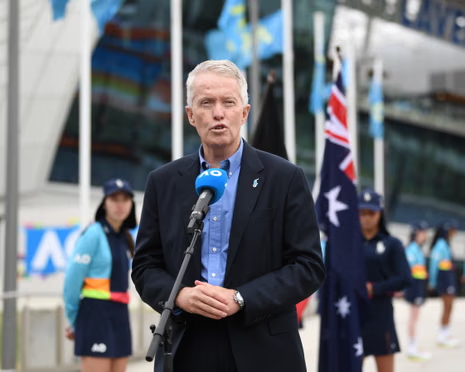
Craig Tiley leaves behind a remarkable Australian Open legacy after two transformative decades in Melbourne. His departure closes a significant chapter for Tennis Australia and global tennis governance. From his arrival in 2005, he reshaped the tournament’s direction with bold ambition. Few administrators have influenced a Grand Slam event as deeply or as visibly.
When Craig Tiley joined Tennis Australia as director of tennis, expectations were steady rather than spectacular. The Australian Open was respected, yet it lacked the spectacle seen elsewhere. Within a few years, that perception shifted dramatically under his confident stewardship. By 2006, as tournament director of the Australian Open, he began implementing ambitious changes.
The Australian Open legacy he cultivated rested on expansion and reinvention. Attendance surged from just over half a million in 2007 to 1.4 million in 2026. That extraordinary growth reflected careful planning and relentless commercial focus. The event evolved beyond tennis into a vast cultural festival each January. Music stages, celebrity chefs, and immersive fan zones redefined its identity.
Some critics argue the spectacle sometimes overshadowed the sport itself. Yet supporters insist the transformation secured the tournament’s global prominence. In financial terms, prize money climbed steadily, pleasing elite competitors worldwide. Broadcast audiences expanded across Europe, Asia, and North America. Sponsors eagerly aligned with a brand that symbolised summer glamour and innovation.

Tiley’s influence extended further when he became chief executive in 2013. Holding dual roles amplified his authority across governance and event management. The Australian Open legacy increasingly mirrored his strategic vision and personal determination. Observers often described him as politically astute and commercially fearless.
He proved adept at negotiating with the Victorian government for infrastructure funding. Investment delivered three roofed stadiums and improved public facilities at Melbourne Park. Concerns that Sydney or even overseas markets might lure the tournament were carefully leveraged. That narrative secured backing while reinforcing Melbourne’s central sporting identity.
Extending the event to 13 days mirrored developments at French Open. Officials explained the Sunday start would ease scheduling pressures on players. Yet spreading early rounds also boosted ticket revenue significantly. Such commercial clarity became central to the Australian Open legacy.
The recent rebranding into a three-week celebration illustrated that same bold instinct. “Opening Week” blended qualifying matches with exhibitions and fan experiences. The innovative One Point Slam exhibition generated headlines and packed grandstands. While purists raised eyebrows, crowds responded enthusiastically to the entertainment focus.
However, not every moment of his tenure was celebratory. The pandemic posed unprecedented operational and reputational challenges. In 2022, controversy erupted around the visa status of Novak Djokovic. The world number one was detained and later deported on the eve of competition.
Global scrutiny intensified, placing Tennis Australia under intense political pressure. Tiley faced criticism regarding communication and crisis management decisions. Despite the storm, the tournament proceeded and gradually restored stability. He later described navigating Covid restrictions as among his proudest achievements.
The 2021 edition reportedly incurred losses near 100 million Australian dollars. Strict quarantine protocols isolated players and reduced spectator capacity dramatically. Yet the event still delivered compelling competition and maintained broadcast commitments. Surviving that financial and logistical shock strengthened the Australian Open legacy.
Player development remains the more contested aspect of his administration. Australia has produced fewer singles contenders compared with earlier golden eras. Alex de Minaur stands as the leading men’s figure inside the global top ten. Behind him, a noticeable ranking gap highlights structural challenges.
On the women’s side, Maya Joint currently leads national rankings. Critics note she developed partly within overseas systems. Pathway graduate Kim Birrell represents domestic development success. Yet depth across junior pipelines remains a topic of debate.
Leadership tensions also surfaced around Davis Cup commitments. Lleyton Hewitt has long captained the national side. Performance setbacks reignited conversations about governance and strategic clarity. These discussions complicate assessments of the broader Australian Open legacy.
Tiley acknowledged future priorities include improved seating, shade, and public space. Infrastructure expansion aims to enhance comfort amid record attendances. Supporters welcome these ambitions as sensible operational planning. Yet many fans quietly hope for renewed focus on grassroots excellence.
As succession planning advances, internal candidates have attracted attention. Chief tennis officer Tom Larner is frequently mentioned within administrative circles. Events executive Stephen Farrow also commands significant experience. Meanwhile, Cam Pearson of Tennis Queensland remains an external contender.
The board has engaged Egon Zehnder to oversee recruitment. Debate continues about whether one individual should retain both leadership roles. Tiley’s formidable workload and control style may prove difficult to replicate. The Australian Open legacy now depends on balanced governance and fresh perspective.

Across the Pacific, new opportunities appear likely. Reports indicate a leadership pathway within the United States Tennis Association. Should that transition materialise, his influence would extend across two continents. Strategic plans drafted through 2030 ensure continuity during the interim period.
Colleagues describe him as tireless, meticulous, and fiercely protective of the tournament’s brand. Admirers credit him with elevating Melbourne’s cultural footprint each summer. Critics caution against over-commercialisation and dwindling domestic champions. Both perspectives form part of the evolving Australian Open legacy.
As he prepares to depart at 64, reflections remain mixed yet substantial. Few deny the event now commands unrivalled global visibility each January. Melbourne has benefited economically from tourism and international broadcasting reach. The Australian Open legacy ultimately blends entertainment innovation with sporting ambition.
History will likely judge his tenure as transformative rather than tranquil. He navigated political storms, financial losses, and shifting public expectations. In doing so, he secured a stronger commercial platform for future leaders. Whether successors prioritise spectacle or player pathways remains an open question.
For now, Craig Tiley leaves an indelible imprint on Australian tennis culture. His strategies reshaped a respected tournament into a global entertainment powerhouse. The Australian Open legacy he forged will influence decisions long after departure. As fans look ahead, the challenge is sustaining growth while honouring tradition.
Related News:
 Sarr Double Sinks Young Liverpool in Carabao Cup
 Nwaneri and Saka Secure Arsenal Win Over Brighton
 Woltemade Hot Streak Fires Newcastle Past Spurs
 Salah & Gravenberch Lead Liverpool to Win Against Villa
 Dyche Criticises Corner Decision as Forest Draw with United
 Caicedo Shines as Chelsea Edge Spurs in Chaotic Derby
 Granit Xhaka Rescue Earns Everton Draw at Sunderland
 Burn and Joelinton Head Newcastle to Victory Over Bilbao
 Foden shines as Man City dismantle Dortmund in dominant display
 Tension and Turmoil at Aston Villa v Maccabi Match
 Bellingham has ‘the edge’ among England No 10s
 Man City Masterclass on Guardiola’s Milestone Day Exposes Liverpool Woes
 Lando Norris Dominates Brazil GP to Strengthen F1 Title Bid
 England cannot afford to be in awe of the All Blacks, warns Jamie George
 VAR Must Rein Its Neck In to Save Football’s Spirit
 Trescothick Hints Pope Will Keep Number Three Spot
 Ronaldo Confirms Final World Cup and Plans Retirement
 Mary Earps’s Manchester United Return Faces Mixed Reception
 Sam Kerr Stars in Chelsea Return with Champions League Double
 This kid is something else: Alex Scott’s rise to England call-up
 UK and Ireland Announce Venues for Euro 2028 Tournament
 Saka Solidifies Role as Tuchel’s Key England Lieutenant
 Former Lion Heskey Warns of Shortage of England Strikers
 Australia Mourns Paralympic Champion Paige Greco
 Irish Hero Parrott Says Goal Brought First Tears in Years
 Nigeria Misses World Cup Again After Play-Off Loss
 From heartbreak to glory: Scotland’s dramatic return to the World Cup
 Tiny Curacao Makes History as Smallest Nation to Reach World Cup
 Haiti Qualifies for World Cup Despite Coach Never Visiting Country
 Major League Baseball Scores New Broadcast Deals Through 2028
 Barcelona Returns to Camp Nou vs Athletic Bilbao
 Moyes Defends Gueye After Dramatic Everton Bust-Up
 Kids Football Coach Removed Over Suspected ‘Drugs Menu’
 Mbappe Scores 4 as Real Madrid Edge Olympiakos
 Man City Lose, Champions League Risk
 Jac Morgan to Miss Six Nations Start After Surgery
 Alexander Isak ends drought as Liverpool stop rot with win at West Ham
 Mbappe rescues Real Madrid with a penalty at Girona
 Barcelona, Atletico set for decisive La Liga showdown
 Maxwell withdraws from IPL 2026 after 13 seasons
 Mbappe stars as Real Madrid thrash Athletic, close on Barca
 Australia Face Big Changes as Cummins and Lyon Ruled Out of Ashes
 Van de Ven Tackle Leaves Isak with Fractured Leg
 City Set to Land Semenyo After Chelsea Exit from Transfer Race
 Arrizabalaga Sends Arsenal Through in Dramatic Shootout
 Ashes Shock: Boland Admits Struggle Bowling With Keeper Up
 ECB powerless to halt England’s recurring Ashes failures
 Stokes urges empathy for England players amid Ashes struggles
 Damien Martyn in Induced Coma After Meningitis Diagnosis
 Spin Bowling Struggles as Pace Dominates 2025 Ashes Series
 Anthony Joshua Released After Nigeria Car Crash
 Chelsea Sack Looms: Enzo Maresca Relationship Collapses
 Africa’s Superpowers Shine in Cup of Nations Quarter-Finals
 Amorim’s United Future Uncertain Amid Wilcox Tension
 Raducanu Battles Injury as Britain Exit United Cup
 Australia Dominates England: Smith, Head Crush Bowlers in Sydney
 Australian Open Prize Money Hits Record $111.5m
 Nick Kyrgios Faces Singles Struggles at Brisbane Tennis Return
 Nottingham Forest Deny West Ham in Dramatic Late Win
 Manchester United Fan Group Targets Jim Ratcliffe Over Club Chaos
 Morocco sail into Afcon semis after Díaz inspires win
 Wrexham stun Nottingham Forest with Okonkwo FA Cup heroics
 Salah Shines as Egypt Knock Out Ivory Coast at Afcon
 Israeli fans ban questioned after Dutch police dispute evidence
 Semenyo Shines for City – Winners and Losers of Transfer
 Geopolitical football: Iran, Trump and the World Cup clash
 Regragui condemns Afcon final chaos after dramatic defeat
 Brahim Díaz’s Panenka Fail Highlights Penalty Risks
 Madison Keys’ Australian Open defence tested as Ukrainian debutant dazzles
 ‘A long time coming’: US table tennis finds its moment
 Mbappé’s Late Penalty Lifts Real Past Nine-Man Rayo
 Women’s FA Cup Could Introduce Seeded Teams from Last 32
 Yamal and Rashford Shine as Barcelona Reach Copa Semis
 Newcastle fans face bleak reality under Saudi ambitions
 ‘Scrutiny and Pressure on Irish Has Reached New Level’ — Rugby Faces Brutal Spotlight After France Defeat
 Hugo Ekitike Becomes Liverpool’s New Cult Hero
 Wrestler at 60: A Powerful New Start in the Ring
 ‘We’re like a family here’: Habib Diarra thrives at Sunderland
 Infantino Faces Russia Threat and Trump Concerns at Uefa Congress
 Coventry v Boro: Momentum Shifts in Championship Race