Published: 26 February 2026. The English Chronicle Desk. The English Chronicle Online.
Minnesota’s Medicaid funding has been thrust into a fierce national debate as the federal government announced a halt to a large portion of reimbursements to the state amid claims of widespread misuse. Vice President J.D. Vance revealed on Wednesday that over a quarter‑billion dollars in federal Medicaid payments will be temporarily withheld, framing the move as a pivotal step in what the White House dubs its “war on fraud,” a tagline amplified by President Trump in his recent State of the Union address.
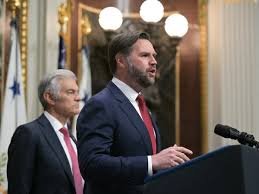
The decision targets roughly $259.5 million in Medicaid reimbursements that would normally flow to Minnesota, with the Trump administration saying the pause will continue until the state implements more stringent anti‑fraud measures. In announcing the action, Vance insisted the step is intended to protect taxpayers and ensure federal funds are not siphoned off by alleged fraudsters, underscoring what federal officials describe as persistent vulnerabilities in how Minnesota’s social services programs are administered.

Standing alongside him at the press conference was Dr. Mehmet Oz, administrator of the Centers for Medicare & Medicaid Services, who stressed that federal authorities had identified significant concerns in this and other programmes. Oz said the withheld payments principally stem from claims deemed unsupported or potentially fraudulent, and also cited issues involving individuals lacking satisfactory immigration status as part of the funding frozen by the agency. Alongside the Medicaid action, the Department of Health and Human Services also announced a six‑month moratorium on new federal funding enrollments for suppliers of durable medical equipment, including prosthetics and orthotics, citing similar worries about billing irregularities.
The decision has ignited fierce criticism from Minnesota’s political leaders, with Governor Tim Walz vehemently rejecting the fraud narrative and characterising the move as a politically motivated attack on a blue‑led state. In a post on social media platform X, Walz said the federal crackdown “has nothing to do with fraud,” and accused the administration of weaponising its authority to punish states whose political leadership differs from that of the White House. He pointed to the recent deployment of federal agents in Minneapolis and broader judicial challenges to previous funding cuts as evidence of what he described as an overreach by national authorities.
Analysts note that the federal action springs from a broader and ongoing dispute over alleged abuse of benefit programmes, which has drawn heightened scrutiny since high‑profile fraud cases emerged in Minnesota and elsewhere. Some of the largest investigations have centred on social services networks in the state’s largest city, Minneapolis, where claims of misrepresented daycare and care services allegedly involving members of the Somali community sparked both federal probes and a massive immigration enforcement response last year. Those enforcement actions, and the resulting public outcry, have made Minnesota a flashpoint in national debates over immigration, public assistance programmes and federal‑state relations.
Federal officials maintain that Minnesota must present a comprehensive corrective action plan within 60 days if it hopes to recover the withheld Medicaid funds, and have warned that further deferrals could accrue, pushing potential withheld payments into the billions over the coming year if systemic problems remain unresolved. The officials’ stance is that the funding still belongs to the state, but will only be released once sufficient safeguards are put in place to prevent further alleged fraud.
Critics of the federal decision argue that the timing and ferocity of the attack on Minnesota’s funding suggest political motivations rather than purely administrative concerns. They say cutting off financial support for a programme relied upon by nearly 1.3 million Minnesotans — including low‑income families, children, seniors and people with disabilities — risks tangible harm to vulnerable populations rather than eliminating misuse, since the state might be forced to draw on reserves or cut services to bridge the gap. Supporters of the federal move counter that stronger controls are urgently needed on Medicaid and related programmes nationwide to protect taxpayers and maintain the integrity of social safety nets.
The broader context for the funding freeze includes high‑profile fraud cases that have reverberated across the Midwest and beyond. Federal prosecutors have previously charged dozens of individuals in connection with alleged fraud schemes tied to social service programmes, and lawmakers and investigators have claimed that billions in public funds may have been improperly claimed. Those figures have been seized upon by the White House as evidence of systemic issues requiring a robust federal response, even as state officials dispute the characterization and scope of the alleged theft.
President Trump’s State of the Union address, delivered just a day before the Vance announcement, spotlighted Minnesota as an example of what he characterised as egregious misuse of federal funds in blue states, assigning Vance a leadership role in the newly proclaimed “war on fraud.” Trump’s remarks included inflammatory language about alleged perpetrators, language that sparked immediate pushback from critics who argue such rhetoric stokes division and unfairly targets specific communities.

The evolving standoff is likely to play out not only in political arenas but also in the courts, where prior attempts by the federal government to cut or withhold funding for other programmes were challenged by states asserting that such actions exceeded federal authority. Minnesota and allied state governments may pursue legal remedies to challenge the Medicaid funding pause, continuing an ongoing tug‑of‑war over the balance of power between federal agencies and states in administering and overseeing public assistance programmes.
For ordinary residents of Minnesota, the immediate concern remains whether vital health services could be disrupted by the payment halt, even if state leaders assure that current services will be maintained through alternate financing. Advocates for beneficiaries of Medicaid argue that those reliant on these programmes should not be placed in the middle of a political dispute, and many have called for urgent action by both state and federal officials to ensure continuity of care. That debate is set against a backdrop of broader national discussions over public health, government oversight and the role of federal interventions in state matters.
The Minnesota Medicaid funding impasse presents a complex intersection of policy, politics and public welfare, with consequences that could reverberate beyond state lines as the administration signals similar actions may be pursued in other jurisdictions. Whether this marks a turning point in federal oversight of welfare programmes, or a contentious dispute that intensifies court battles and political discord, remains to be seen as the clock ticks on negotiations and legal challenges ahead.
Related News:
 Two National Guard Soldiers Critically Injured Near White House
 Putin Intensifies Territorial Demands Before US Talks
 US National Guard Member Killed in DC Shooting
 Trump to Recheck Green Cards from 19 Nations After DC Attack
 Trump to pause migration from ‘third-world countries’
 US Defence Chief on Drug Boat Strike: “Did Not See Survivors”
 Republicans Hold Tennessee Seat Despite Democratic Surge
 Franklin Turtle, Sabrina Carpenter Slam US Social Media Use
 American Mother Extradited From UK to U.S. on Murder Charges
 Russia losses Ukraine war peace talks intensify amid rising deaths
 US Cities Erupt in Protests Against Trump’s Venezuela Military Action
 Trump Escalates Minnesota Immigration Surge Amid Rising Tensions
 Capitol Attack Anniversary Sparks Deep Political Divide
 Portland Shooting: Federal Agents Open Fire Near Hospital
 Trump Labels Renee Good a ‘Paid Agitator’ After Minneapolis ICE Killing
 Federal Immigration Shift: Officers Leave Louisiana for Minneapolis
 Trump Says US Must ‘Own’ Greenland to Block Russia, China
 Homeland security agents deployed amid Minneapolis protests
 Minneapolis mayor demands state access to Renee Good probe
 Democrats Push Affordability to Challenge Trump Ahead of Votes
 German Supermarket Aldi to Open 180 US Stores This Year
 US judge allows Ørsted to resume Rhode Island offshore wind project
 Minnesota Sues Trump Administration Over ICE Surge
 Trump targets Iran trade with 25% tariff warning
 Greenland Faces Pivotal Summit Over Arctic Power Struggle
 US Clears Nvidia AI Chip Sales to China in Policy Shift
 Trump Threatens Strong Action If Iran Executes Protesters
 Government Unveils Northern Powerhouse Rail Plans
 Portland man pleads not guilty after Border Patrol shooting
 Trump press secretary attacks reporter over ICE question
 Kyrsten Sinema Faces High-Profile Lawsuit Over Marriage Interference
 ICE detainee death may be investigated as homicide in Texas camp
 Trump Receives Machado’s Nobel Medal in White House Meeting
 ‘He Believed Help Was Coming’: Why Iran’s Protesters Feel Betrayed
 Trump Aide Sparks Fury as Greenland Dispute Intensifies
 Trump Fed bid heads to Supreme Court
 EU Says US Ties Have Suffered ‘Big Blow’ After Greenland Crisis
 ‘A long time coming’: US table tennis finds its moment
 ‘Unfathomable’: Australian veterans rebuke Trump claims
 Trump officials continue false claims after Alex Pretti shooting
 Minneapolis pushes back against ICE’s federal crackdown
 Border Patrol Commander Leaves Minneapolis After Fatal Shooting
 Arizona border shooting leaves suspect hospitalised after agent pursuit
 ‘Evil is resilient’: Pressure Mounts on Stephen Miller
 Fulton election raid hits Georgia election office
 Videos reveal earlier clash before Alex Pretti shooting
 Partial US Government Shutdown Hits Homeland Security Funding
 Thousands Protest ICE Operations in Nationwide US Day of Action
 Epstein Files Reveal Trump Officials’ Emails with Financier
 Thousands Protest ICE in New York Against Trump Deportation Campaign
 Sinema payment row deepens after $9,000 transfer claim
 US-Cuba Negotiations Shift as Oil Blockade Looms
 Portland Mayor Demands ICE Leave After Protest Violence
 ‘Painful Times’ as Melinda Gates Responds to Epstein Files
 Trump Praises ‘Terrific’ Petro After White House Talks
 Headline: Measles Alert: Dr Oz Urges Americans to Vaccinate
 Nurses’ families fear breakup under UK immigration crackdown
 Trans Youth Care Crisis: NY Hospital Ends Gender‑Affirming Treatment
 Coca‑Cola lawsuit challenges male exclusion at corporate event
 Sanders Condemns Billionaire ‘Greed’ in California Tax Debate
 California Democrats Vow Trump Reckoning
 Missing North Carolina Woman Found Alive After 24 Years
 Hero Rescuer Saves Baby from Icy Chicago Lake
 Trump’s Surgeon General Pick Evades Vaccine Questions
 Buffalo Refugee Tragedy: Border Patrol Neglect Leads to Death
 ‘Extinct’ Antelope Returns to Sahara, Bringing Hope
 IndiGo Cancels Hundreds of Flights Amid Pilot Shortages
 Young Britons Face Heaviest Burden from Ageing Population, Lords Warn
 U‑Turn on Farmers’ Inheritance Tax Sparks Political Firestorm
 Khaleda Zia Death in Bangladesh: First Female PM Dies at 80
 Children to Receive Home Vaccines as England Acts
 GMB Union Faces Turmoil Amid Female Leaders’ Claims
 MoJ Prison Leasing Scandal Triggers £100m Public Cost
 Cambridge College Faces Backlash Over Private School Recruitment
 Bereaved Fathers Gain New Paternity Leave Rights in UK
 US Senate rejects resolution limiting Trump military powers
 Woman Jailed for Life After Killing E-Bike Rider in Tragic Mistaken Identity Case
 Sydney Shark Attack Surge Shocks Australia Beaches
 No Gas Boiler Ban as UK Warm Homes Plan Backs Heat Pumps
 Sussan Ley leadership milestone shakes Liberal future