Published: 26 February 2026. The English Chronicle Desk. The English Chronicle Online.
In 1990, photojournalist Leo Regan began capturing images that exposed the neo-Nazi music scene in Britain. His work documented bands like Skrewdriver and the Blood and Honour movement, which were gaining traction across the country at the time. Initially intended as a magazine feature, Regan’s project expanded into a two-year investigation, culminating in the book Public Enemies and a documentary exploring this controversial subculture. The project confronted ethical dilemmas and personal danger, but his aim was to photograph without promoting or condoning extremist ideology.
Regan explained that he approached the skinhead communities with honesty, making it clear that he disagreed with their politics yet had no hidden agenda. This openness earned him cautious acceptance, allowing him access to events and private spaces that most journalists could never enter. Working with a Jewish publisher and editor on the resulting book, Regan faced criticism from some quarters questioning his decision to document such extreme behaviour. He maintained that art exists to explore discomforting realities and that the camera offers a unique privilege to witness lives directly, even when morally troubling.
The images he captured reveal both the symbolic extremism of the skinhead movement and the humanity behind its members, without softening the severity of their beliefs. Regan’s philosophy emphasised communication and connection, aiming to engage viewers in confronting a reality often hidden from public awareness. “I’m not trying to forgive or underplay the extremities,” he noted, highlighting the delicate balance between observation and condemnation in documentary work.

Regan recounted that entering these environments was immediately shocking, describing them as “venomous and hateful.” Riotous scenes were common, and fights frequently broke out among attendees, sometimes for amusement rather than ideology. While he occasionally sustained minor injuries, his strategy was to remain alert and keep a low profile. This cautious approach allowed him to capture authentic moments without becoming part of the conflict.
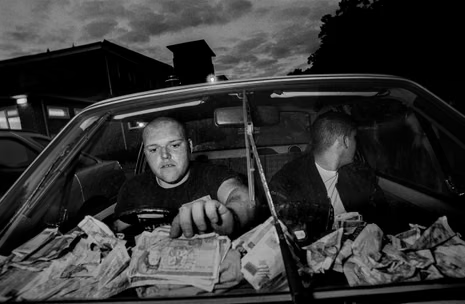
One of his most notable photographs shows two skinheads counting the takings from a neo-Nazi gig in Milton Keynes, a scene that encapsulates both the absurdity and danger of the movement. The gig took place in a school hall rented under the pretext of a 21st birthday party, shocking the local residents who had no idea what was occurring inside. Authorities were notified, and police surrounded the building, yet the event was permitted to continue to avoid potential disorder spilling onto the streets.
Inside the hall, chaos reigned as fights erupted between factions and some attendees simply sought entertainment through aggression. At one point, the skinheads in Regan’s photograph sought refuge from the turmoil, deciding to count their earnings in his car. “Right, Leo, we’re using your car to count up,” they told him, and Regan seized the opportunity to document the scene. Even amidst such extremity, the photograph captures the ordinary human activity of money counting, juxtaposed with the violence and ideology surrounding it.
The tension of that night highlights the paradox of documenting extremism: seemingly mundane moments occur alongside threatening behaviours. Following this period, all gig attendees were escorted to the nearest train station by police to remove them from the neighbourhood safely. For Regan, these experiences underscored the constant danger and unpredictability inherent in chronicling radical movements. He eventually recognised the personal risk of prolonged engagement, particularly as he attracted the attention of police and left-wing activists, and as some associates became involved with the far-right Combat 18 network.
Combat 18, known for its violent and extremist actions, represented an even more perilous faction within the movement, amplifying Regan’s concerns about safety. Some individuals he had photographed later received life sentences, while others renounced the ideology or disappeared from the scene. Despite these hazards, Regan affirmed that his documentation was justified, noting the importance of capturing history as it unfolded, regardless of the personal or ethical risks involved.
Reflecting on the work, Regan admitted that the intensity of the neo-Nazi subculture was overwhelming. He described moments where the environment felt entirely unpredictable, yet the camera provided a buffer, allowing him to engage without fully immersing himself in the hostility. He emphasised that his goal was not sensationalism but careful observation, providing a record of a culture that was growing in visibility yet rarely scrutinised in depth.
The photograph of the skinheads counting their takings remains emblematic of Regan’s broader mission: to reveal the everyday realities behind extreme ideologies. It communicates the ordinariness embedded within extraordinary extremism, challenging viewers to confront the complexities of human behaviour within radical communities. This approach, balancing proximity and critique, distinguishes Regan’s work from sensationalist reporting, offering nuanced insight into a troubling chapter of British cultural history.
Ultimately, Regan’s documentation serves as both a historical record and a cautionary tale, illustrating how radical movements operate beneath the surface of society. By embedding himself within the scene, he was able to photograph moments that would otherwise remain unseen, combining courage with ethical consideration. His images continue to resonate as a reminder of the human capacity for both attachment and aggression, and the responsibility of those who witness it to bear careful testimony.
Through his lens, the skinhead movement is neither glorified nor dismissed. Instead, it is presented with clarity and honesty, allowing viewers to engage with uncomfortable truths about ideology, violence, and social dynamics. The photograph of two men counting their earnings is more than a snapshot; it is a window into a world defined by extremity, tension, and the human instinct for control and survival.
Regan’s work, culminating in Public Enemies, demonstrates the delicate interplay between ethical responsibility and artistic curiosity. By choosing to document without judgment yet with moral awareness, he created a record that challenges audiences while preserving the integrity of the moments captured. His photographs remind viewers that confronting difficult realities requires both bravery and empathy, and that visual storytelling can illuminate aspects of society that are often ignored or misunderstood.

In revisiting these images today, it becomes clear that historical documentation of extremist movements serves a vital role in public understanding. They offer insight into the motivations, contradictions, and humanity of individuals involved, and provide an invaluable resource for scholars, journalists, and citizens seeking to comprehend complex social phenomena. Regan’s commitment to observation and honesty ensures that these photographs maintain relevance, fostering reflection on how society addresses extremism and engages with its consequences.
The photograph of the skinheads counting the takings stands as a testament to Regan’s courage and skill, capturing the tension between ordinary life and radical ideology. It continues to provoke thought, offering a lens into a world that is at once distant and familiar, frightening and compelling. As a piece of historical evidence, it exemplifies the power of photography to reveal difficult truths, while maintaining the ethical integrity necessary to document without exploitation.
Through careful immersion and acute observation, Leo Regan’s images remain a powerful reminder of the responsibility inherent in documenting extremism. His work preserves not only a record of events but also the human stories behind them, illustrating the complexities of engagement, ideology, and moral judgement. The photograph of two skinheads counting money is an enduring symbol of the interplay between normality and extremity, demonstrating the potential of visual storytelling to illuminate society’s darker corners.
Related News:
 Peterborough Mosques Tighten Security After Attack
 Reeves Faces Setback as Labour May Miss Homes Target
 Hospice Cuts Raise Alarm Across England Amid Funding Crisis
 Kate Winslet to Narrate Film Highlighting King’s Environmental Mission
 Green Party Surges Past Labour in Latest UK Poll
 Trump’s UK Ambassador Urges North Sea Drilling to Strengthen US Ties
 Children to Learn Local History in Major Curriculum Overhaul
 French Taxi Driver Cleared in David Lammy Theft Case After Fare Dispute
 UK Bans Fake Numbers: Scammers Lose Their Trick
 Prince William Plants Trees with Brazil’s Nature Heroes
 M&S Profits More Than Halve After Cyber-Attack
 Kent village told to remove flags before Christmas lights go up
 Patients to Test Health at Home to Ease NHS Winter Pressure
 King Charles to Lead Nation in Remembrance Sunday Service
 Palace May Restore Hyphen to Andrew Mountbatten-Windsor’s Name
 Millionaires group urge Reeves to introduce wealth tax to ‘lift kids out of poverty’
 Starmer Faces Growing Dissent as Labour MPs Weigh Leadership Challenge
 Shouting Works Best to Deter Gulls, UK Study Finds
 Reeves rejects £1bn plea for NHS redundancy payouts
 Northern Lights may illuminate UK skies this week
 PM Condemns Leaks, Vows Loyalty to Ministers and Stability
 Son Reveals UK Couple in Iran Resort to Hunger Strike for Help
 Major Rent Reform Ends No-Fault Evictions in England
 Former Lion Heskey Warns of Shortage of England Strikers
 Criminal Gangs Pose as Truckers to Hijack UK Supply Chains
 Stroke Patient Mistaken for Drunk, Care Delayed
 Van Dwellers Face Eviction After Park Misuse Sparks Outcry
 ‘Traumatic Wait’: Northern Ireland Women Face Breast Cancer Delays
 Serial Rapist and Former Cop Found Guilty Again
 Royal Navy Shadows Russian Warships Entering the Channel
 Inside the Helpline Protecting Missing Children in the UK
 Most Tories Expect to Support a Farage-Led Government
 Boots Showstopper Beauty Bundle Outshines Many Advent Calendars This Holiday Season
 Labour’s ‘blinkered’ drive to build risks pushing wildlife to point of no return, nature experts warn
 PlayStation PS5 Deals Hit Lowest Prices Ahead of Black Friday
 Karen Carney Stuns on Blackpool Week, Deserves Strictly Final
 Five-Year-Old Dies After Rare Tonsil Surgery Complication
 Fibromyalgia Patients Struggle as NHS Fails to Provide Care
 Starmer Says Labour’s Economic Plan Needs Years to Deliver
 Virgin Media Fined £23.8m Over Telecare Safety Failures
 More Patients Now Contacting GPs Online, Data Shows
 UK unemployment rises to four-year high of 5.1% before budget
 Wiltshire Police Use Lasso to Catch Rampaging Village Goat
 Children to Receive Home Vaccines as England Acts
 Cambridge College Faces Backlash Over Private School Recruitment
 NHS Violence Crisis: Staff Face Daily Assaults
 Celebrity Campaign Highlights SMA Screening Failures
 Bereaved Fathers Gain New Paternity Leave Rights in UK
 Storm Goretti leaves Cornwall homes without power
 New Documentary Examines Teen’s Zombie Knife Murder
 Woman Jailed for Life After Killing E-Bike Rider in Tragic Mistaken Identity Case
 Right Must Unite After Jenrick Defection, Urges Rees-Mogg
 UK Ministers Drop Foreign Student Targets for Global Education Push
 No Gas Boiler Ban as UK Warm Homes Plan Backs Heat Pumps
 UK Glaucoma Rise Signals Looming Eye Health Crisis by 2060
 Shinzo Abe’s killer receives life sentence in Japan
 Police response times face strict new national limits
 Edinburgh, Glasgow Lead UK Nightlife Hotspots, Uber Data
 Labour policing overhaul sparks fears over growing central control
 Devon hosts first high-density hydro power system
 Pornhub blocks new UK users over age checks dispute
 Starmer warns of toxic division politics in Reform challenge
 UK New Car Discounts Near £6,000 as Prices Are Slashed
 Pneumonia Surge Pushes England Emergency Cases Higher
 Palantir contracts face UK halt calls over transparency
 Send spending gap leaves deprived areas behind
 Hidden Crisis: Domestic Abuse Suicide Toll in UK
 Farage to Name Jenrick as Reform Chancellor Pick
 UK MPs Demand Ban on Brazilian Butt Lifts
 Civil Service Pay: Union Urges Ministers to End ‘Barking Mad’ Limits
 Antonia Romeo appointment sparks criticism
 Farage Chagos Islands Row Sparks Fury
 UK Job Vacancies Hit Five-Year Pandemic Low
 UK Youth Unemployment Surges Amid Tax Changes
 Reform UK targets workers’ rights repeal
 Half of Britons Avoid GP When Ill, Survey Reveals Growing Concern
 Strong Rebound for UK Housing Market Sees 6% More Homes
 Russian Trade Routed Through British Islands Exposed
 Mandelson Arrest: Met Apologises to Hoyle
 Rolling Hills and Heritage: A Car-Free Break in Leicestershire