Published: March 3, 2026 . The English Chronicle Desk . The English Chronicle Online
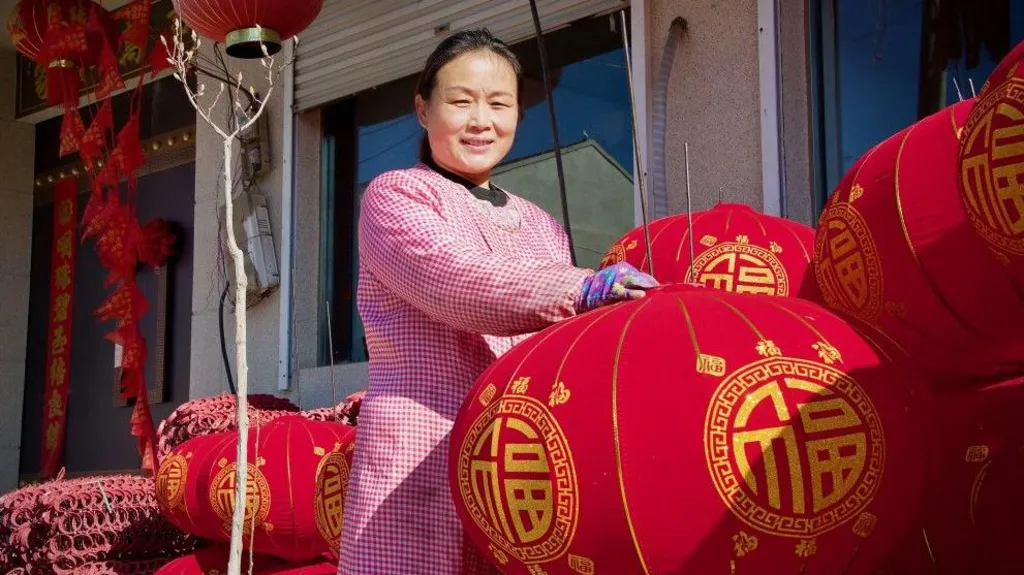
In a quiet corner of northern China, far from the bustling metropolises, lies a small town whose name has become synonymous with one of the nation’s most enduring cultural symbols: the lantern. This unassuming settlement has developed over decades into a manufacturing powerhouse whose workshops and family‑run stalls produce the vast majority of the lanterns seen across China and increasingly around the world. What started as a centuries‑old craft has matured into a thriving industry that sustains local life, fuels exports and preserves a living heritage deeply woven into Chinese culture.

Located in Hebei province, the village often referred to by locals as China’s “lantern capital” has carved out a niche that few other places can rival. According to journalists and industry observers, this village and its surrounding township collectively manufacture roughly 80 to 90 percent of the traditional pumpkin‑shaped red lanterns used domestically throughout the year, with demand peaking during the Spring Festival — China’s most important holiday.
Red lanterns hold symbolic meaning in Chinese culture, representing good fortune, prosperity and familial reunion. Their presence is ubiquitous during major cultural occasions — from street displays and temple decorations to weddings and public celebrations. The lantern industry here, centred on tens of thousands of small workshops and individual artisans, has become an engine of local employment and economic growth, turning centuries‑old cultural tradition into contemporary livelihoods.
Production in this town is still remarkably artisanal in many respects. Families long involved in lantern‑making maintain generational knowledge of techniques once practised with bamboo and silk. Modern operations have largely transitioned to metal frames and textile coverings to cope with rising demand, yet most steps of assembly, decoration and finishing remain manual or small‑scale commercial. Workers often take on specific stages of the process — shaping frames, fastening coverings, applying gilded characters or decorative patterns — before passing completed lanterns along to wholesale handlers.
Economic data from industry sources underscore the scale of the town’s output. Millions of lanterns are produced annually, supplying markets across China and for export to Asia, Europe and the United States. Lanterns from this region are integral not just to Chinese New Year festivities, but to cultural exhibitions, international festivals and diaspora communities marking important occasions.
The craft’s roots extend deeply into history. Local lore recounts lantern‑making traditions stretching back hundreds of years, adapted and refined through successive generations. Families often remember tales of early artisans whose skills gained regional renown, with knowledge passed down through apprenticeships within households. Contemporary makers blend this heritage with modern marketing channels, selling their wares online and securing orders from urban retailers and overseas buyers alike.
For the villagers, lantern-making is more than an occupation. It is a cultural identity, one that binds families together through shared craft, community festivals and commercial cooperation. Many local residents speak of preparing year‑round, acknowledging that production peaks near holiday seasons but rarely ceases entirely. This rhythm of work sustains the town’s economy, enabling entrepreneurs to invest in infrastructure and digital platforms that promote their products beyond local borders.
The success of this lantern town also reflects broader trends in China’s rural manufacturing sector, where clusters of specialised production have become competitive in global markets. The resilience of a traditional craft adapted to modern demand contrasts with narratives of homogenous industrialisation; here, cultural specificity has become a distinct economic advantage.
Despite technological changes and evolving consumer tastes, the lantern‑making community remains focused on keeping its traditions alive. Young workers continue to learn the craft from older generations, while workshops experiment with new designs and materials to attract contemporary markets. Lanterns, once simple symbols of light and good fortune, have evolved into decorative and artistic expressions that carry local heritage into an interconnected world.

Across festive seasons and cultural occasions, from sprawling city streets in Beijing to intimate home gatherings abroad, the glow of these lanterns illuminates celebrations. They serve as a testament to the enduring appeal of traditional craft and the remarkable story of a small town that came to light up a nation’s cultural imagination.
Related News:
 Tourism Is Booming in 2026 — Just Not Where You Think
 Japan Braces as Takaichi Begins New Term with Huge Mandate for Low‑Tax, Ultra‑Conservative Agenda
 US and Indonesia Finalise Deal to Cut Tariffs to 19%
 Why Asian Firms Are Not Cheering Trump Tariff Ruling
 Why Asian Firms Are Not Cheering Trump Tariff Ruling
 Modi’s London Visit Seals Historic UK-India Trade Pact Amid Global Tensions
 Historic Trade Milestone: India and UK Sign Landmark Free Trade Agreement to Deepen Economic Ties
 China’s crackdown on civil servant perks sparks economic concerns
 Shein UK Faces Allegations of Shifting Majority of Profits to Singapore to Reduce UK Tax
 British AI Startup Outshines Human Forecasters in Global Prediction Contest
 Indian Court Deals Legal Setback to Elon Musk’s X in Free Speech Battle
 China warns UK over delayed London mega embassy decision
 Rachel Reeves to lead UK trade push in Saudi Arabia amid rights debate
 UPS Cargo Plane Crash in Kentucky Kills Seven
 US private equity set to acquire UK online retailer Very Group
 Switzerland Rolls Out Charm Offensive to Cut Trump’s 39% Tariffs
 Canada Passes Carney’s First Budget in Tight Parliamentary Vote
 India’s Labour Law Overhaul Sparks Fierce Debate
 Carney’s Alberta Pipeline Deal Sparks Immediate Pushback
 Austrian Airlines Halts Tehran Flights Amid Political Unrest
 Trump Administration Probe of Fed’s Powell Draws Pushback
 Trading Day: Trump Crosses Fed Rubicon, Market Shrugs
 ‘Black Tax’: Burden, Pride and Survival for African Workers
 ‘Repatriate the Gold’: Germany Debates Bringing Reserves Home
 UK New Car Discounts Near £6,000 as Prices Are Slashed
 After the Landslide: Can India Reset Ties with BNP Bangladesh?
 Cuban Cigar Festival Cancelled Amid US-Linked Energy Crisis
 Coles Discounts Under Fire in Federal Court
 China Strikes at Japan’s Core — Will PM Takaichi Back Down?
 Japan’s Lost “Tigers” Were Actually Lions, Study Reveals
 Lunar New Year 2026: Celebrations Around the World
 ‘There Is a Feeling of the Greatest Outrage’: The Mystery of Stolen Champion Racehorse Shergar
 Netflix and Paramount Are Battling for Warner Bros. — Who Is Likely to Win?
 China Shows Off Nunchuck‑Wielding Humanoid Robots for Lunar New Year
 India Sentences Three Men to Death for Attack on Israeli Tourist and Hosts
 South Korea’s Ex-President Faces Death Penalty in Insurrection Trial
 The Chinese AI App Sending Hollywood Into a Panic
 Revealed: The Billions Given to Charity by Ordinary Indians Every Year
 Mystery Donor Gives Japanese City $3.6 Million in Gold Bars to Fix Water System
 US Trade Deficit Hits Fresh High Despite Trump’s Tariffs
 The Two Farms in Senegal That Supply Many of the UK’s Vegetables
 Live Nation Sees Strong Ticket Sales as Monopoly Lawsuit Looms
 ‘We’re Still on Edge’: Toy Firms Look to US Supreme Court as Tariffs Hit Profits
 Etsy Sells Second‑Hand Fashion App Depop to eBay for $1.2bn
 Gold Fever Hits South Africa After Lucky Find in Cattle Pen
 Kim Jong Un Reappointed as Ruling Party Chief
 US Will Not Back Out of Tariff Deals with UK and Others, Says Trump Trade Representative
 Trump Tower Gold Coast to Redefine Skyline
 Major 7.1 Earthquake Strikes Off Malaysian Tourist Coast
 Brit Killed in Horror Bus Crash as 18 Others Die and 25 Injured
 ‘We Pray for Peace’: Indian Filmmaker From Troubled State Who Won a BAFTA
 What Now for Asia After Trump’s Tariffs Were Struck Down?
 Inside Atlanta’s Soul Food Revolution
 Ukraine war briefing: Russia exporting more oil now than before war despite sanctions – report
 Trump’s tariff strategy collapse sows global chaos and confusion
 Man discovers £18k trading card stash in his loft
 Thailand Outsiders Face Patronage Wall
 Japan to Deploy Missiles on Island Near Taiwan by 2031
 German Chancellor Lands in Beijing for Inaugural China Trip
 Shein’s Elusive Boss Hails Chinese Roots in Rare Public Appearance
 What Tariffs Has Trump Introduced and Why?
 Louvre Museum Director Resigns Months After High‑Profile Heist
 Security Threat Linked to Chinese Dance Group Triggers Bomb Scare for Australian PM
 Rose Wylie: The 91‑Year‑Old Art World Rebel in Her Prime
 Bill Gates ‘Took Responsibility’ Over Epstein Ties in Staff Meeting, Foundation Says
 Netflix Drops Warner Bros Bid, Clearing Way for Paramount Takeover
 Pakistan Strikes Afghanistan as PM Says Forces Ready to ‘Crush’ Taliban
 Nine Killed in Karachi Consulate Protest
 Oil Prices Rise After Ships Attacked Near Strait of Hormuz
 Could Kim’s Teen Daughter Become North Korea’s Next Leader?
 Flights Cancelled and New Travel Warnings Issued After Iran Strikes
 Rap Star May Beat Ex‑PM — What This Says About Nepal’s Gen Z
 India and Canada Seal Series of Deals as Carney and Modi Reset Ties
 Oil Prices Surge as Iran War Jolts Markets
 Tehran Makes New Threat to Gulf Shipping as US Says ‘Hardest Hits’ on Iran ‘Yet to Come’
 Limited Flights Leave UAE But Disruption Continues Amid Iran Strikes
 Gulf shipping crisis as war risk cover pulled
 Rembrandt Painting Worth Millions Rediscovered After 65 Years
 ‘No Gain’ for Notorious Prisoner From Artwork Sale After Auction
 China Removes Three Retired Generals From National Advisory Body