Published: 30 March 2026. The English Chronicle Desk. The English Chronicle Online.
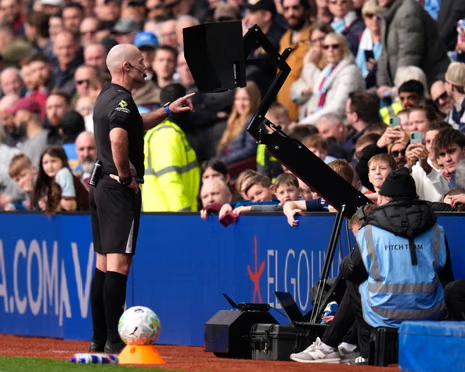
The rhythmic pulse of a packed football stadium remains one of the most electric atmospheres in modern sport. However, a digital shadow has loomed over the hallowed turf for nearly a decade now. The latest comprehensive research into supporter sentiment reveals a staggering depth of feeling regarding video assistant referees. According to the most recent annual survey conducted by the Football Supporters’ Association, the verdict is incredibly clear. An overwhelming ninety-one percent of fans now believe that football was much better off without it. This figure represents a massive mandate from the people who actually populate the terraces every week. For over eight years, the English game has experimented with this controversial officiating technology across various levels. The system was originally introduced with the promise of eliminating clear and obvious errors from matches. Yet, the data suggests that these technological tweaks have failed to win over the general public. More than seven thousand dedicated supporters participated in this extensive poll to share their honest views. The vast majority of these individuals are regular match-going fans who see the impact firsthand. Only a tiny fraction of two percent agreed that the technology makes football more enjoyable today. Furthermore, a mere three percent felt that the system improved the actual experience of attending games. These statistics highlight a profound disconnect between the governing bodies and the lifeblood of the sport. The study found that eighty-one percent of fans would prefer watching games without any video technology.
The frustration often stems from how the system alters the fundamental chemistry of a live match. Football is a game defined by its raw emotion and the sudden explosion of communal joy. When a ball hits the back of the net, the world usually stops for a moment. Now, that moment of pure ecstasy is frequently replaced by a nervous glance at the referee. Ninety-two percent of those surveyed agreed that technology has completely removed the spontaneous joy of celebrations. Instead of hugging strangers in the stands, fans are forced to wait for a silent review. This clinical pause in the action has become a primary point of contention for many critics. The survey indicates that ninety-six percent of respondents are unhappy with the current length of delays. Most fans feel that decisions are not resolved within what they consider a reasonable amount of time. Even with improved communication in the Premier League, the core issue of pacing remains a problem. Supporters in the stadium are often left in the dark while the check is ongoing. While some enjoy hearing the referee explain a decision, the fundamental wait still kills the energy. This lack of transparency has historically fueled a sense of injustice among many loyal club followers. The game is becoming a stop-start affair that mirrors a slow-moving televised drama rather than sport.
Despite this widespread dissatisfaction, some specific elements of the technology do find a level of support. Fifty-six percent of participants indicated they still back the use of video for checking offside calls. There is a general acceptance that objective lines can help determine if a player was ahead. Additionally, more than sixty percent of fans think the system should continue to check for fouls. This suggests that supporters do not necessarily hate the idea of accuracy in the officiating process. Rather, they despise the way the current implementation interferes with the flow of the match itself. The survey also explored reactions to potential new rules being considered for the coming football seasons. Only twenty-one percent of fans liked the idea of using technology to award every corner kick. This specific protocol is scheduled to be trialled during the upcoming World Cup tournament this summer. A majority of fans also expressed their opposition to checking second yellow card decisions via video. There is a palpable fear that the scope of the technology is constantly creeping forward. Many feel that the essence of the referee’s on-pitch authority is being slowly eroded over time. The constant expansion of these rules seems to ignore the growing fatigue felt by the fans. Every new intervention feels like another layer of bureaucracy added to a simple, beautiful game.
The path forward for the sport remains complicated by various commercial and political interests at play. Competition organisers and the biggest global clubs remain firmly committed to keeping the video assistant system. They argue that the high financial stakes of modern football demand a higher level of accuracy. However, the International Football Association Board has recently announced a significant two-year review of performance. This review aims to find a better balance between accuracy and the speed of the game. Mark Bullingham, the chief executive of the Football Association, has spoken about this delicate ongoing process. He emphasized the need to get big decisions right without significantly slowing down the match rhythm. Yet, there has been no official suggestion that the system might be abandoned entirely soon. This creates a stalemate between the governing elite and the millions of fans watching at home. The disconnect suggests a sport that is struggling to balance its traditions with modern technological advances. If fans continue to feel alienated, the long-term health of the stadium culture could suffer. The beauty of football lies in its simplicity and the human element of its local officiating. When technology becomes the main character, the spirit of the game starts to fade away slowly.
As we look toward the future, the voices of these seven thousand fans cannot be ignored. They represent the heartbeat of the clubs and the financial engine of the entire football industry. If ninety-one percent of customers are unhappy with a product, any other business would pivot. Football, however, operates within a unique cultural sphere that often resists immediate change from below. The debate over technology is not just about offside lines or contentious red card fouls. It is a fundamental argument about what we want the sport to look and feel like. Do we want a sterile, perfectly officiated match that lasts two hours every single weekend? Or do we prefer the messy, fast-paced, and emotional roller coaster that we fell in love with? The survey results provide a very loud and clear answer to that very important question. Supporters are crying out for a return to the authenticity of the live football experience. They want to celebrate a goal the very second it happens without any digital doubt. Whether the authorities will actually listen to this overwhelming majority is a completely different matter. For now, the terraces remain united in their desire to see the technology scaled back significantly. The soul of the game depends on maintaining that vital connection between the pitch and stands. Without the fans, the high-definition replays are just moving images on a very expensive screen.
Related News:
 Sarr Double Sinks Young Liverpool in Carabao Cup
 Salah & Gravenberch Lead Liverpool to Win Against Villa
 Dyche Criticises Corner Decision as Forest Draw with United
 Granit Xhaka Rescue Earns Everton Draw at Sunderland
 Burn and Joelinton Head Newcastle to Victory Over Bilbao
 Tension and Turmoil at Aston Villa v Maccabi Match
 Bellingham has ‘the edge’ among England No 10s
 Man City Masterclass on Guardiola’s Milestone Day Exposes Liverpool Woes
 Lando Norris Dominates Brazil GP to Strengthen F1 Title Bid
 VAR Must Rein Its Neck In to Save Football’s Spirit
 Trescothick Hints Pope Will Keep Number Three Spot
 Mary Earps’s Manchester United Return Faces Mixed Reception
 Sam Kerr Stars in Chelsea Return with Champions League Double
 This kid is something else: Alex Scott’s rise to England call-up
 UK and Ireland Announce Venues for Euro 2028 Tournament
 Saka Solidifies Role as Tuchel’s Key England Lieutenant
 Former Lion Heskey Warns of Shortage of England Strikers
 Australia Mourns Paralympic Champion Paige Greco
 Irish Hero Parrott Says Goal Brought First Tears in Years
 From heartbreak to glory: Scotland’s dramatic return to the World Cup
 Tiny Curacao Makes History as Smallest Nation to Reach World Cup
 Haiti Qualifies for World Cup Despite Coach Never Visiting Country
 Barcelona Returns to Camp Nou vs Athletic Bilbao
 Moyes Defends Gueye After Dramatic Everton Bust-Up
 Mbappe Scores 4 as Real Madrid Edge Olympiakos
 Man City Lose, Champions League Risk
 Jac Morgan to Miss Six Nations Start After Surgery
 Alexander Isak ends drought as Liverpool stop rot with win at West Ham
 Barcelona, Atletico set for decisive La Liga showdown
 Maxwell withdraws from IPL 2026 after 13 seasons
 Mbappe stars as Real Madrid thrash Athletic, close on Barca
 Australia Face Big Changes as Cummins and Lyon Ruled Out of Ashes
 Van de Ven Tackle Leaves Isak with Fractured Leg
 City Set to Land Semenyo After Chelsea Exit from Transfer Race
 Arrizabalaga Sends Arsenal Through in Dramatic Shootout
 ECB powerless to halt England’s recurring Ashes failures
 Stokes urges empathy for England players amid Ashes struggles
 Damien Martyn in Induced Coma After Meningitis Diagnosis
 Spin Bowling Struggles as Pace Dominates 2025 Ashes Series
 Anthony Joshua Released After Nigeria Car Crash
 Chelsea Sack Looms: Enzo Maresca Relationship Collapses
 Africa’s Superpowers Shine in Cup of Nations Quarter-Finals
 Amorim’s United Future Uncertain Amid Wilcox Tension
 Raducanu Battles Injury as Britain Exit United Cup
 Australia Dominates England: Smith, Head Crush Bowlers in Sydney
 Australian Open Prize Money Hits Record $111.5m
 Manchester United Fan Group Targets Jim Ratcliffe Over Club Chaos
 Morocco sail into Afcon semis after Díaz inspires win
 Salah Shines as Egypt Knock Out Ivory Coast at Afcon
 Israeli fans ban questioned after Dutch police dispute evidence
 Geopolitical football: Iran, Trump and the World Cup clash
 Regragui condemns Afcon final chaos after dramatic defeat
 Brahim Díaz’s Panenka Fail Highlights Penalty Risks
 ‘A long time coming’: US table tennis finds its moment
 Mbappé’s Late Penalty Lifts Real Past Nine-Man Rayo
 Women’s FA Cup Could Introduce Seeded Teams from Last 32
 Yamal and Rashford Shine as Barcelona Reach Copa Semis
 Newcastle fans face bleak reality under Saudi ambitions
 ‘Scrutiny and Pressure on Irish Has Reached New Level’ — Rugby Faces Brutal Spotlight After France Defeat
 Hugo Ekitike Becomes Liverpool’s New Cult Hero
 Infantino Faces Russia Threat and Trump Concerns at Uefa Congress
 Hilary Knight speaks out on Trump’s recent hockey remarks
 Champions League Thrills as Atalanta and Galatasaray Advance
 English Cricket Faces Moral Crisis Over Indian Investment
 The Norwegian Secret to Dominating the Winter Olympics
 Manchester United Face Huge Bill After Ruben Amorim Exit
 Birmingham City Owners Eye Expansion Into Rugby Union
 India T20 World Cup Triumph Seals Historic Title Defence
 Port Vale Shock Sunderland in Historic FA Cup Win
 Abramovich Chelsea Sale Cash Faces Jersey Probe
 Cho Stuns Forest as Midtjylland Triumph in the Rain
 Crystal Palace Face Fresh Frustration Against Larnaca
 Iranian Captain Departs Australia Amid Asylum Tension
 Six Nations Drama: Why This Year Was the Wildest Yet
 Iran World Cup Move Talks Raise Global Concerns
 Japan Triumphs 1-0 Over Australia to Claim Women’s Asian Cup
 How Seven Premier League Teams Could Qualify for UCL
 Sunderland Stun Newcastle as Brobbey Strikes Late Winner
 McCullum Faces Pressure to Bridge England County Gap
 The Living Heart of Manchester United: Bruno Fernandes