Published: 30 March 2026. The English Chronicle Desk. The English Chronicle Online.
The solemn atmosphere of the Victorian Coroners Court mirrored the heavy hearts of a family seeking answers. A significant legal move has now cast a shadow over the investigation into a tragic death. Eleven Victoria police officers have officially requested legal protection before providing their testimony regarding a fatal incident. These officers are central witnesses in the inquest concerning the death of Jeffrey Winmar in 2023. The Noongar man was only twenty-eight years old when his life ended following a police pursuit. His family remains steadfast in their pursuit of accountability despite these complex and sudden legal maneuvers.
The request for certificates against self-incrimination was made by the Victoria police chief commissioner today. Such certificates are designed to protect witnesses from having their own evidence used against them later. This includes shielding them from potential disciplinary action arising from any admissions made during the inquest. Counsel representing the parents of the deceased man have voiced their strong opposition to these requests. They argue that such protections are inappropriate given the gravity of the circumstances being examined. The court must now navigate the fine line between witness rights and the public interest.
Jeffrey Winmar passed away in a Melbourne hospital on the eleventh of November in late 2023. This tragedy occurred just two days after he was pursued and arrested by several police officers. On the opening day of the inquest, harrowing body-worn camera footage was played for the court. The video captured the final moments of the pursuit through the quiet suburb of Burwood. Winmar had reportedly scaled a roof and jumped over multiple fences to evade the police. The pursuit ended abruptly when he was finally cornered by a police dog and its handler.

The footage showed the young man dropping to the ground after being confronted by the animal. It was at this moment that Winmar appeared to lose consciousness during the chaotic arrest. Officers proceeded to handcuff him before they realized he was no longer responsive to their commands. Once his condition was noted, detectives placed him into the recovery position to assist his breathing. However, the visual record of the incident ends prematurely due to specific technical and policy limitations. The dog handler moved away from the immediate scene, and detectives were not wearing any cameras.
A critical point of contention involves the timing of medical assistance provided to the dying man. The court heard that police initially cancelled two separate calls for an emergency ambulance service. Paramedics eventually arrived on the scene only after Winmar had already suffered a massive cardiac arrest. He was transported to Box Hill Hospital, where he remained for two days before his death. Medical reports indicate that his death resulted from multi-organ failure related to methamphetamine use. The inquest will now determine if earlier medical intervention could have saved his young life.
The scope of the coroner’s investigation is broad and includes the entire planned arrest operation. Counsel assisting the coroner, Rachel Ellyard, emphasized the need to examine every action taken by police. While a prior internal police review found no misconduct, the family remains deeply unconvinced by those findings. That internal review suggested that all officers followed department policies and acted appropriately during the chase. However, the move by eleven officers to seek immunity certificates suggests a much more complicated reality. This legal strategy has raised many eyebrows among legal observers and human rights advocates alike.
Coroner Sarah Gebert began the difficult task of ruling on these individual immunity applications on Monday. She noted that there were reasonable grounds to grant the first certificate for a dog handler. Leading Senior Constable Jason Nowakowski was the first officer to receive this specific legal protection today. He testified that he was unaware of the victim’s Indigenous heritage or his fear of dogs. The officer maintained that he would not have changed his tactics even with that knowledge. He further stated his firm belief that no significant failures occurred during the entire arrest.
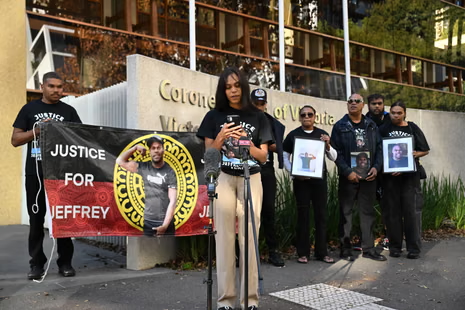
The emotional toll on the Winmar family was visible as they stood outside the Melbourne court. Jeffrey Anderson, the father of the deceased, shared his grief through a statement read by his daughter. He expressed a deep sense of injustice regarding the events that led to his son’s passing. The grieving father insisted that his son did not die alone and deserves true accountability. His words echoed the sentiments of many Indigenous families who have lost loved ones in custody. They seek a system that prioritizes the preservation of life over the protection of officers.
Ursulla Winmar, the mother of Jeffrey, also spoke about her desperate search for peace and justice. She hopes the inquest will finally reveal the truth about what happened in those final moments. The family believes that transparency is the only way to prevent similar tragedies in the future. Their legal team continues to challenge the notion that officers should be shielded from professional consequences. This case highlights the ongoing tension between law enforcement protocols and the rights of the individual. The community is watching closely as the two-week inquest continues to unfold in Victoria.

The broader implications of this case are being felt across Australia and the wider international community. Deaths in custody remain a sensitive and urgent issue for Indigenous Australians and their many supporters. Each new case brings renewed calls for systemic reform within the various national police forces. The use of police dogs and the lack of body cameras for detectives are key concerns. Advocates argue that total transparency is required to maintain public trust in the justice system. Without it, the gap between the police and the community will only continue to grow.
The inquest will continue to hear from medical experts and the remaining ten police officers involved. Each officer will likely face intense questioning about their decisions during the pursuit and the arrest. The coroner will eventually provide findings on the cause of death and the police conduct. These findings could lead to recommendations for changes in how police handle high-stakes arrests and medical emergencies. For now, the focus remains on the courtroom where a family waits for the truth. The memory of Jeffrey Winmar serves as a reminder of the human cost of these incidents.
As the proceedings move forward, the legal arguments over immunity will likely continue to spark intense debate. The balance of power between the state and its citizens is at the heart of this. Many believe that those who uphold the law should be the most accountable to it. The Winmar family remains hopeful that the coroner will provide the clarity they so desperately need. Their journey through the legal system is far from over, but their resolve remains entirely unshaken. The English Chronicle will continue to provide updates as this significant legal matter progresses.
Related News:
 Gambia Supreme Court Hears Case to Overturn FGM Ban
 Iran Death Toll Crisis Exposed: Bodies, Mass Graves, and Concealment
 Files Link Andrew to Epstein Dinner After Prison Release
 Thousands Protest ICE in New York Against Trump Deportation Campaign
 Concerns rise for Canberra boy amid Iran detention fears
 Brazilian Politician Brothers Sentenced for Marielle Murder
 Anthony Albanese Must Uphold Rights for All Australians
 Woman Executed in Somalia Sparks Debate on Justice System
 Uganda Crackdown: Two Women Arrested for Public Kissing
 Slovenia Election: A Nation at a Crossroads
 George Clooney and Amal Clooney Receive French Citizenship
 Grief, Fear and Fury: Mothers Unite to End Israeli-Palestinian Violence
 Avocado Crisis: The Hidden Violence Behind Exports
 Capitol Attack Anniversary Sparks Deep Political Divide
 EU Weakens as Trump Targets Venezuela and Greenland
 Saudi Officials Report Zubaidi Flee Before Yemen Peace Talks
 Protest Rights Under Threat Across England and Wales
 UK Targets in New York Bomb Threat Hoax: Man Jailed
 Trump Plans Venezuela Meeting, Warns of Cartel Land Strikes
 Indonesia blocks Grok chatbot over sexual content risk
 Iran Leader Blames Protesters, Says They Serve Trump
 US Citizens Warned to Venezuela Flee Amid Paramilitary Threats
 Guantánamo compensation demands clarity from UK ministers
 Trump targets Iran trade with 25% tariff warning
 Rudd successor: Defence chief and former ministers considered
 Three Palestine Action hunger strike protesters end protest after contract reversal
 US Senate rejects resolution limiting Trump military powers
 Venezuela regime claims release of political prisoners signals new era
 Friedman Uninvited From 2024 Adelaide Writers’ Week
 Gulf states warn Trump Iran strikes risk wider Middle East war
 Machado Trump medal gesture reshapes Venezuela power struggle
 Greenland defence seen as shared Nato duty amid troop arrivals
 Geopolitical football: Iran, Trump and the World Cup clash
 Canada-China trade gains momentum in new strategic partnership
 Trump Receives Machado’s Nobel Medal in White House Meeting
 Syria President Declares Victory as Ceasefire Reached with SDF
 US Considers Asylum for British Jews Amid Rising Antisemitism
 ‘One in, one out’ scheme failing torture survivors, charity warns
 Chinese tourists drop sharply over Taiwan tensions
 Trump slams UK ‘stupidity’ over Chagos Islands, eyes Greenland takeover
 More Than 100 Islamic State Inmates Escape Amid Syrian Clashes
 Trump Tightens Grip on EU and UK Energy Supply
 Shinzo Abe’s killer receives life sentence in Japan
 Russia Strikes Kyiv and Kharkiv as Peace Talks Enter Day Two
 China General Under Investigation Amid Leadership Purge
 Philippines ferry disaster leaves 15 dead, dozens missing
 Israel Conditions Gaza Rafah Reopening on Hostage Search Completion
 Turnbull urges Albanese to confront Trump’s global ‘bully’ politics
 Crisis Looms as Liberals Debate Sussan Ley Future
 Calls Grow for King Charles to Apologise for Crown’s Role in Slavery
 Cambridge Faces Scrutiny Over Arms Investment Transparency
 Emails Show Epstein Funded Mandelson’s Husband After Jail
 Epstein UAE Emails Shake British Royal Andrew’s Legacy
 Christchurch Shooter Seeks to Overturn Guilty Plea in Appeals Court
 Minnesota Nurse Saves Refugees, Witnesses Tragedy Decades Later
 Christchurch gunman seeks to vacate guilty plea
 Liberal Fallout: Taylor Challenge Casts Shadow Over Sussan Ley’s Leadership
 Infantino Faces Russia Threat and Trump Concerns at Uefa Congress
 How Dark Web Agent Spotted Bedroom Wall Clue to Rescue Girl from Years of Harm
 Ukraine, Russia Meet in Geneva Ahead of War Anniversary
 Gower, Waugh and Gavaskar Among Cricket Legends Calling for Imran Khan to Receive Proper Medical Care
 Sydney Businessman Falsely Claimed Security Advice Came From Kevin Rudd
 Hero Rescuer Saves Baby from Icy Chicago Lake
 Caribbean Leaders Urge Dialogue Amid US Oil Embargo on Cuba
 The Miraculous Survival of Nada Itrab
 Tommy Robinson Meets Trump Officials at US State Department
 DHS Probe Into Border Official Sparks National Debate
 Caffè Nero Warns Coffee Prices May Rise Again
 Ukraine Sends Drone Experts to Defend US Bases in Jordan
 New Zealand Covid Response Praised Despite Lingering Scars
 HMS Dragon to Head to Cyprus Amid Rising Tensions
 Abramovich Chelsea Sale Cash Faces Jersey Probe
 China Approves ‘Ethnic Unity’ Law Requiring Minorities to Learn Mandarin
 Yvette Cooper: UK Must Follow Principles, Not US Pressure
 US Strike on IRIS Dena Strains Strategic Indian Security Ties
 Jury Rules Meta and YouTube Liable for Addictive Design
 African World Cup Fans Face $15,000 Entry Bond Fee
 Saudi Arabia Urging US to Keep Up Iran Attacks
 Trump Softens Cuba Oil Stance as Russian Tanker Nears
 Health & Social Affairs | International Development