Published: 31 March 2026. The English Chronicle Desk. The English Chronicle Online.
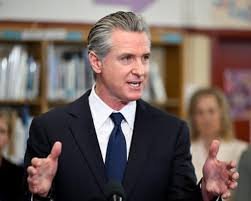
The golden state of California has once again positioned itself at the very heart of a global digital revolution. This week the region took a massive step forward by introducing a series of robust regulations for artificial intelligence. This significant move serves as a direct challenge to the current federal stance regarding the technology sector. Governor Gavin Newsom signed a comprehensive executive order on Monday which aims to reshape the landscape of innovation. The directive specifically targets companies that wish to secure lucrative contracts with the state government of California. Under these new rules firms must prove their technology prioritizes public safety above all other goals. This development signals a major shift in how the industry will operate within the local borders. The state now has four months to finalize a set of detailed and strict policies. Experts believe this timeline shows a real sense of urgency regarding the risks of automation. Many observers see this as a bold act of defiance against the national government’s preferences. The White House has previously expressed a strong desire for a much lighter regulatory touch. Donald Trump has frequently argued that heavy rules will only serve to stifle American ingenuity. He believes that the United States must remain a leader by allowing companies total freedom. However the leadership in California clearly feels a different responsibility to the general public today. They are focused on the potential for technology to be misused by bad actors online.
Governor Newsom emphasized that California has always been a historic birthplace for the greatest innovations. He noted that the state enjoys a unique position as a global leader in AI development. Yet he also acknowledged that every powerful tool possesses a darker and more dangerous side. The governor stated that the state must use every available tool to protect individual rights. This philosophy stands in stark contrast to the deregulated environment favored by the federal administration. The new executive order specifically addresses the distribution of highly sensitive and illegal digital content. Companies must demonstrate that their models cannot be used to create child sexual abuse material. They are also required to prevent the generation of non-consensual and violent pornographic imagery online. These safeguards are intended to curb some of the most harmful uses of synthetic media. The state will also scrutinize how these models handle the issue of harmful social bias. This involves looking at whether algorithms might inadvertently promote unlawful discrimination against various minority groups. There is a deep concern that AI could be used for intrusive mass surveillance. The order seeks to prevent technology from being used for illegal detention or biased policing. It also directs the state to develop clear standards for watermarking all AI-generated content. This would help the public distinguish between real footage and manipulated or synthetic digital media. Such transparency is becoming vital as deepfakes become increasingly realistic and harder to detect easily.

The tension between the state of California and the federal government is becoming quite palpable. President Trump has repeatedly called for a hands-off approach to ensure American companies win the race. His administration released a national policy framework in December which discouraged states from passing local laws. The White House believes that excessive regulation will only benefit international competitors like China or Russia. Trump’s framework explicitly states that companies must be free to innovate without any cumbersome legal hurdles. To enforce this vision he directed the Justice Department to create a special litigation task force. This group is tasked with challenging any state-level AI regulations that appear too restrictive today. They argue that a patchwork of different state laws will make doing business nearly impossible. Despite these threats from Washington the leaders in Sacramento remain firm in their current path. They believe that waiting for federal action would leave their citizens vulnerable to immediate harms. This battle is not just about technology but also about the balance of political power. California often sets the standard for the rest of the country due to its size. As the fifth largest economy in the world its decisions carry an immense global weight. If California demands certain safety features companies will likely adopt them for all their users. This creates a de facto national standard regardless of what the federal government officially says.
The move by Newsom is part of a much larger trend across the country. More than one hundred laws have already been passed by various states to address AI. Many of these focus on protecting children from predatory or addictive chatbot behaviors and designs. Others aim to stop tech giants from pilfering protected creative works for training their models. Artists and writers have been vocal about their work being used without any proper compensation. There is also a growing anxiety about the impact of artificial intelligence on the workforce. Labor unions are worried that expensive technology will eventually kill many traditional middle-class job roles. They fear that the value of human labor will be significantly degraded by digital automation. By setting high standards for state contracts California is using its purchasing power as leverage. Companies that want a piece of the massive state budget must now play by rules. This economic pressure is often more effective than simple legislative mandates on their own merit. The next four months will involve intense negotiations between tech lobbyists and state officials. Silicon Valley executives are expected to push back against some of the more technical requirements. They argue that some forms of bias are incredibly difficult to eliminate from large models. There is also the question of how effective watermarking technology can truly be in practice. Some critics suggest that determined users will always find ways to bypass these digital labels.
Public opinion on the matter remains quite divided across different demographic and political groups. Many people welcome the idea of a safer digital world for their families and children. They are tired of the internet feeling like a wild frontier with very few rules. However others worry that the United States might lose its competitive edge to foreign nations. They believe that safety regulations should be handled at a federal or even international level. The debate highlights the complex relationship between progress and the protection of the common good. California’s defiance marks a significant chapter in the ongoing history of the modern tech age. It suggests that the era of self-regulation for big tech may finally be ending soon. For years companies were allowed to move fast and break things without much official oversight. That culture is now being met with a new wave of responsible and fair governance. The English Chronicle will continue to monitor these developments as the four-month deadline quickly approaches. This story is far from over as the legal battles in Washington begin to unfold. The outcome of this clash will determine the future of innovation for many years ahead. It will decide if the digital future is shaped by profit or by public safety. As we watch this play out one thing is certain for the global audience. The world is looking to California to see if innovation can truly coexist with ethics. The stakes have never been higher for the developers and the people they serve. Every citizen has a vested interest in how these powerful tools are managed and deployed. California is betting that people will choose safety over speed in this high-stakes digital race.
Related News:
 Indonesia blocks Grok chatbot over sexual content risk
 The Woman Guarding Earth From the Threat of Asteroids
 Virgin Trains Moves Closer to Challenging Eurostar Monopoly
 UK Bans Fake Numbers: Scammers Lose Their Trick
 Vibe coding’ named Collins dictionary’s word of the year
 Patients to Test Health at Home to Ease NHS Winter Pressure
 Britain deploys RAF specialists to assist Belgium with drone threats
 Stop using ChatGPT to write speeches, AI minister tells MPs
 Northern Lights may illuminate UK skies this week
 New laws to bolster UK’s defences against cyber attacks on NHS, transport and energy
 Hitler’s DNA Confirms He Truly Had Only One Testicle
 Working-Class Men with Prostate Cancer Left Behind by NHS
 New AI tool could cut wasted efforts in organ transplants
 How Cultures Interpreted the Aurora Through History
 Sundar Pichai Cautions on AI Hype and Market Risks
 Google Chief Urges Caution: Don’t Trust AI Blindly
 US Judge Says Meta Did Not Hold Illegal Social Media Monopoly
 Healthy Habits in Your 30s That Boost Life in Your 70s
 Coffins Now Too Large to Cremate Amid Rising Obesity Crisis
 AI Actress Creator Says Tilly Norwood Won’t Replace Actors
 Capitol Attack Anniversary Sparks Deep Political Divide
 Saudi Officials Report Zubaidi Flee Before Yemen Peace Talks
 AI Grok Sparks Child Safety Alarm in the UK
 UK Targets in New York Bomb Threat Hoax: Man Jailed
 Gambia Supreme Court Hears Case to Overturn FGM Ban
 Google Removes Some AI Health Summaries Over Safety Concerns
 Trump targets Iran trade with 25% tariff warning
 US Clears Nvidia AI Chip Sales to China in Policy Shift
 Amazon Milton Keynes closure sparks concern for UK warehouse workforce
 US Senate rejects resolution limiting Trump military powers
 Gulf states warn Trump Iran strikes risk wider Middle East war
 Machado Trump medal gesture reshapes Venezuela power struggle
 Greenland defence seen as shared Nato duty amid troop arrivals
 Geopolitical football: Iran, Trump and the World Cup clash
 Canada-China trade gains momentum in new strategic partnership
 Trump Receives Machado’s Nobel Medal in White House Meeting
 Astronomers Prepare for First-Ever Movie of a Black Hole
 Syria President Declares Victory as Ceasefire Reached with SDF
 MPs warn AI financial risks threaten UK stability
 MPs warn AI financial risks threaten UK stability
 Shinzo Abe’s killer receives life sentence in Japan
 China General Under Investigation Amid Leadership Purge
 Philippines ferry disaster leaves 15 dead, dozens missing
 Pornhub blocks new UK users over age checks dispute
 Amazon mistakenly signals new global layoffs to employees
 AI breast screening cuts later cancer diagnoses by 12%, study finds
 UK Launches First Rapid-Charging Battery Train This Weekend
 UK New Car Discounts Near £6,000 as Prices Are Slashed
 Cambridge Faces Scrutiny Over Arms Investment Transparency
 Most Statin Side-Effects Are Not Caused by Drugs, Study Confirms
 Epstein UAE Emails Shake British Royal Andrew’s Legacy
 Christchurch gunman seeks to vacate guilty plea
 BT Names New Openreach Chief Amid Major Fibre Expansion
 Infantino Faces Russia Threat and Trump Concerns at Uefa Congress
 Tech Trends Set to Transform Life in 2026
 Concerns rise for Canberra boy amid Iran detention fears
 Starmer Targets AI Chatbots Over Child Safety Concerns
 Indian University Kicked Out of AI Summit for Claiming Chinese Robot Dog as Its Own Invention
 Caribbean Leaders Urge Dialogue Amid US Oil Embargo on Cuba
 How Ancient Scottish Rocks Challenge ‘Snowball Earth’ Theory
 Ayahuasca Psychedelic DMT Shows Potential as Depression Therapy
 Stewart Brand on Musk, Bezos and a Life of Long Thinking
 Facial Recognition Error Leads to Wrongful Arrest in Milton Keynes
 Social Media Trial: Woman Says Addiction Began at Six
 Ukraine Sends Drone Experts to Defend US Bases in Jordan
 Revealed: UK AI Push Faces Phantom Investment Claims
 Ministers Urged to Act Faster on Deepfakes Threat
 Abramovich Chelsea Sale Cash Faces Jersey Probe
 Tesla Enters British Energy Market Following Ofgem Approval
 Social Media Giant Trial Reaches Final Jury Decision
 Yvette Cooper: UK Must Follow Principles, Not US Pressure
 Cern Prepares First-Ever Antimatter Transport Test
 The Molten Mystery of L98-59d: A New Class of Liquid Planet
 Slovenia Election: A Nation at a Crossroads
 Jury Rules Meta and YouTube Liable for Addictive Design
 House of Lords Backs Landmark Social Media Ban for Youth
 Charity Watchdog Warns Alan Turing Institute Over Conduct
 Saudi Arabia Urging US to Keep Up Iran Attacks
 Trump Softens Cuba Oil Stance as Russian Tanker Nears
 IMF Predicts Global Economic Crisis Due to Gulf Unrest