Published: 01 April 2026. The English Chronicle Desk. The English Chronicle Online.
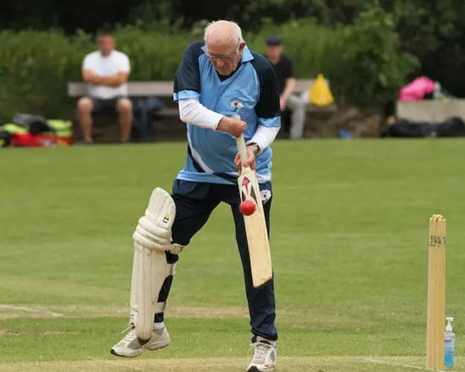
The England and Wales Cricket Board now faces serious allegations regarding its premier disability tournament. Critics argue that non-disabled players currently occupy spots meant for athletes with genuine physical or learning impairments. This controversy centers on the Disability Premier League which serves as a vital international cricket pathway. Several parents of former England internationals have voiced deep concerns about the integrity of the league. They believe the current selection process unfairly blocks talented players from reaching the highest competitive levels. These families claim that the ECB allows athletes who do not meet strict disability criteria to play. The DPL should ideally represent the pinnacle of achievement for the England Mixed Disability cricket team. However, recent data suggests that nearly one-fifth of the current players may not be disabled. Estimates indicate that twelve out of sixty-four drafted players fail to meet the required impairment standards. This situation has sparked a heated debate about fairness and the true purpose of disability sport.
The ECB currently follows guidelines set by Virtus for international competition involving athletes with intellectual impairments. Under these rules, players in the learning disability category must possess an IQ of seventy-five or less. Owen Jervis manages the Yorkshire disability team and has witnessed these issues firsthand within the domestic circuit. He alleges that the board permits several neurodiverse players to compete despite failing official assessment tests. These assessments are usually conducted by educational psychologists to ensure that every athlete meets specific eligibility. Most neurodiverse individuals do not actually meet the strict criteria required for formal disability cricket categories. Some players with conditions like ADHD or autism already compete successfully within professional mainstream cricket circles. England bowler Em Arlott is a notable example of a mainstream professional with a neurodiverse diagnosis. While the ECB does not strictly need to follow international rules for domestic games, experts disagree. They argue that including non-disabled players essentially undermines the very foundation of the Disability Premier League.

Tracey Jervis expressed her frustration by stating that a disability league must exclusively feature truly disabled players. The current environment has left many families feeling that their children are being pushed out of sport. Another parent suggested that players from the county disability circuit are now at a significant disadvantage today. Many players qualified for England do not participate in the traditional county disability system at all lately. This parent believes the county game is no longer being used to assess emerging new cricket talent. He described the current state of the DPL as a closed club for a small group. There is a growing sense that coaches and captains are picking favorites instead of looking at form. The transition to mixed disability cricket has also complicated the availability of spots for all eligible players. Teams now combine players with physical disabilities, hearing impairments, and learning disabilities into one single playing squad. This format naturally reduces the number of available positions for athletes within each specific disability sub-category.
Owen Jervis noted that players with misallocated impairments are taking valuable game space from those in need. These individuals often dominate the match by taking the most significant roles in batting and in bowling. Meanwhile, players with profound learning disabilities are frequently relegated to minor roles like carrying the water bottles. Many of these athletes feel discouraged because they cannot compete with those who lack their specific challenges. They often internalize this failure and wonder if there is any point in continuing their sports careers. The emotional impact on these young men is profound as they feel their hard work is ignored. Several other parents shared similar feelings but requested anonymity to protect their children from any potential repercussions. There is a pervasive feeling that people with learning disabilities are being quietly moved to the side. This perceived marginalization has led to a breakdown in trust between the families and the governing body.

The issue was officially raised with Richard Hill who manages events and competitions for the governing body. In an email from late 2024, Hill acknowledged the challenges presented by players with high-functioning conditions. He stated that the ECB was developing an action plan to manage the changing landscape of disability. However, Owen Jervis insists the situation has only worsened since that correspondence was sent to the board. More players with legitimate learning disabilities are being excluded from the draft with every passing new season. Two prominent examples of this trend are the talented bowlers Jai Charan and the veteran Alex Jervis. Jai Charan debuted for the England learning disability team in 2023 with a very impressive statistical record. He currently holds the best bowling average and strike rate in the entire history of the DPL. Alex Jervis has represented his country for a decade and has won the Ashes three times now. Despite their incredible resumes, both men spent the 2025 season acting primarily as drinks carriers for others.
Shanial Charan shared his heartbreak over the treatment his son received during the recent DPL season matches. He believed that disability cricket would be the one place where his son would face no discrimination. Jai did not play a single game last season despite attending every match with his cricket gear. The young bowler eventually decided to step away from the league because he felt his presence was ignored. He questioned why his record-breaking statistics were not enough to earn him a spot on the starting pitch. His father struggled to find an explanation that would satisfy a dedicated athlete who felt completely betrayed. An ECB spokesperson defended the league by stating it provides top-level competition for sixty mixed disability players. They emphasized that all participants have some form of impairment that justifies their inclusion in the draft. The board noted that competition for these sixty spots is intense because of the high playing standards. They acknowledged the ongoing debates regarding eligibility and confirmed a formal review of the current criteria is underway. The ECB intends to implement any necessary changes to the selection process by the 2027 cricket season.
Related News:
 Ben Stokes injury joke after brutal ball strike
 England Too Careful in Windies Defeat
 Buttler Eyes Vital Run Surge as England Face New Zealand
 India T20 World Cup Triumph Seals Historic Title Defence
 Father and Son Score Record 590 Run Partnership
 McCullum Faces Pressure to Bridge England County Gap
 Jos Buttler Searches for Form as the IPL Returns
 Teenage Titan: Sooryavanshi Smashes IPL Records
 Middlesex Icons Launch Bold Revolt Against Club Leadership
 Sam Konstas Dropped as Australia Unveils New Contract List
 Salah & Gravenberch Lead Liverpool to Win Against Villa
 Granit Xhaka Rescue Earns Everton Draw at Sunderland
 Tension and Turmoil at Aston Villa v Maccabi Match
 Bellingham has ‘the edge’ among England No 10s
 Man City Masterclass on Guardiola’s Milestone Day Exposes Liverpool Woes
 Lando Norris Dominates Brazil GP to Strengthen F1 Title Bid
 VAR Must Rein Its Neck In to Save Football’s Spirit
 Trescothick Hints Pope Will Keep Number Three Spot
 Mary Earps’s Manchester United Return Faces Mixed Reception
 Sam Kerr Stars in Chelsea Return with Champions League Double
 UK and Ireland Announce Venues for Euro 2028 Tournament
 Saka Solidifies Role as Tuchel’s Key England Lieutenant
 Former Lion Heskey Warns of Shortage of England Strikers
 Australia Mourns Paralympic Champion Paige Greco
 From heartbreak to glory: Scotland’s dramatic return to the World Cup
 Tiny Curacao Makes History as Smallest Nation to Reach World Cup
 Haiti Qualifies for World Cup Despite Coach Never Visiting Country
 Moyes Defends Gueye After Dramatic Everton Bust-Up
 Mbappe Scores 4 as Real Madrid Edge Olympiakos
 Barcelona, Atletico set for decisive La Liga showdown
 Australia Face Big Changes as Cummins and Lyon Ruled Out of Ashes
 Van de Ven Tackle Leaves Isak with Fractured Leg
 City Set to Land Semenyo After Chelsea Exit from Transfer Race
 ECB powerless to halt England’s recurring Ashes failures
 Stokes urges empathy for England players amid Ashes struggles
 Damien Martyn in Induced Coma After Meningitis Diagnosis
 Spin Bowling Struggles as Pace Dominates 2025 Ashes Series
 Anthony Joshua Released After Nigeria Car Crash
 Chelsea Sack Looms: Enzo Maresca Relationship Collapses
 Africa’s Superpowers Shine in Cup of Nations Quarter-Finals
 Amorim’s United Future Uncertain Amid Wilcox Tension
 Raducanu Battles Injury as Britain Exit United Cup
 Australia Dominates England: Smith, Head Crush Bowlers in Sydney
 Australian Open Prize Money Hits Record $111.5m
 Manchester United Fan Group Targets Jim Ratcliffe Over Club Chaos
 Morocco sail into Afcon semis after Díaz inspires win
 Israeli fans ban questioned after Dutch police dispute evidence
 Geopolitical football: Iran, Trump and the World Cup clash
 Regragui condemns Afcon final chaos after dramatic defeat
 Brahim Díaz’s Panenka Fail Highlights Penalty Risks
 ‘A long time coming’: US table tennis finds its moment
 Mbappé’s Late Penalty Lifts Real Past Nine-Man Rayo
 Women’s FA Cup Could Introduce Seeded Teams from Last 32
 Yamal and Rashford Shine as Barcelona Reach Copa Semis
 ICC Men’s T20 World Cup – Everything You Need to Know
 ‘Scrutiny and Pressure on Irish Has Reached New Level’ — Rugby Faces Brutal Spotlight After France Defeat
 Hugo Ekitike Becomes Liverpool’s New Cult Hero
 Infantino Faces Russia Threat and Trump Concerns at Uefa Congress
 Gower, Waugh and Gavaskar Among Cricket Legends Calling for Imran Khan to Receive Proper Medical Care
 ‘I Won’t Bat for Myself to Correct Form’ – Buttler
 Hilary Knight speaks out on Trump’s recent hockey remarks
 Champions League Thrills as Atalanta and Galatasaray Advance
 English Cricket Faces Moral Crisis Over Indian Investment
 The Norwegian Secret to Dominating the Winter Olympics
 Manchester United Face Huge Bill After Ruben Amorim Exit
 Birmingham City Owners Eye Expansion Into Rugby Union
 Port Vale Shock Sunderland in Historic FA Cup Win
 Abramovich Chelsea Sale Cash Faces Jersey Probe
 Cho Stuns Forest as Midtjylland Triumph in the Rain
 Iranian Captain Departs Australia Amid Asylum Tension
 Iran World Cup Move Talks Raise Global Concerns
 Japan Triumphs 1-0 Over Australia to Claim Women’s Asian Cup
 How Seven Premier League Teams Could Qualify for UCL
 Sunderland Stun Newcastle as Brobbey Strikes Late Winner
 The Living Heart of Manchester United: Bruno Fernandes
 The 15-Year-Old Indian Cricket Prodigy
 Eddie Howe Faces Seven Game Test to Secure Newcastle Future
 Don Garber Defends MLS Growth Against Critics
 LA 2028: Millions of Affordable Olympic Tickets Announced
 Italy Faces Third Successive World Cup Absence After Loss