Published: 06th August 2025.The English Chronicle Desk
In a notable shift in Russia’s war strategy, President Vladimir Putin is reportedly weighing a temporary suspension of missile and drone attacks on Ukraine in a calculated move to placate the Trump administration and forestall the imposition of fresh US-led sanctions. The proposal, if enacted, would mark a significant yet cautious overture by Moscow toward de-escalation, amid growing global fatigue over the protracted conflict and a mounting toll on regional stability and economic security.

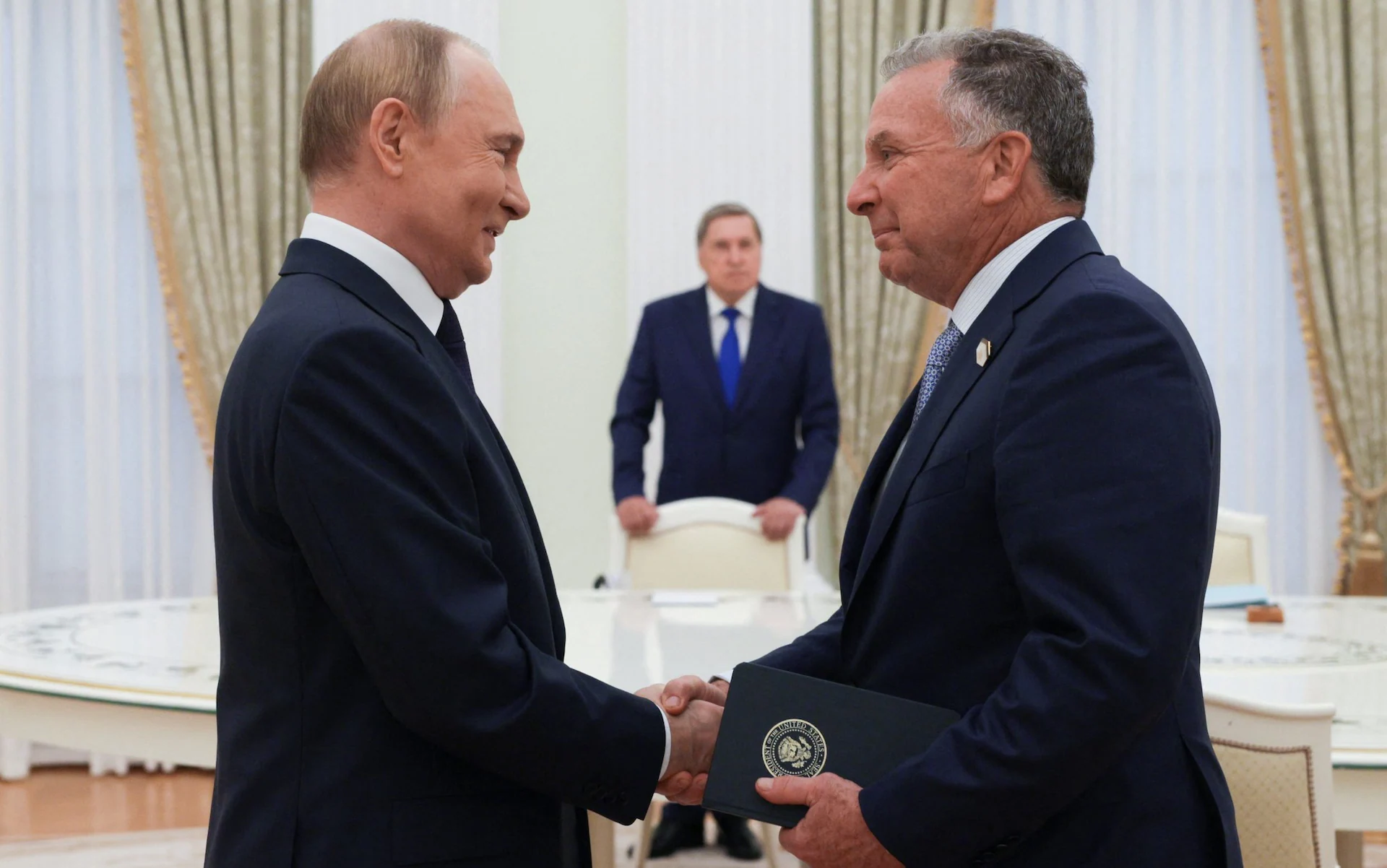
The development comes following a high-level meeting between President Putin and Steve Witkoff, the special envoy of US President Donald Trump, held in the Kremlin on Wednesday. Witkoff, a New York real estate magnate turned diplomatic emissary, landed in Moscow earlier the same day, signaling renewed backchannel efforts by Washington to push for a political resolution to the war. The talks between the Russian leadership and the American envoy reportedly centred on a phased pathway to peace, beginning with what has been described as an “air truce” — a mutual cessation of aerial assaults conditional on reciprocal commitment from Ukraine.
While President Putin has not endorsed a full ceasefire, the prospect of suspending aerial strikes appears designed to mollify the United States at a moment of heightened diplomatic pressure. President Trump, who has been vocal about Russia’s military aggression and its impact on global energy stability, has threatened to impose sweeping tariffs not only on Russian fossil fuel exports but also on nations that continue to facilitate Moscow’s energy trade, including India and China. The Trump administration’s rhetoric has sharpened in recent weeks, with the President reducing an initial 50-day warning period to just 25 days and hinting at a possible announcement of punitive measures by Friday. Speaking to reporters, Trump left little room for doubt about his intentions. “I never said a specific percentage, but we’ll be doing quite a bit of that. We’ll see what happens over the next fairly short period of time,” he said, referring to the proposed tariffs. The President further confirmed that discussions with Russian officials were imminent, suggesting a verdict would follow shortly thereafter.

The timing of this diplomatic overture from Moscow coincides with a rising sense of urgency within the Kremlin, as the Russian economy continues to reel under existing sanctions and dwindling international partnerships. Reports suggest that Russian officials view the meeting with Witkoff as a crucial opportunity to restart direct communication channels with the United States and avert a potentially devastating new round of economic restrictions. Kremlin spokesperson Dmitry Peskov acknowledged the gravity of the talks but refrained from commenting on them in advance, citing their sensitivity.
Amid these diplomatic manoeuvres, Ukraine remains under daily threat. Just hours before the Putin-Witkoff meeting, Russian forces reportedly launched a strike on a key gas facility in Ukraine’s Odesa region, near the Romanian border. President Volodymyr Zelensky confirmed that the attack targeted critical energy infrastructure in the village of Novosilske, home to the Orlovka interconnector — a strategic site for winter gas supplies received via the Transbalkan route. Zelensky condemned the strike as a “deliberate and cynical blow” to Ukraine’s preparations for the heating season.
Despite these ongoing assaults, Zelensky remains in active dialogue with the Trump administration. On Tuesday, he held what he termed a “productive” phone call with President Trump, during which the two leaders discussed a multibillion-dollar European initiative to procure American-made air defence systems for Ukraine. The deal, backed by contributions from the Netherlands, Denmark, Sweden, and Norway, amounts to over $1 billion in fresh military assistance aimed at reinforcing Kyiv’s defensive capabilities.
The proposed “air truce” — though still in the realm of diplomatic speculation — was reportedly first broached in a conversation between Putin and Belarusian leader Alexander Lukashenko last week. Lukashenko, a close Kremlin ally, later told reporters that the idea was well received in Moscow, but stressed that Ukraine’s agreement would be essential to make it work. The concept gained further traction following meetings between US General Keith Kellogg, acting as a peace envoy, and Lukashenko. General Kellogg is now expected to travel to Kyiv to discuss the proposal with President Zelensky and gauge Ukraine’s willingness to consider such a truce.

While the situation remains fluid, the emergence of this diplomatic effort suggests a potentially significant turning point in the conflict, shaped by an evolving balance of international pressure, economic vulnerabilities, and strategic recalculations on both sides. Whether this will lead to substantive de-escalation or merely another fleeting pause in a long and bloody war remains to be seen. Yet, even a temporary cessation of air attacks, if honoured by both parties, could offer much-needed respite to war-weary civilians and open a narrow window for renewed peace negotiations.
For now, the world watches closely as diplomatic overtures intersect with battlefield realities, and the fragile threads of diplomacy are once again tested in one of the most intractable conflicts of the 21st century.
Related News:
 Market Jitters Send Stocks Lower as Trade Tensions and Earnings Anxiety Weigh on Investors
 Oxford Shatters Records with State School Admissions in Historic Move Towards Educational Equity
 Birmingham City’s Premier League Ambition Ignites: A 150th Anniversary Marked by Vision, Investment, and a Relentless Promotion Push
 Private Parking Under Pressure: Transparency Demands Mount Amid Soaring Ticket Appeals and Rising Fines
 Global Trade Earthquake: Trump Slaps 35% Tariff on Canada and Expands Tariff Blitz to Over 90 Nations
 100 children from Gaza seek evacuation to the UK for critical medical treatment
 Going Loco: Major UK Rail Line Faces Two-Week Shutdown Amid Critical Upgrade Works
 Tariff Tempest: India Rebukes Trump’s ‘Unfair’ Oil Sanctions as Diplomatic Tensions Mount
 Tough Call, Softer Blow: Bank of England Cuts Interest Rates to 4% Amid Economic Crosswinds
 Minute’s Silence for Diogo Jota Abruptly Ended After Wembley Tribute Disrupted
 Women’s Rights Groups Warn Far-Right Is Exploiting Women’s Safety for Political Gain
 Britain Invests £118 Million in New Air Defence Missiles Amid Rising Threats
 Anglo American to Merge with Teck in $53bn Mining Deal
 Cardi B Announces Pregnancy with NFL Star Stefon Diggs Amid Personal Triumphs
 Putin, Gaza, Tariffs and Mandelson: Key Insights from Trump-Starmer Press Conference
 Kimmel Stands Firm Against Trump Amid Free Speech Storm
 Sir Sadiq Khan Accuses Trump of Racism and Islamophobia Following UN Remarks
 Brentford Punish United’s Inconsistencies as Amorim’s Struggles Deepen
 Scottish Government Mandates Single-Sex Toilets and Changing Facilities in Schools
 Conservatives Plan Controversial Immigration Taskforce Inspired by US ICE
 British Scientist Wins Nobel for ‘Harry Potter’ Material
 De Bruyne Brace Crushes Wales’ World Cup Qualification Hopes
 NHS Health Checks to Include Menopause Questions
 Rachel Reeves Faces Pressure to Break Tax Pledge in Budget
 Woman Denied £3,800 Disability Benefit Over Bra Trick
 Sturgeon’s Government Accused of Misleading Firms on Green Scheme
 Britain’s Waterways at Risk Amid Climate Funding Crisis
 UK Could See Snow Next Week as Temperatures Set to Plummet
 Tesla Warns UK That Weak EV Rules Could Threaten Sales