Published: 01 September 2025. The English Chronicle Desk
Former Prime Minister Boris Johnson is reported to have sought “revenge” against King Charles, then Prince of Wales, following a politically charged remark in 2022, according to insights revealed in Valentine Low’s forthcoming book Power and the Palace: The Inside Story of the Monarchy and 10 Downing Street. The incident highlights a rarely seen tension between the government and the monarchy during Johnson’s premiership, raising questions about the delicate interplay between political leadership and royal commentary.

The source of friction stemmed from Johnson’s controversial plan to address illegal migration in April 2022. At the time, the government proposed sending individuals who arrived in the UK illegally to Rwanda, where they could seek asylum. Low’s book suggests that King Charles had made a critical remark regarding this policy, a comment intended to be included in a story for The Times. Buckingham Palace reportedly sought to contain the situation, as the remark portrayed Charles as voicing scepticism about a government initiative designed to address the migration crisis.
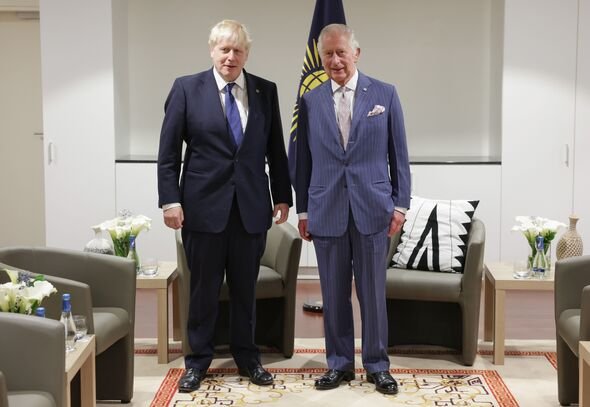
Despite the Palace’s efforts, Johnson is said to have actively planned a subtle form of retribution. Clarence House, responsible for Charles’ communications, attempted to mitigate potential fallout by arranging a photograph of Charles and Johnson smiling and shaking hands at the Commonwealth heads of government meeting in Kigali. The image was intended to convey cordiality and prevent the story from escalating. Yet, Johnson is reported to have ensured that the narrative of Charles’ criticism persisted.
According to the accounts in Low’s book, Johnson made pointed comments to journalists during his flight to Rwanda, noting his desire to help others “shed some of their condescending attitudes towards Rwanda.” While the Prime Minister did not explicitly name Charles, former Downing Street director of communications Guto Harri described the remarks as “a dig at Charles, without mentioning Charles.” Harri further reflected on Johnson’s character, stating, “Charles had slagged off a key and difficult policy decision. Boris is not a man to let that go. He does not get angry or upset, but he gets even. I remember Boris telling me once, ‘I fear no man’. But it was slightly playful as well: I think he was enjoying [Charles’s] discomfort.”

The incident reportedly placed the Palace in a difficult position. The British royal family traditionally maintains a careful neutrality on political matters, and public tensions with government leaders are considered highly undesirable. Observers suggest that while Johnson’s actions may have been perceived as playful or strategic, they underscored a rare moment of friction between Number 10 and Clarence House, illustrating the complexities of modern political-royal interactions.
Low’s book promises further insights into the behind-the-scenes dynamics between successive British governments and the monarchy, providing a rare glimpse into how personal relationships can intersect with high-level policy decisions. The episode involving Johnson and Charles adds a human dimension to political maneuvering, revealing the personal stakes that often accompany public office.

As the release of Power and the Palace approaches, it is expected to spark renewed discussion about the boundaries of political and royal influence, highlighting the delicate balance that defines the United Kingdom’s constitutional and political landscape.
Related News:
 A Royal Smile for Twelve: Prince George’s Birthday Photo Delights the Nation
 Royals, Ratings, and Renewals: Harry and Meghan Eye Record Netflix Deal Amid Mixed Reception
 Prince Harry Cleared of Bullying Allegations Amid Charity Dispute Fallout
 Princess Anne at 75: Duty, Discipline, and a Royal Life Without Fus
 Close Friend of Princes William and Harry Faces Delicate Godparent Decision
 Where Is Prince William and Kate Middleton’s New House? Inside the Historic Lodge Set to Become Their ‘Forever Home’
 Princess Kate Revealed as the Ultimate Supportive Parent at Children’s Sporting Events
 Duke and Duchess of Edinburgh to Embark on Key Diplomatic Visits to Papua New Guinea and Japan
 Royal Family Turmoil: Prince Harry’s Moves, Palace Reactions and the Future of the Monarchy
 Meghan Markle’s Netflix Show Faces Uncertain Future After Ratings Drop
 Duchess of Kent Dies at 92, Buckingham Palace Confirms
 Prince Harry Pays Tribute to Queen Elizabeth on Third Anniversary of Her Passing
 Prince Harry Meets King Charles in First Private Encounter in 19 Months
 George and Amal Clooney Celebrate Global Human Rights Champions at Star-Studded Albies
 Prince Harry Responds to Charity Commission Criticism Over Sentebale Row
 Sussexes Warn on Children’s Phone Use Echoing Princess of Wales
 Prince Andrew told Epstein “we are in this together”
 Admiral of the Fleet Sir David Bathurst Dies Aged 89
 King Charles to pray publicly with pope in historic Vatican visit
Prince Andrew steps aside as royal succession shifts
Prince Andrew under police scrutiny over Giuffre claims
Giuffre’s bombshell memoir names Prince Andrew 88 times in shocking revelations
King Charles to pray publicly with pope in historic Vatican visit
Prince Andrew steps aside as royal succession shifts
Prince Andrew under police scrutiny over Giuffre claims
Giuffre’s bombshell memoir names Prince Andrew 88 times in shocking revelations
 Harry and Meghan join global AI leaders urging superintelligence ban
 William Steps Up Over Prince Andrew Palace Response
 Prince Andrew May Leave Royal Lodge for Frogmore Cottage
 King Charles Heckled Over Prince Andrew-Epstein Links
Prince Andrew Hosted Epstein Days Before Arrest
Prince Andrew Under Pressure as MPs Question Royal Lodge Rent Arrangements
King Charles Heckled Over Prince Andrew-Epstein Links
Prince Andrew Hosted Epstein Days Before Arrest
Prince Andrew Under Pressure as MPs Question Royal Lodge Rent Arrangements
 Prince Andrew Stripped of Title: Giuffre Family Hails Historic Moment
 Kate Winslet to Narrate Film Highlighting King’s Environmental Mission
Trump Speaks on Prince Andrew’s Royal Scandal Fallout
Kate Winslet to Narrate Film Highlighting King’s Environmental Mission
Trump Speaks on Prince Andrew’s Royal Scandal Fallout
 Prince of Wales showcases volleyball skills on Brazil visit
 Is Carbis Bay Hotel the Best Stay on North Cornwall’s Coast?
 Prince William Plants Trees with Brazil’s Nature Heroes
 Meghan ‘to return to acting’ after eight-year hiatus
 Oprah enjoys Meghan’s jam on English muffins
 Earl of Yarmouth Faces £1.3m Legal Bill Over Family Estate
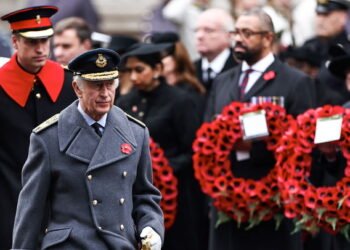 King Charles to Lead Nation in Remembrance Sunday Service
 Second world war veterans honoured as King leads Remembrance Sunday
 The Debate Over Princess Beatrice and Eugenie’s Royal Status Intensifies
 Farage appointee to lead Reform youth accused of anti-British views
Palace to reinstate hyphen in Andrew’s surname
Farage appointee to lead Reform youth accused of anti-British views
Palace to reinstate hyphen in Andrew’s surname
 Princess of Wales Hosts Festive Christmas Service at Abbey
 Thai King Embarks on Historic China Visit After 50 Years
 Andrew Told Epstein ‘I Can’t Take Any More’ Over Media Storm
 Royal Hopes Rest on George and the Next Generation
 Princess Eugenie-Linked Gallery Faces Russia Sanctions Charges
 Princess of Wales Hosts Carol Service Celebrating Love for All
 Princess Anne Takes the Controls in Airbus Flight Simulator
 Princess Beatrice Opens Up About Premature Birth Journey
 107-Year-Old Veteran Credits Whiskey for Longevity
 What Now for the Queen’s Childhood Playhouse After Andrew’s Eviction?
 Catherine urges end to stigma around addiction