Published: 19 September ‘2025. The English Chronicle Desk
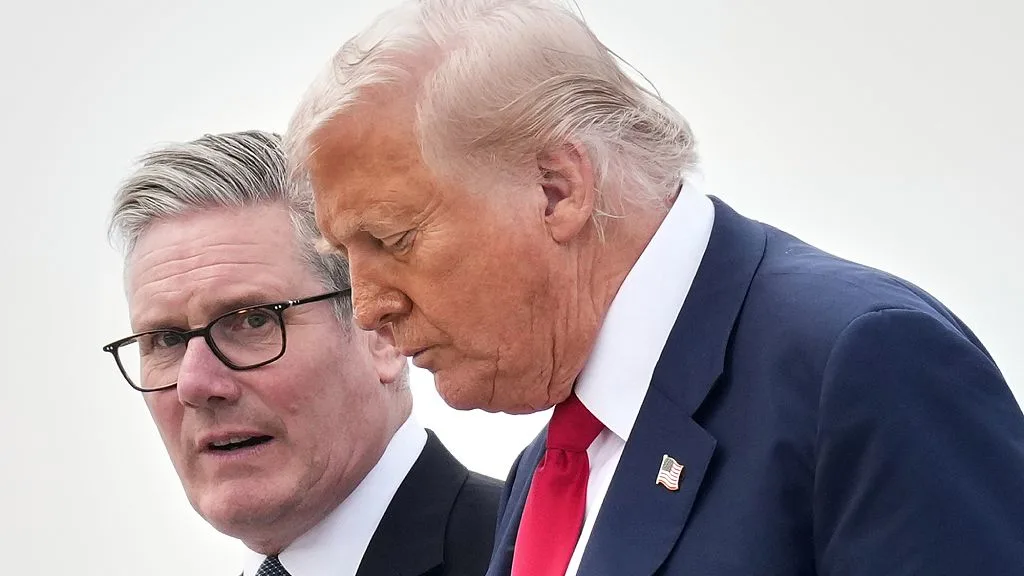
The joint press conference between US President Donald Trump and UK Prime Minister Keir Starmer at Chequers on Thursday delivered a mixture of diplomacy, political theatre, and revealing commentary on some of the world’s most pressing issues. While the event was tightly managed, the session offered a glimpse into the priorities and positions of both leaders, touching on Ukraine, Russia, Gaza, trade, defence, and the delicate dynamics of personal relationships in high politics.
Donald Trump, speaking more freely than during most of his previous visits, oscillated between pointed criticisms, self-justifications, and unexpected admissions. On the ongoing conflict in Ukraine, he emphasised his disapproval of Russian President Vladimir Putin, despite his own history of ambivalence toward Moscow. “I spoke to President Putin about Ukraine, it was the apple of his eye,” Trump said. “He would have never done what he did, except that he didn’t respect the leadership of the United States.” Yet, despite this critique, the president signalled no intention to escalate sanctions, instead criticising other countries for purchasing Russian oil. This selective approach underscores Trump’s transactional style of international diplomacy, prioritising US economic and strategic interests while avoiding direct confrontation.

Concerns that the UK’s impending recognition of Palestinian statehood might spark tension between the two leaders proved largely unfounded. Trump admitted a divergence in opinion but framed it as “one of our few disagreements,” suggesting a willingness to compartmentalise foreign policy differences in favour of broader cooperation. Starmer, meanwhile, carefully avoided direct commentary on the humanitarian catastrophe unfolding in Gaza. Instead, he emphasised the stance of Hamas, stating, “Hamas … don’t want two-state solution. They don’t want peace, they don’t want the ceasefire.” Trump appeared to endorse this framing with a visible nod of approval, sidestepping direct criticism of Israel’s ongoing military campaign, which has drawn widespread international scrutiny.
The press conference also ventured into the realm of technology and international trade, where ideological differences and domestic priorities intersect. Trump’s allies have frequently criticised European online safety rules for their perceived bias against American technology companies. Starmer, however, presented a domestic argument that aligned with both British public sentiment and US concerns, distinguishing between free speech and harmful content targeting children. “Free speech is one of the founding values of the United Kingdom … [but] I draw a limit between free speech and the speech of those that want to peddle paedophilia and suicide social media to children,” he said. This framing appeared to resonate with the US president, highlighting Starmer’s careful calibration of rhetoric to maintain bilateral goodwill while signalling domestic resolve.
A major topic of discussion was the UK’s defence commitments. Earlier this year, Starmer announced a significant cut in international aid to fund an increase in defence spending, a controversial move that prompted criticism from international aid agencies and the resignation of a cabinet minister. Trump praised the decision, stating, “I want to congratulate the United Kingdom on making the vital commitment to spend 5% of GDP on defence at the Nato summit this year.” The acknowledgement highlighted the symbolic and strategic importance of defence investment in transatlantic relations, while reinforcing Starmer’s domestic positioning as a leader capable of prioritising national security without abandoning humanitarian concerns.
Trade discussions reflected the complexity of US-UK economic relations. Trump referred to Starmer as “a tough negotiator” and complimented the recent UK-US trade agreement, noting, “I think it was a better deal for you than us, but these are minor details.” Questions regarding the promised reduction of tariffs on British steel exports remain unresolved, and Trump reaffirmed the US commitment to tariffs as a tool to bolster domestic economic performance. “The United States, as you probably have heard, is doing better than it has ever done in terms of business and investment,” he said. “A lot of it’s because of tariffs.” This emphasis underscored the pragmatic, results-oriented approach underpinning US trade policy under Trump, with little indication of compromise on matters deemed central to domestic business interests.
One of the more unexpected revelations involved the US interest in regaining control over Bagram Airbase in Afghanistan, the largest American military facility in the country until the withdrawal in 2021. Trump indicated that the base’s proximity to China renders it strategically significant. “We’re going to keep Bagram – one of the biggest airbases in the world,” he said. “We’re trying to get it back, by the way. OK, that could be a little breaking news. We’re trying to get it back, because they need things from us. One of the reasons we want the base is, as you know, it’s an hour away from where China makes its nuclear weapons.” While he stopped short of proposing military reinvolvement in Afghanistan, his remarks signalled a renewed US focus on strategic positioning in Asia and reflected a growing concern over China’s nuclear capabilities.
The conference also touched on symbolic and personal aspects of the state visit. Starmer, a practising atheist who observes certain Jewish traditions in honour of his wife, was asked whether Britain remains a Christian country. He replied simply, “I was christened. So that is my church – has been all my life,” a statement that blended personal conviction with historical context.
The session also revisited past controversies surrounding Peter Mandelson, the former UK trade minister, and his association with the convicted child sex offender Jeffrey Epstein. Mandelson had previously played a key role in facilitating UK-US trade agreements, and his proximity to Trump during earlier engagements raised concerns among British officials. Asked about Mandelson, Trump appeared to suffer a lapse in memory, responding, “I don’t know him,” despite the two having met at high-profile occasions. This moment underscored the unpredictable, performative nature of Trump’s engagement with the media and the added pressures on Starmer to navigate sensitive personal and political issues without triggering public or diplomatic controversy.

While the press conference avoided outright conflict, it revealed key areas of alignment and divergence between the UK and the US. Defence, trade, and security were identified as shared priorities, whereas policy on Palestine and the application of sanctions on Russia remained points of subtle disagreement. The event illustrated Starmer’s deft balancing act—maintaining a cooperative posture with a visiting US president while preserving domestic credibility amid scrutiny from MPs, the public, and international observers.
Observers noted that the highly managed nature of the event reflected the British government’s desire to control the narrative and minimise controversy. Trump’s unpredictable style, however, ensured moments of surprise and unpredictability, revealing the US president’s priorities and idiosyncrasies. Defence spending, trade agreements, online safety, and military strategy dominated the discussion, providing a window into the transactional and pragmatic nature of contemporary international diplomacy.
In conclusion, the Trump-Starmer press conference at Chequers offered a detailed and multi-faceted insight into the workings of high-level diplomacy. While overt conflicts were largely avoided, the session highlighted the delicate interplay of domestic politics, personal diplomacy, and international strategy. From Ukraine and Gaza to trade tariffs and Bagram Airbase, the discussions underscored the complexities of the UK-US relationship and the broader geopolitical landscape. For the public, the conference provided an informative snapshot of how modern statecraft operates in an era of global interconnectedness, where symbolic gestures, strategic interests, and personal interactions converge to shape the policies and perceptions of two of the world’s most influential nations.
Related News:
 Market Jitters Send Stocks Lower as Trade Tensions and Earnings Anxiety Weigh on Investors
 Oxford Shatters Records with State School Admissions in Historic Move Towards Educational Equity
 Birmingham City’s Premier League Ambition Ignites: A 150th Anniversary Marked by Vision, Investment, and a Relentless Promotion Push
 Private Parking Under Pressure: Transparency Demands Mount Amid Soaring Ticket Appeals and Rising Fines
 Global Trade Earthquake: Trump Slaps 35% Tariff on Canada and Expands Tariff Blitz to Over 90 Nations
 100 children from Gaza seek evacuation to the UK for critical medical treatment
 Putin Considers Temporary Suspension of Air Strikes on Ukraine Amid Pressure from Trump Administration
 Going Loco: Major UK Rail Line Faces Two-Week Shutdown Amid Critical Upgrade Works
 Tariff Tempest: India Rebukes Trump’s ‘Unfair’ Oil Sanctions as Diplomatic Tensions Mount
 Tough Call, Softer Blow: Bank of England Cuts Interest Rates to 4% Amid Economic Crosswinds
 Minute’s Silence for Diogo Jota Abruptly Ended After Wembley Tribute Disrupted
 Women’s Rights Groups Warn Far-Right Is Exploiting Women’s Safety for Political Gain
 Britain Invests £118 Million in New Air Defence Missiles Amid Rising Threats
 Anglo American to Merge with Teck in $53bn Mining Deal
 Cardi B Announces Pregnancy with NFL Star Stefon Diggs Amid Personal Triumphs
 Kimmel Stands Firm Against Trump Amid Free Speech Storm
 Sir Sadiq Khan Accuses Trump of Racism and Islamophobia Following UN Remarks
 Brentford Punish United’s Inconsistencies as Amorim’s Struggles Deepen
 Scottish Government Mandates Single-Sex Toilets and Changing Facilities in Schools
 Conservatives Plan Controversial Immigration Taskforce Inspired by US ICE
 British Scientist Wins Nobel for ‘Harry Potter’ Material
 De Bruyne Brace Crushes Wales’ World Cup Qualification Hopes
 NHS Health Checks to Include Menopause Questions
 Rachel Reeves Faces Pressure to Break Tax Pledge in Budget
 Woman Denied £3,800 Disability Benefit Over Bra Trick
 Sturgeon’s Government Accused of Misleading Firms on Green Scheme
 Britain’s Waterways at Risk Amid Climate Funding Crisis
 UK Could See Snow Next Week as Temperatures Set to Plummet
 Tesla Warns UK That Weak EV Rules Could Threaten Sales