Published: 15 December 2025. The English Chronicle Desk. The English Chronicle Online.
The Conservative Party has unveiled sweeping proposals that would overturn the planned 2030 ban on new petrol and diesel cars, marking a significant shift in Britain’s transport and climate policy debate. The announcement, delivered amid rising political tensions over the pace and cost of net zero commitments, signals a clear departure from the trajectory set by the current Labour government and reframes the argument around consumer choice, industrial competitiveness, and economic pragmatism.
Under the proposals, a future Conservative government would completely remove the prohibition on selling new petrol and diesel vehicles from 2030. At the same time, it would abolish the zero-emission vehicle mandate, a regulatory framework that legally obliges car manufacturers to sell an increasing proportion of electric vehicles each year. The mandate currently requires that by 2030, eighty percent of new cars and seventy percent of new vans sold must be zero emission, rising to one hundred percent by 2035.

Conservative leaders argue that these requirements place excessive pressure on manufacturers and consumers at a time of economic uncertainty. They contend that forcing rapid electrification risks distorting the market, inflating vehicle prices, and undermining confidence in a sector that remains a cornerstone of British manufacturing. The party estimates that scrapping non-research and development subsidies linked to the mandate would save taxpayers around £3.8 billion over the next decade.
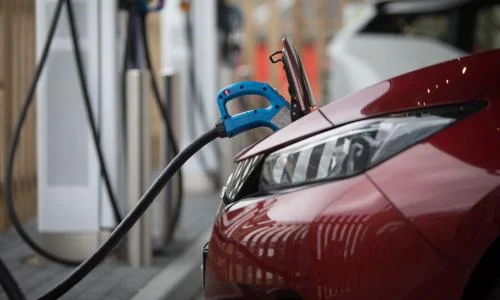
Despite the proposed rollback of regulation, the Conservatives insist they would continue funding charging infrastructure and other measures designed to support electric vehicle adoption. Ministers say the intention is not to halt the transition to cleaner transport, but to slow it to a pace driven by consumer demand rather than legal compulsion. This distinction has become central to the party’s messaging as it seeks to reconcile environmental responsibility with economic caution.
Kemi Badenoch, the Conservative leader, has framed the policy as a corrective to what she describes as an overly rigid approach to net zero. She argues that the current timetable risks damaging the domestic car industry by imposing deadlines that do not reflect market readiness or household affordability. In her view, environmental progress should not come at the expense of family finances or industrial stability.
Badenoch has also drawn inspiration from international examples, particularly Italy under Prime Minister Giorgia Meloni. Writing recently in a national newspaper, she praised what she called a common-sense approach to emissions reduction, one that prioritises economic resilience alongside environmental goals. She suggested Britain should follow a similar path, ensuring climate action strengthens rather than weakens national competitiveness.
The backdrop to this debate is a policy history marked by repeated shifts. In 2023, the previous Conservative government delayed the ban on new petrol and diesel cars from 2030 to 2035, citing concerns from industry and motorists. After winning power, Labour reinstated the earlier date, arguing that certainty was essential for long-term investment decisions and consumer confidence. Labour ministers maintain that a clear deadline accelerates innovation, attracts investment, and positions the UK as a leader in clean transport.
The zero-emission vehicle mandate itself is rooted in the Climate Change Act and the statutory duty to reach net zero emissions by 2050. The Conservatives have pledged to repeal aspects of this framework, a move that would represent one of the most significant reversals of climate legislation since its introduction. Critics argue that dismantling these obligations risks weakening Britain’s credibility on climate leadership at a time when international cooperation remains crucial.
Environmental groups have responded sharply to the Conservative proposals. Doug Parr, policy director at Greenpeace UK, warned that any attempt to reverse course would create confusion across the automotive sector. He argued that manufacturers have already invested heavily in preparation for electrification and that sudden policy changes could waste years of effort while putting jobs at risk.
Parr also highlighted the global context, noting that competition from Chinese electric vehicle manufacturers is intensifying rapidly. He suggested that without clear phaseout dates and supportive regulation, the UK risks falling behind in a market where innovation and scale are advancing quickly. In his assessment, uncertainty would deter investment and leave British manufacturers exposed in a fast-moving global transition.
Industry analysts echo concerns about stability, though opinions remain divided. Some manufacturers have privately welcomed the idea of greater flexibility, particularly given ongoing challenges around supply chains, battery costs, and charging infrastructure coverage. Others fear that weakening mandates could slow domestic demand for electric vehicles, undermining the economies of scale needed to reduce prices and improve technology.
The government has firmly rejected the Conservative position, reiterating its commitment to ending sales of new non-zero emission cars and vans by 2035. A spokesperson emphasised that electric vehicle adoption is already accelerating, with recent figures showing one in four new cars sold being electric. Ministers argue this momentum demonstrates growing consumer confidence rather than resistance.
Significant public investment underpins the government’s stance. More than £7.5 billion has been allocated to support drivers and manufacturers through the transition, including £4 billion aimed at boosting British manufacturing, research, and development. Officials say this funding is designed to secure jobs, stimulate growth, and ensure the UK remains competitive in emerging technologies.
Consumer incentives also remain central to Labour’s approach. The electric car grant, reintroduced and expanded, has helped tens of thousands of drivers reduce the upfront cost of switching to electric vehicles. An additional £1.3 billion announced in the autumn budget aims to widen access further, particularly for households previously priced out of the market.

Public opinion appears mixed, reflecting broader anxieties about living costs and environmental priorities. Surveys suggest many drivers support cleaner transport in principle but worry about affordability, charging availability, and resale values. This tension provides fertile ground for political debate, with each party seeking to present itself as both responsible and realistic.
As the next general election approaches, the future of Britain’s car industry has become a potent symbol of competing visions for the country’s economic and environmental direction. The Conservative proposal challenges the assumption that rapid regulation is the only path to decarbonisation, while Labour insists that delay risks higher costs later.
What remains clear is that uncertainty itself carries consequences. Manufacturers, investors, and consumers all rely on stable policy signals when making long-term decisions. Whether flexibility or firmness ultimately best serves Britain’s interests will continue to be fiercely contested, both on the campaign trail and beyond.
Related News:
 “Enough is Enough”: Local MP Vows to Fight Rainham Quarry Plans
 ‘Extinct’ Antelope Returns to Sahara, Bringing Hope
 King Charles Pledges to Defend Europe Against Russia
 Treasury Opens Inquiry into Autumn Budget Leak Claims
 Families to Receive Support to Exit Temporary Accommodation
 Red Squirrels Thrive in Highlands After Decade-Long Rescue
 Labour MP’s Biscuit Debt Video Surges Past 3.3m Views
 UK Ends Haven Status for Dirty Money in Bold New Crackdown
 UK Asylum Crackdown Fuels Deaths and Violence
 Prince Harry’s Security Faces UK Review
 Farage Urged to Come Clean on Clacton Spending
 Reform campaign in Clacton faced ‘juggernaut’ scrutiny, say rivals
 Starmer Calls for Modern ECHR Curb to Counter Europe’s Populist Surge
 Youth Strategy Aims to End Decades of Political ‘Indifference’
 UK Borrowing Costs May Ease as Markets Gain Confidence
 Asylum Overhaul Could Worsen Homelessness, Whitehall Warns
 Javid Claims Johnson Was Cummings’ Puppet Before Resignation
 Marine Pandemic Pushes Sea Urchins Toward Extinction Threat