Published: 10 January 2026. The English Chronicle Desk. The English Chronicle Online.
Morocco sail into Afcon semi-finals after Díaz’s brilliant performance stunned Cameroon in a gripping quarter-final. Morocco sail dominated early, using relentless pressing and tactical intelligence to control the game, keeping Cameroon under constant pressure. The home crowd at Stade Prince Moulay Abdallah roared as Morocco sail converted set pieces into decisive goals, showcasing a level of composure not seen in previous matches. Coach Walid Regragui praised the team’s focus and determination, noting that the players had learned from earlier tense performances and were finally expressing their full potential.
In earlier rounds, Morocco sail had struggled with nervousness, weighed down by high expectations from a nation desperate to claim its first Cup of Nations title in fifty years. The substantial investment in stadiums, training facilities, and youth development aimed at the 2030 World Cup co-hosting seemed to add extra pressure on the squad. Criticism had followed their cautious approach against Tanzania in the last-16, with some fans even booing Regragui. Yet, the Moroccan side adapted, displaying intelligence and patience while gradually asserting control over a disciplined Cameroonian team.

From the outset, Morocco sail’s energy was palpable. The team pressed aggressively, winning repeated corners and free-kicks, and breaking Cameroon’s rhythm with clever positioning. Brahim Díaz emerged as the match-winner, scoring with a clinical header from Ayoub El Kaabi’s precise delivery, marking his fifth goal of the tournament. Later, Ismael Saibari added a second with a deftly angled shot, again following a well-executed set piece. The crowd’s encouragement and the players’ tactical awareness proved crucial in managing Cameroon’s attempts to disrupt play.
Cameroon, by contrast, faced turbulence long before kick-off. Their squad selection had been controversial, with rival coaches submitting competing lists to CAF. Ultimately, federation president Samuel Eto’o sided with David Pagou, whose pragmatic leadership helped assemble a young, quick, and technically competent side. Despite a commendable performance throughout the tournament, Cameroon struggled to match Morocco sail’s intensity. The pace, pressing, and coordination of the hosts in the first half created a gap that Cameroon could not close, leaving them chasing the game under increasing pressure.
Referee Dahane Beida, appointed just days before the match following Morocco’s protests against Egyptian official Amin Omar, maintained control amid Cameroonian frustration at several decisions. Nevertheless, the referee’s presence did not overshadow Morocco sail’s dominance. Pagou himself acknowledged the “challenging” circumstances but refused to blame officiating for the defeat. The result reinforced Morocco sail’s growing reputation as a tactically disciplined side capable of handling high-stakes encounters.
For nations already qualified for the World Cup, the Cup of Nations presents a unique challenge. It offers competitive preparation but also carries risk, as early exits can trigger managerial upheavals. Tunisia’s Sami Trabelsi, sacked after a poor showing, serves as a cautionary tale. In Morocco’s case, Regragui’s position may remain secure only if the team continues this strong form, with speculation already pointing to Tarik Sektioui as a potential replacement should they falter.
Morocco sail’s performance combined defensive resilience with attacking creativity, demonstrating a significant evolution since the start of the tournament. The first-half pressing was intense and precise, while the second-half strategy focused on containment and calculated risk. Such adaptability underscores the tactical maturity of a team blending experienced internationals with dynamic younger players. Díaz’s finishing exemplified this balance, offering both flair and efficiency in crucial moments.
Analysts noted that Morocco sail could still enhance their offensive threat, as reliance on set-piece opportunities may not suffice against stronger semi-final opposition. However, the manner of victory against Cameroon, blending patience, aggression, and tactical intelligence, provides confidence that they are serious contenders. The squad’s composure in handling both the physical and mental demands of the quarter-final suggests Morocco sail may progress deep into the competition, potentially reaching the final stage.

Fans and commentators alike praised Morocco sail for their discipline and controlled aggression. The players’ ability to respond to early pressure, combined with strategic adjustments throughout the match, highlighted the team’s preparation and cohesion. Díaz, supported by El Kaabi and Saibari, proved a key catalyst, translating opportunities into goals and maintaining offensive momentum while the midfield and defenders efficiently neutralized Cameroon’s counterattacks.
With this victory, Morocco sail not only advance to the semi-finals but also reinforce a narrative of resilience, intelligence, and strategic execution. The team has now set a high benchmark for themselves and others in the tournament. Their journey exemplifies the rewards of patience, rigorous preparation, and the tactical evolution of a squad determined to succeed on home soil. As the semi-final approaches, expectations remain high, but Morocco sail appear ready to shoulder the responsibility, blending national pride with disciplined, world-class football.
Related News:
 Granit Xhaka Rescue Earns Everton Draw at Sunderland
 Bellingham has ‘the edge’ among England No 10s
 Man City Masterclass on Guardiola’s Milestone Day Exposes Liverpool Woes
 VAR Must Rein Its Neck In to Save Football’s Spirit
 Mary Earps’s Manchester United Return Faces Mixed Reception
 UK and Ireland Announce Venues for Euro 2028 Tournament
 Saka Solidifies Role as Tuchel’s Key England Lieutenant
 Former Lion Heskey Warns of Shortage of England Strikers
 Tiny Curacao Makes History as Smallest Nation to Reach World Cup
 Haiti Qualifies for World Cup Despite Coach Never Visiting Country
 Moyes Defends Gueye After Dramatic Everton Bust-Up
 Mbappe Scores 4 as Real Madrid Edge Olympiakos
 Barcelona, Atletico set for decisive La Liga showdown
 Australia Face Big Changes as Cummins and Lyon Ruled Out of Ashes
 Van de Ven Tackle Leaves Isak with Fractured Leg
 ECB powerless to halt England’s recurring Ashes failures
 Stokes urges empathy for England players amid Ashes struggles
 Aston Villa Remain Arsenal’s Key Obstacle in Title Pursuit
 Salah Shines as Egypt Knock Out Ivory Coast at Afcon
 Raphinha doubles up as Barcelona beat Real Madrid in Super Cup
 Xabi Alonso leaves Real Madrid, Arbeloa Takes Over
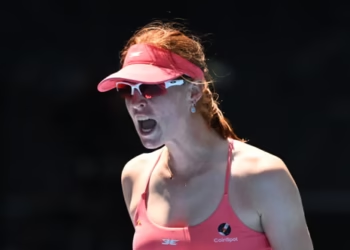 Maya Joint stunned by Valentová in Australian Open upset
 The Influencer World Cup: Fifa’s TikTok Bet on a New Fan Era
 US World Cup Safety Under Scrutiny Amid Rising Federal Violence
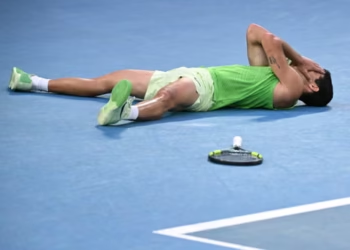 Carlos Alcaraz Triumphs Over Zverev in Five-Set Australian Open Epic
 Newcastle fans face bleak reality under Saudi ambitions
 Infantino Faces Russia Threat and Trump Concerns at Uefa Congress
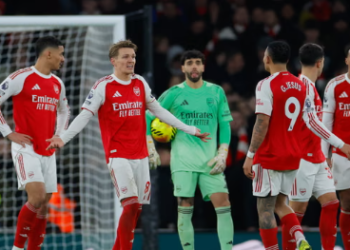 Arsenal blow lead as Arteta rues Wolves draw
 England v Ireland: Scrum Battle Takes Centre Stage
 Buttler Eyes Vital Run Surge as England Face New Zealand
 Manchester United Face Huge Bill After Ruben Amorim Exit
 Saka criticism response: Arsenal star dismisses outside noise
 Abramovich Chelsea Sale Cash Faces Jersey Probe
 Champions League Failure Sparking Premier League Crisis
 African World Cup Fans Face $15,000 Entry Bond Fee
 Roy Hodgson Returns to Bristol City in Sensational Move
 Eddie Howe Faces Seven Game Test to Secure Newcastle Future
 ECB Faces Backlash Over Disability Premier League Inclusion
 Brighton Stun Arsenal as Liverpool Edge Past Charlton
 Maguire Commits Future to Manchester United with New Deal
 Can De Zerbi Restore Belief to Save Spurs From the Drop?
 Robots Outpace Humans in Beijing Half-Marathon
 Gianluigi Buffon: Reflections on a Legendary Career
 Ashley Cole: Finding His Voice and Vision in Italy
 A Nine-Goal Thriller Redefines European Football Brilliance
 George North Announces Retirement From Rugby
 $13bn World Cup Set to Break All Revenue Records
 Disney+ Wins Champions League Rights in Key Markets
 Foden Commits Future to Man City Until 2030
 FIFA Confirms Global Ban for Benfica Star Prestianni
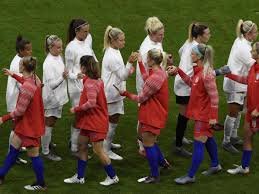 The Global Battle for Control Over the Women’s Game
 Fernandes Equals Assist Record as United Secure Third
 Bracing for the Cherries: Guardiola Likens Vital Bournemouth Trip to the Dentist
 De Zerbi Rallies Spurs To Fight Relegation Threat
 The Battle for Wembley Sparking Unprecedented Legal Warfare
 Chasing Glory: The Quest for a New World Cup Champion
 Tuchel Defends Tough England Squad Decisions
 Farewell to an Icon: Pep Guardiola to Exit Manchester City
 Chasing Paris Glory Amid Familiar Echoes
 Tom Pidcock On Chasing Tadej Pogacar And His Future Ambitions
 Is Ollie Robinson the Chaos English Cricket Needs Today?
 Saka Playing Through Pain As England World Cup Campaign Looms
 Iran Files Official Fifa Complaint Over World Cup Travel
 Women’s T20 World Cup Breaks Records But Gaps Remain
 Serena Williams Returns to Wimbledon Centre Court
 Martinelli Strikes Late as Brazil Edge Past Brave Japan
 Paraguay Shock Germany in Historic Penalty Shootout
 France Dominate Sweden as Deschamps’ New Era Takes Shape
 Mexico World Cup Joy Turns to Tragedy as Two Die in Crowds
 US Advance Past Bosnia in World Cup Thriller
 Kane Saves Tuchel as England Survive Dramatic Exit
 The Stokes Departure: A New Era or a Tactical Mistake?
 Taylor Swift and Travis Kelce Marry at Madison Square Garden
 Trump’s Red-Card Intervention Hurts the US World Cup
 Trump Intervenes in Fifa World Cup Balogun Ban
 NCAA Rules Unchanged After Supreme Court Transgender Ruling
 USA World Cup Heartbreak: Belgium Ends Their Dream
 Mbappé Brilliance Leads France Into Semi-Finals
 Spain’s Superstar Fan: Keyne Yamal Steals the Spotlight
 Lamine Yamal’s Birthday: Football, Fame, and France