Published: 15 January 2026. The English Chronicle Desk. The English Chronicle Online.
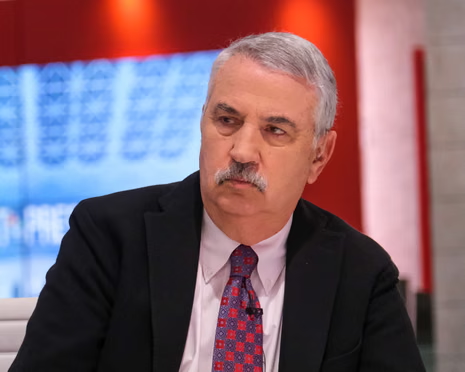
Jewish American columnist Thomas Friedman confirmed he was uninvited from the 2024 Adelaide Writers’ Week, raising questions about freedom of expression. The Friedman Adelaide controversy began when he agreed to appear via video link but was later told that the timing “would not work out,” triggering debate over the festival’s decision-making. Former board member Tony Berg accused director Louise Adler of lobbying for Friedman’s removal following a petition by academics, highlighting tensions between free speech and public pressures.

Earlier, ten academics, including Palestinian author Randa Abdel-Fattah, petitioned for Friedman’s removal after a New York Times column compared Middle East conflict to the animal kingdom. Berg criticised Adler for prioritising ideological alignment over balanced programming. The festival board initially defended Friedman’s participation, emphasising their commitment to artistic freedom. A letter signed by board chair Tracey Whiting highlighted Friedman’s online contribution and said canceling him was a “serious issue,” but last-minute scheduling changes led to his removal, prompting Whiting’s resignation.
Berg’s resignation letter, once confidential, accused Adler of consistently programming writers with pro-Palestinian and anti-Zionist perspectives while undermining others, framing Friedman’s uninvitation as part of a broader pattern. He stated that Adler and other leaders pressured the board, threatening resignation if Friedman remained. Adler resigned after Abdel-Fattah’s cancellation, and the 2026 writers’ event was subsequently cancelled. Berg accused both women of selective free speech, claiming they supported some voices while opposing Friedman’s participation.
Abdel-Fattah denied leading Friedman’s cancellation, emphasising the petition addressed racial tropes and cultural sensitivity. South Australian premier Peter Malinauskas denied any interference, stating the board acted independently. The Friedman Adelaide case reignited discussion on censorship, academic influence, and the responsibilities of cultural institutions in protecting expression while considering social impact.
Observers argue boards must differentiate harmful speech from controversial perspectives, avoiding selective cancellations. The controversy reflects tensions in literary programming where public reaction influences decisions. While Friedman’s removal was officially attributed to scheduling, Berg’s disclosures suggest ideological conflict played a role. The resignations of Whiting and Adler highlight the impact on governance and the challenge of maintaining trust between boards, directors, and audiences.

As Australia’s literary community reflects, Friedman’s uninvitation exemplifies preemptive cancellation dilemmas. Festivals face challenges in balancing cultural sensitivities, creative freedom, and public scrutiny. Policies around confidentiality, petitions, and artist selection are being reconsidered. The Friedman Adelaide dispute serves as a cautionary tale, urging transparent processes to protect artistic integrity and public confidence.
The controversy demonstrates the complex intersection of politics, literature, and festival governance. Stakeholders call for consistent standards that safeguard free expression while respecting diverse perspectives. Friedman’s case emphasizes the importance of clear procedures and transparent communication in ensuring literary festivals remain credible and inclusive. The lessons from this incident will likely shape future programming and cultural discourse.
Related News:
 British skier killed in La Plagne avalanche tragedy
 Mandelson apologises over Epstein ties after public scrutiny
 Trump Calls Greenland Critical for US Security After Denmark Talks
 Iran unrest slows under brutal crackdown and global tensions
 Starmer Resists Matching Trump Amid Greenland Tensions
 Silence and Unity Mark Bondi Terror Attack Memorial
 India-EU Free Trade Deal Marks Historic Economic Shift
 Iran Death Toll Crisis Exposed: Bodies, Mass Graves, and Concealment
 Thousands Protest ICE Operations in Nationwide US Day of Action
 US-Cuba Negotiations Shift as Oil Blockade Looms
 Ukraine, Russia Meet in Geneva Ahead of War Anniversary
 UK, US Medics Barred from Gaza Amid Rising Aid Concerns
 Anthony Albanese Must Uphold Rights for All Australians
 UK suspends study visas for four nations to curb asylum
 Jordanian Arrested in Philippines Over Bondi Beach Terror Links
 Ukraine war briefing: Zelenskyy offers help to Saudi Crown prince on combatting Iranian drones
 Abramovich Chelsea Sale Cash Faces Jersey Probe
 Starmer Praised for Stance on Trump and Iran Conflict
 UK Ministers Signal Strategic Independence From Trump Demands
 African World Cup Fans Face $15,000 Entry Bond Fee
 Police Seek Immunity in Indigenous Custody Death Case
 Farage Shuns Truss as US Right-Wing Roadshow Hits London
 Trump Slams Europe as Transatlantic Tensions Boil Over
 Spain Faces Backlash Over Xenophobic Chants in Egypt Draw
 Trump Facing Backlash Over Firing of Cabinet Women
 The Price of Hubris: Trump, Netanyahu, and the ‘Easy’ War
 Trump and Tehran Find Common Ground in Landmark Ceasefire
 Own an Entire Australian Town for the Price of a UK Flat
 Melania Trump Denies Ties to Epstein and Ghislaine Maxwell
 Reeves Slams Trump Over Iran War Lack Of Exit Plan
 Kyiv and Odesa Mourn After Deadly Wave of Russian Strikes
 Norway’s Telenor Faces Lawsuit Over Myanmar Data Breach
 Strait of Hormuz Status Uncertain Despite Iran’s Claims
 Trump’s Presidency: A House of Cards Collapsing?
 US Forces Seize Iranian Ship Near Hormuz Blockade
 Trump Starts $166bn Tariff Refund Process
 Israeli Soldiers Jailed Over Vandalism of Lebanese Statue
 Investigation: Offshore Loans and Sanctions
 Prominent Voices Challenge Palestine Action Ban
 Cross-Border Crisis Shatters Fragile Afghan Peace
 Tragedy Near Jakarta: Train Collision Leaves 14 Dead
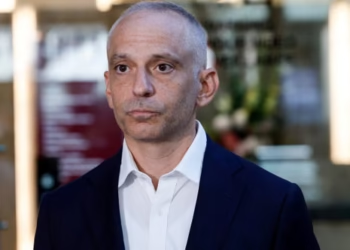 NSW Police Urged Victim to Abandon Antisemitic Case
 The Burning Lens: An Iranian Artist’s Visual Resistance
 FIFA Confirms Global Ban for Benfica Star Prestianni
 Tensions Surge in the Gulf as Ceasefire Wobbles
 One Nation Candidate’s Surprising Ties to Independents
 New South Wales Wetland Rescue Legislation Passes
 US and Mexico Face Heatwave as Floods Batter South Africa
 French Patient Told Hantavirus Was Just Anxiety
 Putin Signals War End as Russian Momentum Stalls
 Romania’s Judicial Crisis: A System Under Siege
 Scepticism and tight security as Beijing braces for Trump
 Philippine Senator Flees After Days Under Senate Siege
 Alberta Separatist Bid Blocked by Canadian Court
 Big Tobacco Under Fire Over Controversial New Ad Campaign
 Court Upholds Landmark Win for Transgender Rights
 Fragile Truce Shattered as Violence Escapes Diplomatic Control
 Secrecy Down Under: Albanese Faces FoI Scandal
 Taliban Codifies Strict New Marriage and Divorce Legislation
 Tony Abbott Returns as New Liberal Party President
 Discontent grows around Putin amid war strain
 Trump Diplomacy Faces Hurdles from Tehran to Tbilisi
 Teaching Machines Right From Wrong in the Digital Age
 Oman Defies US Pressure Over Strategic Strait of Hormuz
 Ex-CIA Agent Accused of $40m Gold Theft and Fake Spy Unit
 Aukus Deal Facing Fierce Backing and Historic Criticism
 Thai Princess Bajrakitiyabha Passes Away at 47
 Tragic Loss of Australian Sprinter Jemma Stapleton
 Trump Urged to Condemn UFC Fighter Over Obama Slurs
 US Democratic Crisis Deepens as Trump Limits Mail Voting
 Russian Tanker Captain Remanded in UK Court After Channel Seizure
 US Military Pacific Boat Strike Kills Three People
 US Battles Auction of Titanic Artifacts
 France Dominate Sweden as Deschamps’ New Era Takes Shape
 Trump’s Mount Rushmore Speech: A Divisive Anniversary
 Trump Swaps Planes Amid Iran Tensions
 Rotterdam Museum Honours Artist With Peanut Butter Floor
 Bangkok Nightclub Blaze Claims 30 Lives Amid Negligence Probe
 Yemen Accuses Iran of Violating National Sovereignty
 Houthis Strike Saudi Arabia as Middle East Tensions Rise