Published: 19 January 2026. The English Chronicle Desk. The English Chronicle Online.
China embassy plans in London are expected to finally receive approval this week after years of contentious debate and bureaucratic delays. The proposed China embassy has been at the centre of UK-China discussions since 2018, drawing scrutiny from politicians, residents, and security experts alike. Officials from both countries have expressed cautious optimism as London prepares to give the green light for construction, which would mark a historic milestone in bilateral relations. The focus on the China embassy highlights broader geopolitical priorities and the delicate balance between diplomacy and domestic concerns.
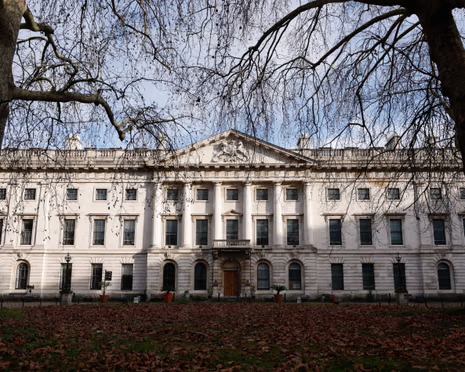
The saga began when China purchased the Royal Mint Court site near the Tower of London for £255 million, intending to establish its largest diplomatic complex in Europe. The deal was finalised during Boris Johnson’s tenure as foreign secretary, with assurances given to Chinese officials that planning permission would proceed smoothly. However, Tower Hamlets council initially refused the application, leading to significant delays. The expired application frustrated Beijing, which viewed the rejection as unexpected interference from local authorities in state-to-state matters.

Experts note that the China embassy situation has influenced broader UK-China relations. Steve Tsang, director of the Soas China Institute, explained that the embassy dispute allowed China to leverage its position on other matters, delaying British requests in Beijing. Similarly, Professor Kerry Brown, director of the Lau China Institute at King’s College London, described the issue as symbolic, reflecting inconsistencies in UK policy towards China over the years. The embassy has become more than a building project; it represents a test of diplomatic trust and governmental consistency.
Labour ministers re-engaged with the application soon after entering government, particularly after Chinese President Xi Jinping raised the issue directly with Prime Minister Keir Starmer. The decision is expected before a 20 January deadline, a crucial window ahead of Starmer’s planned visit to Beijing at the end of the month. If approved, the China embassy would facilitate smoother interactions, potentially unlocking further trade, scientific, and technological cooperation, including areas like artificial intelligence where collaboration has been limited.
Despite the anticipated approval, opposition remains. MPs from across the political spectrum have expressed concerns about security, proximity to sensitive infrastructure, and the potential for espionage. Local residents have also mobilised, crowdfunding legal challenges to oppose the construction. Many in the Chinese diaspora, including Hongkongers, Tibetans, and Uyghurs, have voiced apprehension over an expanded Chinese presence in London. Protests have been frequent outside the Royal Mint Court site, highlighting the ongoing tension between diplomacy and domestic apprehension regarding foreign influence.
China’s ambassador to the UK, Zheng Zeguang, remains banned from parliamentary access due to sanctions, further straining relations. Additionally, recent controversies, such as the dropped spying case involving individuals accused of working for China and the politically charged conviction of pro-democracy activist Jimmy Lai in Hong Kong, underscore the fragile nature of the bilateral relationship. Approving the China embassy will not resolve these tensions but will represent a key diplomatic step forward.
Security officials in the UK have assessed the proposed embassy site and are confident that risks can be managed. The location’s proximity to critical data cables has been highlighted as a potential vulnerability, yet plans include mitigation measures designed to safeguard national security. British authorities stress that the decision process has been independent and free from political interference, with the Secretary of State for Housing, Communities, and Local Government tasked with final approval.
For China, the embassy represents both a strategic foothold and a symbol of international stature. Analysts note that failing to approve the application could impede broader cooperation on trade, technology, and climate initiatives. The embassy, once approved, is expected to enhance Beijing’s diplomatic engagement across Europe while signalling London’s willingness to maintain constructive relations despite domestic opposition.
Observers caution that the China embassy will remain a “perpetual sore” in bilateral relations. Professor Brown emphasised the importance of a consistent UK government approach, noting that mixed signals over years have exacerbated tensions. Even with approval, public protests, legal challenges, and political debates are likely to continue, ensuring that the embassy will be a recurring topic in UK-China discussions.

The upcoming decision is also symbolic for Prime Minister Starmer, whose visit to Beijing could reinvigorate diplomatic momentum. Previous trips, including Theresa May’s in 2018, resulted in multi-billion-pound deals, and officials hope Starmer’s journey may produce similar outcomes. Analysts argue that the China embassy’s approval is a precondition for broader diplomatic and economic engagement, underscoring its strategic importance for the UK.
China’s persistent focus on the embassy has highlighted how local planning decisions can ripple through international relations. While Tower Hamlets council initially blocked construction, central government intervention reflects the high stakes involved. The episode illustrates the intersection of domestic governance, foreign diplomacy, and security considerations, demonstrating that even local planning disputes can carry international consequences.
In conclusion, the approval of the China embassy in London represents a crucial turning point. It will likely smooth relations ahead of high-level visits, enable stronger cooperation across trade and technology, and reaffirm diplomatic norms between the two nations. However, ongoing security concerns, public opposition, and geopolitical sensitivities mean the issue will continue to influence UK-China relations long after construction begins. The final decision, anticipated this week, will mark a significant milestone in what has been an unusually prolonged and complex diplomatic negotiation.
Related News:
 British skier killed in La Plagne avalanche tragedy
 UK Presses On With Chagos Handover Despite Trump Criticism
 Shinzo Abe’s killer receives life sentence in Japan
 Sydney Protest Pepper Spray Clash During Herzog Visit
 UK Experts Raise Alarm Over Machinery Export to Armenian Firm
 UK suspends study visas for four nations to curb asylum
 DHS Probe Into Border Official Sparks National Debate
 Jordanian Arrested in Philippines Over Bondi Beach Terror Links
 Caffè Nero Warns Coffee Prices May Rise Again
 Ukraine war briefing: Zelenskyy offers help to Saudi Crown prince on combatting Iranian drones
 HMS Dragon to Head to Cyprus Amid Rising Tensions
 Starmer Praised for Stance on Trump and Iran Conflict
 Yvette Cooper: UK Must Follow Principles, Not US Pressure
 Inside the Deceptive Machine: A Former Producer Speaks Out
 Trump Facing Backlash Over Firing of Cabinet Women
 Trump Mocks Starmer and UK Carriers in White House Speech
 Gaza Child Arrives in UK for Life-Changing Care
 Melania Trump Denies Ties to Epstein and Ghislaine Maxwell
 Middle East Conflict Risks UK Food Supply Chains This Summer
 Arrests Made After Wembley Firebombing Attempt
 Trump Starts $166bn Tariff Refund Process
 Prominent Voices Challenge Palestine Action Ban
 UK Urged to Adopt ‘Trade Bazooka’ Against Tariff Threats
 BP Profits Surge Amidst Middle East Conflict Crisis
 Aukus Submarine Plan Faces Critical Failures
 World Cup Ticket Price Surge Leaves Many National Teams Stunned
 Fear and Betrayal: The Chilling Case of Kouri Richins
 Tragedy in the Maldives: Inside the Deep Sea Rescue
 US Ebola Case Sparks Urgent Global Screening Measures
 Washington Embassy Shake-Up as Senior Diplomat Departs
 Uefa Transforms Men’s Major Tournament Qualification
 UK Urged to Build EU Rejoin Consensus, Says Miliband
 Teaching Machines Right From Wrong in the Digital Age
 Steel Tensions Rise Between United Kingdom and European Union
 US Condemns ‘Two-Tier’ UK Policing After Student Murder
 US Slams ‘Two-Tier’ UK Policing After Nowak Murder
 Millions in British Charity Funds Linked to Illegal Settlements
 Captain in the Spotlight: The Future of England Cricket
 One Year On: Air India Crash Survivor Demands Answers
 Tragedy in Pakistan Sparks Fury
 Russian Tanker Captain Remanded in UK Court After Channel Seizure
 Controversial London Property Show Sparks Legal Fury
 Kremlin-Backed Saboteurs Target UK Capital and State Democracy
 What Burnham in Number 10 Means for the Future of Britain
 AI Lawyer Triumphs in Landmark English Court Victory
 Scouts Introduce Badges For AI And Digital Skills
 Morocco Beat Dutch in Wild World Cup Penalty Drama
 EU Slashes Steel Quotas But Grants UK Favourable Rates
 Jamaica Demands Slavery Reparations From King Charles
 The Last Stand of English Cricket’s Greatest Partners
 UK Charity Funds Illegal Hebron Settlement Expansion
 Heartbreak After Surrogacy Sperm Mix-Up
 Reeves Faces Setback as Labour May Miss Homes Target
 Kate Winslet to Narrate Film Highlighting King’s Environmental Mission
 Trump’s UK Ambassador Urges North Sea Drilling to Strengthen US Ties
 UK Bans Fake Numbers: Scammers Lose Their Trick
 Millionaires group urge Reeves to introduce wealth tax to ‘lift kids out of poverty’
 Reeves rejects £1bn plea for NHS redundancy payouts
 PM Condemns Leaks, Vows Loyalty to Ministers and Stability
 Inside the Helpline Protecting Missing Children in the UK
 PlayStation PS5 Deals Hit Lowest Prices Ahead of Black Friday
 Five-Year-Old Dies After Rare Tonsil Surgery Complication
 Trump and Tehran Find Common Ground in Landmark Ceasefire
 National Energy Grant Proposed to Slash UK Household Bills
 Kyiv and Odesa Mourn After Deadly Wave of Russian Strikes
 US Forces Seize Iranian Ship Near Hormuz Blockade
 Investigation: Offshore Loans and Sanctions
 Cross-Border Crisis Shatters Fragile Afghan Peace
 New AI Tool To Target Obesity Risk And Transform NHS Care
 Greens Face Internal Row Over Antisemitism Claims
 The Burning Lens: An Iranian Artist’s Visual Resistance
 Met Officers Probed Over Al Fayed Abuse Allegations
 One Nation Candidate’s Surprising Ties to Independents
 Reform UK Faces Crisis as Newly Elected Councillors Resign
 Starmer Strikes Back as 100 MPs Sign Support Pledge
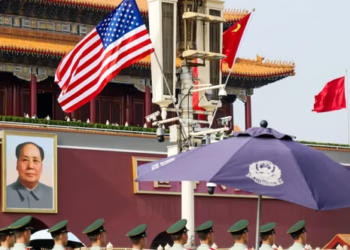 Scepticism and tight security as Beijing braces for Trump
 UK Firms Freeze Spending as Iran Conflict Bites
 Reeves to Fast-Track Clean Energy Amid Iran Crisis
 The Battle for Wembley Sparking Unprecedented Legal Warfare
 Tony Abbott Returns as New Liberal Party President