Published: 20 January 2026. The English Chronicle Desk. The English Chronicle Online.
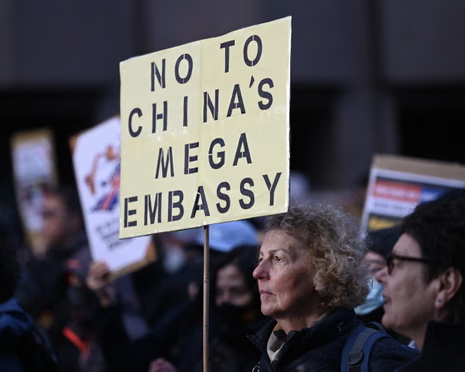
Residents of Royal Mint Court are preparing a legal challenge if China’s proposed mega embassy in London receives approval. The focus keyword trailblazer is central to discussions, highlighting the unprecedented nature of the embassy development. Local campaigners expressed alarm at what they perceive as government bias in approving the project near the Tower of London, arguing the process may have been preemptively influenced. The term trailblazer has become a shorthand for this highly controversial proposal, with implications for planning law and international diplomacy within the city’s historic centre.
The Royal Mint Court Residents’ Association has raised nearly £37,000 of the £145,000 needed to instruct lawyers for a judicial review. If Secretary of State Steve Reed approves China’s application, legal action could follow within weeks. Treasurer Mark Nygate said residents fear future displacement once the 230 planned flats for embassy staff and guests are built. He warned that residents “will be looking directly at the flats they want to build, and they won’t want us here,” underscoring deep unease among the community.

Campaigners received a legal opinion from Lord Banner KC, who argued in September that the Labour government may have approached the case with a “closed mind,” suggesting potential procedural irregularities. This legal advice adds weight to the prospect of a formal challenge in the high court. If filed, the case could extend over months or years, complicating planning decisions while providing a diplomatic window for Prime Minister Keir Starmer to consider a visit to Beijing. Such a visit would mark the first by a British leader in eight years, heightening political sensitivities around the project.
Historical context adds complexity. In 2018, then-Foreign Secretary Boris Johnson sent a letter to the Chinese ambassador signalling approval for Royal Mint Court to be recognised as diplomatic premises, despite the embassy not yet being constructed. Johnson wrote that he was “pleased to confirm” his agreement to designate the site as diplomatic property based on assurances from China. Campaigners now argue this correspondence amounts to a binding international commitment that could prejudice any planning review.
Recent correspondence has introduced further debate. Last week, the Foreign Office indicated that an undisclosed note verbale qualified Johnson’s apparent commitment, stating consent was conditional on planning permission. Iain Duncan Smith, co-chair of the Inter-Parliamentary Alliance on China (Ipac), criticised this as “highly irregular,” claiming informal side notes cannot outweigh formal ministerial letters. Without the note verbale’s text, critics say it is impossible to fully assess the legal implications, leaving uncertainty over domestic and international obligations.
The embassy proposal was initially rejected by Tower Hamlets Council in 2022, but China resubmitted the application in 2024. Reed’s predecessor, Angela Rayner, subsequently called in the project, escalating it to central government oversight. The repeated interventions have intensified scrutiny, with legal experts and MPs questioning whether standard planning procedures have been circumvented. Starmer’s comments to Xi Jinping at the 2024 G20 summit, referencing action on the embassy application, have further fueled claims of a pre-determined outcome.
Security concerns remain a recurring topic. Critics cite potential spying risks due to the embassy’s proximity to high-speed data cables, although MI5 has stated risks are not considered greater than usual. Conversely, some officials argue consolidating China’s seven existing London properties into a single site could enhance security and administrative efficiency. Residents and campaigners remain unconvinced, maintaining that the scale and central location of the embassy represents an unprecedented intrusion into a historic neighbourhood.
Fundraising and mobilisation by residents continue amid uncertainty. Nygate emphasised that additional donations will support legal challenges if necessary, signalling a community determined to defend its rights. The legal strategy will focus on claims of government interference, procedural unfairness, and pre-empted planning decisions, leveraging both historical correspondence and contemporary policy actions. Observers suggest the case could become a significant precedent for future foreign embassy developments in the UK, with implications extending beyond London.
The dispute has also attracted media attention across both domestic and international outlets, framing Royal Mint Court as a flashpoint in UK-China relations. The term trailblazer has increasingly been used in discussions to denote the novelty and potential consequences of this large-scale diplomatic project. Legal analysts highlight that the outcome may define the boundaries of government discretion in planning approvals for foreign states, while also touching upon diplomatic norms.
Residents and campaigners are clear in their determination to pursue justice through the courts if Reed approves the embassy. As the deadline for decisions approaches, political, legal, and public interest in the project continues to intensify. Whether the Royal Mint Court case proceeds to a judicial review could establish a benchmark for citizen-led challenges against state-facilitated foreign developments. The debate surrounding the trailblazer embassy project underscores the tensions between diplomatic engagement, urban planning, and resident rights in the heart of London.

The coming weeks will be critical, with potential court proceedings highlighting legal interpretations of both historic commitments and modern planning law. Regardless of the outcome, the Royal Mint Court saga has already reshaped conversations about transparency, governance, and the city’s approach to international diplomacy. The term trailblazer remains central, symbolising both the scale of the proposed embassy and the unprecedented legal challenge it has provoked. With public scrutiny and legal debate continuing, the final decision will likely resonate far beyond the immediate locality.
The Royal Mint Court case exemplifies the complexities at the intersection of urban planning, diplomacy, and civic activism. Stakeholders from residents to MPs are closely monitoring developments, anticipating that the legal proceedings may test boundaries of governmental discretion and citizens’ rights. The outcome could influence the handling of other foreign embassy proposals in London and across the UK, reinforcing the significance of this high-profile dispute. As legal action looms, the trailblazer project remains a focal point for debates about accountability, transparency, and the preservation of London’s historic districts.
Related News:
 British skier killed in La Plagne avalanche tragedy
 Mandelson apologises over Epstein ties after public scrutiny
 Friedman Uninvited From 2024 Adelaide Writers’ Week
 Starmer Challenges US Over Controversial Greenland Deal
 Spoof “Make America Go Away” Caps Rally Denmark Over Greenland
 Starmer Resists Matching Trump Amid Greenland Tensions
 Silence and Unity Mark Bondi Terror Attack Memorial
 India-EU Free Trade Deal Marks Historic Economic Shift
 Iran Death Toll Crisis Exposed: Bodies, Mass Graves, and Concealment
 Thousands Protest ICE Operations in Nationwide US Day of Action
 US-Cuba Negotiations Shift as Oil Blockade Looms
 Ukraine, Russia Meet in Geneva Ahead of War Anniversary
 UK, US Medics Barred from Gaza Amid Rising Aid Concerns
 Anthony Albanese Must Uphold Rights for All Australians
 UK suspends study visas for four nations to curb asylum
 Jordanian Arrested in Philippines Over Bondi Beach Terror Links
 Ukraine war briefing: Zelenskyy offers help to Saudi Crown prince on combatting Iranian drones
 Abramovich Chelsea Sale Cash Faces Jersey Probe
 Starmer Praised for Stance on Trump and Iran Conflict
 UK Ministers Signal Strategic Independence From Trump Demands
 African World Cup Fans Face $15,000 Entry Bond Fee
 Police Seek Immunity in Indigenous Custody Death Case
 Farage Shuns Truss as US Right-Wing Roadshow Hits London
 Trump Slams Europe as Transatlantic Tensions Boil Over
 Spain Faces Backlash Over Xenophobic Chants in Egypt Draw
 Trump Facing Backlash Over Firing of Cabinet Women
 The Price of Hubris: Trump, Netanyahu, and the ‘Easy’ War
 Trump and Tehran Find Common Ground in Landmark Ceasefire
 Own an Entire Australian Town for the Price of a UK Flat
 Cyclone Maila Intensifies to Category Five Strength
 Melania Trump Denies Ties to Epstein and Ghislaine Maxwell
 Reeves Slams Trump Over Iran War Lack Of Exit Plan
 Kyiv and Odesa Mourn After Deadly Wave of Russian Strikes
 Norway’s Telenor Faces Lawsuit Over Myanmar Data Breach
 Strait of Hormuz Status Uncertain Despite Iran’s Claims
 Trump’s Presidency: A House of Cards Collapsing?
 US Forces Seize Iranian Ship Near Hormuz Blockade
 Trump Starts $166bn Tariff Refund Process
 Israeli Soldiers Jailed Over Vandalism of Lebanese Statue
 Investigation: Offshore Loans and Sanctions
 Prominent Voices Challenge Palestine Action Ban
 Cross-Border Crisis Shatters Fragile Afghan Peace
 Tragedy Near Jakarta: Train Collision Leaves 14 Dead
 NSW Police Urged Victim to Abandon Antisemitic Case
 The Burning Lens: An Iranian Artist’s Visual Resistance
 FIFA Confirms Global Ban for Benfica Star Prestianni
 The Global Battle for Control Over the Women’s Game
 Tensions Surge in the Gulf as Ceasefire Wobbles
 One Nation Candidate’s Surprising Ties to Independents
 New South Wales Wetland Rescue Legislation Passes
 US and Mexico Face Heatwave as Floods Batter South Africa
 French Patient Told Hantavirus Was Just Anxiety
 Putin Signals War End as Russian Momentum Stalls
 Romania’s Judicial Crisis: A System Under Siege
 Scepticism and tight security as Beijing braces for Trump
 Philippine Senator Flees After Days Under Senate Siege
 Big Tobacco Under Fire Over Controversial New Ad Campaign
 Court Upholds Landmark Win for Transgender Rights
 Fragile Truce Shattered as Violence Escapes Diplomatic Control
 Secrecy Down Under: Albanese Faces FoI Scandal
 Tony Abbott Returns as New Liberal Party President
 Discontent grows around Putin amid war strain
 Teaching Machines Right From Wrong in the Digital Age
 Oman Defies US Pressure Over Strategic Strait of Hormuz
 Ex-CIA Agent Accused of $40m Gold Theft and Fake Spy Unit
 Aukus Deal Facing Fierce Backing and Historic Criticism
 Thai Princess Bajrakitiyabha Passes Away at 47
 Tragic Loss of Australian Sprinter Jemma Stapleton
 Trump Urged to Condemn UFC Fighter Over Obama Slurs
 US Democratic Crisis Deepens as Trump Limits Mail Voting
 Russian Tanker Captain Remanded in UK Court After Channel Seizure
 US Military Pacific Boat Strike Kills Three People
 US Battles Auction of Titanic Artifacts
 France Dominate Sweden as Deschamps’ New Era Takes Shape
 Trump’s Mount Rushmore Speech: A Divisive Anniversary
 Trump Swaps Planes Amid Iran Tensions
 Rotterdam Museum Honours Artist With Peanut Butter Floor
 Bangkok Nightclub Blaze Claims 30 Lives Amid Negligence Probe
 Yemen Accuses Iran of Violating National Sovereignty
 Houthis Strike Saudi Arabia as Middle East Tensions Rise