Published: 22 January 2026. The English Chronicle Desk. The English Chronicle Online.
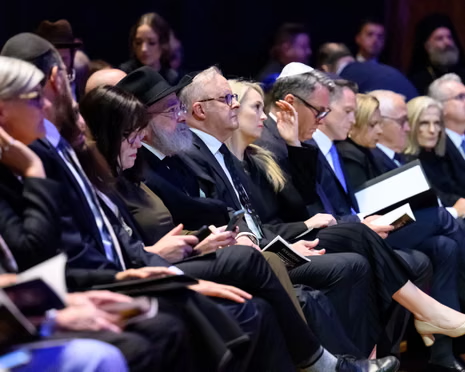
At 7.01pm on Thursday evening, Australians paused to honour victims of the Bondi terror attack. The event marked six weeks since 15 lives were lost during a Hanukah celebration, leaving Sydney in collective mourning. At the iconic Opera House, 1,500 attendees observed a minute of silence, their quiet reflecting grief and resilience simultaneously. Television broadcasts paused, and public spaces fell silent, as the weight of the tragedy resonated across the nation. Families lit candles, and Orthodox mourners offered tefillin, highlighting traditions and the enduring spirit of the community.
The memorial, themed “Light Will Win,” brought survivors and families together. Larisa Kleytman, who lost her husband Alex, shared memories of decades spent together, interrupted by the violence of the Bondi terror attack. Valentyna Poltavchencko, grieving her daughter Matilda, who was only ten, lit a candle alongside Ahmed al-Ahmed, who had courageously helped stop one of the gunmen. Their actions symbolised the bravery and unity that Australians are drawing from in the aftermath.

A surprise appearance by 20-year-old pianist Leibel Lazaroff, recently discharged from hospital, brought emotional depth to the evening. Performing publicly for the first time since the tragedy, Lazaroff’s music reminded attendees of resilience and hope, even amid loss caused by the Bondi terror attack. Outside, police presence, snipers on rooftops, and helicopters signalled continued vigilance. Tourists and locals have returned to Bondi Beach, but the collective trauma remains, visible in debates over the pedestrian footbridge and in temporary memorials across the city.
In Archer Park, a menorah stood as a symbol of remembrance, while three tonnes of flowers collected after the attack were preserved to create a permanent tribute. Mourners placed stones following Jewish tradition, underscoring the intertwining of grief, memory, and cultural ritual. The community has been encouraged to perform mitzvah, acts of kindness, to honour the victims’ legacy and uphold societal cohesion in light of the Bondi terror attack.
Senior Rabbi Yehoram Ulman, who lost his son-in-law Rabbi Eli Schlanger, spoke of resilience and societal contribution. “Our hearts are broken, but our spirit is unbroken,” he said, reflecting the Jewish response to tragedy. Ulman emphasised the power of light over darkness, a message that resonated with Australians attending the service. His words encouraged unity and civic responsibility, highlighting the communal healing process initiated in the wake of the Bondi terror attack.
The federal government faced scrutiny over its handling of the aftermath, with Prime Minister Anthony Albanese criticised for delayed action in launching a royal commission addressing antisemitism and social cohesion. During the memorial, Albanese expressed profound sorrow. “Tragically, we are gathered here because everything changed on the 14th of December. For that, I am sorry,” he said, acknowledging the breach of safety and the nation’s collective grief following the Bondi terror attack.

Albanese stressed Bondi Beach as part of Australia’s “promise to the world,” highlighting inclusivity and national responsibility. “An attack on Jewish Australians is an attack on all Australians,” he stated, reinforcing the message that the tragedy united rather than divided citizens. Opposition leader Sussan Ley praised the reclaiming of the Opera House from the 2023 pro-Palestine protest’s shadows, framing the memorial as a symbolic act of resistance against hate.
NSW Premier Chris Minns described the event as reclaiming national space for peace, not hatred. “Tonight, we gather in our most important building to bring out the best in Australia,” he said. He noted that the Chabad community requested the memorial coincide with the shosham, the one-month mark following the burial of loved ones, symbolising transition, reflection, and renewed purpose after tragedy.
Despite the grief, Australians continue to demonstrate resilience, community solidarity, and public remembrance. The memorial for the Bondi terror attack reflected both mourning and hope, reinforcing a national commitment to peace, safety, and remembrance. Citizens honoured victims while promoting acts of kindness, symbolic light, and cultural heritage, offering a collective response to tragedy that strengthens societal bonds across Sydney and the broader nation.
Related News:
 Sydney Businessman Falsely Claimed Security Advice Came From Kevin Rudd
 Anthony Albanese Must Uphold Rights for All Australians
 Victorian Liberals Face New Crisis Over Candidate Ethics
 Sam Konstas Dropped as Australia Unveils New Contract List
 Tony Abbott Returns as New Liberal Party President
 Tony Abbott Returns as New Liberal Party President
 Global Tech Giants Face Off Against Australia Over Media Levies
 Breakthrough in Hunt for Sovereign Citizen Accomplices
 A State in Turmoil: Aussie MP Denies Assault Allegation
 China’s Pacific Missile Test Sparks Regional Alarm
 Liberal Turmoil Threatens Victorian Election Hopes
 British skier killed in La Plagne avalanche tragedy
 PM pushes urgent hate speech and gun laws after Bondi terror attack
 Mandelson apologises over Epstein ties after public scrutiny
 Friedman Uninvited From 2024 Adelaide Writers’ Week
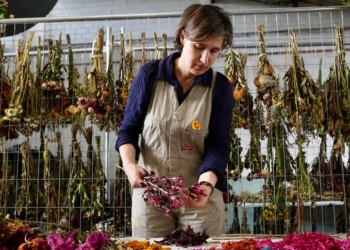 Bondi memorial flowers preserved in lasting tribute artwork
 Starmer Challenges US Over Controversial Greenland Deal
 Spoof “Make America Go Away” Caps Rally Denmark Over Greenland
 India-EU Free Trade Deal Marks Historic Economic Shift
 Iran Death Toll Crisis Exposed: Bodies, Mass Graves, and Concealment
 How Sandhill Ashes Rebuilt a Bushfire-Hit Rural Community
 Thousands Protest ICE Operations in Nationwide US Day of Action
 US-Cuba Negotiations Shift as Oil Blockade Looms
 Ukraine, Russia Meet in Geneva Ahead of War Anniversary
 UK, US Medics Barred from Gaza Amid Rising Aid Concerns
 UK suspends study visas for four nations to curb asylum
 Jordanian Arrested in Philippines Over Bondi Beach Terror Links
 Ukraine war briefing: Zelenskyy offers help to Saudi Crown prince on combatting Iranian drones
 Abramovich Chelsea Sale Cash Faces Jersey Probe
 Starmer Praised for Stance on Trump and Iran Conflict
 UK Ministers Signal Strategic Independence From Trump Demands
 African World Cup Fans Face $15,000 Entry Bond Fee
 Police Seek Immunity in Indigenous Custody Death Case
 Farage Shuns Truss as US Right-Wing Roadshow Hits London
 Trump Slams Europe as Transatlantic Tensions Boil Over
 Spain Faces Backlash Over Xenophobic Chants in Egypt Draw
 Trump Facing Backlash Over Firing of Cabinet Women
 The Price of Hubris: Trump, Netanyahu, and the ‘Easy’ War
 Trump and Tehran Find Common Ground in Landmark Ceasefire
 Own an Entire Australian Town for the Price of a UK Flat
 Melania Trump Denies Ties to Epstein and Ghislaine Maxwell
 Reeves Slams Trump Over Iran War Lack Of Exit Plan
 Kyiv and Odesa Mourn After Deadly Wave of Russian Strikes
 Trump’s Presidency: A House of Cards Collapsing?
 US Forces Seize Iranian Ship Near Hormuz Blockade
 Trump Starts $166bn Tariff Refund Process
 Investigation: Offshore Loans and Sanctions
 Prominent Voices Challenge Palestine Action Ban
 Cross-Border Crisis Shatters Fragile Afghan Peace
 NSW Police Urged Victim to Abandon Antisemitic Case
 The Burning Lens: An Iranian Artist’s Visual Resistance
 FIFA Confirms Global Ban for Benfica Star Prestianni
 Tensions Surge in the Gulf as Ceasefire Wobbles
 One Nation Candidate’s Surprising Ties to Independents
 US and Mexico Face Heatwave as Floods Batter South Africa
 Putin Signals War End as Russian Momentum Stalls
 Romania’s Judicial Crisis: A System Under Siege
 Scepticism and tight security as Beijing braces for Trump
 Philippine Senator Flees After Days Under Senate Siege
 Court Upholds Landmark Win for Transgender Rights
 Fragile Truce Shattered as Violence Escapes Diplomatic Control
 Secrecy Down Under: Albanese Faces FoI Scandal
 Discontent grows around Putin amid war strain
 Teaching Machines Right From Wrong in the Digital Age
 Oman Defies US Pressure Over Strategic Strait of Hormuz
 Ex-CIA Agent Accused of $40m Gold Theft and Fake Spy Unit
 Aukus Deal Facing Fierce Backing and Historic Criticism
 Thai Princess Bajrakitiyabha Passes Away at 47
 Tragic Loss of Australian Sprinter Jemma Stapleton
 Trump Urged to Condemn UFC Fighter Over Obama Slurs
 Russian Tanker Captain Remanded in UK Court After Channel Seizure
 US Military Pacific Boat Strike Kills Three People
 US Battles Auction of Titanic Artifacts
 France Dominate Sweden as Deschamps’ New Era Takes Shape
 Trump’s Mount Rushmore Speech: A Divisive Anniversary
 Trump Swaps Planes Amid Iran Tensions
 Rotterdam Museum Honours Artist With Peanut Butter Floor
 Bangkok Nightclub Blaze Claims 30 Lives Amid Negligence Probe
 Yemen Accuses Iran of Violating National Sovereignty
 Houthis Strike Saudi Arabia as Middle East Tensions Rise