Published: 26 January 2026. The English Chronicle Desk. The English Chronicle Online.
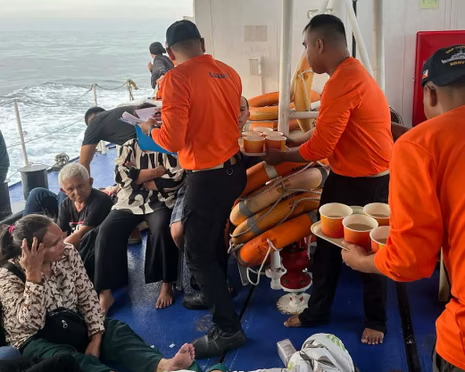
At least 15 people have died after a Philippines ferry sank early Monday, leaving dozens missing. The ferry disaster involved the M/V Trisha Kerstin 3, carrying 332 passengers and 27 crew members, en route from Zamboanga to Jolo island in Sulu province. Coast guard officials confirmed that 28 people remained unaccounted for, while 316 passengers were rescued and transferred to nearby Baluk-baluk village.
The ferry capsized approximately one nautical mile from Basilan province under clear weather conditions, coast guard commander Romel Dua reported. A safety officer aboard was first to alert authorities, ensuring rapid deployment of rescue vessels. The survivors, some of whom were injured, were transported to Isabela city, where local ambulances provided emergency care.

Coast guard and navy ships, a surveillance plane, Black Hawk helicopters, and fishing boats have been searching tirelessly in surrounding waters. Governor Mujiv Hataman of Basilan confirmed that several passengers and two bodies had already arrived at the provincial capital. He said authorities were prepared to offer medical and logistical assistance as rescue efforts continued.
While the cause of the ferry sinking remains under investigation, officials stated that the vessel had been cleared for departure and there was no indication of overloading. Maritime accidents in the Philippines are frequent due to unpredictable storms, poorly maintained vessels, and sporadic enforcement of safety regulations, particularly in remote provinces.
Historical records indicate the archipelago has witnessed severe ferry disasters. In 1987, the Dona Paz ferry sank after colliding with a fuel tanker, killing over 4,300 people in what remains the deadliest peacetime maritime accident globally. This latest incident underscores persistent challenges in ensuring passenger safety across the Philippine islands.
Authorities have urged families of missing passengers to remain vigilant and continue coordination with local officials. Search operations are ongoing, and maritime safety boards have pledged full investigation into the mechanical and operational conditions leading to the sinking.
The community response has been immediate, with local fishermen and volunteers joining official rescue operations. Survivors recounted panic on board as the ferry began taking on water and capsized within minutes. Rescue personnel emphasized the importance of wearing life vests and following evacuation protocols during emergencies.
Analysts highlighted that frequent inter-island ferry travel remains vital to the Philippines’ transport network, making stringent safety measures essential. Regulatory bodies have noted that even with safety certifications, technical malfunctions and human error continue to pose significant risks.

In the meantime, local hospitals and disaster response units remain on high alert, coordinating care and support for affected families. Government officials have assured that lessons from previous maritime tragedies would guide current and future safety protocols to prevent recurrence.
The Philippines ferry disaster, with 15 confirmed dead and many missing, has sparked renewed debate on maritime safety, regulation enforcement, and emergency preparedness across the archipelago.
Related News:
 British skier killed in La Plagne avalanche tragedy
 Mandelson apologises over Epstein ties after public scrutiny
 Friedman Uninvited From 2024 Adelaide Writers’ Week
 Starmer Challenges US Over Controversial Greenland Deal
 Spoof “Make America Go Away” Caps Rally Denmark Over Greenland
 Starmer Resists Matching Trump Amid Greenland Tensions
 Silence and Unity Mark Bondi Terror Attack Memorial
 India-EU Free Trade Deal Marks Historic Economic Shift
 Iran Death Toll Crisis Exposed: Bodies, Mass Graves, and Concealment
 Thousands Protest ICE Operations in Nationwide US Day of Action
 Epstein Files Reveal Trump Officials’ Emails with Financier
 US-Cuba Negotiations Shift as Oil Blockade Looms
 Ukraine, Russia Meet in Geneva Ahead of War Anniversary
 UK, US Medics Barred from Gaza Amid Rising Aid Concerns
 Anthony Albanese Must Uphold Rights for All Australians
 UK suspends study visas for four nations to curb asylum
 Jordanian Arrested in Philippines Over Bondi Beach Terror Links
 Ukraine war briefing: Zelenskyy offers help to Saudi Crown prince on combatting Iranian drones
 Abramovich Chelsea Sale Cash Faces Jersey Probe
 Starmer Praised for Stance on Trump and Iran Conflict
 UK Ministers Signal Strategic Independence From Trump Demands
 African World Cup Fans Face $15,000 Entry Bond Fee
 Police Seek Immunity in Indigenous Custody Death Case
 Farage Shuns Truss as US Right-Wing Roadshow Hits London
 Trump Slams Europe as Transatlantic Tensions Boil Over
 Spain Faces Backlash Over Xenophobic Chants in Egypt Draw
 Trump Facing Backlash Over Firing of Cabinet Women
 The Price of Hubris: Trump, Netanyahu, and the ‘Easy’ War
 Trump and Tehran Find Common Ground in Landmark Ceasefire
 Own an Entire Australian Town for the Price of a UK Flat
 Melania Trump Denies Ties to Epstein and Ghislaine Maxwell
 Reeves Slams Trump Over Iran War Lack Of Exit Plan
 Kyiv and Odesa Mourn After Deadly Wave of Russian Strikes
 Norway’s Telenor Faces Lawsuit Over Myanmar Data Breach
 Strait of Hormuz Status Uncertain Despite Iran’s Claims
 Trump’s Presidency: A House of Cards Collapsing?
 US Forces Seize Iranian Ship Near Hormuz Blockade
 Trump Starts $166bn Tariff Refund Process
 Israeli Soldiers Jailed Over Vandalism of Lebanese Statue
 Investigation: Offshore Loans and Sanctions
 Prominent Voices Challenge Palestine Action Ban
 Cross-Border Crisis Shatters Fragile Afghan Peace
 Tragedy Near Jakarta: Train Collision Leaves 14 Dead
 NSW Police Urged Victim to Abandon Antisemitic Case
 The Burning Lens: An Iranian Artist’s Visual Resistance
 FIFA Confirms Global Ban for Benfica Star Prestianni
 Tensions Surge in the Gulf as Ceasefire Wobbles
 One Nation Candidate’s Surprising Ties to Independents
 New South Wales Wetland Rescue Legislation Passes
 US and Mexico Face Heatwave as Floods Batter South Africa
 French Patient Told Hantavirus Was Just Anxiety
 Putin Signals War End as Russian Momentum Stalls
 Romania’s Judicial Crisis: A System Under Siege
 Scepticism and tight security as Beijing braces for Trump
 Philippine Senator Flees After Days Under Senate Siege
 Big Tobacco Under Fire Over Controversial New Ad Campaign
 Court Upholds Landmark Win for Transgender Rights
 Fragile Truce Shattered as Violence Escapes Diplomatic Control
 Secrecy Down Under: Albanese Faces FoI Scandal
 Tony Abbott Returns as New Liberal Party President
 Discontent grows around Putin amid war strain
 Teaching Machines Right From Wrong in the Digital Age
 Oman Defies US Pressure Over Strategic Strait of Hormuz
 Ex-CIA Agent Accused of $40m Gold Theft and Fake Spy Unit
 Aukus Deal Facing Fierce Backing and Historic Criticism
 Thai Princess Bajrakitiyabha Passes Away at 47
 Tragic Loss of Australian Sprinter Jemma Stapleton
 Trump Urged to Condemn UFC Fighter Over Obama Slurs
 US Democratic Crisis Deepens as Trump Limits Mail Voting
 Russian Tanker Captain Remanded in UK Court After Channel Seizure
 US Military Pacific Boat Strike Kills Three People
 US Battles Auction of Titanic Artifacts
 Scouts Introduce Badges For AI And Digital Skills
 France Dominate Sweden as Deschamps’ New Era Takes Shape
 Trump’s Mount Rushmore Speech: A Divisive Anniversary
 Trump Swaps Planes Amid Iran Tensions
 Rotterdam Museum Honours Artist With Peanut Butter Floor
 Bangkok Nightclub Blaze Claims 30 Lives Amid Negligence Probe
 Yemen Accuses Iran of Violating National Sovereignty
 Houthis Strike Saudi Arabia as Middle East Tensions Rise