Published: 20 February 2026. The English Chronicle Desk. The English Chronicle Online
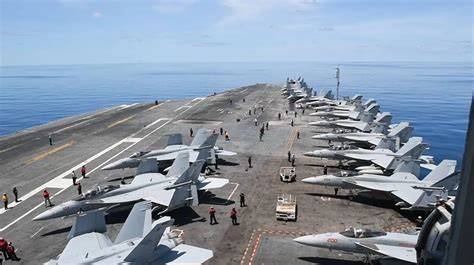
The United States is dramatically reinforcing its military presence in the Middle East, with warships and advanced fighter jets now tracked in positions near Iran, intensifying tensions amid ongoing diplomatic efforts and nuclear negotiations. Officials in Washington stress that the heightened posture is intended to strengthen deterrence while negotiations continue, but the scale of the deployments has raised global concern over the risk of a broader confrontation.
In what defence analysts are calling the largest US force deployment in the region in decades, multiple aircraft carrier strike groups, warships, and squadrons of advanced combat aircraft have been moved within striking distance of Iran, observers and open-source tracking confirm.

Two carrier strike groups — including the USS Gerald R. Ford and the USS Abraham Lincoln — form the backbone of the naval presence, gathering alongside destroyers and other support vessels in waters stretching from the Arabian Sea to approaches near the Strait of Hormuz. These strike groups carry a full complement of warplanes and air defence systems, giving the Pentagon significant flexibility for both defensive and offensive operations.
Advanced fighter jets such as F-22s and F-35s, as well as aerial refueling tankers and combat support aircraft, are also being reported through flight-tracking platforms and military analyses as flying toward key Middle Eastern bases. The deployment reflects not just maritime power but a deepening aerial presence designed to extend US reach and readiness in a region already on edge.
President Donald Trump has publicly warned Tehran that Iran must agree to a deal — particularly over its nuclear programme — or face heightened consequences. While diplomatic negotiations continue in Geneva and have yielded only partial progress with unresolved gaps, the White House has coupled these talks with clear pressure from the military buildup.
Iran has responded to the United States’ military concentration with its own displays of force. Moscow and Tehran recently conducted joint naval exercises, a signal of cooperation and regional defiance, while Russia called on all parties — including Washington and Tehran — to show restraint amid this escalation.
The buildup near Iran has global repercussions. Oil markets have reacted nervously, given the strategic importance of the Strait of Hormuz for global energy supplies, and world leaders are urging caution as the situation evolves. U.S. allies and regional partners have expressed both support for deterrence and concern over a possible miscalculation that could spiral into conflict.

Military experts emphasise that the current posture conveys strength without immediate aggression, and U.S. officials continue to frame the manoeuvres as supportive of diplomacy. However, critics warn that the sheer scale of warships and aircraft concentrated so close to Iran inevitably increases the risk of an incident or accidental clash.
As Iran resists major concessions in nuclear talks and the United States pushes to tighten pressure, the next weeks could prove pivotal: a breakthrough could ease tensions, but a diplomatic stalemate might solidify the military buildup as a permanent posture, with far-reaching implications for regional stability.
Related News:
 Iran Says ‘Guiding Principles’ Agreed With US at Nuclear Talks
 US Pushes to Recruit Organised Crime Gangs into Gaza Police Force
 US Urges Iran to Make Deal as Military Presence Rises
 Two National Guard Soldiers Critically Injured Near White House
 Putin Intensifies Territorial Demands Before US Talks
 Trump to Recheck Green Cards from 19 Nations After DC Attack
 US Defence Chief on Drug Boat Strike: “Did Not See Survivors”
 American Mother Extradited From UK to U.S. on Murder Charges
 Russia losses Ukraine war peace talks intensify amid rising deaths
 Trump Taiwan China drills: US President Downplays Tensions
 US Venezuela protests sweep cities after intervention
 US Cities Erupt in Protests Against Trump’s Venezuela Military Action
 Trump Escalates Minnesota Immigration Surge Amid Rising Tensions
 Trump: US Stands Ready to Help Iran Find Freedom Amid Widespread Unrest
 US Conducts Large-Scale Strikes Against ISIS Targets Across Syria
 Trump Says US Must ‘Own’ Greenland to Block Russia, China
 Trump Says US Will Act on Greenland ‘Whether They Like It or Not’
 Trump Weighs Response to Iran Crackdown as Tehran Says Communication Open With US
 Australia’s US Ambassador Rudd to Step Down Early
 Trump Administration Probe of Fed’s Powell Draws Pushback
 Trading Day: Trump Crosses Fed Rubicon, Market Shrugs
 Greenland Faces Pivotal Summit Over Arctic Power Struggle
 US Clears Nvidia AI Chip Sales to China in Policy Shift
 Trump Threatens Strong Action If Iran Executes Protesters
 Trump Receives Machado’s Nobel Medal in White House Meeting
 Greenland Crisis Forces Europe to Draw a Line With Trump
 Iran Cannot Be Bombed Into Democracy, Only Helped There
 Trump Aide Sparks Fury as Greenland Dispute Intensifies
 Historic Abu Dhabi Talks Bring US, Ukraine and Russia Together
 Trump Pulls Canada from His Controversial ‘Board of Peace’ Plan
 EU Says US Ties Have Suffered ‘Big Blow’ After Greenland Crisis
 Arizona border shooting leaves suspect hospitalised after agent pursuit
 Videos reveal earlier clash before Alex Pretti shooting
 Thousands Protest ICE Operations in Nationwide US Day of Action
 Epstein Files Reveal Trump Officials’ Emails with Financier
 Thousands Protest ICE in New York Against Trump Deportation Campaign
 ‘Painful Times’ as Melinda Gates Responds to Epstein Files
 Trump Praises ‘Terrific’ Petro After White House Talks
 US Must Be Prudent When Supplying Arms to Taiwan, Xi Tells Trump
 Fears of New Arms Race as US-Russia Nuclear Weapons Treaty Expires
 US and Iran Talks to Begin as Fears of Direct Conflict Continue
 US Military Says Two Killed in Strike on Alleged Drug Boat in Eastern Pacific
 Trump Endorses Japan’s Takaichi Ahead of Snap Election
US and Iran Hold Nuclear Talks as Trump Ramps Up Military Threats
Trump Endorses Japan’s Takaichi Ahead of Snap Election
US and Iran Hold Nuclear Talks as Trump Ramps Up Military Threats
 Venezuela’s Opposition Says Party Leader Kidnapped Hours After Being Freed
 Trump Bizarrely Claims China Will ‘Terminate All Ice Hockey in Canada’ in Threat to Block New Border Bridge
 Oil Refinery Ablaze in Cuba as Fuel Crisis Deepens Amid Worsening Shortages
 Trump Says Iran Regime Change Is “Best Thing That Could Happen”
 Iran Signals Readiness to Compromise for Nuclear Deal
 Obama Slams Trump’s Racist ‘Ape’ Video Amid Backlash
 Eleven Killed in Israeli Strikes on Gaza, Rescuers Say
 Starmer Weighs Fast-Tracking Defence Boost
 Macron Rebuked in Franco-German Defence Row
 Actor Robert Duvall, Who Starred in The Godfather, Dies Aged 95
 Facing a Demographic Catastrophe, Ukraine Is Paying for Troops to Freeze Their Sperm
 Ukraine-Russia War Latest: Kyiv’s Forces Make Huge Gains Ahead of Geneva Peace Talks
 New Nuclear Talks Between US and Iran Begin in Geneva
 ‘He Did It for Us’: US Soldier Recalls Jesse Jackson’s Efforts to Free Him and Two Other POWs
 US Says It “Supports” UK Chagos Islands Deal
 Under Pressure From Trump, Venezuela’s New President Has Aces Up Her Sleeve
 ‘I Would Scream in My Sleep’: Alawite Women from Syria Tell of Kidnap and Rape
 Stephen Colbert Says CBS Spiked Interview With Democrat Over FCC Fears
 Moment Officers Rescue Injured Bald Eagle From Icy Hudson River
 Suspect in Rhode Island Ice Hockey Shooting Killed Ex‑Wife and Son
 Japan Braces as Takaichi Begins New Term with Huge Mandate for Low‑Tax, Ultra‑Conservative Agenda
 As Trump Retreats from Climate Goals, China Is Becoming a Green Superpower
 US to Withdraw Troops from Syria
 Eight Skiers Found Dead After California Avalanche
 Desperate Hunt for Breakthrough in Nancy Guthrie Case Turns to Mexico
 UK Must Act with Courage and Clarity on Israel-Palestine Conflict, Says Foreign Affairs Committee Report
 Yvette Cooper Signals Global Momentum Towards Gaza Peace Deal Amid Humanitarian Crisis
 Chaos at Ibrox as Martin’s Rangers Era Comes to an End
 Russia’s Latest Push to Win US Favors Shows Deep Desperation
 BBC to Apologise Over Edited Trump Speech Amid Backlash
 ‘Extinct’ Antelope Returns to Sahara, Bringing Hope
 Minnesota Sues Trump Administration Over ICE Surge
 Sydney Shark Attack Surge Shocks Australia Beaches
 Portugal Election Delivers Socialist Win as Far Right Surges
 ‘Trump Will Be Gone in Three Years,’ Top Democrats Tell Europe
 Australian Families Leave Syrian Camp for Home