Published: 23 February 2026 . The English Chronicle Desk. The English Chronicle Online
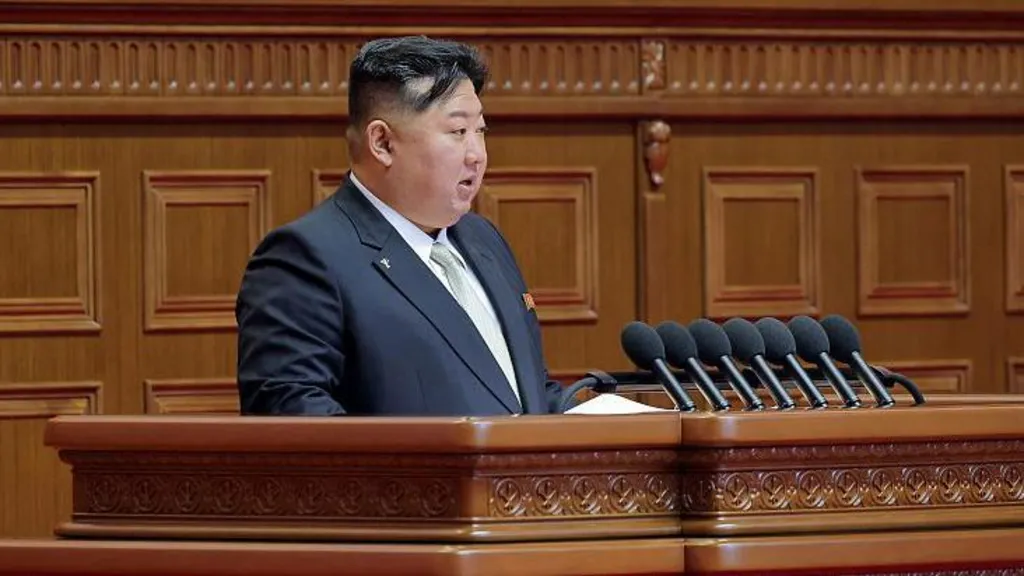
North Korean leader Kim Jong Un has been formally reappointed as head of the country’s ruling Workers’ Party, reinforcing his grip on power and signalling continuity in the Democratic People’s Republic of Korea’s political direction. The decision, announced through state media following a high-level party meeting in Pyongyang, underscores the regime’s emphasis on stability, ideological unity and centralised authority amid ongoing economic and geopolitical pressures.

The reappointment took place during a major party assembly attended by senior officials, military representatives and provincial delegates. According to official statements, the gathering reviewed national economic performance, defence strategy and long-term development goals before unanimously reaffirming Kim’s leadership position. Such party congresses and plenary meetings serve as key instruments through which North Korea communicates its internal priorities and strategic outlook to both domestic and international audiences.
Kim Jong Un has led North Korea since late 2011 following the death of his father, Kim Jong Il. Over the past decade and a half, he has consolidated power through party restructuring, military oversight and the promotion of loyal cadres into influential posts. His reappointment as general secretary of the Workers’ Party signals continuity rather than change, reinforcing the political structure that places the ruling party at the centre of governance.
Observers note that reaffirmations of leadership positions are common within North Korea’s political system, where elections and appointments are typically uncontested and presented as unanimous endorsements. Nevertheless, the symbolism of such moments remains significant. Public confirmation of leadership authority provides reassurance to domestic elites and reinforces the state’s narrative of unity under a single guiding figure.
The announcement comes at a time of complex challenges for Pyongyang. The country continues to navigate strict international sanctions linked to its nuclear weapons and ballistic missile programmes. While North Korea maintains that its military development is essential for national security, critics argue that sanctions have deepened economic isolation and constrained growth. State media reports have highlighted efforts to boost agricultural output, industrial production and infrastructure projects, reflecting the leadership’s focus on economic resilience.
In recent years, Kim has emphasised a policy line often described as “self-reliance,” prioritising domestic production and technological advancement. Large-scale housing developments in Pyongyang, rural modernisation campaigns and expanded industrial zones have been showcased as evidence of progress. Yet external analysts suggest that structural economic limitations persist, particularly in energy supply and access to global markets.
Diplomatically, North Korea remains in a delicate position. Relations with neighbouring South Korea and the United States have fluctuated between dialogue and tension over the past several years. While high-profile summits earlier in Kim’s tenure marked unprecedented engagement, substantive agreements on denuclearisation and sanctions relief proved elusive. Since then, Pyongyang has largely returned to a firmer stance, emphasising military preparedness and strategic deterrence.
Regional dynamics further complicate the landscape. North Korea’s ties with China and Russia have attracted renewed attention amid shifting global alliances. Analysts suggest that geopolitical realignments have offered Pyongyang additional diplomatic leverage, though the country continues to operate within a tightly controlled and insulated system.
Internally, the reappointment underscores the enduring role of the Workers’ Party as the supreme political institution. Unlike many states where governmental branches function with visible separation, North Korea’s party apparatus operates as the primary decision-making authority. The military, cabinet and other state organs are formally subordinate to party leadership. By reaffirming his role at the helm of the party, Kim consolidates his influence across all branches of governance.
State broadcasts accompanying the announcement featured images of delegates applauding and praising what they described as “visionary leadership” and “steadfast guidance.” Official commentary credited Kim with strengthening national defence capabilities and guiding economic construction under challenging external conditions. The tone of coverage emphasised unity and continuity, with repeated references to long-term strategic planning.
Some analysts interpret the timing of the reappointment as a calculated signal to the international community. By presenting a stable leadership front, Pyongyang may be seeking to deter speculation about internal instability or succession uncertainties. Stability narratives are central to the regime’s legitimacy, reinforcing the idea of uninterrupted leadership across generations of the Kim family.
Human rights organisations, meanwhile, continue to express concern about restrictions on civil liberties, information access and freedom of movement within North Korea. International watchdog groups argue that political centralisation limits dissent and independent expression. North Korean authorities, however, maintain that their system reflects the will of the people and safeguards sovereignty against foreign interference.
Economic analysts suggest that the leadership’s next phase may focus on pragmatic adjustments within the confines of sanctions. Limited market activities have gradually expanded over the past decade, with informal trading networks playing a growing role in daily life. Whether the renewed party mandate will translate into deeper economic reforms remains uncertain, but the reappointment provides a political foundation for long-term policy continuity.
Military policy is also expected to remain a priority. North Korea has repeatedly underscored the importance of maintaining a credible deterrent capability. Recent weapons tests, according to state media, demonstrate advancements in missile technology and defence systems. International observers view these developments as a reminder that security considerations remain central to Pyongyang’s strategy.
For the North Korean public, official narratives surrounding the party meeting emphasised collective progress and national pride. State messaging frequently links economic construction with patriotic duty, framing development campaigns as shared national endeavours. The reaffirmation of leadership is portrayed as a guarantee of steady guidance in uncertain global circumstances.
From a broader geopolitical perspective, Kim Jong Un’s reappointment highlights the durability of North Korea’s political structure. Unlike many states where leadership transitions trigger policy shifts, Pyongyang’s continuity reflects a system built around centralised authority and ideological consistency. This predictability, while often criticised, provides clarity regarding the country’s strategic orientation.
The international response to the announcement has so far been measured. Governments in the region continue to monitor North Korea’s military activities and diplomatic signals. Analysts suggest that future developments will depend less on formal titles and more on concrete actions, particularly regarding missile testing and engagement initiatives.

Ultimately, the reappointment serves as a reaffirmation rather than a turning point. Kim Jong Un remains firmly at the helm of North Korea’s ruling party, consolidating a leadership era that has already spanned more than a decade. As the country faces economic constraints, diplomatic isolation and evolving regional dynamics, the continuity of command may shape its trajectory in the years ahead.
For now, the message from Pyongyang is unmistakable: the leadership remains unchanged, the party remains central, and the course set in previous years will continue. Whether that course leads to renewed dialogue or heightened confrontation will depend on decisions made both within North Korea and beyond its borders.
Related News:
 After the Landslide: Can India Reset Ties with BNP Bangladesh?
 China Strikes at Japan’s Core — Will PM Takaichi Back Down?
 Japan Braces as Takaichi Begins New Term with Huge Mandate for Low‑Tax, Ultra‑Conservative Agenda
 South Korea’s Ex-President Faces Death Penalty in Insurrection Trial
 Kinnock’s Rebuke Echoes Loudly as Corbyn Allies Launch Left-Wing Breakaway: “A Gift to Farage”
 UK and Norway Forge Stronger Ties Through Joint Sanctions and Enhanced Defence Cooperation
 Trump Administration Dismisses 17 Immigration Judges, Sparking Debate Over Judicial Independence
 Modi’s London Visit Seals Historic UK-India Trade Pact Amid Global Tensions
 UK Must Act with Courage and Clarity on Israel-Palestine Conflict, Says Foreign Affairs Committee Report
 Trump Threatens 100% Tariff on Nations Importing Russian Oil Amid India Standoff Over Ukraine War
 Netanyahu Announces Plan to Take Over Gaza City, Escalating Conflict Further
 Radioactive Leak at UK’s Nuclear Warhead Base Sparks Outcry Over Safety and Secrecy
 Mutual Inconvenience: Why Alaska Was Chosen for the Trump-Putin Summit on Ukraine
 Hong Kong Summons UK and Australian Envoys Following Asylum Grants to Democracy Activists
 Is the UK Ready to Put Boots on the Ground in Ukraine? Assessing Military Capacity and Challenges
 Protests Expected as Israeli Arms Firms Join Global Defence Trade Fair in London
 Trump Appears Sidelined as Israel’s Unprecedented Strikes Hit Qatar
 Conservative Influencer Charlie Kirk Fatally Shot During University Debate
 Thousands Gather in London to Protest Donald Trump’s Second UK State Visit
 Channel Crossings Surge: Over 1,000 People Arrive in the UK in Small Boats in a Single Day
 Widow of Charlie Kirk Forgives Killer at Emotional Memorial Service
 Denmark Investigates Professional Drone Incursions Across Multiple Airports, No Evidence of Russian Involvement
 UK Fighter Jet Purchase Could Breach Nuclear Treaty, Warns CND
 Yvette Cooper Signals Global Momentum Towards Gaza Peace Deal Amid Humanitarian Crisis
 A Third of EU Citizens in UK Report Discrimination by Public Bodies Post-Brexit
 Public Trust in SNP Hits Historic Low Amid NHS Concerns
 Johnson Suggests Mandelson Linked to China Spy Controversy
 Rachel Reeves signals welfare reform ahead of key budget
 Ireland Votes as Two Women Compete for Presidency
 Russia’s Latest Push to Win US Favors Shows Deep Desperation
 Experts Warn Russia’s Burevestnik Missile Could Destabilise Arms Control
 Johnson Approved China’s London ‘Super-Embassy’ in 2018
 BBC to Apologise Over Edited Trump Speech Amid Backlash
 Britain deploys RAF specialists to assist Belgium with drone threats
 Trump Urges Herzog to Grant Netanyahu Full Pardon
 US Justice Department Files Lawsuit Against California Over Partisan Voting Maps
 Indian authorities demolish Kashmir home linked to Red Fort blast
 Greene Pushes Epstein Files Amid Trump Fallout
 Trump Deploys DHS to Charlotte in Major Arrest Operation
 December Run-Off in Chile as Election Produces No Winner
 Canada Passes Carney’s First Budget in Tight Parliamentary Vote
 Shadow Fleet at Sea: Europe’s Battle Against Illicit Oil Shipping
 Pentagon Officials in Ukraine to Discuss War End
 India’s COP30 Delay Raises Global Climate Concerns
 Venezuela Threatens Nobel Winner Machado with Fugitive Status
 Georgians Defy Government Crackdown After Year of Protests
 EU plans $105bn Ukraine aid using frozen Russian assets
 Global campaign launched to free Palestinian leader Barghouti
 Russia losses Ukraine war peace talks intensify amid rising deaths
 Zelenskyy Accuses Russia of Sabotaging Peace Talks
 Albanese Opens Door to Bondi Royal Commission Amid Rising Pressure
 Trump Escalates Minnesota Immigration Surge Amid Rising Tensions
 Iran Protesters Defy Crackdown as Violent Clashes Intensify
 Trump Threatens Strong Action If Iran Executes Protesters
 Machado Trump medal gesture reshapes Venezuela power struggle
 EU weighs response amid Greenland tariff crisis with Trump
 ICE street raids expose a chilling future for public freedoms
 EU Says US Ties Have Suffered ‘Big Blow’ After Greenland Crisis
 Andrew Hastie Emerges as Leadership Rival to Ley
 Starmer China visit raises human rights pressure on Beijing
 Israel Moves to Bar MSF From Gaza Operations
 Trump Praises ‘Terrific’ Petro After White House Talks
 Fears of New Arms Race as US-Russia Nuclear Weapons Treaty Expires
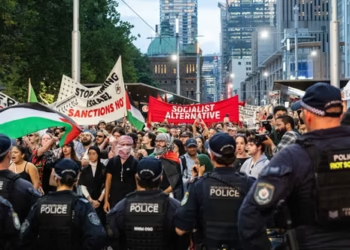 Sydney Protest Escalates and Elderly Woman Suffers Severe Injury
 Tarique Rahman’s Rise Toward Bangladesh’s Top Job
 Australian Families Leave Syrian Camp for Home
 Starmer Weighs Fast-Tracking Defence Boost
 Macron Rebuked in Franco-German Defence Row
 Japan’s Lost “Tigers” Were Actually Lions, Study Reveals
 Trump Attacks UK-California Energy Pact
 Kim Jong-un Unveils Housing for War Families
 Stephen Colbert Says CBS Spiked Interview With Democrat Over FCC Fears
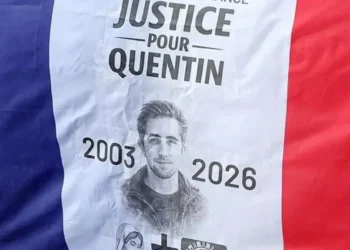 Nine Arrested in France Over Death of Far‑Right Student
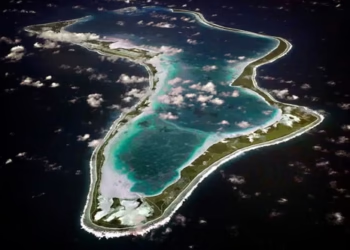 Trump and Chagos Deal Rift Over Iran Strikes
 Andrew Arrest Sparks Republic Debate in Australia
 Australian PM Says Former Prince Andrew Has Suffered ‘Extraordinary Fall’ but That Won’t Prompt Republic Referendum
 Global corruption crisis: Who Washington shields
 Musk Cuts Starlink Access for Russian Forces – Giving Ukraine an Edge at the Front
 Farage Chagos Islands Row Sparks Fury
 How South Korea’s Democracy Rebounded After Martial Law Attempt