Published: 23 February 2026 . The English Chronicle Desk. The English Chronicle Online
The UK government is set to launch a “generational” overhaul of support for children with special educational needs and disabilities (Send), pledging £4bn to transform provision across schools in England. Ministers warned local councils they could lose control of Send services if they fail to meet their legal duties, highlighting the urgency of the reforms.
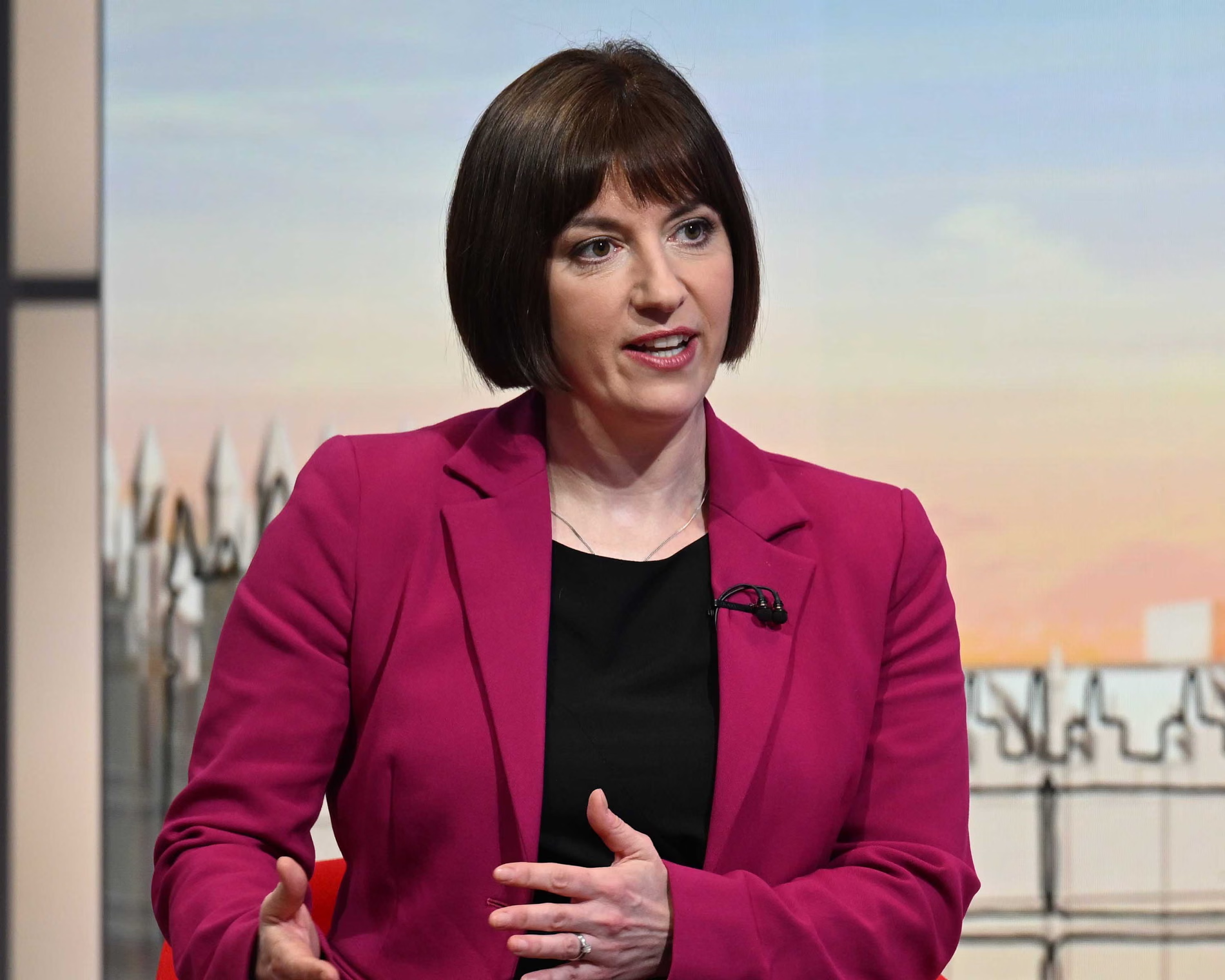
Education Secretary Bridget Phillipson, who delayed the changes last autumn following backlash from MPs and parents, described the reforms as a once-in-a-generation opportunity to redefine the future of education. Writing for the Guardian, she emphasized that the plans were about “improved support, not removed support.”

The proposals include substantial additional investment in special needs provision, addressing widespread fears that the reforms might be a cuts exercise amid soaring service costs. Phillipson pledged tailored specialist support in all mainstream schools and 60,000 new special needs school places, ensuring children with Send have greater access to the resources they need.
A long-running consultation process sought to smooth tensions with parents and MPs, many of whom had previously threatened to rebel against the reforms. Privately, some MPs expressed optimism that the majority of children, particularly those from poorer backgrounds, would benefit from improved provision, though the full white paper may provide further clarifications.
Backing the plans, Prime Minister Keir Starmer said: “Getting the right support should never be a battle – it should be a given. Families will get tailored support built around their child’s individual needs, available on their doorstep.” Starmer cited personal experience of his late brother, who had learning difficulties, as motivation for the reforms, emphasizing the importance of mainstream inclusion for children with Send.
Under the new system, schools will receive extra funding for specialized support, while Education, Health, and Care Plans (EHCPs) will be reserved for children with the most severe and complex needs. Children on lower tiers will still receive additional support and legal rights, although parents have raised concerns about potential reviews as children progress to secondary education.
The reforms will also change parental choice, replacing unrestricted free choice of schools with a list of possible options. Appeals will still be allowed, and the Send tribunal can ask local authorities to reconsider decisions.
The shake-up arrives amid record demand for special needs provision and growing parental distrust in a system where families often win tribunal appeals only after prolonged battles. New obligations will require councils to meet legal duties more reliably, with penalties for failure, including the potential removal of control over Send services.
The upcoming schools white paper outlines £4bn of investment over three years to enhance inclusion in mainstream schools. Early years settings, schools, and colleges will receive £1.6bn for initiatives such as small-group language support, while a further £1.8bn will fund an “experts at hand” service, providing access to Send teachers and speech and language therapists regardless of EHCP status. Additional funding will also support high needs provision, teacher training, and 60,000 extra special school places, reducing reliance on private institutions and long-distance travel.
In practical terms, primary schools may see an additional £20,000–£40,000 per year, with secondary schools receiving £50,000–£70,000 annually. Once fully implemented, an average secondary school will gain over 160 days of dedicated specialist time per year. Schools will also establish “inclusion bases,” supported through the government’s £3.7bn capital investment.
Phillipson reassured that effective support would not be removed and that a careful, decade-long transition would underpin the reforms. Charities and thinktanks welcomed the ambition but stressed the importance of staff recruitment and retention to ensure success.
Jo Hutchinson, director of Send at the Education Policy Institute, warned that without more funded training places, educational psychologists may remain insufficient in number. Nick Harrison of the Sutton Trust noted the reforms’ potential to help disadvantaged families navigate the system. Meanwhile, IPSEA expressed concern that issues around unlawful decision-making and accountability remain unresolved.
Mencap highlighted the positive move towards inclusion in mainstream schools, urging early identification and support for children’s needs, backed by fully funded services and statutory rights. Phillipson affirmed that reform, alongside investment, was essential to address long-standing failings in the Send system.

The Mayor of Greater Manchester, Andy Burnham, offered his region as an early adopter, emphasizing the potential for a less adversarial, preventative approach centered on children and families.
“This is a reforming government,” Phillipson concluded. “Any parent or teacher who has experienced the Send system will say change is the right thing. Now is the time to turn it around.”
Related News:
 Michele Dougherty Makes History as the UK’s First Female Astronomer Royal
 Labour Urged to Revive Sure Start Name to Rebuild Trust and Win Back Reform Voters
 Tragedy in Cambridge: Two Arrested Over Fatal Assault of International Student
 UK University Staff Studying Sensitive Chinese Issues Report Intimidation
 Princess of Wales Launches Animated Video Series to Support Early Childhood Development
 University Education Faces New Challenges as Students Question Its Value
 Learner Drivers to Face CPR and Defibrillator Questions in New Theory Tests
 More than a Quarter of A-Level Students Poised to Achieve Top Grades Across UK
 Record Number of UK Students Secure University Places Following A-Level Results
 Boys’ Under-Performance at GCSEs a “National Concern,” Says Leading Education Expert
 From ‘Skibidi’ to ‘Mouse Jiggler’: Cambridge Dictionary Expands with Modern Slang and Social Terms
 Why Where You Live Can Affect Your School Grades – And the Gap Between Areas Is Only Widening
 Education Leaders Call for End to Compulsory GCSE Resits in English and Maths
 Thousands of New School Nursery Places to Be Rolled Out Across England
 University of Edinburgh Lecturers Launch Five-Day Strike Amid £140m Budget Cuts
 Ofsted Pushes Ahead with Controversial New Inspection Regime Despite Widespread Opposition
 UK Set to Launch Its First ‘Super-University’ Through Landmark Merger of Kent and Greenwich
 Special Needs Reforms Risk Becoming ‘Welfare Reforms Mark 2,’ Warns IFS
 UK Graduates in Healthcare Report Highest Satisfaction with Degree Choices
 Growing Crisis in UK Schools: One in Three Parents Seek Special Needs Assessments
 UK Launches Initiative to Teach Democracy to Toddlers in Memory of Sir David Amess
 Majority of Girls and Young Women in UK Adjust Daily Lives to Feel Safe, Survey Reveals
 UK Confronts Rising Crisis of Child-on-Child Sexual Abuse as Patterns Shift
 Historic Letters Unearthed on eBay Reveal UK Families’ Profits from Slavery
 It Changed My View’: Campaign Encourages Pupils in Deprived Areas to Consider University
 Report Finds School History Lessons Marginalise Women’s Contributions
White Low-Income Pupils in England Show Lowest Levels of School Engagement, Study Finds
Report Finds School History Lessons Marginalise Women’s Contributions
White Low-Income Pupils in England Show Lowest Levels of School Engagement, Study Finds
 UK Home Office approves extra visas for UCL international students amid deferred admission concerns
 Teacher Permanently Banned After Slapping Pupil Over Classroom Incident
 UK Universities Warn Students Ahead of 7 October Pro-Palestine Protests
 Eating International Foods Linked to Greater Tolerance, UK Study Finds
 Thousands of University Jobs Cut Amid Deepening Financial Crisis
 MPs Urge UK to Let Gaza Scholars Bring Their Children
 Phillipson Warns Parents Over Poor Quality Online Advice
 UK Pupils Fear AI Is Eroding Their Learning Skills
 Parents spending £5,000 on special school assessments in England
 New V-Level qualification to transform post-16 education
 Oxford Union president-elect ousted following Charlie Kirk scandal
 The debate over England’s compulsory reading test for 13-year-olds
 One in 12 Secondary Pupils Sent to Isolation Weekly
 Children to Judge Inaugural Booker Prize for Young Readers
 Six-Figure Tutors Teach Toddlers to ‘Be British’
 How Bringing Forests Into Preschools Boosts Children’s Health
 Is a two-week half-term a good deal? Some parents in England aren’t so sure
 Children to Learn Local History in Major Curriculum Overhaul
 Top Christmas Books Reads: Classics to Cozy Romcoms
England Curriculum Review Recommends Major Changes
Top Christmas Books Reads: Classics to Cozy Romcoms
England Curriculum Review Recommends Major Changes
 Greta Thunberg Backs Student Facing UK Visa Revocation
 Audio Books deals and promo codes to explore in November 2025
 London’s Childlessness Crisis: Schools Closing as Families Shrink
 No link found between paracetamol in pregnancy and autism
 Government urges schools to ban phones to curb classroom disruption
 Stephen Fry backs SafeCall to protect missing children
 England’s Special Needs Support Faces Breaking Point
 Higgs Donates Nobel Medal to His Beloved University
 UK Schools Face Staff Exodus Amid Wellbeing Crash
 Schools urged to trial four-day week to ease pressure on teachers in England and Wales
 Oxford Names ‘Rage Bait’ Word of the Year
 Christmas Code-Crackers: GCHQ Unveils Annual Festive Puzzle Card
 UK Set to Rejoin Erasmus as Student Exchanges Return
 Bristol Lecture Disruption Sparks Academic Freedom Legal Threat
 Cambridge College Faces Backlash Over Private School Recruitment
 Glasgow rector cleared by watchdog in antisemitism case
 UK Launches First Town of Culture Competition
 UK Ministers Drop Foreign Student Targets for Global Education Push
 City & Guilds pay surge sparks backlash amid £22m cuts
 Harvey Willgoose School Stabbing Red Flags Missed
 Defence Sector Students Get £80m Government Funding
 Kingsbury stabbing probe led by counter-terror police
 School phone policies drain English staff resources, study finds
 Send spending gap leaves deprived areas behind
 Children’s vocabulary shrinking amid rising screen time concerns
 UCL and Students Reach Settlement Over Covid Teaching Dispute
 Students Begin Covid Compensation Claim Against 36 More Universities
 Teacher Who Lied About Cambridge Degree Banned From Profession
 Britain’s Special Needs Spending Crisis Will Be Labour’s Ruin
 With Scottish Freebies Under Threat, University Tuition Is on the ‘Hit List’
 SEND overhaul gives schools new support funds
 ‘Don’t Make Us Security Guards,’ Says Teacher Stabbed by Pupil
 Schools in England to Get Budget for Children with Special Needs as Part of SEND Overhaul